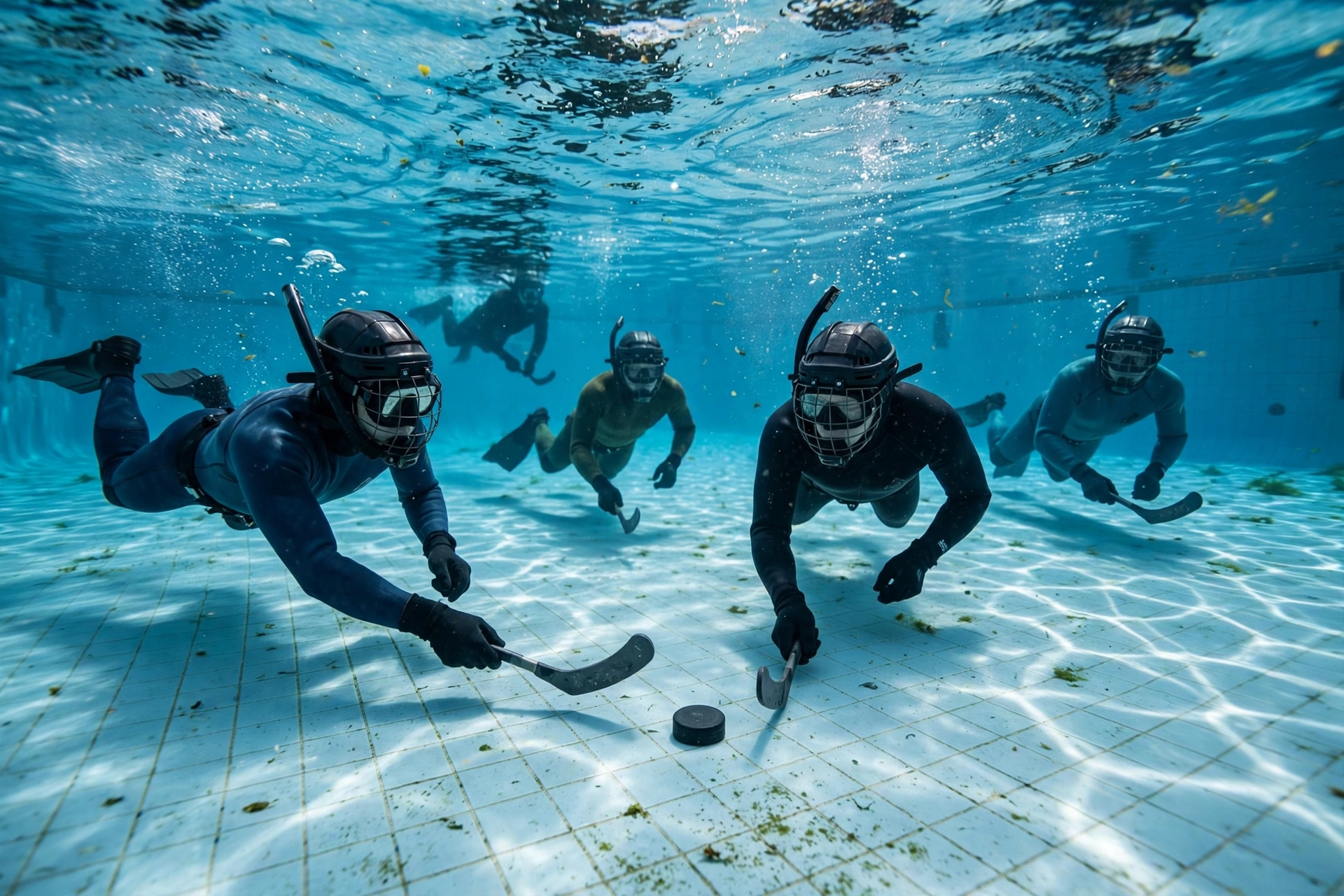
A helmet for underwater hockey players is a snug, soft-capped helmet worn in the pool to protect the head and ears during the fast, close-contact play of underwater hockey. In general terms, it is closer to a water polo cap with a protective shell than to a hard cycling or climbing helmet, and it is designed to stay in place underwater while players swim, dive, and chase the puck along the bottom of the pool. It guards against knocks from other players, sticks, and the pool floor, and it helps to protect the ears from blows and water pressure.
Underwater hockey is played on the bottom of a swimming pool, with players wearing fins, masks, and snorkels, pushing a heavy puck with a short stick. The game is quick and physical, with players diving down, turning sharply, and jostling for the puck in a small space. In that kind of play, heads can collide, sticks can swing up, and a player can bump the pool floor. A helmet will not stop every knock, but it lowers the chance that a routine clash turns into a cut, a bruised ear, or a more serious head injury.
What is an underwater hockey helmet?
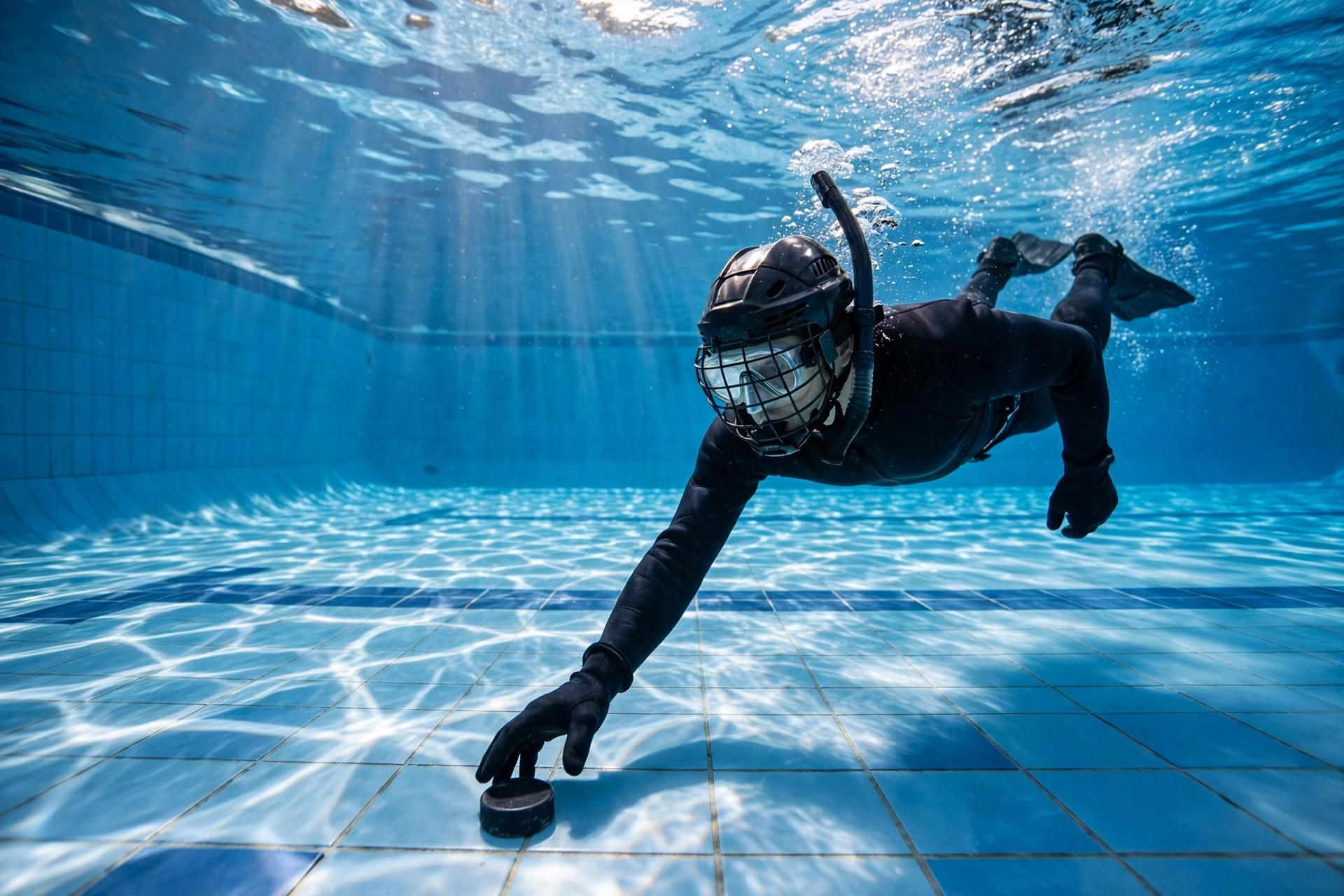
An underwater hockey helmet is a close-fitting head guard made from a soft but tough material, often with padded sections over the top and sides of the head and a chin strap to hold it in place. In general terms, it covers the crown, the sides, and the ears, while leaving the face open so the player can wear a mask and snorkel. It is light in the water, it drains easily, and it does not float off when a player dives or turns.
Some helmets are made from a firm foam covered in a durable outer layer, while others use a harder shell with padding inside. The choice often comes down to personal comfort and the level of play, with more experienced players sometimes choosing a slimmer helmet and beginners choosing one with more padding. The helmet is part of the standard kit for the sport, along with fins, a mask, a snorkel, and a stick, and most clubs expect players to wear one from their first session.
Why do underwater hockey players wear helmets?
Underwater hockey players wear helmets because the game brings heads, sticks, and the pool floor into close contact again and again. A player diving for the puck may meet another player coming the other way, a stick can flick up during a tackle, and a player who loses balance can hit the bottom of the pool. In general terms, the helmet spreads the force of these knocks and protects the ears, which are easy to injure underwater.
The ears are a particular concern in underwater hockey, because a blow to the ear underwater can be painful and can damage the eardrum. The helmet’s ear coverage helps to cushion those blows and to keep water from rushing into the ear during a dive. Players also find that a helmet gives them more confidence to play hard, since they can commit to a tackle or a dive without worrying as much about a knock to the head. That confidence matters in a sport where hesitation costs the team the puck.
What should you look for in an underwater hockey helmet?
A good underwater hockey helmet should fit snugly, cover the ears fully, and stay in place when you dive and turn. In general terms, the helmet should sit level on the head, with the chin strap fastened so that the helmet does not shift when you push off the wall or surface quickly. If the helmet slides around, it can block the mask or leave the ears exposed, which defeats its purpose.
Comfort matters as much as protection, because a helmet that pinches or presses on the ears will be a distraction through a whole game. Look for padding that feels even all round, straps that adjust easily with wet hands, and a material that does not soak up water and become heavy. Some helmets include a system designed to reduce rotational forces in a fall, such as MIPS, although in underwater hockey the more useful features are usually ear protection, a secure strap, and a fit that stays put underwater.
How do you look after an underwater hockey helmet?
An underwater hockey helmet should be rinsed in fresh water after every session, to wash out chlorine and pool chemicals that can wear down the material and the straps. In general terms, the helmet should be left to dry in the open air, away from direct sunlight and away from radiators or other heat, because strong heat can warp the shell and weaken the straps. The helmet should be dried fully before it is packed away, so that it does not develop a smell or mould.
The helmet should be checked regularly for tears in the outer layer, flattened padding, and straps that have stretched or frayed. A helmet that has taken a hard knock should be looked at closely, and if the padding is damaged or the shell is cracked, the helmet should be replaced. Because underwater hockey helmets are relatively light and soft, they wear out faster than a hard-shell helmet used on land, so players should be ready to replace one when the fit or the padding starts to feel less reliable.
Do beginners need a helmet for underwater hockey?
Yes, in general terms beginners need a helmet just as much as experienced players, and arguably more. A new player is still learning to control their body underwater, still learning where other players are, and still learning how to handle the stick, so they are more likely to bump into someone or to hit the pool floor. A helmet gives a beginner the protection they need while they learn the game.
Most clubs lend helmets to newcomers for their first few sessions, so a beginner does not need to buy one before trying the sport. It is worth asking the club what size is available and trying a couple of helmets to find one that fits well. Once a player decides to keep playing, buying their own helmet is a good step, because a helmet that fits their own head will be more comfortable and more protective than a shared one that is a little too big or too small.
Is a helmet required in underwater hockey?
In general terms, helmets are part of the standard kit for underwater hockey, and most clubs and competitions expect players to wear one. A player without a helmet may not be allowed to join a game, so it is best to check with the club before turning up.
Can you wear a swim cap instead of a helmet?
No, a swim cap keeps hair out of the way but offers no real protection against knocks, sticks, or the pool floor. An underwater hockey helmet is padded and shaped to protect the head and ears, which a swim cap cannot do.
Does the helmet cover the ears?
Yes, an underwater hockey helmet is designed to cover the ears, which helps to cushion blows and to keep water from rushing into the ear during dives. The ear coverage should sit flat and comfortable, without pressing painfully on the ears.

Olivia
Writer at Helmet Today, covering helmet reviews, fit and riding safety.