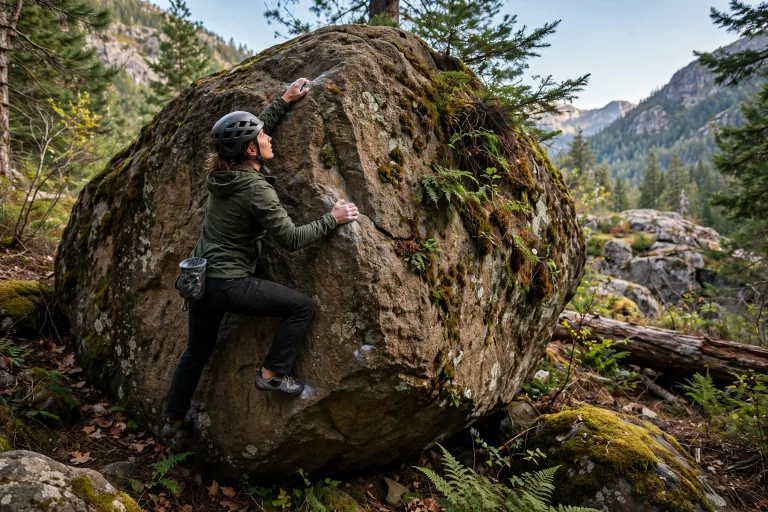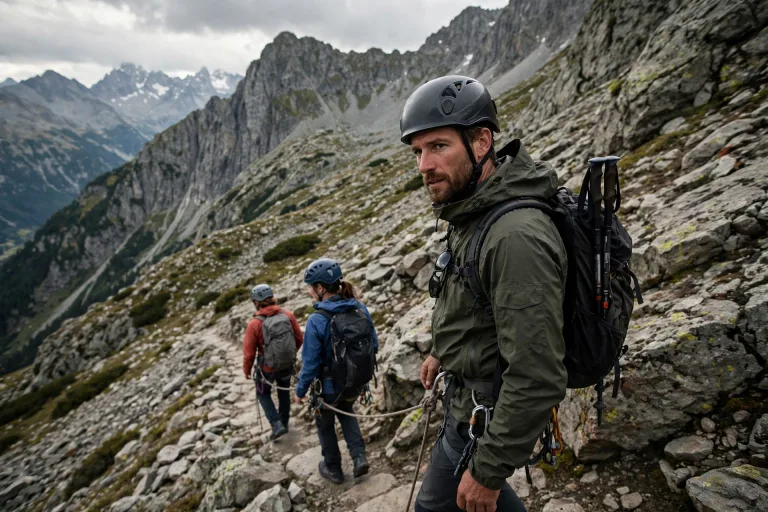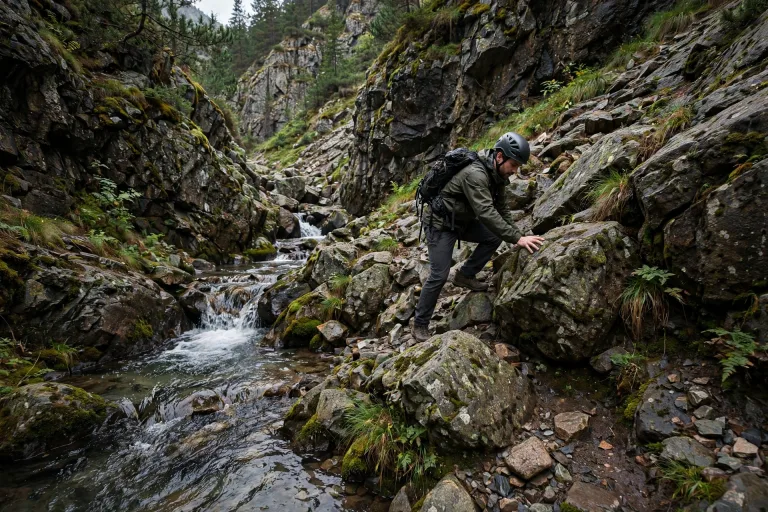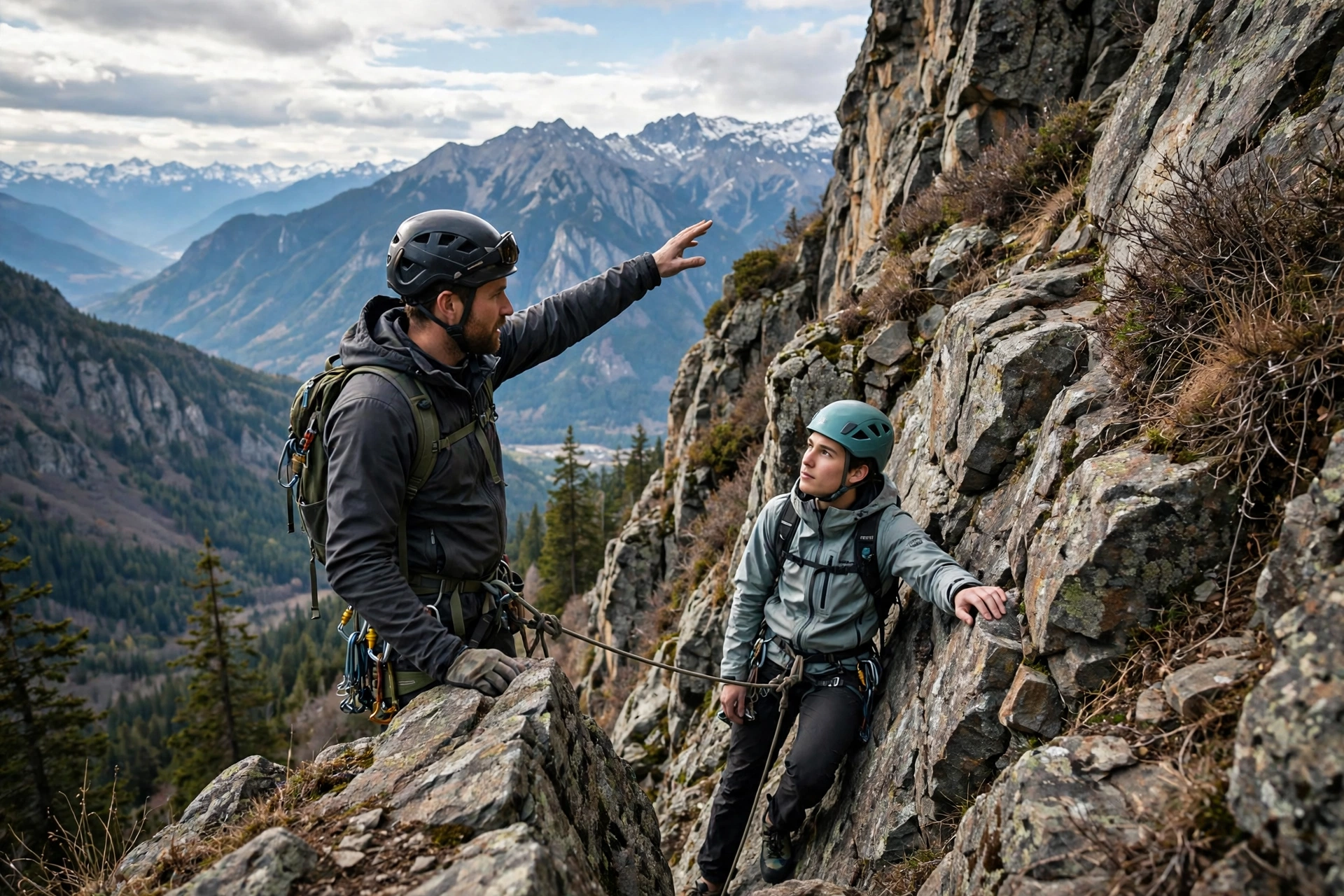
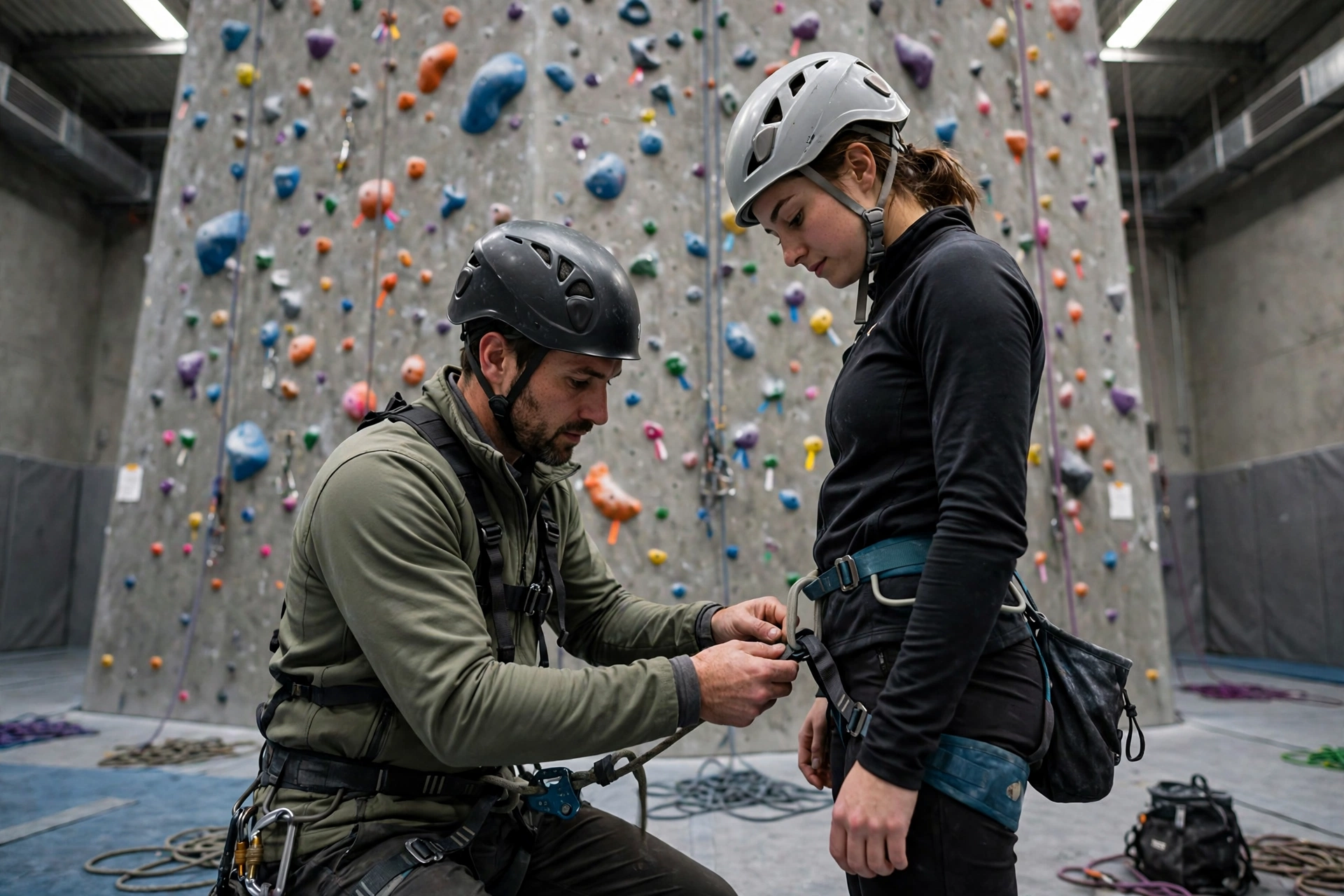
A helmet for climbing instructors is a light climbing helmet worn to protect the head from falling rock, dropped gear, and knocks against the rock face while coaching on a wall or crag. In general terms, a climbing instructor spends long hours below and beside climbers, often in places where loose rock and dropped equipment are a real risk, so a helmet is a working part of the job rather than an optional extra. It protects the instructor in the same way it protects the climber, and it sets an example that students are more likely to follow.
Climbing instructors work in two very different places: the indoor wall and the outdoor crag. Indoors, the risks are smaller, but a dropped quickdraw or a climber’s foot can still cause a painful knock. Outdoors, the risks are greater, because rock can come loose from above, gear can be dropped from a belay, and the instructor may be moving across uneven ground below the climb. A helmet will not make climbing safe on its own, and it does not replace good judgement about rock quality and weather, but it lowers the chance that a falling object becomes a serious injury.
What is a climbing instructor’s helmet?
A climbing instructor’s helmet is a light, well-vented helmet with a hard outer shell and a padded lining, made to absorb the impact of falling objects and to protect against knocks from the side as well as from above. In general terms, it covers the top and sides of the head, sits low on the forehead, and is held in place by a chin strap and an adjustable headband. It is designed to be worn for hours at a time without becoming uncomfortable.
Climbing helmets are lighter than many other helmets because the instructor needs to look up, move freely, and wear the helmet all day. Many have large vents that keep the head cool, and clips or slots for a head torch, which is useful for early starts and late finishes. The shell is usually made from a tough plastic or a composite material, and the lining is often a foam that spreads the force of an impact. Some helmets are made to be especially light, while others offer a little more coverage and durability for rough outdoor use.
Why do climbing instructors wear a helmet?
Climbing instructors wear a helmet because falling rock and dropped gear are part of the environment they work in. A climber above can dislodge a stone without meaning to, a carabiner can slip from a hand at a belay, and a rope can flick a loose pebble down the face. In general terms, the instructor is often the person standing in the fall line, watching the climber and managing the rope, so they are the one most likely to be hit.
The instructor’s helmet also matters because students copy what they see. If the instructor wears a helmet without fuss, the students are far more likely to wear theirs, and the whole group becomes safer. An instructor who climbs without a helmet sends the opposite message, even if they do not mean to. For that reason, many climbing schools and guiding companies make helmets part of the instructor’s standard kit, indoors and outdoors alike.
What should a climbing instructor look for in a helmet?
A climbing instructor should look for a helmet that fits well, is light enough to wear all day, and has good ventilation. In general terms, the helmet should cover the top and sides of the head without blocking vision, and the vents should let air move through so the head does not overheat during a long session. A head torch clip is a useful extra, and a helmet that packs easily into a kit bag is a bonus for instructors who travel.
Durability matters too, because an instructor’s helmet gets far more use than a weekend climber’s. The shell should resist scratches and knocks, the straps should stay adjustable after months of use, and the lining should be easy to clean or replace. Some helmets include a system designed to reduce rotational forces in a fall, such as MIPS, which is a feature worth considering, although a good fit and a shell made for climbing remain the most important things.
How should a climbing helmet fit?
A climbing helmet should fit snugly all round, without pressing hard on one spot or sliding around when the head moves. In general terms, it should sit level on the head, covering the forehead down to just above the eyebrows, and the chin strap should be tight enough that the helmet stays put when shaken gently from side to side. The instructor should be able to look up at a climber without the helmet tipping forward or backward.
Fit should be checked with the hair and headwear the instructor will actually use, since a beanie or a sun hat changes the fit. The adjustment wheel or straps at the back should be easy to use with one hand, so the fit can be fine-tuned on the crag. It is also worth checking that the helmet works with a head torch and with sunglasses, since both are part of an instructor’s normal kit. A helmet that fits well becomes easy to forget, which is exactly what an instructor needs during a long day.
How do you care for a climbing helmet?
A climbing helmet should be kept clean, dry, and out of strong sunlight when it is not being worn. In general terms, the shell can be wiped with a damp cloth, and the lining can be washed gently where the maker allows it, so that sweat and dirt do not build up. The helmet should be stored in a bag or a cool, dry place, away from chemicals, solvents, and sharp objects that could damage the shell or the straps.
The helmet should be checked regularly for cracks in the shell, dents, flattened foam, and straps that have frayed or stretched. A helmet that has taken a hard hit from a falling rock should be looked at closely, and if there is any doubt about its condition, it should be replaced rather than kept in use. Instructors who climb every day will wear a helmet out faster than an occasional climber, so it is worth keeping a spare ready and replacing the helmet when the fit or the protection starts to feel less reliable.
Do climbing instructors always wear helmets?
In general terms, yes, most climbing instructors wear a helmet whenever they are working on a wall or crag, indoors and outdoors. It protects them from falling rock and dropped gear, and it sets the example their students are expected to follow.
Can a bike helmet be used for climbing?
No, a bike helmet is made for a different kind of impact and does not protect the top of the head from falling rock in the same way. A climbing helmet is shaped and tested for the knocks that happen on a wall or crag, so it is the right choice.
When should a climbing helmet be replaced?
A climbing helmet should be replaced after a hard impact, if the shell is cracked or the foam is damaged, or when the fit and straps no longer hold it securely. Instructors who use a helmet every day should check it often and replace it sooner than an occasional climber would.

Olivia
Writer at Helmet Today, covering helmet reviews, fit and riding safety.