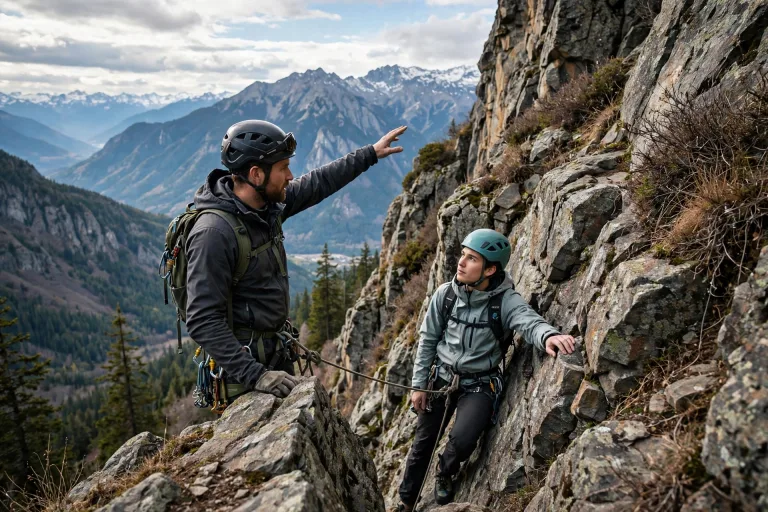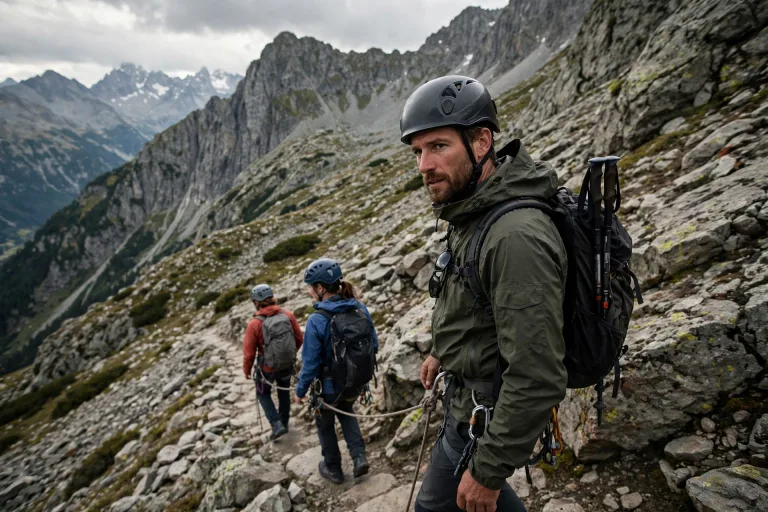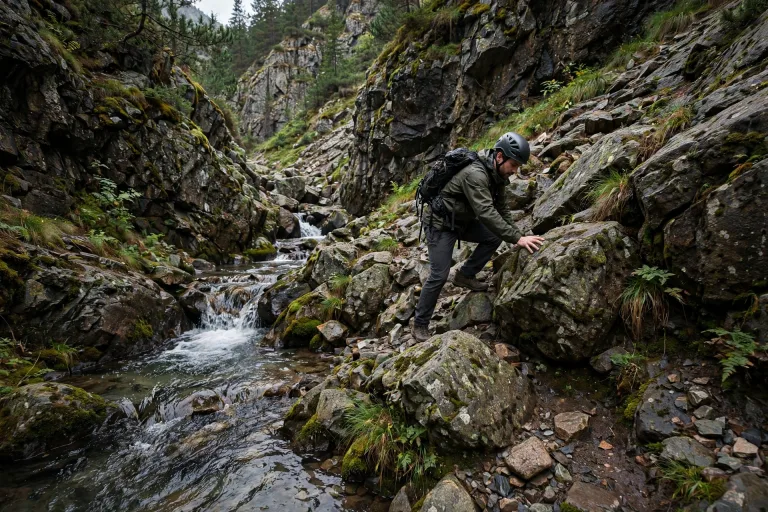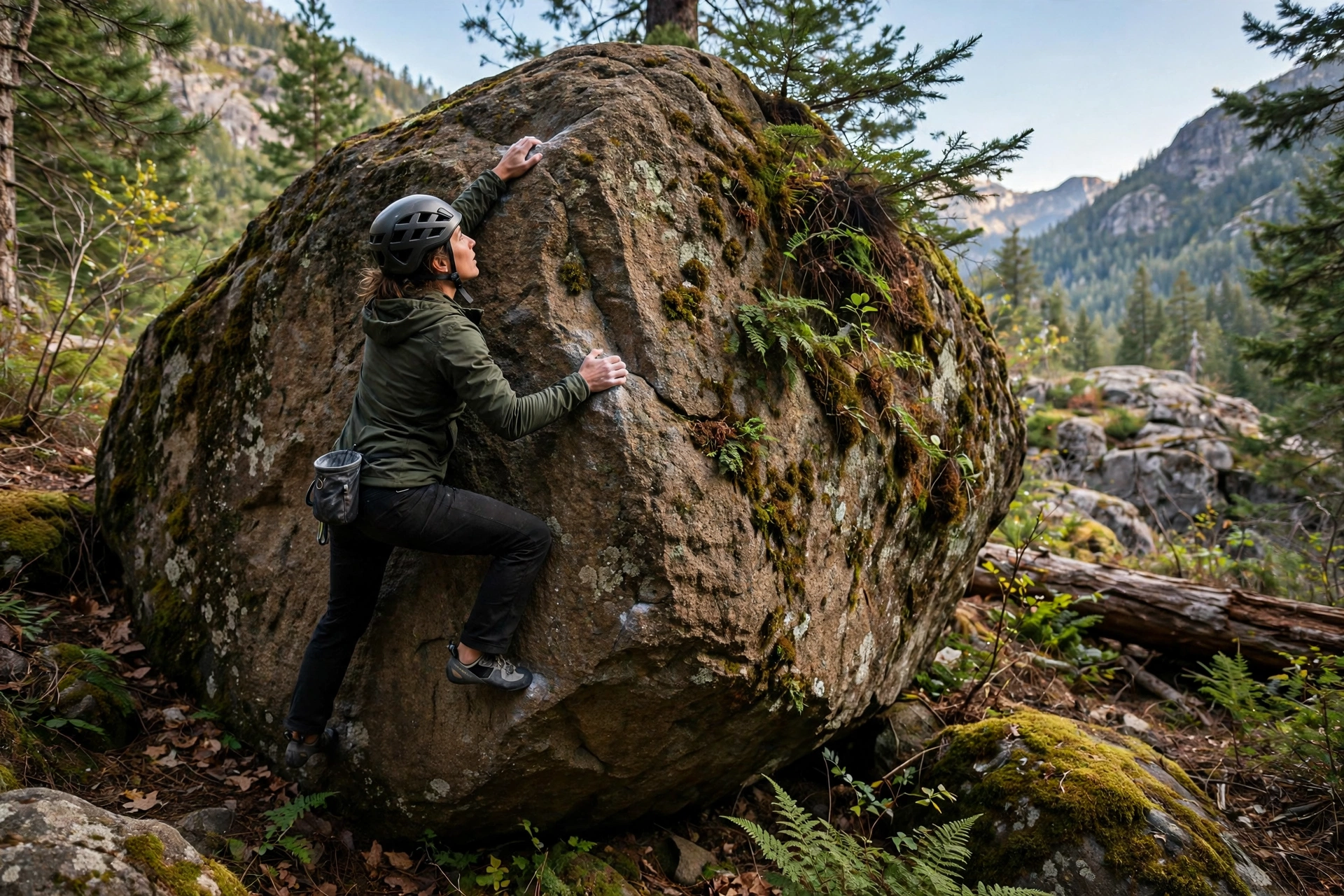
A helmet for bouldering is, in general terms, a light climbing helmet worn to protect the head from falls and loose rock while bouldering on low rock faces and boulders outdoors. Bouldering is climbing without ropes, close to the ground, over crash pads, and many climbers assume a helmet is unnecessary because the falls are short. But outdoor boulders sit on uneven ground, often below loose rock, and a fall can send the climber’s head towards stone, a tree root, or the edge of a crash pad. A helmet gives the head protection in exactly those moments.
Indoor bouldering gyms rarely require helmets, since the floor is padded and there is no loose rock above. Outdoor bouldering is different: the rock is natural, the landing zone is uneven, and other climbers may be working on the same boulder above. A light helmet that is easy to wear for a whole session fits the outdoor bouldering style, and more outdoor boulderers are choosing to wear one, especially on taller problems and on rock that is known to be loose.
Do you need a helmet for bouldering?
In general terms, a helmet is not required for bouldering, and many outdoor boulderers climb without one. The decision is usually left to the climber, and it depends on the height of the problem, the quality of the rock, and the landing below. Short, low problems over a flat landing with good crash pads carry less risk, while taller problems, problems on loose rock, and problems with a bad landing carry more. A helmet is most useful where a fall could end with the head striking rock or a hard object.
The case for a helmet is strongest on natural rock that has not been cleaned, where holds can break and stones can fall from above. Climbers working on the same boulder can also dislodge loose rock onto someone below, and a helmet protects the person on the ground as well as the climber. Some bouldering areas have a local habit of wearing helmets, and following that habit is sensible. A helmet will not make a dangerous problem safe, but it gives the head a layer of protection that a bare head does not have.
What kind of helmet works best for bouldering?
The best helmet for bouldering is light, low-profile, and comfortable enough to wear for a whole session. In general terms, a light climbing helmet suits bouldering better than a heavy or bulky one, because the climber needs a full range of movement and a clear view of the holds above. The helmet should sit level on the head, cover the forehead and the back of the head, and stay in place when the climber looks up, twists, or falls onto a crash pad. A secure adjustment system that can be tightened with one hand is useful.
Ventilation matters, because bouldering is hard exercise and a hot helmet is distracting. A helmet with good airflow and a washable lining is easier to wear for hours. The shell should be tough enough to take scrapes against rock, and the helmet should have a headlamp clip for sessions that run into dusk. Some climbers choose a very light foam helmet for bouldering, while others prefer a hard-shell design that resists dents. Either way, the helmet should meet a recognised standard for climbing use.
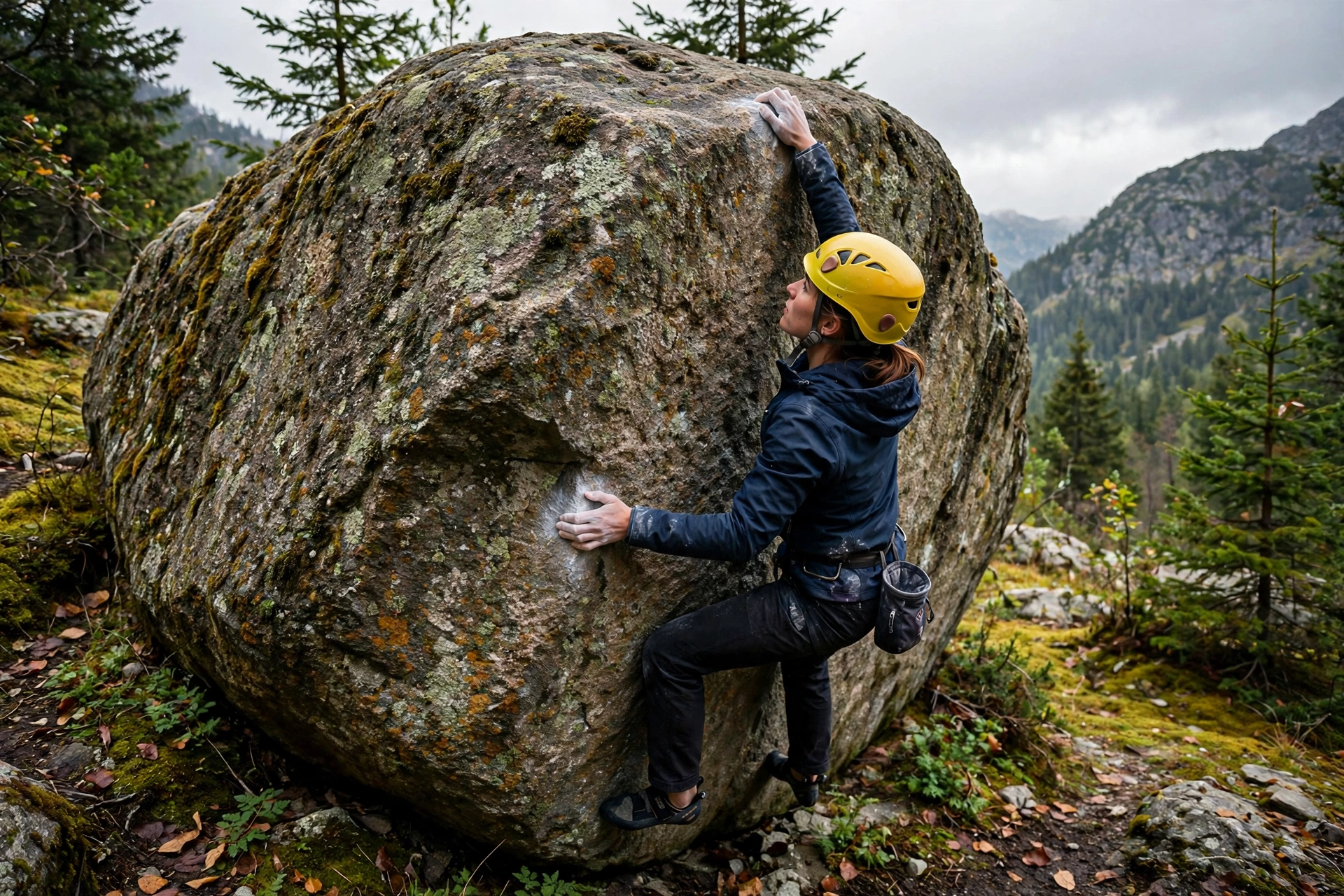
How should a bouldering helmet fit?
A bouldering helmet should fit snugly without pressing, and it should stay put when the climber shakes their head or moves through a dynamic jump. The front edge should sit just above the eyebrows, and the straps should be adjusted so the helmet does not slide forward over the eyes or back off the forehead. In general terms, the test is simple: if the helmet moves when the climber looks up at the holds, it is either the wrong size or it is not adjusted correctly.
It is worth trying the helmet on with the hair and headband the climber normally wears, since a thick headband can change the fit. The helmet should feel comfortable after an hour of climbing, not just when standing still. If it presses on the temples or the forehead, a different model may fit better. A helmet that is comfortable is a helmet that gets worn, and a helmet left in the bag at the base of the boulder protects no one.
Does a helmet change how you climb?
A helmet can change how a climber approaches a problem, and in general terms the change is usually a small one. Some climbers find that a helmet gives them confidence to commit to a move they might otherwise avoid, while others find that it takes a session or two to get used to the extra weight and the feel of the straps. The key is to treat the helmet as a backup, not as a reason to attempt a problem that is beyond the climber’s ability or to ignore a bad landing.
Good bouldering safety still comes first: checking the landing, placing crash pads well, having a spotter, and knowing when to climb down instead of jumping. A helmet adds protection on top of those habits, and it is most valuable when something unexpected happens, such as a hold breaking or a foot slipping. Some helmets include a system designed to reduce rotational forces in a fall, such as MIPS, and climbers choosing a new helmet should check what the maker says the helmet is designed to protect against.
How do you care for a bouldering helmet?
A bouldering helmet should be checked before each session for cracks, dents, and worn straps, and it should be cleaned with mild soap and water after climbing. In general terms, a helmet that has taken a hard impact should be retired, even if the damage is hard to see, because the shell and foam may no longer absorb energy as they should. The helmet should be stored away from direct sunlight and heat, and it should not be left loose in a pack where it can be crushed by heavy kit.
The padding inside the helmet should be washed or replaced when it becomes dirty or worn, since clean padding fits better and is more comfortable. Straps and buckles should be checked regularly, because a strap that slips during a fall leaves the helmet loose at the worst moment. If the helmet has been dropped onto rock or struck hard, it is worth inspecting it carefully and replacing it if there is any doubt. A well-cared-for helmet is a reliable part of the kit.
Is a helmet needed for indoor bouldering?
No, in general terms indoor bouldering gyms have padded floors and no loose rock above, so helmets are rarely worn indoors. Outdoor bouldering is different, because the rock is natural and the landing is uneven.
What is the best helmet for outdoor bouldering?
A light, low-profile climbing helmet usually works best, because it stays in place during dynamic moves without blocking vision. It should fit snugly, have good ventilation, and meet a recognised standard for climbing use.
When is a helmet most important for bouldering?
A helmet matters most on taller problems, on loose or uncleaned rock, and where the landing is uneven or has hard objects nearby. It protects against falls onto rock and against stones dislodged by climbers above.

Olivia
Writer at Helmet Today, covering helmet reviews, fit and riding safety.