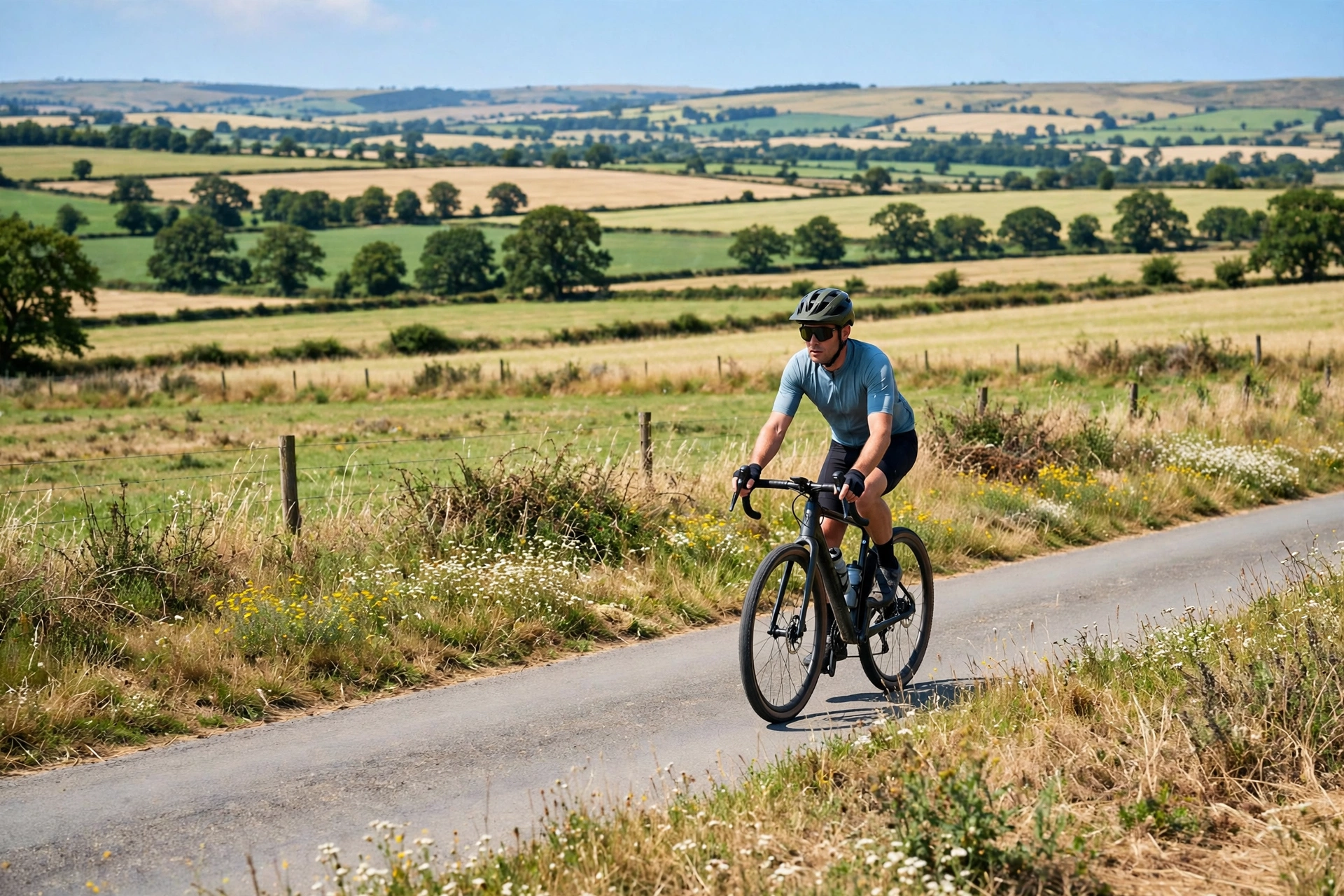
Yes, a helmet peak can help with sun protection — it shades your eyes and forehead from direct sunlight, cuts glare, and keeps low sun out of your line of sight, though it does not replace sunscreen or sunglasses for full sun protection. A peak, also called a visor on some helmets, is the small brim that sticks out over the front of the helmet. It was first popular on mountain bike and off-road helmets, but it now appears on many cycling, commuting, and motorcycle helmets too. For riders who spend long hours in bright sun, that small shade can make a real difference to comfort and visibility.
This guide explains, in general terms, how a peak helps, where its limits lie, how it compares with a visor and sunglasses, and how to choose and adjust one. It is written for cyclists and motorcyclists who ride in sunny conditions and want to know whether a peak is worth having.
How Does a Helmet Peak Protect You From the Sun?
A peak works in a simple way: it blocks sunlight coming from above and ahead before it reaches your eyes. When the sun is high, the peak casts a small shadow over your forehead and the top of your face, which reduces squinting and eye strain. When the sun is low, in the morning or late afternoon, the peak can block the direct glare that makes it hard to see the road, traffic lights, and other riders.
That shade also helps with heat. Direct sun on the forehead can feel hot and tiring on a long ride, and a peak gives that area a little relief. It does not cool the whole head, and it does not replace ventilation, but riders often notice that their eyes feel less tired and their face feels less exposed with a peak in place.
What Are the Limits of a Peak for Sun Protection?
A peak shades a narrow strip — your eyes and forehead — and it does not protect the rest of your face, your ears, or your neck. Sunlight reflected from the road, from water, or from light-coloured surfaces can still reach your face from below and from the sides. That is why a peak alone is not full sun protection, and why riders in strong sun still need sunscreen on exposed skin and, ideally, sunglasses.
The angle of the sun matters too. A peak works best when the sun is in front of you and above you. When the sun is behind you, to the side, or very low on the horizon, the peak may shade little or nothing. At those times, sunglasses and a visor do more of the work. A peak is a helpful layer of shade, not a complete solution.
Peak, Visor, or Sunglasses: Which Helps Most?
A peak, a visor, and sunglasses all deal with sunlight in different ways, and they work best together. A visor is a clear or tinted shield that covers the eyes and part of the face, and it protects against wind, dust, and insects as well as sun. A peak shades from above but leaves the eyes open to wind and dust. Sunglasses protect the eyes directly, reduce glare, and shield the skin around the eyes, but they do not shade the forehead.
For many riders, the best combination is a peak plus sunglasses. The peak handles overhead sun and glare from above, while the sunglasses handle reflected light and side sun. That pairing is common among mountain bikers and commuters, who ride in changing light and want flexible protection they can adjust during the ride.
Some helmets offer a built-in sun visor that drops down inside the helmet, which is another option worth considering. It gives shade without the wind-catching shape of an external peak, and it can be flipped up when you ride into shade. If you are learning about how helmets handle different kinds of impact, reading about what MIPS is for helmets can help you understand one of the technologies used in modern helmet design.
How Do I Choose a Peak for My Helmet?
Start by checking whether your helmet is designed to take a peak. Many mountain bike and trail helmets come with one fitted, or with mounting points for an optional peak. Road helmets often do not, because their smooth shape is built for speed and ventilation. If your helmet has no mounting points, do not try to glue or bolt a peak on yourself, because that can damage the shell and affect how the helmet performs.
Look for a peak that is wide enough to shade your eyes but not so long that it blocks your view when you look up or ride in a low, forward position. A peak that is too long can cut into your field of vision on climbs or when you tuck down, which is both annoying and unsafe. Most peaks are adjustable, so you can tilt them up or down to suit the sun and your riding position.
Material matters too. A light, flexible peak is less likely to catch the wind and more forgiving if it brushes a branch. A stiff, heavy peak may feel solid but can transmit more force to the helmet in a knock. In general terms, a peak that is designed for your helmet model, fits its mounts properly, and can be adjusted easily is the safest choice.
How Should I Adjust and Look After a Helmet Peak?
Adjust the peak before you ride, not while you are moving. Tilt it down a little when the sun is low and ahead of you, and tilt it up when you are climbing, riding in shade, or need a wider view. A small change in angle can make a big difference to how much shade you get, so take a moment to find the position that works for the light on that day.
If the peak is cracked, bent, or missing a fixing, replace it rather than riding with it loose. A damaged peak may not stay in place, and a loose part near your face is a hazard. Spare peaks are usually inexpensive and easy to fit, and replacing one is a quick job that keeps your helmet working as it should.
Frequently Asked Questions
Q: Does a helmet peak replace sunglasses?
A: No. A peak shades your forehead and eyes from overhead sun, but it does not block reflected light or side sun. Sunglasses protect your eyes directly, so the two work best together on bright days.
Q: Can I add a peak to any helmet?
A: Not every helmet is made for one. Check whether your model has mounting points or an optional peak from the same maker. Do not glue or bolt a peak onto a helmet that was not designed for it, as that can damage the shell.
Q: Will a peak slow me down?
A: In general terms, a peak adds a small amount of wind resistance, which most riders barely notice at normal cycling speeds. At higher speeds, or on a fast road ride, a large peak may catch more wind, so some riders prefer a smaller peak or none at all.

Olivia
Writer at Helmet Today, covering helmet reviews, fit and riding safety.