Yes, changing your helmet liners for spring riding is a sensible seasonal step — a lighter, fresher liner suits warmer weather, while a thick winter liner can leave you hot, sweaty, and uncomfortable on a spring ride. Spring brings milder temperatures, longer days, and changeable weather, so the liner that kept you warm through winter may no longer match the conditions. Swapping to a lighter liner, or simply cleaning and refreshing the one you have, can make your helmet feel cooler and more comfortable without changing the helmet itself.
Many helmets come with removable liners and cheek pads that can be taken out, washed, and replaced. Some riders keep a spare set so they can rotate between a warm winter set and a cooler spring set. This guide explains, in general terms, when a liner change makes sense, how to choose a lighter option, how to swap liners safely, and how to look after them through the season.
Why Does Spring Riding Call for a Different Liner?
Winter liners are usually made to insulate. They are thicker, softer, and sometimes lined with fleece-style material that traps warm air around your head and ears. That is helpful on a cold morning in January, but in spring the same thickness can trap heat and sweat. A helmet that felt cosy in winter can start to feel stuffy as temperatures rise, and a sweaty liner can become uncomfortable and unpleasant over a longer ride.
Spring weather also changes during the day. A morning ride may start cool and finish warm, so ventilation matters more than insulation. A lighter liner allows air to move through the helmet more freely, which helps keep your head cooler as the day warms up. In general terms, if you finish spring rides with a damp liner, a hot head, or pressure marks from swollen padding, your winter liner is probably working against you.
How Do I Know If My Helmet Liner Can Be Changed?
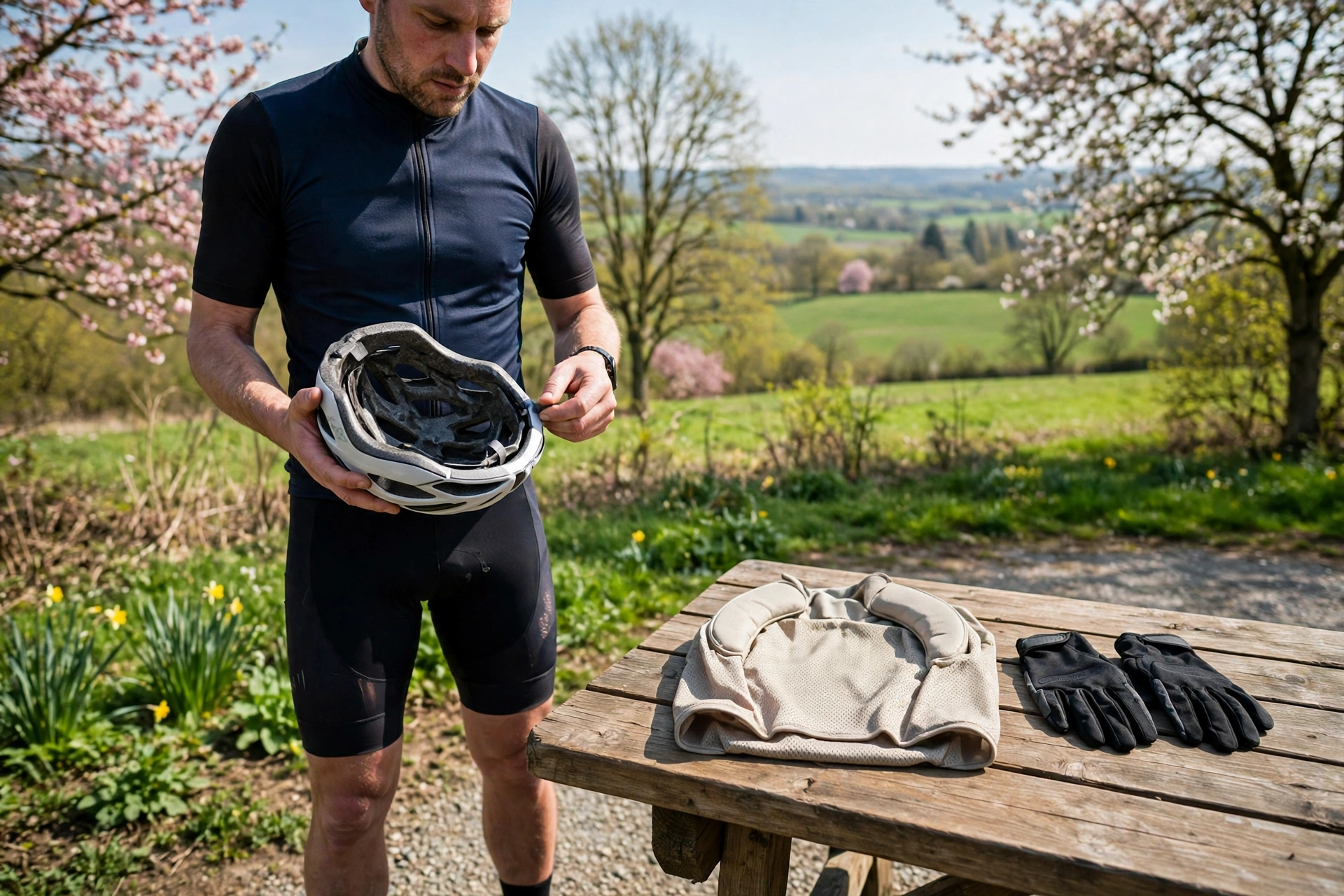
Most modern helmets have removable liners, but not all do. Check inside your helmet for press studs, hook-and-loop fasteners, or small plastic clips holding the liner in place. If the padding peels away gently from the shell, it is designed to be removed. Your helmet manual, if you still have it, should confirm this and show where each piece attaches. If the liner is glued in place and does not move, it is probably a fixed liner, and you should not try to force it out.
Some helmets use a two-part system, with a crown liner at the top and separate cheek pads at the sides. Others use a single liner that covers the inside. In either case, take a photo before you remove anything, so you can see how each piece sits and which way round it goes. That simple step makes refitting much easier, especially the first time you do it. If you are learning about how helmets handle different kinds of impact, reading about what MIPS is for helmets can help you understand one of the technologies used in modern helmet design.
It is also worth checking whether your helmet maker sells spare liners. Many do, in different thicknesses, and a spare set lets you wash one while wearing the other. If a spare liner is not available for your model, a thorough wash of your existing liner may be the better spring refresh, rather than trying to fit a liner made for a different helmet.
What Kind of Liner Works Best in Spring?
A good spring liner is thinner, lighter, and more breathable than a winter one. Look for open, mesh-style material that lets air pass through, and moisture-wicking fabric that draws sweat away from your skin rather than holding it against your head. These features help your helmet vent properly, which is the main benefit of changing liners as the weather warms up.
Fit matters just as much as fabric. A spring liner should hold the helmet snugly on your head without squeezing. If a liner is too thin, the helmet may feel loose or move when you shake your head gently. If it is too thick, you are back to the stuffy feeling you were trying to avoid. Try the helmet on after fitting the new liner and wear it around the house for a few minutes before your first ride, so you can check for pressure points or movement.
Some riders keep the same liner all year and simply wash it more often in spring. That can work well, especially if your helmet already vents well and the liner is not very thick. The right choice depends on your helmet, how warm you run when riding, and how much your local spring weather varies. There is no single liner that suits every rider, so comfort and fit should guide your decision.
How Do I Swap a Helmet Liner Without Damaging It?
Start with clean, dry hands and a clear surface. Work gently, unclipping or peeling one section at a time rather than pulling the whole liner out in one tug. The fasteners are small and can break if forced, so take your time and feel for each attachment point. If a section resists, stop and look for a hidden clip or stud rather than pulling harder.
When fitting the new liner, line it up with the shell before pressing it into place. Start at the front, work towards the back, and check that each stud or fastener clicks or sits flat. Make sure the liner is not twisted or bunched, because a fold can create a pressure point on a ride. Once it is fitted, put the helmet on and check that it sits level, feels even around your head, and does not press hard on your forehead or ears.
How Should I Clean and Care for Helmet Liners in Spring?
Spring is a good time to wash your liners, because sweat and road grime build up over winter. Most removable liners can be hand-washed in lukewarm water with a small amount of mild soap. Gently squeeze the padding rather than wringing it, then rinse it well so no soap is left behind. Avoid harsh detergents, bleach, or strong cleaners, which can damage the fabric and the foam underneath.
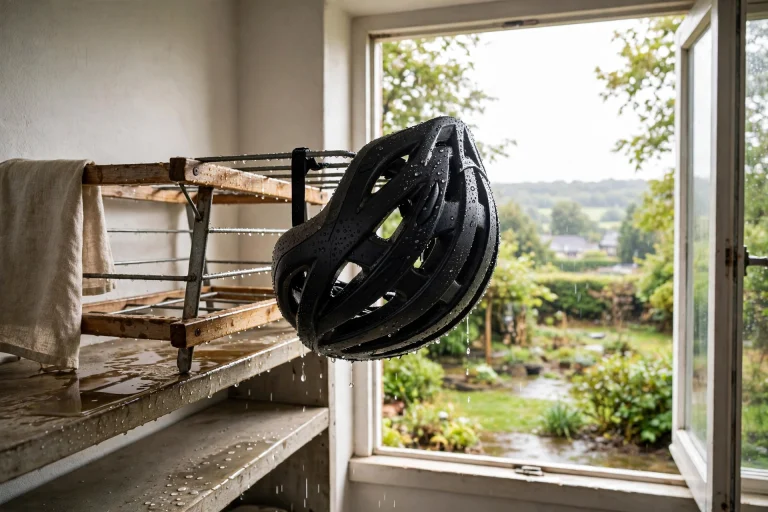
Let liners dry naturally, away from radiators, hair dryers, and direct sunlight. Press them gently in a towel to remove extra water, then leave them in a well-ventilated room until they are fully dry. A liner that is still damp when you put it back can smell unpleasant and may feel cold and clammy on your next ride. In general terms, a liner should be completely dry before you refit it.
Frequently Asked Questions
Q: Do I need a different liner for spring riding?
A: Not always, but many riders find a lighter, more breathable liner more comfortable in spring. If your winter liner leaves you hot and sweaty, a thinner liner or a fresh wash of your existing liner can help.
Q: Can I wash my helmet liner in a washing machine?
A: In general terms, hand-washing is the safer choice. Check your helmet manual first, because some liners can be machine-washed on a gentle cycle while others should only be hand-washed. Always let liners dry naturally.
Q: Will a thinner spring liner change how my helmet fits?
A: It can, so check the fit after swapping. The helmet should still sit snugly and level without moving when you shake your head. If it feels loose, the liner may be too thin for your helmet, and you should refit the original or try a different thickness.

Olivia
Writer at Helmet Today, covering helmet reviews, fit and riding safety.