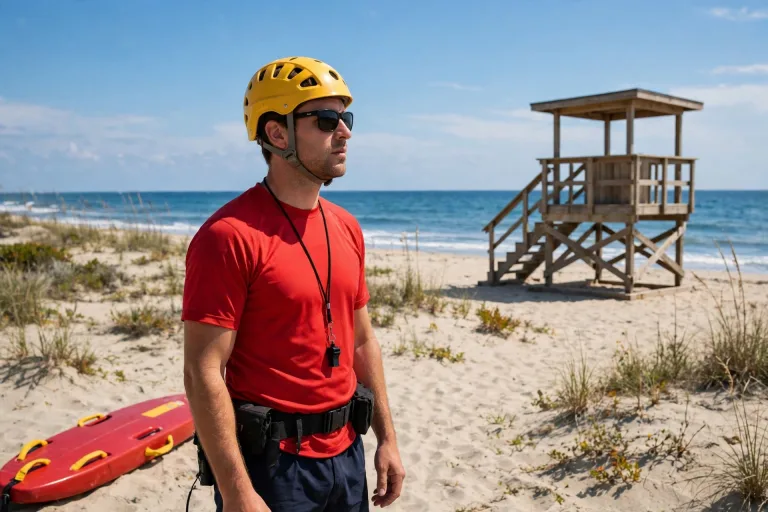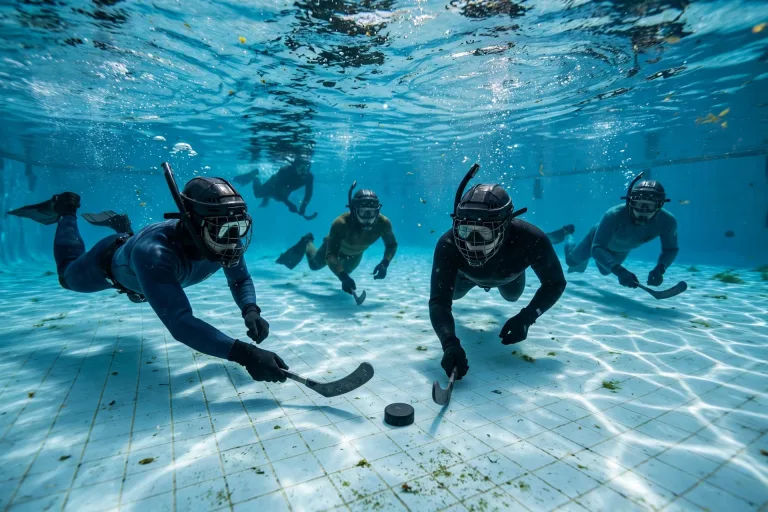
Most scuba divers do not wear helmets, because a standard scuba mask, regulator, and wetsuit hood already cover the head, and a helmet would get in the way of the mask and the air supply. In general terms, helmets are used only in special kinds of diving, such as commercial diving, cave diving, and some technical dives, where the diver works in tight spaces, around structures, or under an overhead ceiling. For ordinary recreational diving, a helmet is not part of the kit.
The question comes up because helmets are common in so many other sports, and because the underwater world can look risky, with rocks, wrecks, and strong currents. But scuba diving is different from most helmet sports: the diver moves slowly, the water cushions movement, and the head is already protected by the mask strap and hood. The risks that a helmet would guard against are simply less common in open-water recreational diving than they are on a bike or on a horse.
Why don’t recreational scuba divers wear helmets?
Recreational divers do not wear helmets mainly because there is little for a helmet to protect against in open water. A diver swims in open space, well away from hard surfaces, and the slow, floating movement of diving means that head impacts are rare. A mask and a hood already cover the head and ears, and they do the job that a helmet would do in a low-risk setting, without adding weight or bulk.
A helmet would also create practical problems underwater. It would make it harder to fit a mask properly, it could interfere with the regulator in the mouth, and it would add drag in the water, which makes swimming harder and uses up air faster. In general terms, dive gear is kept as simple and streamlined as possible, and a helmet that adds bulk without adding much safety is left out of the kit.
When do divers wear helmets?
Divers do wear helmets in some kinds of diving where the head is at real risk. Commercial divers, who work on underwater structures, pipelines, and harbour walls, often wear heavy diving helmets that are part of a surface-supplied air system. These helmets protect the head from knocks against metal and concrete, and they also carry the air supply, the communications gear, and sometimes a light.
Cave divers and wreck divers may also wear light helmets, usually simple, close-fitting shells. In a cave or inside a wreck, the diver swims through narrow passages with rock or metal close overhead, and a bump on the head can damage the mask or dislodge the regulator. In general terms, a helmet is used when the dive takes place in a confined space with hard surfaces overhead, rather than in open water.
What kind of helmet do divers use?
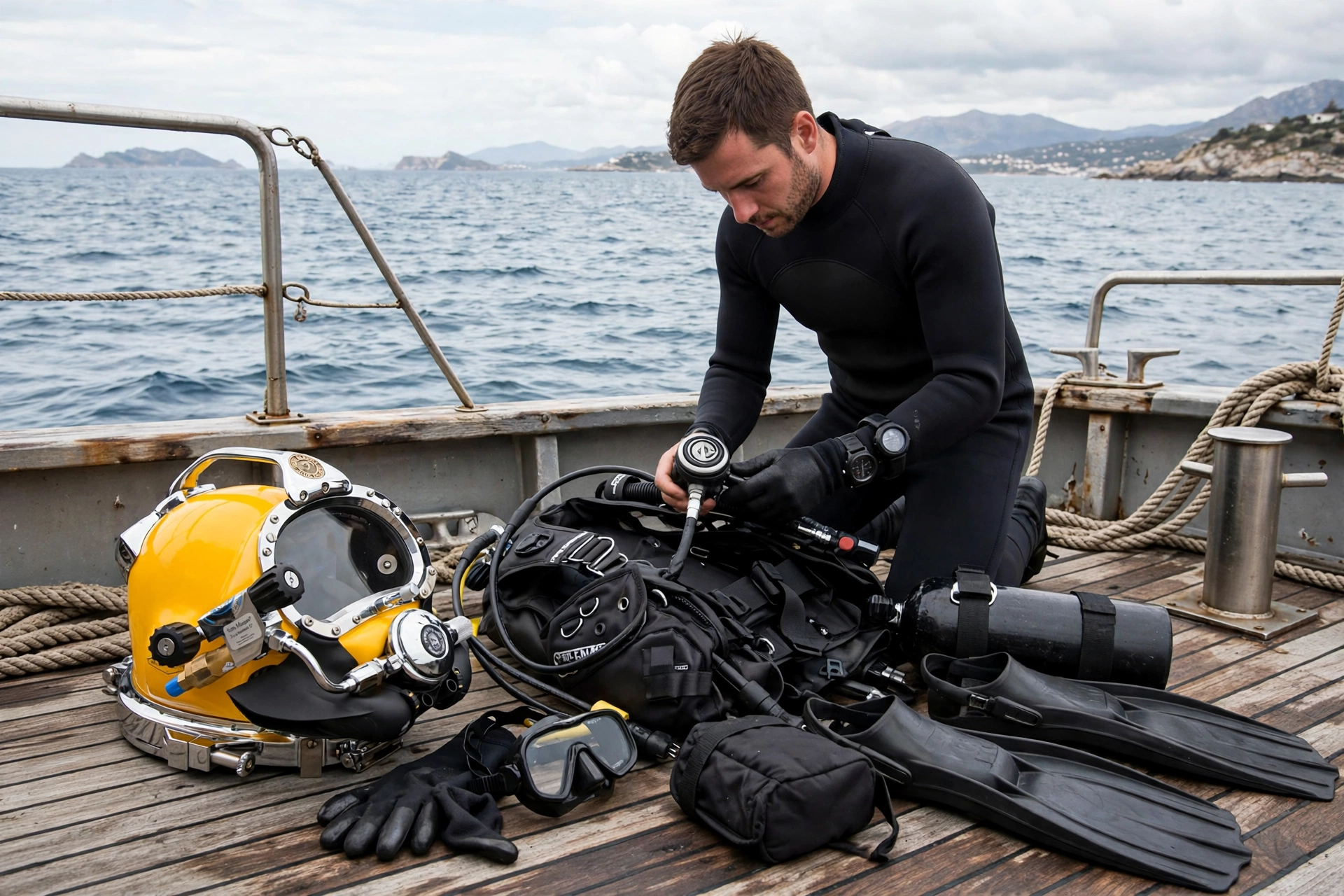
The helmets used in diving are very different from the helmets used on land. A commercial diving helmet is a large, sealed unit that covers the whole head, with a faceplate, an air inlet, and an exhaust valve, and it is connected to an air supply on the surface. It is heavy, expensive, and it needs training and support equipment to use safely, so it is not something a recreational diver would ever wear.
Cave and wreck divers use much simpler helmets, often similar to a light climbing or caving helmet, with a hard shell and a snug fit. These helmets are chosen because they fit under a hood, they do not interfere with the mask, and they protect the top and sides of the head from scrapes. Some divers also attach a small light to the helmet, which keeps their hands free in a dark cave or wreck.
Could a helmet help a recreational diver?
For most recreational divers, a helmet would add little safety and a fair amount of hassle. The main head risks in recreational diving are bumps when getting in and out of the water, for example on a boat ladder or a rocky shore entry, and these are better handled by careful entries and exits than by a helmet. Once underwater, the diver is in open water, and the mask, hood, and slow movement give enough protection.
There are exceptions, and some divers do choose a light helmet for particular dives. A diver exploring a shallow reef with low rock overhangs, or a diver taking part in an underwater clean-up around a pier, may find a light helmet reassuring. In general terms, the decision depends on the dive site: if the dive involves swimming under or through hard structures, a helmet is worth considering, and the dive operator or guide can advise on what is normal for that site.
What should a diver wear on their head instead?
For most dives, a wetsuit hood is the standard head covering. It keeps the head warm, it protects the ears and the scalp from sun and small scrapes, and it fits neatly under the mask strap. In warm water, some divers wear no hood at all, and just rely on the mask. Either way, the head is covered well enough for the conditions, and the diver can hear and move freely.
Good dive habits matter more than extra gear. A diver should enter the water carefully, keep a safe distance from rocks and structures, and watch where their head is in relation to the reef or wreck. Dive helmets for specialist work are tested for their own use, and some land helmets include a system designed to reduce rotational forces in a fall, such as MIPS, but that feature belongs to land sports, and it is not what makes a dive helmet work. For diving, the right headgear is the one that suits the dive you are actually doing.
Do scuba divers wear helmets?
Most recreational scuba divers do not wear helmets. Helmets are used mainly in commercial diving and in some cave and wreck diving, where the diver works in tight spaces with hard surfaces overhead.
Is a helmet needed for cave diving?
In general terms, many cave divers do wear a light helmet, because caves have low rock ceilings and narrow passages where a bump on the head could damage a mask or dislodge a regulator.
Can I wear a helmet while scuba diving?
You can, if the dive calls for it and the helmet fits with your mask and regulator, but for ordinary open-water diving it is not needed, and most dive operators do not expect divers to wear one.

Olivia
Writer at Helmet Today, covering helmet reviews, fit and riding safety.