A bandy helmet is a protective helmet worn for bandy, the fast ice sport played with a ball and curved sticks on a large ice rink, similar in spirit to ice hockey but played on a football-sized field with eleven players per side. The helmet protects the head from the ball, sticks, falls on the ice and collisions with other players during a fast, physical game.
Bandy is popular in Russia, Sweden, Finland, Kazakhstan and several other countries, and it is one of the fastest team sports on ice. Players skate at high speed, pass a small ball with curved sticks, and shoot at a large goal. This guide explains what kind of helmet bandy players wear, why it matters, and what to look for when you choose one.
What Is Bandy?
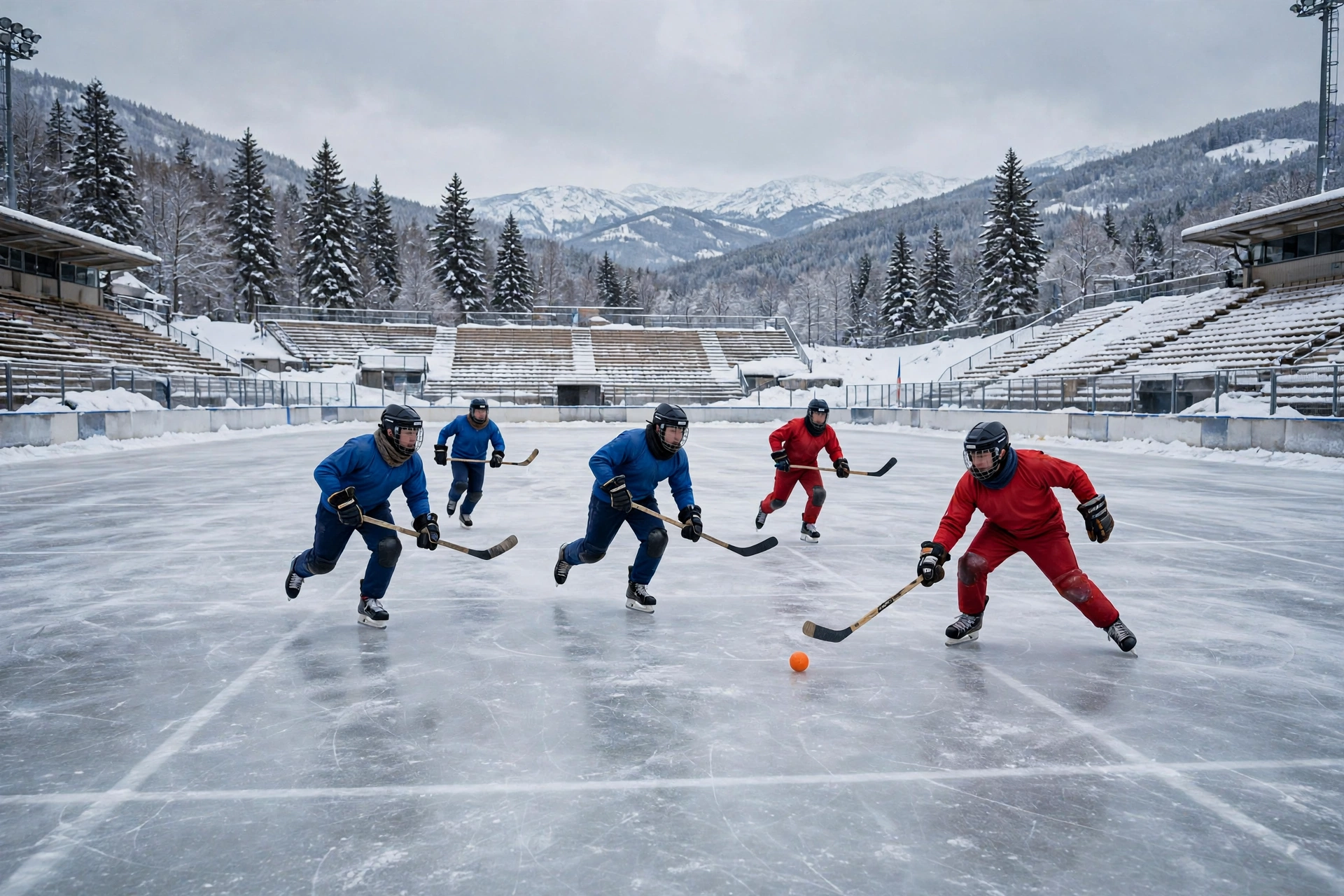
Bandy is an ice sport played on a rink about the size of a football pitch, with eleven players per side including a goalkeeper. Players wear skates and use curved sticks to hit a small ball, passing it up the ice and shooting at a goal that is much larger than an ice hockey goal. The game is played in two halves, and the ball can move very quickly across the ice.
What Kind of Helmet Do Bandy Players Wear?
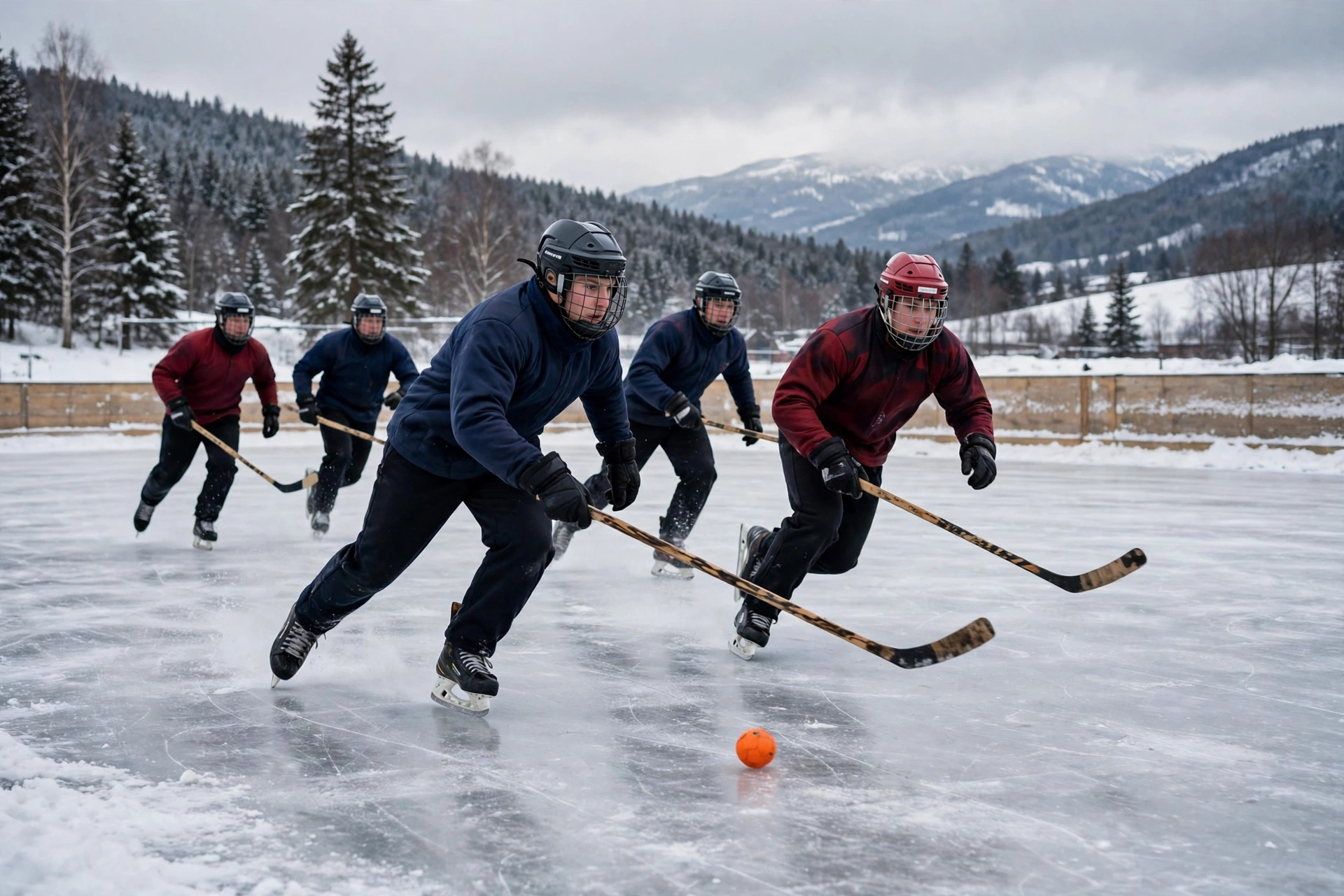
Bandy players wear a helmet similar to an ice hockey helmet, with a hard shell, padding inside and a secure chin strap. The helmet covers the top, sides and back of the head, and it is made to protect against impacts from the ball, sticks, the ice and other players. Many bandy helmets have a face guard or a visor, which protects the face from the ball and from sticks.
The face protection is an important part of the helmet. In bandy, the ball is small and hard and can be lifted into the air, so a player can be hit in the face by a shot or a deflection. A cage or visor reduces that risk, and many players, especially younger ones, wear full face protection. Goalkeepers often wear a helmet with a full face guard, similar to an ice hockey goalie mask, because they face shots at close range.
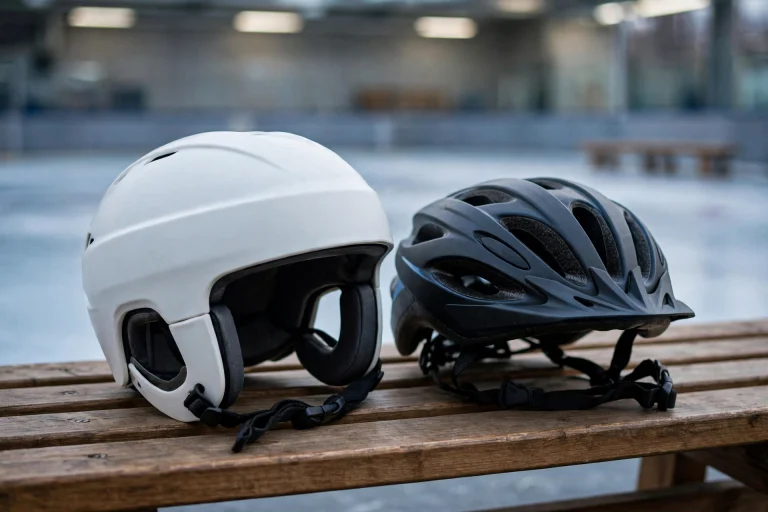
In general terms, a bandy helmet is not the same as a ski helmet or a bike helmet. It is made for the specific risks of an ice team sport, with a shape and a face guard that suit the game. A helmet made for another sport may not give the right protection or fit with the face guard a bandy player needs.
Why Is a Helmet Important in Bandy?
A helmet is important in bandy because the ball is small, hard and fast. A shot at goal can travel quickly across the ice, and a deflection can send the ball in an unexpected direction. A player who is hit in the head by the ball can be seriously hurt, and a helmet with face protection reduces that risk. Sticks are another hazard, as a raised stick can catch a player in the head during a challenge for the ball.
Falls on the ice are also a risk. Bandy players skate at speed and change direction quickly, and a player who is tripped or who loses balance can fall hard onto the ice. The ice is unforgiving, and a fall onto the back of the head can cause a serious injury. A helmet protects the head in that kind of fall, and the chin strap keeps it in place.
Collisions with other players are a third risk. Players challenge for the ball, block shots and compete for position, and two players can collide at speed. A helmet will not prevent a collision, but it can reduce the harm if the head is involved. In general terms, a helmet is part of the standard kit for bandy, and many leagues and clubs require players to wear one.
What Should You Look for in a Bandy Helmet?
Fit comes first. The helmet should sit level, feel snug all round, and stay put when you shake your head. It should not press hard on your forehead or temples, and the chin strap should fasten securely under your chin. Try the helmet on with any face guard or visor you plan to use, because the combination needs to work together and give a clear view of the ice.
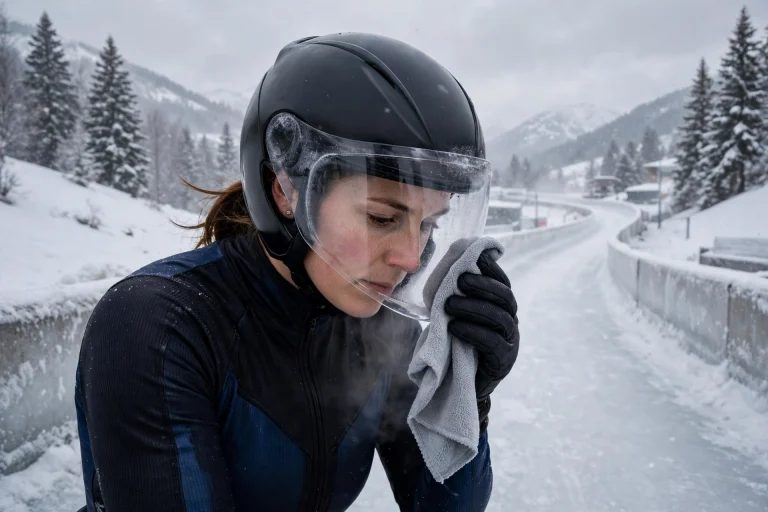
Next, look at the face protection. A cage gives strong protection and good airflow, while a visor gives a clearer view but can fog up in cold weather. Some players prefer a combination of the two. The face protection should attach securely to the helmet, sit comfortably in front of your face, and not block your view of the ball or the players around you.
Finally, check the padding and the strap. The padding should be comfortable and, if possible, removable for washing, because bandy is played in cold weather and the helmet will pick up sweat. The strap should be easy to fasten with gloves on. If you want to understand one of the technologies used in modern helmets, reading about what MIPS is for helmets can help you compare different models before you buy.
How Do You Fit and Care for a Bandy Helmet?
Measure your head around the widest part, just above your eyebrows and ears, and use the maker’s size guide as a starting point. Try the helmet on and adjust the fit system until it feels snug but not tight. Fasten the chin strap so that two fingers fit snugly between the strap and your chin, and check that the helmet does not rock forward or back when you move your head.
Test the fit with your face guard or visor attached, and with the gloves you play in, so the fit you test is the fit you will play in. A helmet that fits in the shop but feels loose once the face guard is on is not the right helmet. If the helmet moves easily, try a smaller size or a different brand, because head shapes vary.
After a game, wipe the shell with a damp cloth, remove the pads if you can, and let the helmet dry in the open air away from direct heat. Wash the pads now and then following the maker’s guidance. Store the helmet in a cool, dry place out of strong sunlight, and replace it after a hard impact, even if the shell looks fine, because the liner inside can be damaged in ways you cannot see.
Frequently Asked Questions
Q: Do bandy players have to wear a helmet?
A: In general terms, yes. Helmets are standard in bandy, and many leagues and clubs require them. The ball, sticks and falls on the ice make head protection important for every player.
Q: Can I use an ice hockey helmet for bandy?
A: In general terms, yes. An ice hockey helmet is very similar to a bandy helmet and is often used for bandy. Check that it fits well with the face protection you need for the game.
Q: Do bandy goalkeepers wear a different helmet?
A: In general terms, yes. Bandy goalkeepers often wear a helmet with a full face guard, similar to an ice hockey goalie mask, because they face hard shots at close range.

Olivia
Writer at Helmet Today, covering helmet reviews, fit and riding safety.