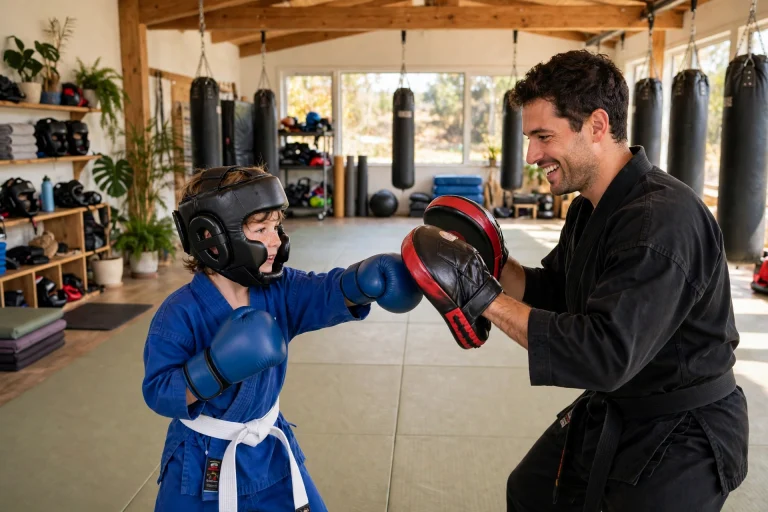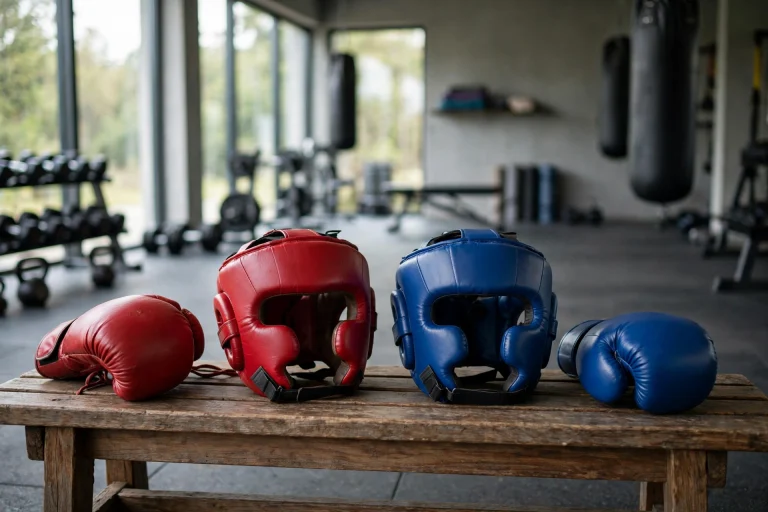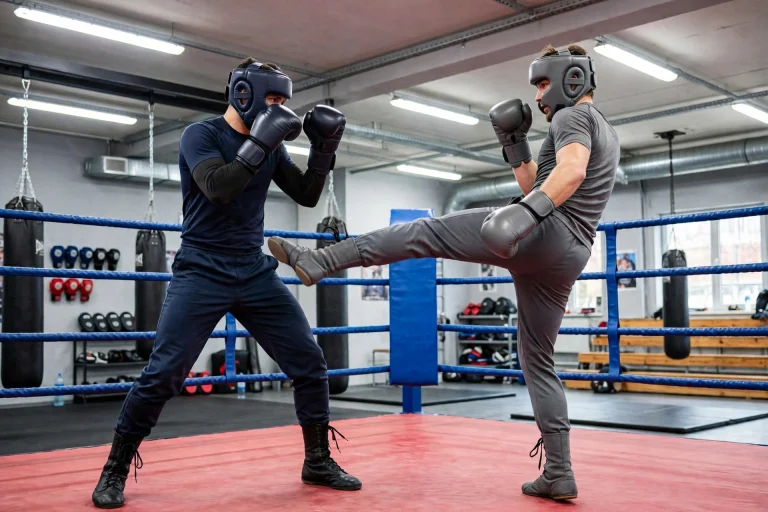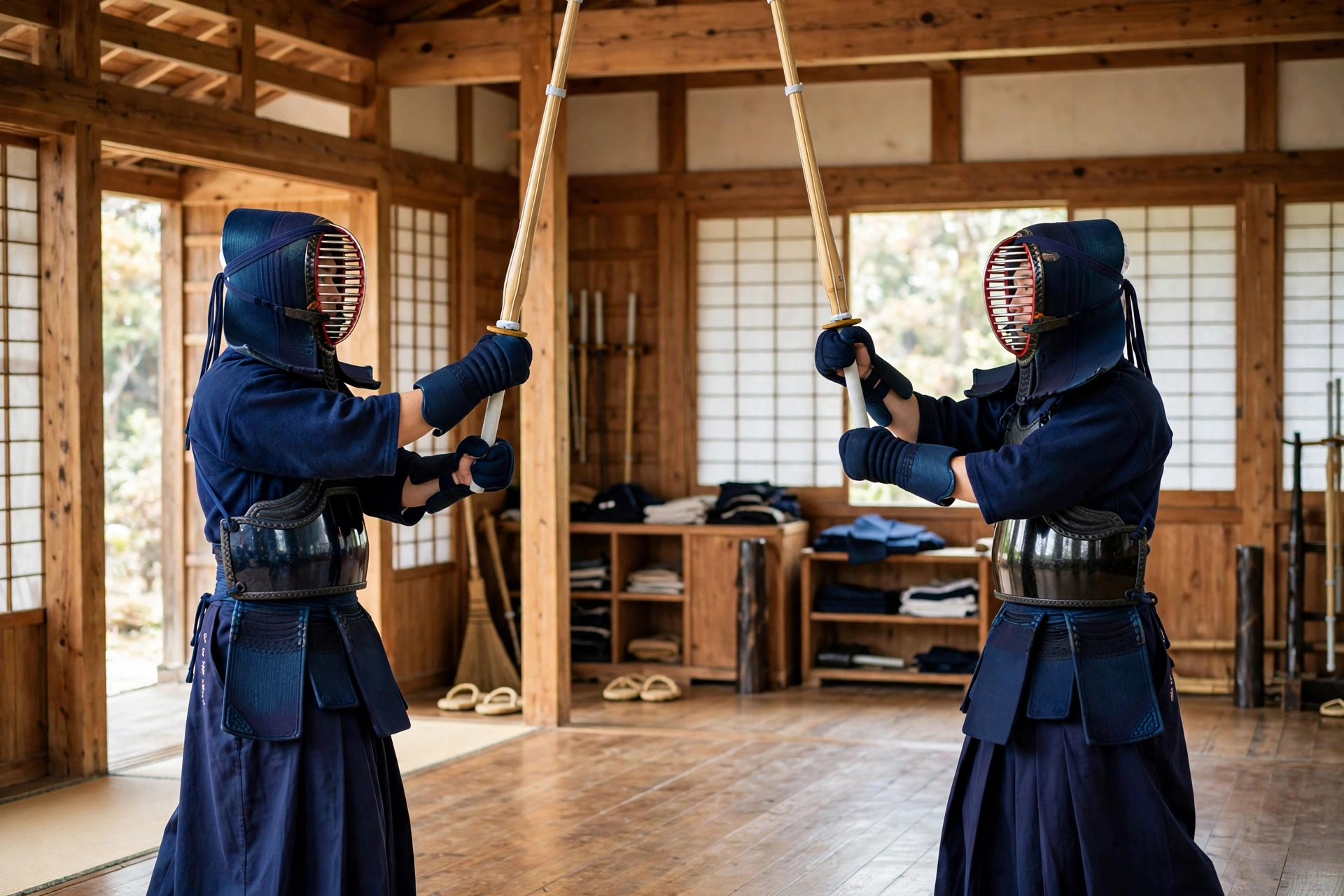
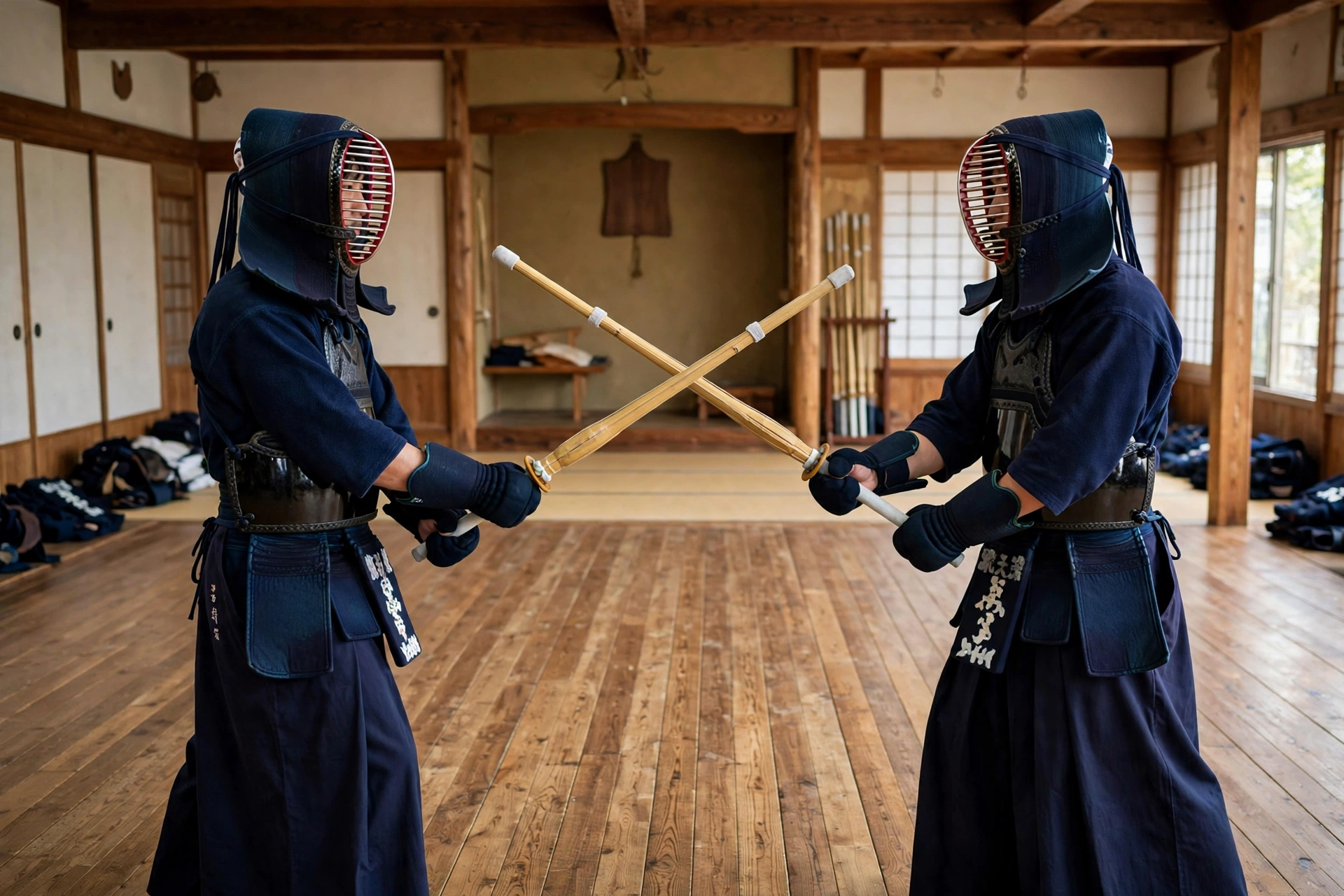
The men is the padded headgear worn in kendo, the Japanese martial art of fencing with bamboo swords — it is a thick, quilted helmet that covers the whole head, face, and throat. Unlike the soft head guards used in boxing or kickboxing, the men is a rigid, structured piece of protective equipment, built from layers of cotton padding and a metal grille over the face. It is part of the bogu, the set of armour worn for kendo practice and matches, and it is worn every time kendo practitioners spar with shinai, the bamboo practice swords.
Kendo is a striking art: practitioners score points by hitting the head, wrists, body, and throat with the shinai. That means the head is a direct target in every exchange, so the men has to absorb fast, repeated strikes without letting the wearer be hurt. This guide explains what the men is, what it is made of, how it protects the head, and how to fit and care for one.
What Is the Men in Kendo?
The men is the head protector of the bogu, the four-piece armour set used in kendo. The other pieces are the kote, which protect the hands and forearms, the do, which protects the torso, and the tare, which protects the waist and hips. The men is the most complex piece of the set, because it has to protect the head, face, ears, and throat while still letting the wearer see, breathe, and hear.
From the outside, the men looks like a padded hood with a metal face grille. The top and sides are made of thick quilted cotton, often in dark blue, with a padded flap that hangs down to cover the throat. The face is covered by a metal grille called the mengane, made of horizontal and vertical bars that stop the shinai while leaving gaps to see and breathe through. The whole piece fastens with cords, known as himo, that tie at the back and under the chin.
What Is the Men Made Of?
The body of the men is made from layers of cotton padding, stitched in a quilted pattern that gives it both stiffness and flexibility. The padding is thickest over the crown and the sides of the head, where strikes land, and it is shaped to hold its form rather than collapsing flat. Higher-quality men use hand-stitched padding with many small stitches, which keeps the layers in place and makes the piece last longer.
The face grille, the mengane, is made from metal bars, usually steel or a lighter alloy in modern designs. The bars run horizontally across the face, with vertical bars crossing them, forming a grid that is strong enough to stop a shinai strike while leaving enough open space to see through. The grille is shaped to sit away from the face, so a strike that hits the bars does not press them into the nose or cheeks.
How Does the Men Protect the Head?
The men protects the head in two ways: the padding absorbs the force of a strike, and the rigid shape spreads that force over a wide area. When a shinai hits the top of the men, the quilted layers compress slightly and slow the blow, while the stiff structure of the piece stops the force from concentrating on one small spot. The grille works the same way for the face: the bars spread the impact across the frame instead of letting it reach the skin.
The throat flap is just as important. A strike to the throat, called a tsuki, is a valid scoring technique in kendo, and the padded flap is designed to absorb it. Without the flap, even a controlled thrust could cause serious harm, so the tsuki is one of the first things a kendo practitioner learns to respect. The flap hangs loosely so it moves with the head, but it is thick enough to take the force of a direct hit.
How Should a Men Fit?
A men should fit snugly around the head without pressing hard on the forehead or temples. When it is tied on, it should sit level, with the top of the grille in line with the eyes so the wearer can see straight ahead through the bars. If the men sits too low, the grille blocks the view; if it sits too high, the throat flap pulls up and leaves the neck exposed. The fit is adjusted with the cords: the top cords tie at the back of the head, and the chin cords tie under the jaw.
Sizing is usually given by head circumference, and the tenugui underneath adds a little bulk, so try the men on with the towel in place. If you are between sizes, a slightly larger men with careful cord adjustment is usually more comfortable than one that squeezes. A kendo supplier or your instructor can help with sizing, because the shape of the men varies between makers. If you are learning about how helmets handle different kinds of impact, reading about what MIPS is for helmets can help you understand one of the technologies used in modern helmet design.
How Do You Care for a Men?
The men picks up a lot of sweat, so air it out after every practice. Hang it in a well-ventilated place, away from direct sunlight, and let it dry fully before putting it away. The tenugui underneath absorbs most of the sweat and should be washed after each session, but the men itself should not be soaked or machine washed — water can damage the stitching and make the padding clump. Wipe the grille with a dry cloth to remove sweat and dust.
Check the cords regularly. The himo take a lot of strain, and a frayed cord can snap during practice, which leaves the men loose at the worst moment. Replace cords when they show wear, and keep a spare set in your kit bag. Check the stitching along the edges of the padding too: loose threads can be trimmed, but a seam that is coming apart should be repaired by a specialist or by the maker, because the structure of the men depends on the stitching holding the layers together.
Store the men on a shelf or on top of your bogu bag, not crushed under other gear. The shape matters: if the padding is flattened or the grille is bent, the men will not protect evenly. A good men, looked after properly, can last for many years of regular practice, and many practitioners keep the same one through years of training. Treat it as a piece of equipment that protects your head, and it will repay the care.
Frequently Asked Questions
Q: What is the men in kendo?
A: The men is the padded headgear of the kendo bogu armour — a quilted cotton helmet with a metal face grille and a throat flap, worn for all sparring with bamboo shinai.
Q: Can you see clearly through the men grille?
A: In general terms, yes. The metal bars are spaced to give a clear view of the opponent while still stopping a shinai, though it takes a little practice to get used to looking through them.
Q: Do beginners wear a men straight away?
A: In general terms, no. Beginners usually start with footwork and basic swings without armour, and the men is introduced once they are ready for paired practice and sparring.

Olivia
Writer at Helmet Today, covering helmet reviews, fit and riding safety.