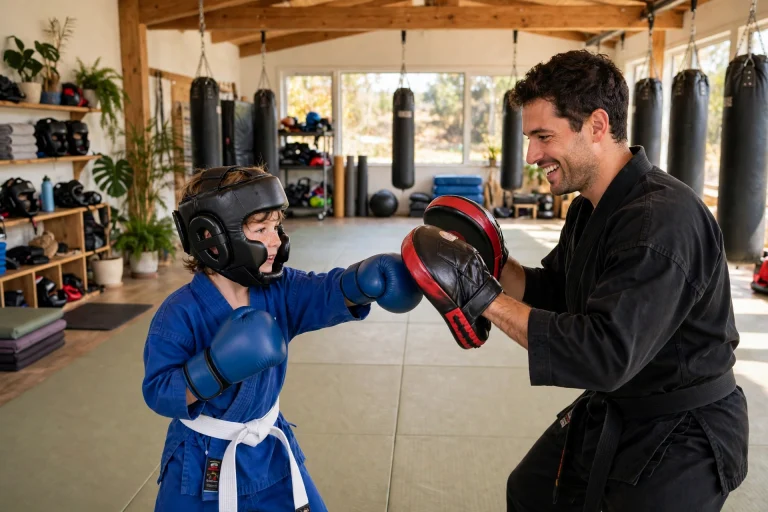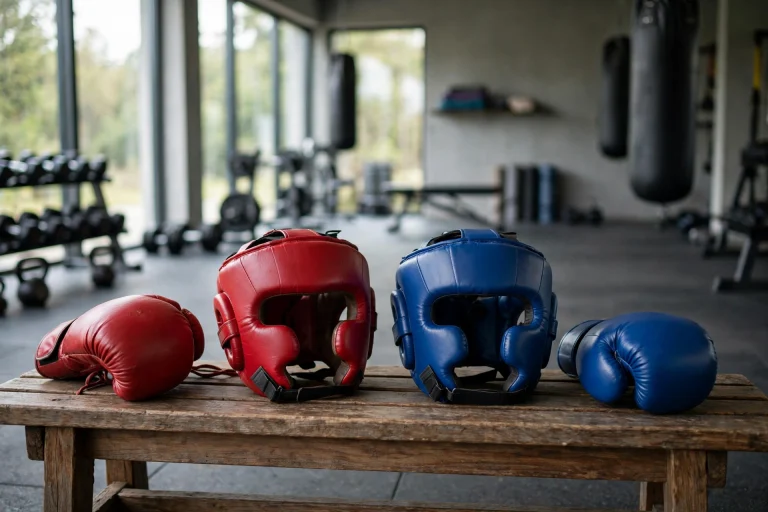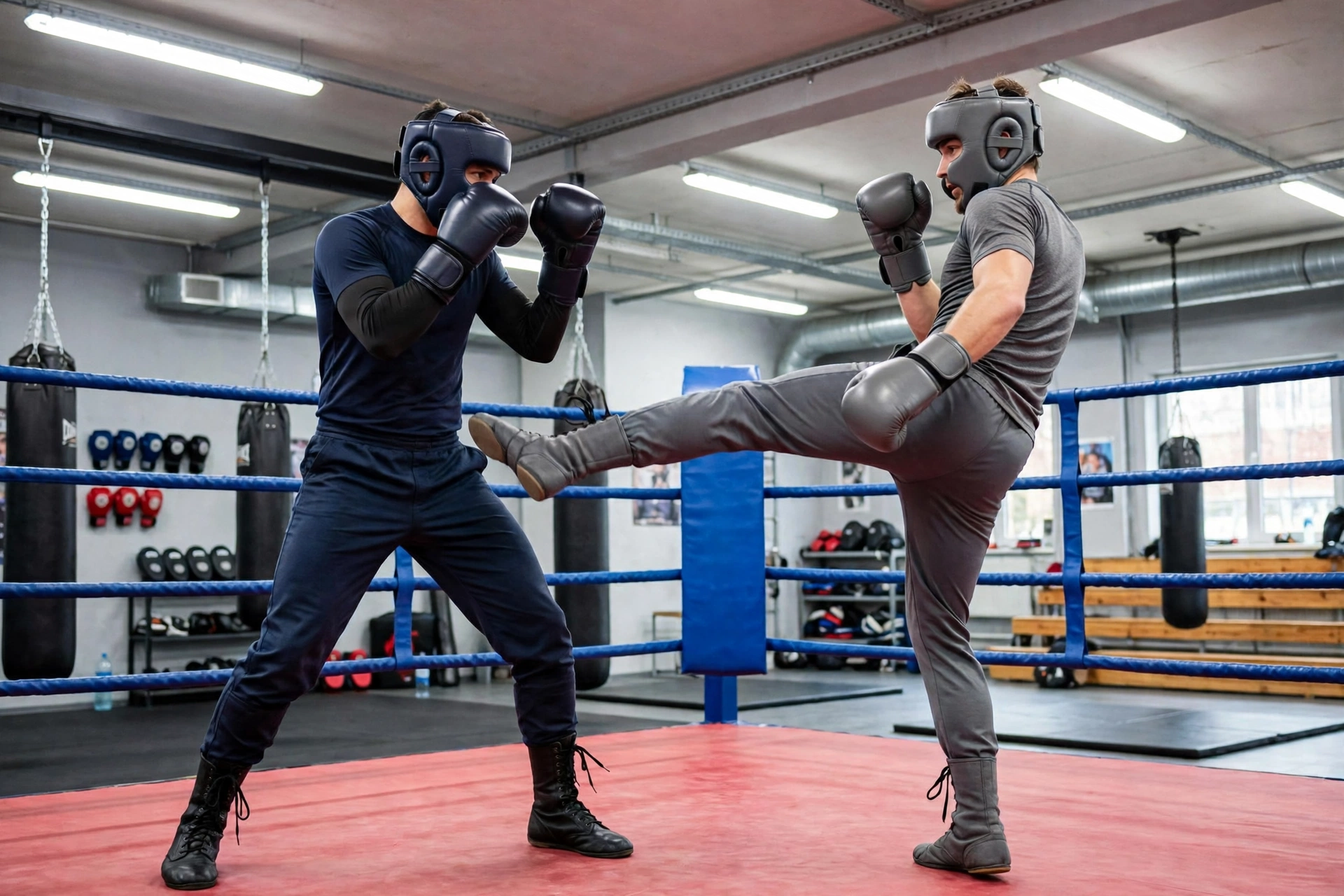
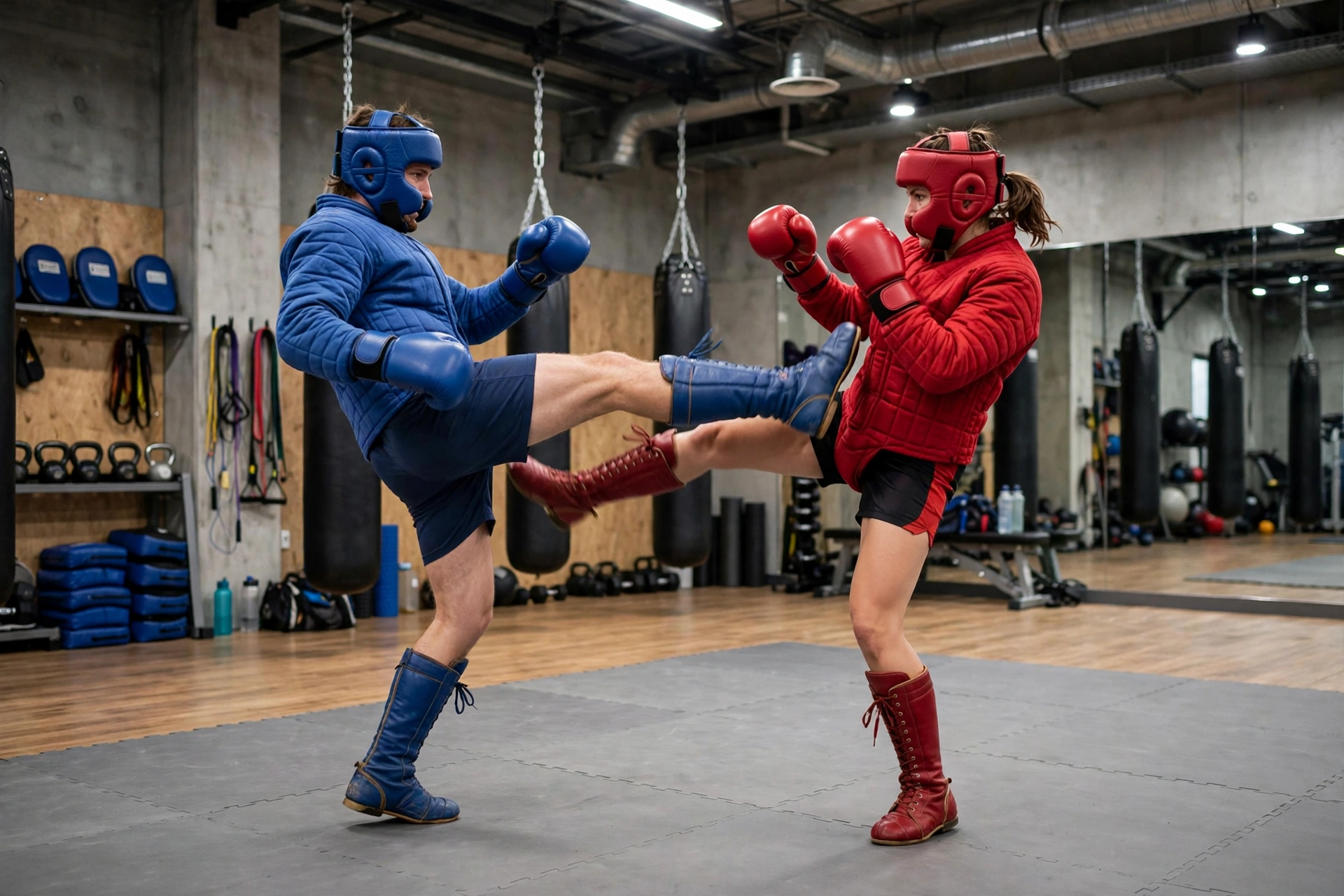
Savate headgear is padded protective gear worn during sparring in savate, the French kickboxing art that combines punches with kicks delivered in shoes — it protects the head from gloved punches and shoe strikes while keeping the face open. Savate, sometimes called French boxing, is fought in a ring with gloves and special boots, and the head is a target for both punches and kicks. Headgear is standard kit for training and for many amateur bouts, where it softens blows and protects the skin and ears.
Savate is less widely known than boxing or kickboxing, but its headgear follows the same principles: soft padding over the forehead, temples, cheeks, and ears, fastened with straps, designed to spread the force of a blow. The difference is in the details, because savate kicks arrive in shoes and the footwork is distinctive. This guide explains what savate headgear is, how it differs from boxing headgear, why it is worn, and what to look for when choosing a pair.
What Is Savate Headgear?
Savate headgear is a padded guard that wraps around the head and fastens under the chin, usually with Velcro straps or laces. It is made from synthetic leather or vinyl over layers of foam, with the thickest padding over the forehead, temples, and the back of the head. The face stays open, so the eyes, nose, and mouth are uncovered, and the wearer can see clearly and breathe freely during fast exchanges.
The design is close to a boxing head guard, but with a few differences that suit savate. Because savate kicks are delivered with the foot in a shoe, the padding around the temples and the top of the head is particularly important — a shoe kick that lands on the side of the head is a different kind of impact from a gloved punch. The guard also needs to cope with the upright, mobile stance of savate, where the head moves a lot and the guard must stay in place through constant footwork.
How Is Savate Headgear Different from Boxing Headgear?
The main difference is the coverage around the temples and the top of the head. Boxing headgear is built for punches, which arrive mostly from the front and the side at glove height, so the padding is concentrated on the forehead and cheeks. Savate headgear needs to handle kicks as well, which can arrive from higher angles and with the harder surface of a shoe, so the padding is spread more evenly around the head, including the crown and the back.
Weight and mobility differ too. Savate is a fast, mobile art, with constant movement, changes of angle, and long-range kicks. A heavy head guard would slow the athlete down and tire the neck, so savate guards tend to be lighter than the thickest boxing designs. The padding is firm rather than soft and bulky, which keeps the guard compact while still spreading the force of a blow. In general terms, a savate guard trades a little bulk for speed and freedom of movement.
Why Do Savate Practitioners Wear Headgear?
The main reason is to reduce the minor injuries that come with regular sparring. A padded guard spreads the force of a punch or a shoe kick over a wider area, which lowers the chance of a cut above the eyebrow, a bruised cheekbone, or a swollen ear. The ears are especially vulnerable in savate, because the side of the head is a target for roundhouse kicks, and a guard with ear coverage helps prevent the friction and knocks that cause sore, swollen ears over time.
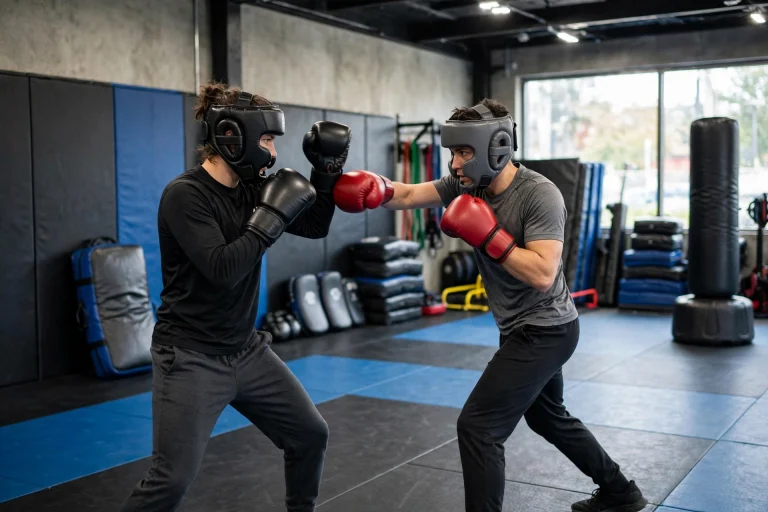
Headgear also gives training partners confidence. When both people in a sparring round wear headgear, they can practise combinations, footwork, and defence at a realistic pace without worrying that every light contact will leave a mark. That confidence matters for learning: athletes who are afraid of getting hurt tend to freeze or flinch, which slows their progress. A guard does not remove the risk, but it makes the training environment feel safer and lets the class focus on technique.
What Should You Look for in Savate Headgear?
Fit comes first. The guard should sit level, with the brow padding just above the eyebrows, and it should stay put when you move, duck, and change direction. Savate footwork is constant, so a guard that wobbles or slides will distract you and may leave part of the head exposed. Shake your head from side to side and practise a few steps: if the guard shifts, try a different size or a different shape.
Finally, look at the build quality and the materials. The outer material should be smooth and easy to wipe clean, the stitching should be neat with no loose threads, and the straps should hold firmly when pulled tight. Foam that feels lumpy or uneven will not protect evenly, so press the padding all over and check for thin spots, especially around the temples and the top of the head. If you are learning about how helmets handle different kinds of impact, reading about what MIPS is for helmets can help you understand one of the technologies used in modern helmet design.
How Do You Care for Savate Headgear?
Headgear picks up sweat every session, so wipe it down after training with a damp cloth and a little mild soap, then let it air-dry away from direct sunlight or a radiator. Heat can make the foam harden or the outer material crack, so never leave it in a hot car or on top of a heater. Turn it inside out occasionally to let the inner lining dry fully, which helps prevent smells and keeps the padding fresh.
Check the straps and stitching regularly. Velcro loses its grip over time, especially if it collects fluff and dust, so clean the hooks with a small brush now and then. If a strap no longer holds, or the stitching along the edge has come apart, repair or replace the guard before it fails in the middle of a sparring round. A guard that slips or comes loose during sparring is worse than no guard at all, because it distracts you at the wrong moment.
Replace headgear when the foam stops springing back after you press it, or when the padding has gone flat in the spots where blows land most often. In general terms, a guard used several times a week will last a season or two of regular training before the padding starts to wear out. Keep it in a kit bag away from sharp objects, and do not stack heavy gear on top of it, which can crush the foam out of shape.
Frequently Asked Questions
Q: Is headgear required for savate competition?
A: In general terms, yes, for many amateur savate bouts, especially in the assaut form and for younger age groups — but the exact rules depend on the organisation running the event, so check before you compete.
Q: Can I use boxing headgear for savate?
A: In general terms, yes, for light training — but a guard made for savate or kickboxing usually has more padding around the temples and the top of the head, where shoe kicks land.
Q: Does savate headgear prevent concussion?
A: In general terms, no. Headgear spreads the force of a blow and protects the skin and ears, but it does not stop the brain moving inside the skull, so sparring should stay controlled.

Olivia
Writer at Helmet Today, covering helmet reviews, fit and riding safety.