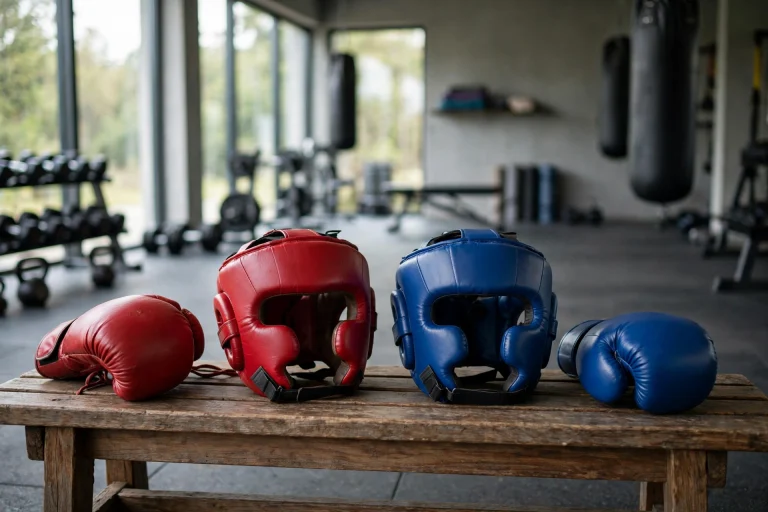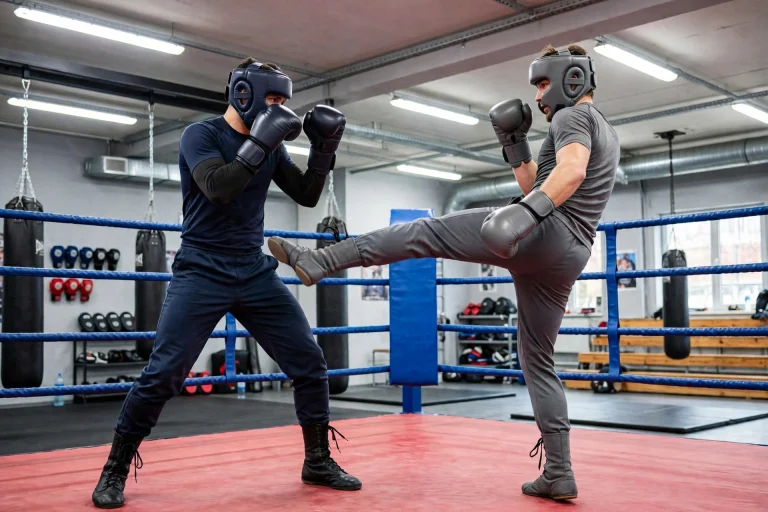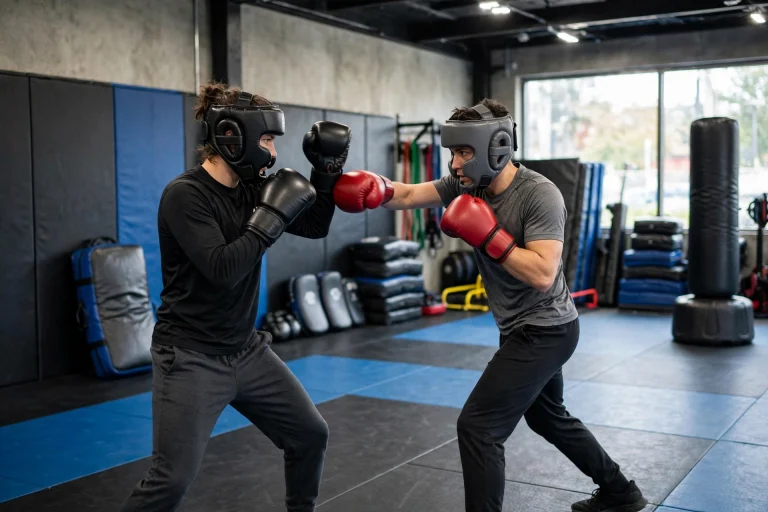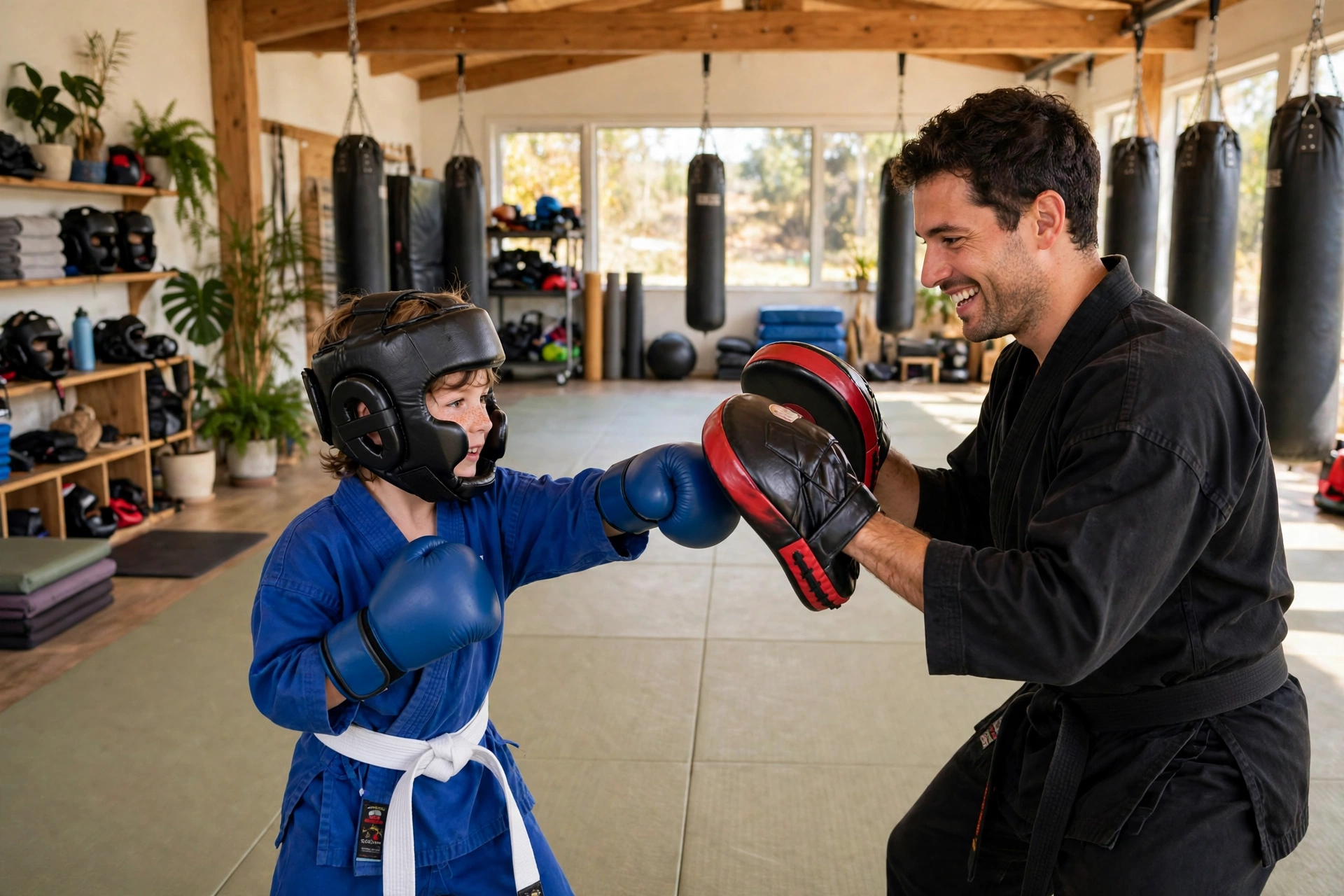
Yes, children in martial arts should wear headgear for sparring and contact drills — a properly fitted, youth-sized padded guard protects their head from cuts, bruises, and ear injuries while they learn. Children’s heads are still developing, and their skin is thinner and more easily cut than an adult’s, so the case for headgear is even stronger for young students than it is for adults. Most reputable clubs require headgear for all children’s sparring, and many competitions make it compulsory for junior age groups.
As a parent, you do not need to be a martial arts expert to make a good choice: the key points are the right size, a comfortable fit, and a guard suited to the art your child practises. This guide explains when kids need headgear, what kind suits children, how it should fit, and what to check before you buy.
Do Kids Need Headgear in Martial Arts?
In general terms, yes, for any martial art that involves contact to the head. That includes boxing, kickboxing, Muay Thai, karate sparring, taekwondo sparring, and wushu sanda, where punches and kicks are aimed at the head. Even light, controlled sparring produces knocks, and a child’s skin cuts and bruises more easily than an adult’s. A padded guard spreads the force of a blow, protects the ears, and reduces the chance of a cut above the eyebrow or a swollen cheek.
For non-contact arts, or for forms practice, headgear is not needed. A child learning kata, taolu, or basic technique without a partner does not face incoming strikes, so a guard would only add weight and distraction. The same applies to warm-ups and pad work. Headgear is sparring kit: it goes on when another child is throwing punches or kicks towards your child’s head, and it comes off when the contact stops.
What Kind of Headgear Suits Children?
Children need a youth-sized guard, not a small adult one. Youth headgear is shaped for a child’s head, which is rounder and smaller than an adult’s, and it uses lighter padding so the guard does not weigh the child’s neck down. An adult guard in the smallest size will usually be too big, too heavy, and the wrong shape, and it will slip during sparring. Always buy a guard labelled for juniors, youth, or kids, and check the size chart for the maker’s age or head-circumference range.
For most children, an open-face guard is the best choice. It leaves the whole face visible, which helps the child see clearly and breathe easily, and it is lighter than a full-face design. Full-face guards with extra cheek protection or a face bar give more coverage, and they can suit younger children or beginners who are still learning to keep their guard up, but they can also feel hot and restrictive. In general terms, start with an open-face youth guard and add more coverage only if the instructor recommends it.
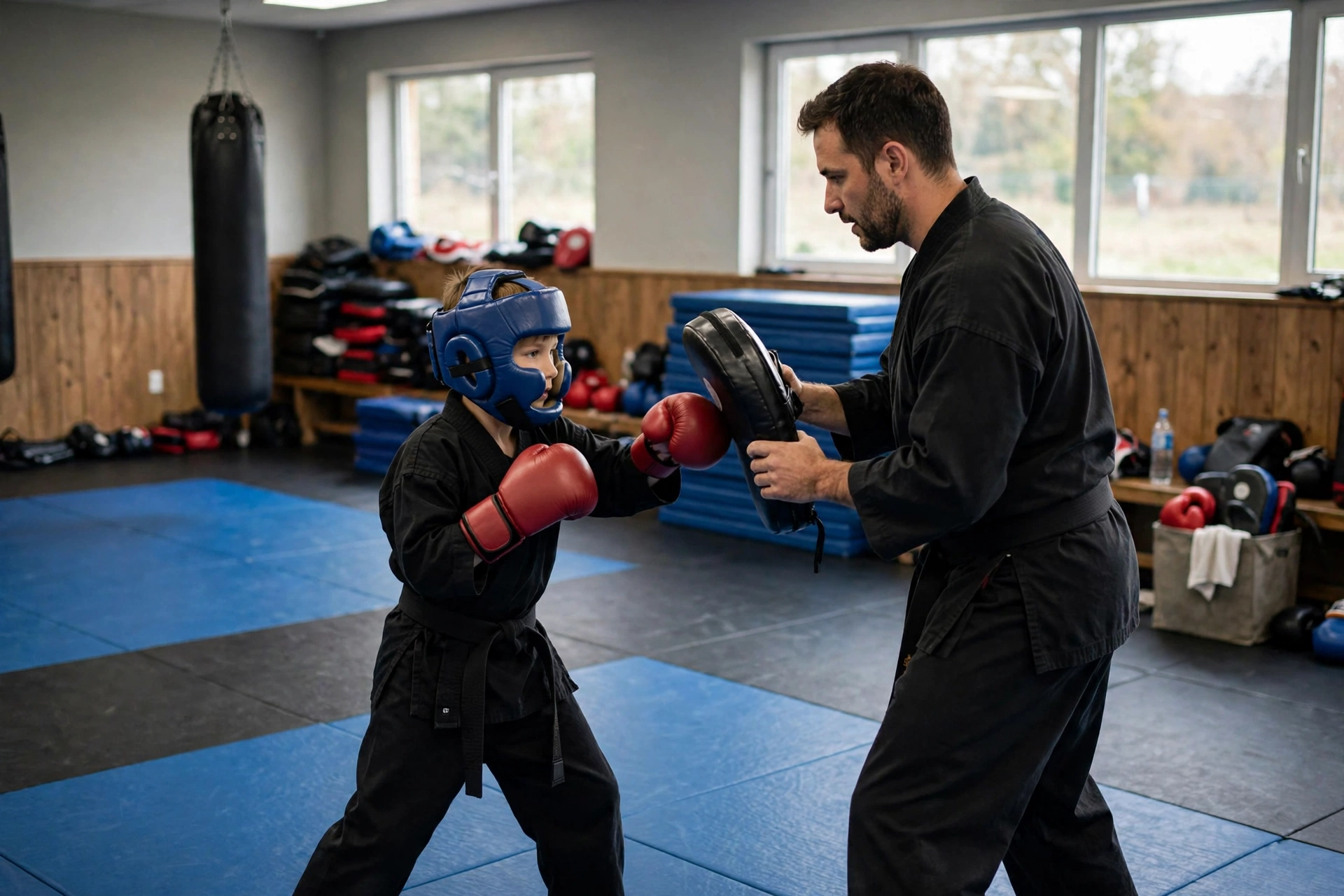
How Should Kids’ Headgear Fit?
A good fit is snug all round without squeezing. The guard should sit level on the head, with the brow padding just above the eyebrows, so it does not slip down over the eyes when your child moves. When your child shakes their head from side to side, the guard should stay in place rather than wobbling or sliding. If it shifts during a round, it will distract them and may leave part of the head exposed.
Try the guard on with your child’s mouthguard in, as they would wear it in sparring, and check the chin strap. It should fasten firmly without digging in, and it should hold the guard in place through a few practice movements — a duck, a turn, a step forward. Children grow quickly, so check the fit every few months: a guard that fitted in September may be too tight by spring. If you are learning about how helmets handle different kinds of impact, reading about what MIPS is for helmets can help you understand one of the technologies used in modern helmet design.
What Should Parents Check Before Buying?
First, check what your child’s club requires. Some clubs have a standard guard, a list of approved designs, or a rule about the level of coverage. Buying the wrong type wastes money and may mean your child cannot spar until you replace it. Ask the instructor before you buy, and find out whether the club sells guards or has a supplier they recommend.
Second, check the size carefully. Measure your child’s head circumference with a soft tape measure, just above the eyebrows and around the widest part of the head, and compare it with the maker’s size chart. Do not guess, and do not buy a size to grow into — a guard that is too big will slip, and a guard that is too small will squeeze. If you buy online, check the returns policy so you can swap the size if the fit is wrong.
Third, check the build quality. Press the padding all over and look for thin spots or lumps. Check that the stitching is neat with no loose threads, and that the Velcro straps hold firmly when pulled tight. A cheap guard with uneven padding is a poor investment: it may look the part but fail to protect evenly. Spend a little more on a guard from a known martial arts brand, and inspect it when it arrives before your child wears it in sparring.
How Do You Help a Child Get Used to Headgear?
Let your child wear the guard at home first, for short periods, before their first sparring session in it. They can wear it while watching television or practising footwork, so the feel of it becomes familiar. A guard that is new and strange on sparring day is a distraction; a guard that has been worn a few times at home is just part of the kit. Keep the first sessions short and positive.
Talk to your child about why they wear it. Explain, in simple terms, that the guard protects their head and ears, just as gloves protect their hands and a mouthguard protects their teeth. Children accept safety kit much more readily when they understand its purpose. Avoid making it sound scary: the point is not that sparring is dangerous, but that the guard lets them train safely and enjoy the sport.
Check in after each session. Ask whether the guard felt comfortable, whether it slipped, and whether anything hurt or pressed. If your child complains about the fit, take the complaint seriously and adjust the straps or try a different size — a child who is uncomfortable will fiddle with the guard instead of focusing on the lesson. Praise them for wearing it properly, and make putting it on part of the routine of getting ready for class, like tying their belt.
Frequently Asked Questions
Q: At what age should children start wearing headgear?
A: In general terms, as soon as they start sparring with contact to the head — for most clubs that means from their first sparring sessions, whatever their age, with a youth-sized guard.
Q: Can my child use an adult head guard in the smallest size?
A: In general terms, no. Adult guards are shaped for adult heads and are usually too heavy and too loose for a child — always buy a guard made and sized for juniors.
Q: How often should I check my child’s headgear fit?
A: Check the fit every few months, because children grow quickly. Also check the padding, straps, and stitching before each class, and replace the guard when the foam goes flat.

Olivia
Writer at Helmet Today, covering helmet reviews, fit and riding safety.