Yes — cerebral palsy football players generally wear a helmet, and a helmet is part of the standard kit for the sport in many leagues and competitions. Cerebral palsy football, also known as CP football, is a version of football for athletes with cerebral palsy or a similar neurological condition affecting movement and coordination. The game is played seven-a-side on a smaller pitch, and the helmet protects the head during falls and collisions.
CP football is a fast, competitive game, and falls are part of it. Players run, turn and tackle with movement patterns that can make balance harder, so a fall can come without warning. This guide explains what kind of helmet CP football players wear, why it is worn, and what to look for when choosing one.
What Kind of Helmet Do Cerebral Palsy Football Players Wear?
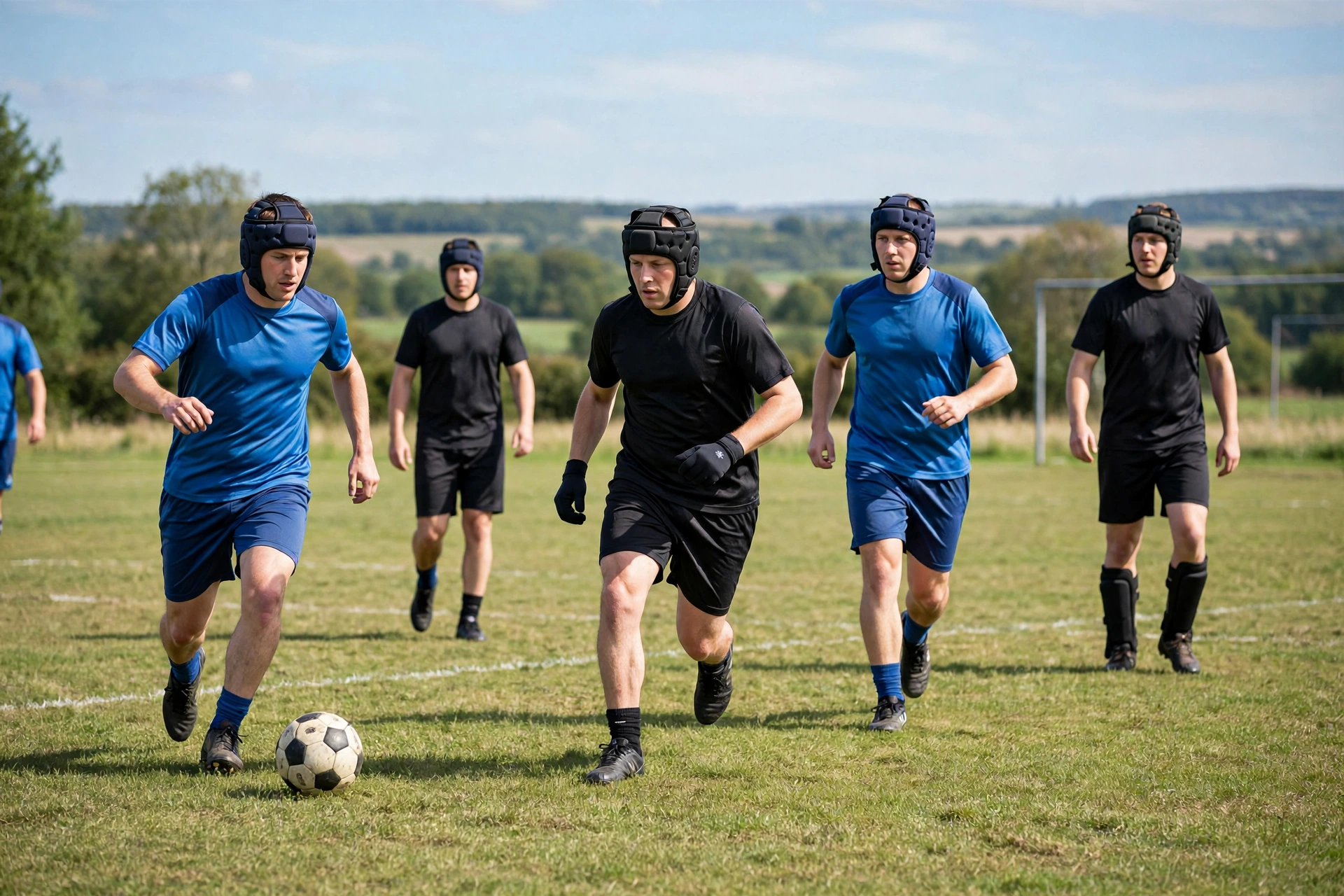
CP football players typically wear a soft protective headguard rather than a hard-shell helmet. The headguard is made of padded foam covered in a soft fabric shell, and it fits snugly over the head like a close-fitting cap. It covers the top, sides and back of the head, and it is fastened with a chin strap that keeps it in place during a fall or a tackle.
The headguard is designed for football. It is light, flexible and low-profile, so it does not limit the player’s vision, hearing or balance. Unlike a hard helmet, it is made to cushion a fall onto grass rather than to withstand a high-speed impact, and it can be worn comfortably for a full match. A hard-shell helmet from another sport, such as cycling, is not a good substitute, because it is heavier, limits movement, and is not shaped for football.
Why Is a Helmet Worn in Cerebral Palsy Football?
The main reason is protection during falls. CP football players may have difficulty with balance and coordination, and a fall can happen suddenly — after a tackle, a turn, or a stumble on uneven ground. When a player falls, the head can strike the ground, another player, or a goalpost. A headguard cushions that contact and reduces the chance of a head injury.
Collisions are another reason. CP football is a contact sport, and players challenge for the ball shoulder to shoulder. Two players going for the same ball can clash heads, or a player’s head can meet an opponent’s knee or elbow in a tackle. A headguard softens those knocks. In general terms, the headguard is there for the everyday contact of the game, not only for rare accidents.
There is also a practical reason: confidence. Knowing the head is protected helps a player commit to a tackle, chase a loose ball, and play without holding back. For players who are still building balance and coordination, that confidence matters, because a hesitant player is more likely to fall awkwardly than a player who moves with purpose.
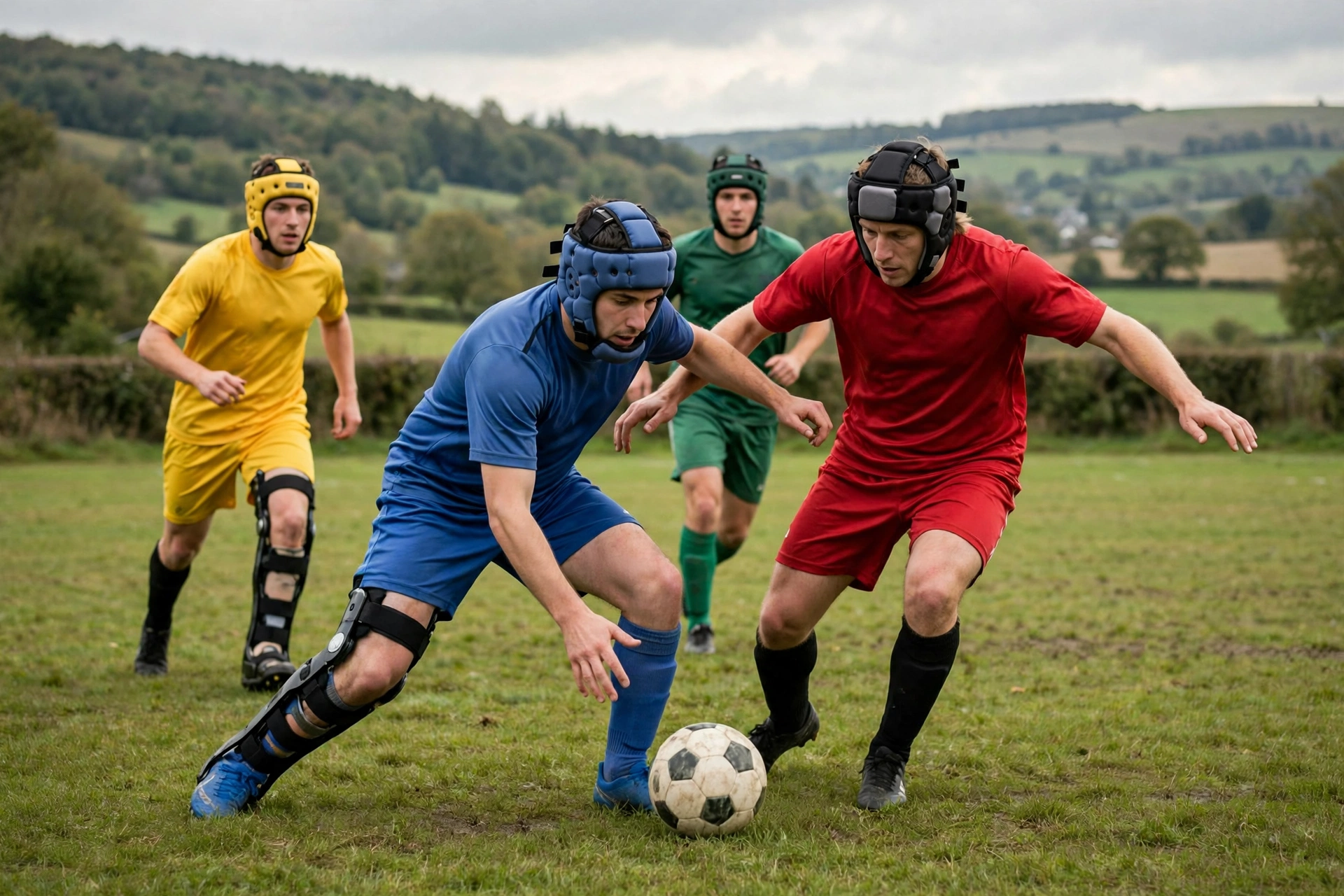
How Does a CP Football Headguard Differ from a Rugby Headguard?
A CP football headguard and a rugby headguard look similar, and in fact many players use a rugby-style headguard, but there are differences in how they are used. A rugby headguard is designed for the scrums and tackles of rugby, where head contact is frequent and forceful. A CP football headguard is worn for a game where falls are the main risk, so it is often lighter and thinner, with more emphasis on comfort over a full match.
The fit is similar in both cases: snug, level, and held in place by a chin strap. The difference is mainly in the level of padding and the shape of the ear coverage. Some rugby headguards have thicker padding around the ears, which suits rugby but can muffle hearing on a football pitch, where players need to hear calls from teammates. The right choice depends on the player’s needs, and a coach can help with that decision.
What Should You Look for in a CP Football Headguard?
Fit comes first. The headguard should sit level on the head, feel snug all round without pressing hard on one spot, and stay put when you shake your head. The strap should fasten securely under the chin and hold the headguard firmly in place during a fall. If it rocks from side to side or slides forward over the eyes, it is the wrong size or the wrong shape for that head.
Next, check comfort and hearing. The headguard will be worn for a full match, so it should feel comfortable after an hour, not just for the first five minutes. It should also let the player hear teammates and the referee clearly, because football is a team game built on communication. If you are learning about how helmets handle different kinds of impact, reading about what MIPS is for helmets can help you understand one of the technologies used in modern helmet design.
Do All Cerebral Palsy Football Players Wear a Headguard?
In general terms, headguards are the norm in CP football, but the exact rules can vary between leagues, competitions and the organisations that run them. Some events require a headguard for every player, while others may leave the choice to the player or their team. Because the rules can differ, players, parents and coaches should always check the rules for the specific competition before playing, rather than assuming one league’s rules apply everywhere.
Whatever the rule says, many players choose to wear a headguard in training as well as in matches. Training is where new skills are practised and where falls are more likely, so the same protection that matters on match day matters on a training night too. A headguard that is comfortable enough to wear every session is more likely to be worn, which is why fit and comfort matter so much in this sport.
Frequently Asked Questions
Q: Do cerebral palsy football players wear helmets in training as well as matches?
A: In general terms, yes. Many players wear a headguard whenever they play, because falls and knocks can happen in training just as easily as in a match.
Q: Can a CP football player use a cycling helmet instead of a headguard?
A: In general terms, no. A cycling helmet is hard, heavy and shaped for the road. A soft headguard is lighter, fits the game better, and does not limit vision or balance.
Q: Does a headguard have to be replaced after a hard knock?
A: In general terms, a headguard that has taken a hard impact should be checked, and replaced if the padding is flattened or damaged. Soft padding can lose its cushioning over time, even without visible damage.

Olivia
Writer at Helmet Today, covering helmet reviews, fit and riding safety.