In general terms, no — helmets are not known to cause neck injuries in a crash, and a well-fitting helmet is designed to protect the head rather than to harm the neck. The idea that a helmet could break or injure the neck is a common worry, often based on the feeling that a helmet adds weight to the head. But helmets are designed to absorb impact and to spread forces across the head, and the weight of a modern helmet is small compared with the forces involved in a crash. If you are concerned about neck pain after a fall, speak to a doctor rather than relying on general information online.
This question comes up often, especially among motorcyclists and cyclists who have heard stories about helmets and neck injuries. It is worth looking at carefully, because it affects whether people wear a helmet at all. This article explains, in general terms, where the worry comes from, what helmets are designed to do, and why fit and weight matter more than the helmet itself.
Where Does the Idea That Helmets Cause Neck Injuries Come From?
The worry usually starts with weight. A helmet adds weight to the head, and some riders feel that extra weight in their neck on long rides. That feeling is real, but it is not the same as an injury. A helmet that is heavy or poorly balanced can make the neck feel tired, especially on a long ride, but tiredness is not the same as damage.
The idea also comes from a misunderstanding of how crashes work. In a crash, the head and neck are exposed to very large forces, with or without a helmet. A helmet is designed to absorb some of that energy and to protect the skull. The forces that could injure a neck in a serious crash are present whether or not a helmet is worn, and in general terms a helmet does not add to them in a meaningful way.
How Are Helmets Designed to Protect the Head and Neck?
A helmet has two main jobs. The hard outer shell spreads the force of an impact across a wider area, and the foam liner inside absorbs energy by crushing slowly. Together, they reduce the force that reaches the head. This is why a helmet should be replaced after a hard impact, even if the damage is not visible — the liner inside can be damaged in ways you cannot see.
Modern helmets are also designed to be smooth on the outside, so they slide rather than catch on the ground. This matters because a helmet that catches can twist the head, while a smooth shell lets the head slide. Many helmets also have a liner designed to reduce rotational forces, and if you want to understand that feature, reading about what MIPS is for helmets can help explain how it works in general terms.
Helmet standards also play a part. A helmet that meets a recognised standard has been tested for the kinds of impacts a rider might have, and those tests include checks on how the helmet behaves in a crash. A helmet without a clear standard label has not been through that testing, so it is not worth buying.

Does the Weight of a Helmet Matter for the Neck?
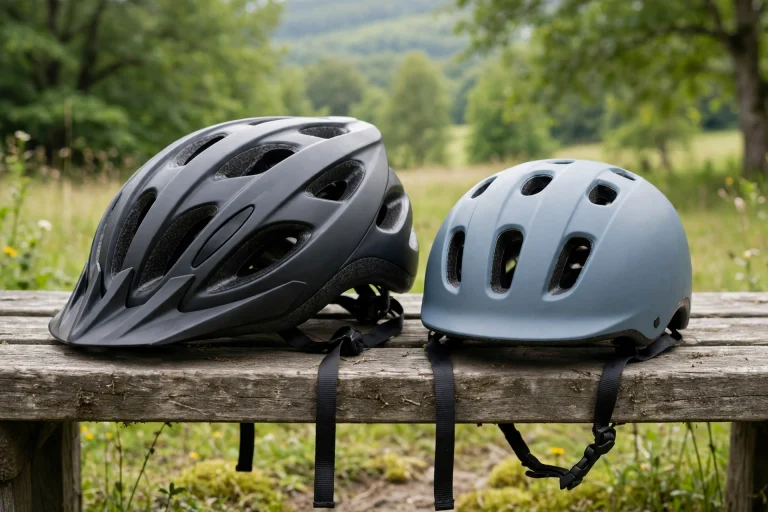
Weight does matter for comfort, and a lighter helmet is easier on the neck over a long ride. Hold a few helmets in your hand and compare them, and choose one that feels light while still covering the head fully. In general terms, a helmet that feels heavy on the shelf will feel heavier still after an hour of riding.
But weight is not the same as injury risk. The weight of a modern helmet is small, and a well-fitting helmet spreads that weight evenly around the head. A helmet that is too big or sits unevenly will feel heavier and less comfortable than a lighter one that fits well, so fit matters more than weight alone.
If your neck feels tired after riding, check the fit first. Make sure the helmet sits level, the straps are adjusted properly, and the helmet is not pressing on one side. Also check your riding position, because a poor position can strain the neck whether or not you wear a helmet. If neck pain persists, speak to a doctor or a qualified professional rather than trying to diagnose it yourself.
What Does a Good Fit Have to Do with Neck Safety?
A helmet that fits well stays in place in a crash, and that is what it is designed to do. A helmet that is too loose can shift or come off, while a helmet that is too tight will be uncomfortable and may not sit in the right position. The right size is the one that matches your head measurement, not your age or your usual clothing size.
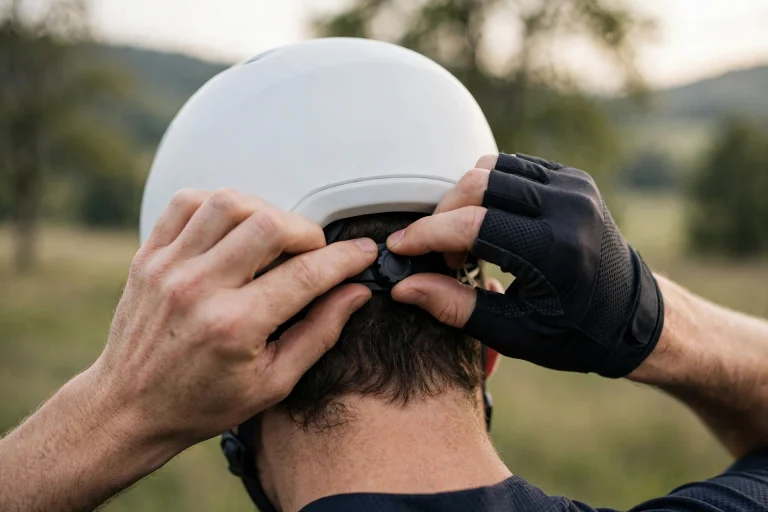
To check the fit, put the helmet on and make sure it sits level, with the front edge just above the eyebrows. Shake your head from side to side and nod up and down. The helmet should move with the head rather than sliding around on its own. Tighten the chin strap until you can fit one finger between the strap and the chin.
Check the fit regularly, because helmets loosen over time and heads change. A helmet that fitted last year may be too loose now, and a loose helmet will not protect as well as a snug one. If the helmet has been in a crash, replace it, even if you cannot see any damage.
Should the Neck Injury Myth Stop You Wearing a Helmet?
In general terms, no. The worry about neck injuries is understandable, but it should not stop anyone from wearing a helmet. A helmet is designed to protect the head, and the head is the part of the body most at risk in a fall. A well-fitting, lightweight helmet that meets a recognised standard is the best choice for most riders.
If you are worried, choose a lighter helmet and make sure it fits well. Try on several models, compare their weight, and pick the one that feels most comfortable. A helmet that is comfortable is one you will wear every time, and a helmet that is worn is far better than a helmet left at home.
Finally, remember that general information online is not medical advice. If you have a neck condition, have had a neck injury, or feel pain after a fall, speak to a doctor or a qualified health professional. They can give advice based on your own situation, which no general article can do.
Frequently Asked Questions
Q: Do helmets cause neck injuries in a crash?
A: In general terms, no. Helmets are designed to protect the head by absorbing impact and spreading forces, and their weight is small compared with the forces involved in a crash. A well-fitting helmet is not known to cause neck injuries.
Q: Can a heavy helmet hurt my neck?
A: A heavy or poorly fitting helmet can make the neck feel tired on long rides, but tiredness is not the same as an injury. Choose a lighter helmet that fits well, and check the fit and your riding position if your neck feels sore.
Q: Should I stop wearing a helmet because of neck worries?
A: In general terms, no. A well-fitting helmet that meets a recognised standard is designed to protect your head, and that protection matters more than the worry. If you have a neck condition or pain after a fall, speak to a doctor.

Olivia
Writer at Helmet Today, covering helmet reviews, fit and riding safety.