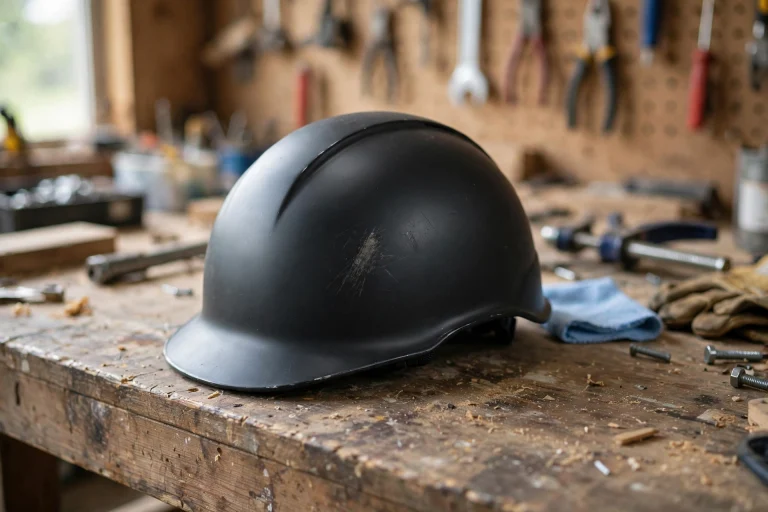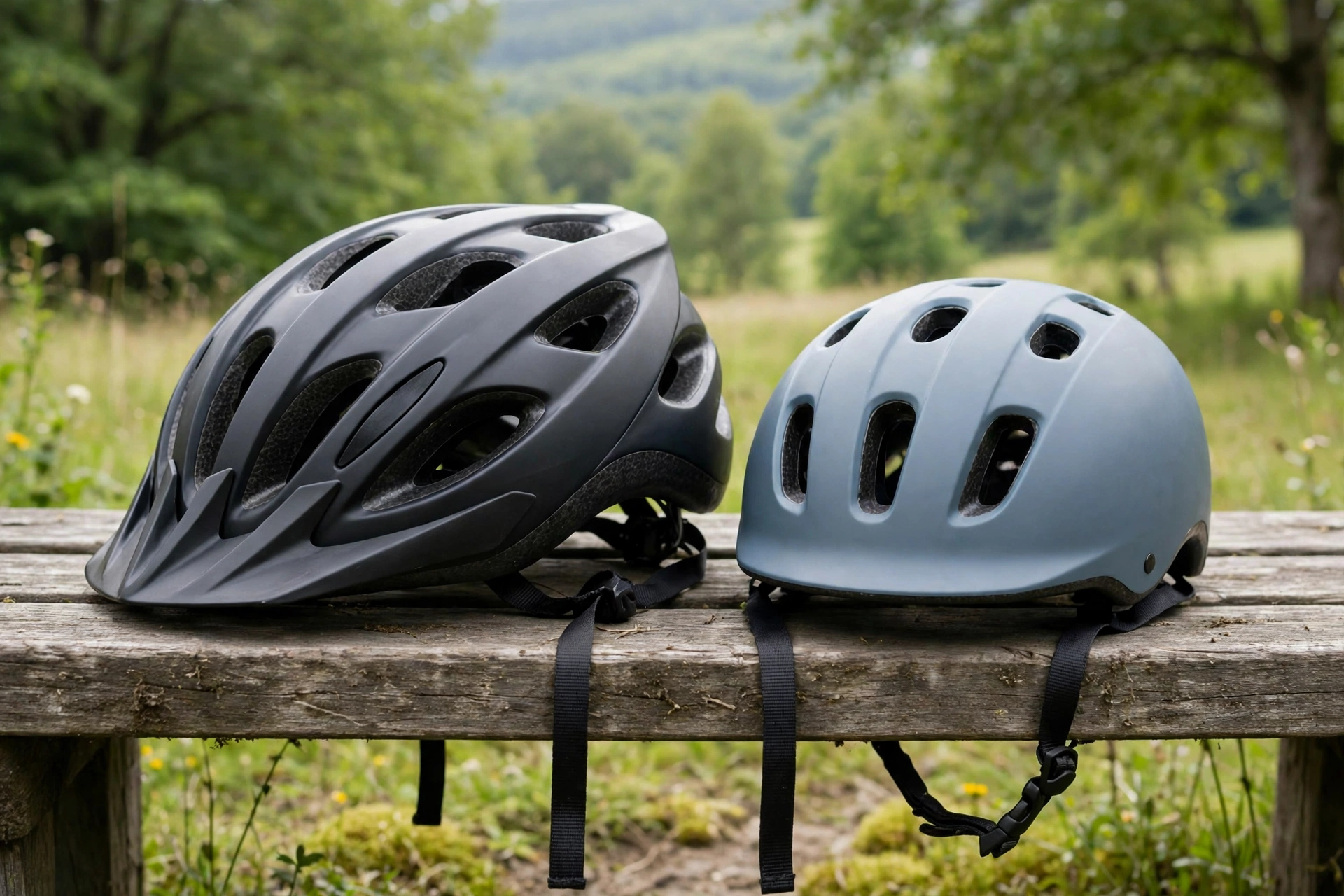
In general terms, sharing a helmet is not the safest choice, and it is best avoided when you can wear a helmet of your own. A helmet is made to fit one head closely, and a borrowed helmet is unlikely to fit you well. It may also be worn, damaged, or dirty in ways you cannot see. For a short, low-speed ride in an emergency, a borrowed helmet is still better than no helmet, but it should not become a habit.
Sharing happens often: a spare at a bike hire shop, a sibling’s helmet, or a communal helmet at a climbing wall. The right answer depends on fit, condition, and what you will be doing. This guide explains why fit matters, what can go wrong with a shared helmet, and what to check before you put one on.
Why Does Helmet Fit Matter So Much When Sharing?
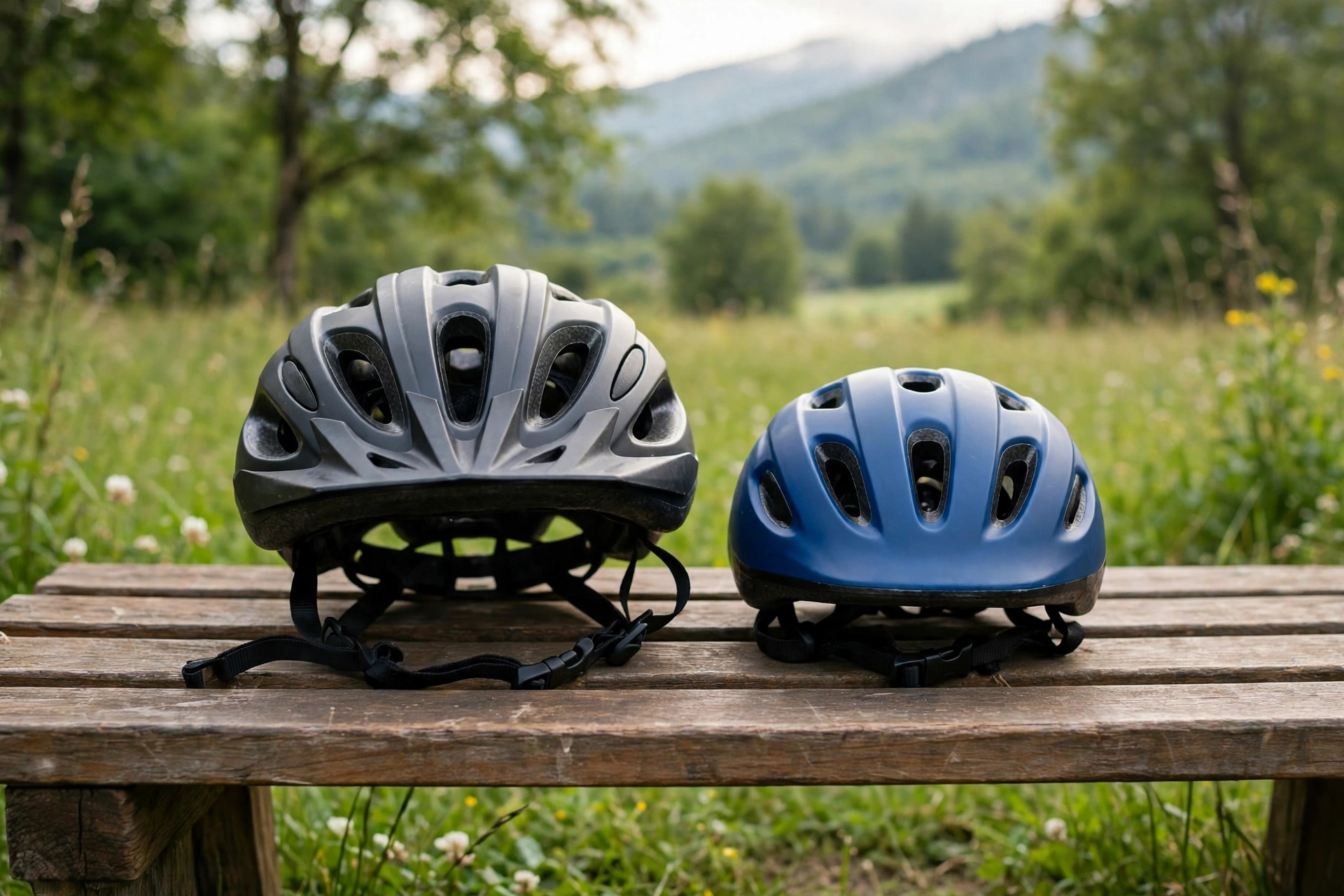
A helmet protects you best when it sits level, feels snug all round, and stays put when you move your head. Heads differ in size and shape, so a helmet that fits its owner may sit too high, too loose, or too tight on you. A loose helmet can shift in a fall and leave part of your head exposed, while a helmet that is too tight may tempt you to wear it pushed back, which also leaves you less protected.
Many helmets have adjustable pads, a rear dial, or a strap system, but these only adjust within a narrow range. A dial cannot turn a large helmet into a small one, and extra pads cannot make a small shell fit a bigger head. If the shell is the wrong size, no adjustment will fix it.
Children are a special case: a child sharing an adult’s helmet is almost always wearing the wrong size. Children grow quickly, so a helmet that fitted last year may not fit now. Check the fit often rather than assuming last season’s helmet still fits.
What Condition Problems Can a Shared Helmet Hide?
When you borrow a helmet, you do not know its history. It may have been dropped, knocked, or in a crash that left no visible mark. The foam liner can be damaged by an impact even when the shell looks fine, reducing how well it absorbs a future impact — and the owner may not even know, because the damage is hidden inside.
Wear and age matter too. Straps stretch, buckles wear, pads flatten, and the liner ages even without a crash. A helmet used every day for years will not protect as well as a newer one. When you borrow a helmet, check the straps and buckle, look for cracks in the shell, and press the liner for uneven or compressed spots.
Hygiene is another concern. Sweat, skin oils, and hair products build up in the padding, and a shared helmet can pass on skin irritation or head lice. This is rarely a serious health risk, but it is unpleasant. A thin skull cap under a borrowed helmet can help, and many hire shops provide disposable liners.
When Is Sharing a Helmet Acceptable?
There are times when sharing is reasonable. Hire shops, activity centres, and climbing walls lend helmets all the time, and they check, clean, and replace their stock. If you borrow from a hire shop, ask when the helmet was last checked and whether it has had a hard impact. A reputable operator should take a damaged helmet out of service.
Sharing within a family for a single short ride can be acceptable if the helmet fits properly, is in good condition, and has no crash history. The key test is fit: if it sits level, feels snug, and does not rock side to side, it is probably doing its job. If it wobbles or slides over your eyes, do not use it.
In an emergency, the balance changes. If the choice is between a borrowed helmet that fits poorly and no helmet at all, the borrowed helmet is still the better option in general terms. It will give you some protection, even if it is not ideal. But treat that as a one-off, not as a reason to keep sharing.
What Should You Check Before Wearing a Borrowed Helmet?
Start with the outside: look for cracks, deep scratches, dents, or faded patches, and check that vents and visor fittings are intact. Then check the straps: no fraying, a buckle that clicks shut firmly, and a strap that sits flat under your chin without twisting. A slipping strap or a buckle that does not hold means choosing a different helmet.
Next, check the inside. Press the liner gently all round for hard spots, gaps, or crushed areas. A strong stale smell suggests the helmet has not been cleaned or checked. If the pads are removable, take them out and look underneath for hidden damage or dirt.
Finally, try it on properly: put it on level, fasten the strap so only one or two fingers fit underneath, and shake your head gently. The helmet should move with your head rather than sliding on its own. If it passes these checks and fits well, it is a reasonable short-term option. If it fails any of them, wait until you have your own.
If you want to understand more about the technology inside a modern helmet, reading about what MIPS is for helmets is a useful starting point. It explains one of the systems makers use to help a helmet cope with angled impacts, which matters whichever helmet you wear.
How Can Families Avoid Sharing Helmets?
Give each regular rider their own helmet in the right size. This matters most for children, who need a helmet that fits today rather than one they will grow into — a helmet that is too big will not protect properly in the meantime.
Label each helmet with its owner’s name and size, and store them separately so the right one is easy to find. Check the fit of every family helmet at the start of each season. Replace any helmet that has been in a crash, shows damage, or no longer fits, rather than passing it down.
If cost is a concern, a basic helmet that meets the right standard and fits well protects better than an expensive helmet in the wrong size. You need the right size, the right standard, and a helmet in good condition.
Frequently Asked Questions
Q: Is it safe to share a helmet with someone else?
A: In general terms, it is best avoided, because a shared helmet rarely fits well and its crash history may be unknown. A borrowed helmet that fits and is in good condition is still better than no helmet.
Q: Can sharing a helmet spread head lice?
A: In general terms, yes, it can, since lice spread by close contact with hair and headwear. A disposable liner or a thin cap under a borrowed helmet can reduce the risk.
Q: Should children share helmets with siblings?
A: In general terms, no. Children grow quickly, so a sibling’s helmet is often the wrong size, and a helmet that does not fit cannot protect a child properly.

Olivia
Writer at Helmet Today, covering helmet reviews, fit and riding safety.