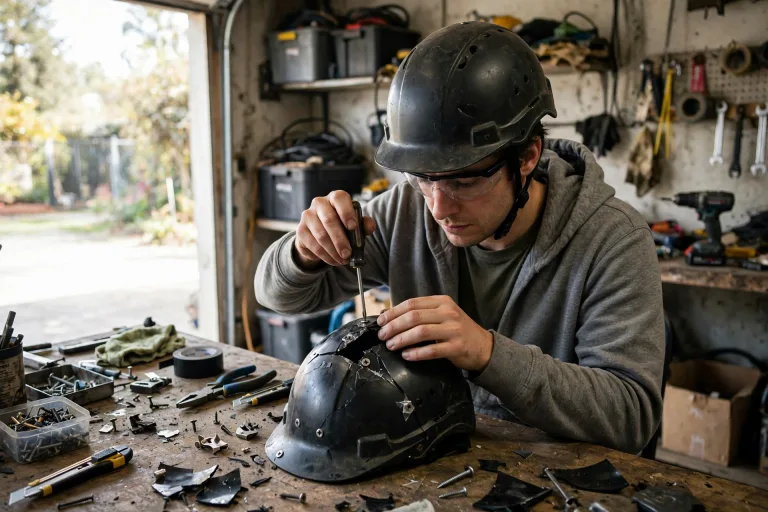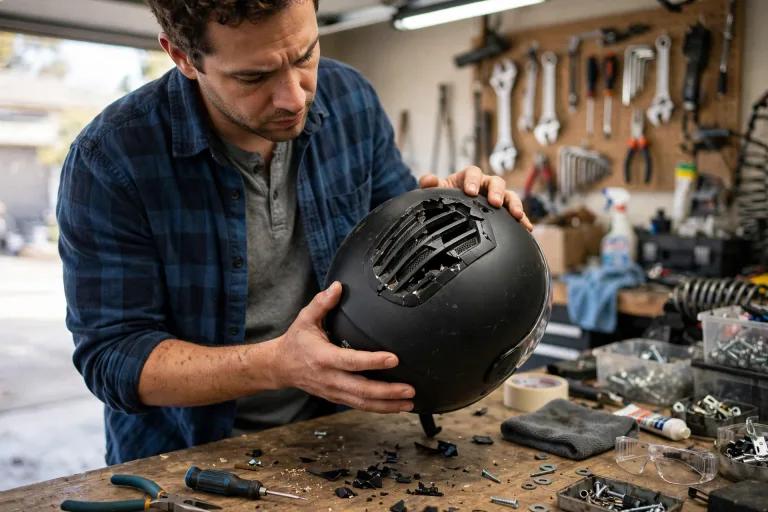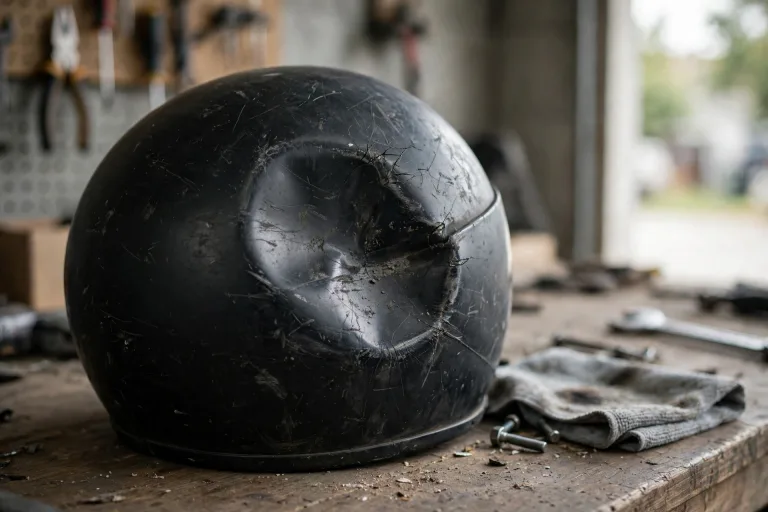
To fix a scratched helmet, start by cleaning the shell, then work on the scratch with a gentle method that suits how deep it is, and in general terms a light surface scratch can often be made much less visible, while a deep scratch may need a new visor or a new helmet. Scratches are a common problem, because a helmet is carried, stored and used in places where it rubs against other gear. A scratch on the visor can blur vision, and that is a safety problem.
The first step is always to work out what is scratched and how deep the damage goes. Feel the scratch lightly and look at it in good light to see how deep it is. A scratch that is only in the surface layer is the easiest to improve, while a scratch that has cut deep into the shell needs a different answer, and the rider should be honest about which one they are looking at.
How do you fix a scratch on a helmet shell?
To fix a scratch on a helmet shell, first wash the shell with warm water and a mild soap, then dry it with a soft cloth so that no grit is left on the surface. Grit left on the shell can cause more scratches when the rider starts to work on the first one, so a clean surface matters. Once the shell is clean and dry, look at the scratch again in good light and decide whether it is a light scuff in the clear coat or a deeper mark in the paint.
A light scuff in the clear coat can often be improved with a gentle polish made for helmets or for car paint, applied with a soft microfibre cloth in small circles and wiped away with a clean cloth. The rider should work slowly, check the result often and stop as soon as the scratch looks better, because polishing too hard can wear through the clear coat and make the mark worse. A deeper scratch may need a touch-up pen in a matching colour, applied in thin layers.
Can a scratched helmet visor be fixed?
A scratched helmet visor can sometimes be improved, but in general terms a visor is much harder to fix than a shell, and a badly scratched visor should be replaced rather than repaired. The visor is the rider’s window on the road, and even a small scratch can catch the light, blur the view or make it hard to see in rain or at night. A rider should never try to polish a visor with a harsh product, because many visors have coatings that a strong polish can strip away, leaving the visor cloudy or streaked.
For a very light scuff on a visor, the rider can try washing the visor with warm water and a mild soap, then drying it with a soft microfibre cloth, and in some cases that is enough to make the mark less obvious. If the scratch still catches the light, distorts the view or sits in the rider’s line of sight, the safe choice is a new visor, and the rider should fit one made for their own helmet model.

What should you not do when fixing a scratched helmet?
When fixing a scratched helmet, the rider should not use harsh chemicals, strong solvents or rough pads on the shell or the visor, because these can damage the surface, strip away a coating or make the scratch worse. A household cleaner, a strong polish or a scouring pad may seem like a quick fix, but they can leave the helmet looking worse than before, and they can weaken the finish that protects the shell.
The rider should also not try to fill a deep scratch with a filler that is not made for helmets, and should not sand the shell with coarse sandpaper, because sanding can thin the shell and change how it works. A rider who is unsure should ask the helmet maker or a dealer for advice. A quick fix that damages the helmet is never worth the risk, and a rider should always put safety before the look of the helmet.
When does a scratch mean the helmet should be replaced?
A scratch means the helmet should be replaced when it is deep enough to cut into the shell, when the shell is cracked or dented, or when the scratch is on the visor and it affects the rider’s vision. A scratch on its own does not always mean the helmet is unsafe, but a deep scratch can be a sign that the helmet has taken a knock, and a helmet that has taken a hard impact should be replaced even if the damage looks small. The rider should look for cracks around the scratch, check whether the shell flexes or feels soft, and think about how the scratch happened.
If the helmet was dropped from a height, knocked hard against a wall or involved in a crash, the rider should replace it rather than try to repair the scratch. A helmet is designed to take one serious impact, and after that impact its protection may be reduced, even if the outside looks almost normal. Riders who are choosing a new helmet may also want to learn about features that can help in a crash, including a system designed to reduce rotational forces, such as MIPS, which is found in some motorcycle and sports helmets. When in doubt, a new helmet is the safer choice.
How can you prevent scratches on a helmet?
A rider can prevent scratches on a helmet by storing it in a helmet bag, keeping it away from keys, tools and other hard objects, and putting it down on a soft surface rather than on concrete or gravel. A helmet bag is a simple habit that makes a real difference, because most scratches happen when the helmet is carried, stored or knocked in a garage, not when it is worn on the road.
The rider should wash the shell and the visor with warm water and a mild soap, dry them with a soft microfibre cloth and store the helmet in a cool, dry place away from direct heat and sunlight. A well-kept helmet, stored in its bag and cleaned often, will stay looking good for longer, and the rider will spend less time fixing scratches and more time riding.
Can toothpaste fix a scratched helmet?
Toothpaste is sometimes suggested for light scratches, but in general terms it is not a good choice for a helmet. It can be too rough for a visor and may leave the surface cloudy, so a product made for helmets is a safer option.
Is a scratched helmet still safe to wear?
A helmet with a light surface scratch is often still safe to wear, but a helmet with a deep scratch, a crack or a dent may not be. If the scratch is on the visor and it affects vision, replace the visor, and if the shell is damaged, replace the helmet.
How much does it cost to fix a scratched helmet?
The cost depends on the damage, and in general terms a light scratch can be improved with a polish and a cloth at little cost. A new visor or a touch-up pen costs more, and a helmet that needs to be replaced is the most expensive option of all.

Olivia
Writer at Helmet Today, covering helmet reviews, fit and riding safety.