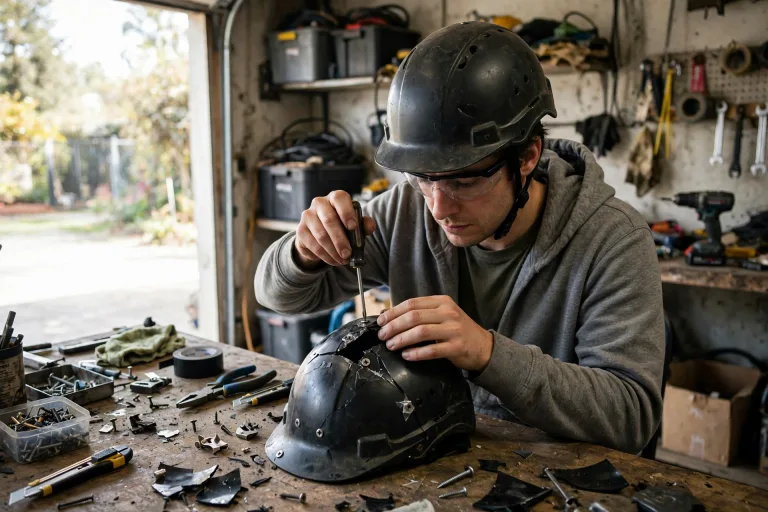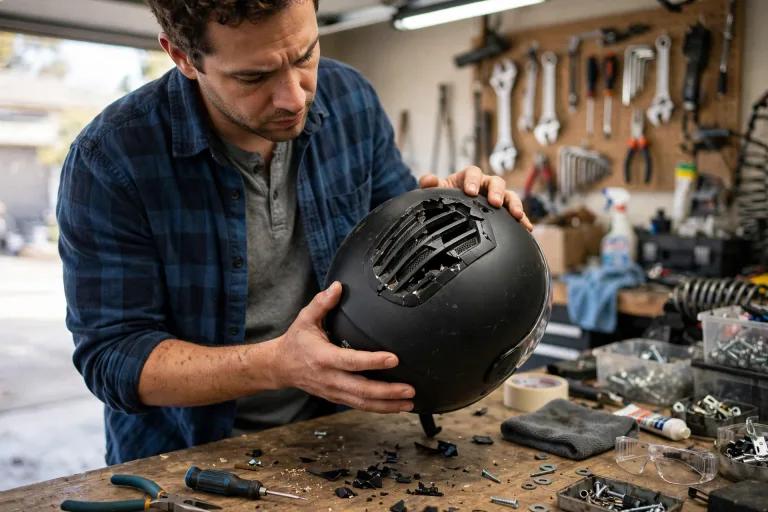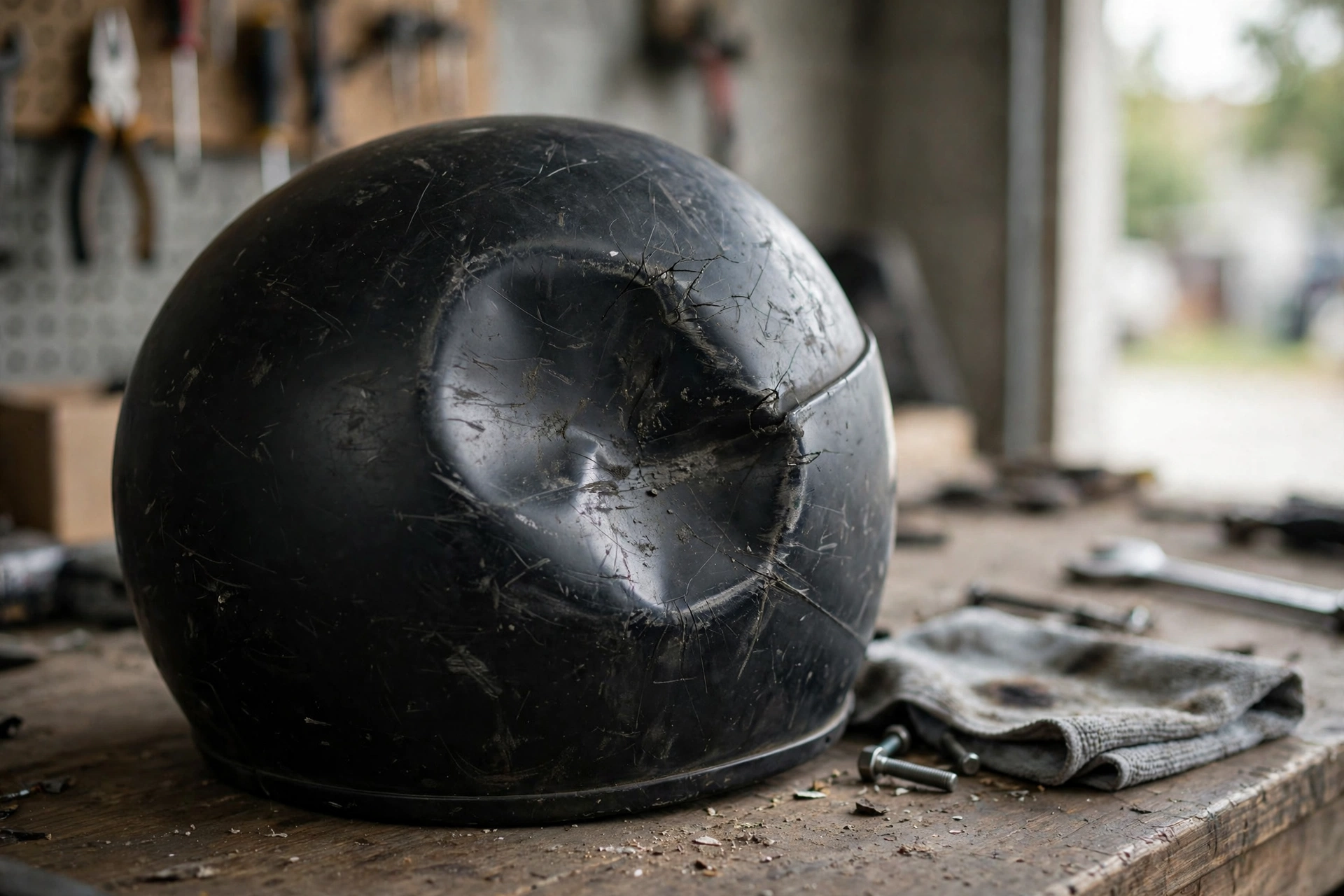
To fix a dented helmet, start by checking how deep the dent is and whether the shell is cracked, and in general terms a helmet with a shallow dent in the outer shell and no cracks may still be usable, but a helmet with a deep dent, a cracked shell, or damage to the inner lining should be replaced rather than repaired. A helmet is safety equipment, and its job is to absorb the force of an impact, so any fix must be judged against one question: will this helmet still protect the head in a fall? If the answer is not a clear yes, the helmet should not be used again.
Dents happen in everyday life. A helmet can be knocked off a table, dropped onto a hard floor, or struck by a falling object in a garage. The outer shell, the foam lining, and the straps all work together, and a dent that looks small on the outside can mean that the foam inside has been compressed and will not absorb a second impact in the same way.
How do you tell if a dented helmet is still safe?
To tell if a dented helmet is still safe, look at the shell in good light and run a hand over the dented area to feel for cracks, sharp edges, or soft spots. Check the inside of the helmet too, because the lining can show a dent or a crack that is not visible from the outside. Look at the straps, the buckle, and the vents, and check that nothing has been bent or broken. In general terms, a shallow dent with no cracks and no damage to the lining may be safe, but a deep dent, a crack of any size, or a lining that has been compressed should be treated as a sign to replace the helmet.
Think honestly about how the dent happened. A helmet that was dropped from a low shelf onto a carpet may have suffered very little, while a helmet that fell from a height onto concrete, or that was involved in a crash, has been through far more. A helmet that has taken a hard impact has done its job, and its job may be done. When in doubt, the safest choice is to replace the helmet, because the cost of a new helmet is small compared with the cost of a head injury.
Can you push a dent out of a helmet?
In general terms, a dent in a hard outer shell should not be pushed out or hammered back into shape, because forcing the shell can weaken it further or hide a crack. Some helmets have a shell that can be eased back with gentle pressure, but this is not a repair that restores the helmet’s strength, and it should not be treated as one. A helmet that has been bent back into shape may look fine while being weaker than it was before the dent.
Heat is another fix that should be avoided. Some people try to warm a dented shell to soften it, but strong heat can harm the materials in a helmet, including the foam lining and the glues that hold the layers together. In general terms, if a dent cannot be left alone safely, the helmet should be replaced, not reshaped.
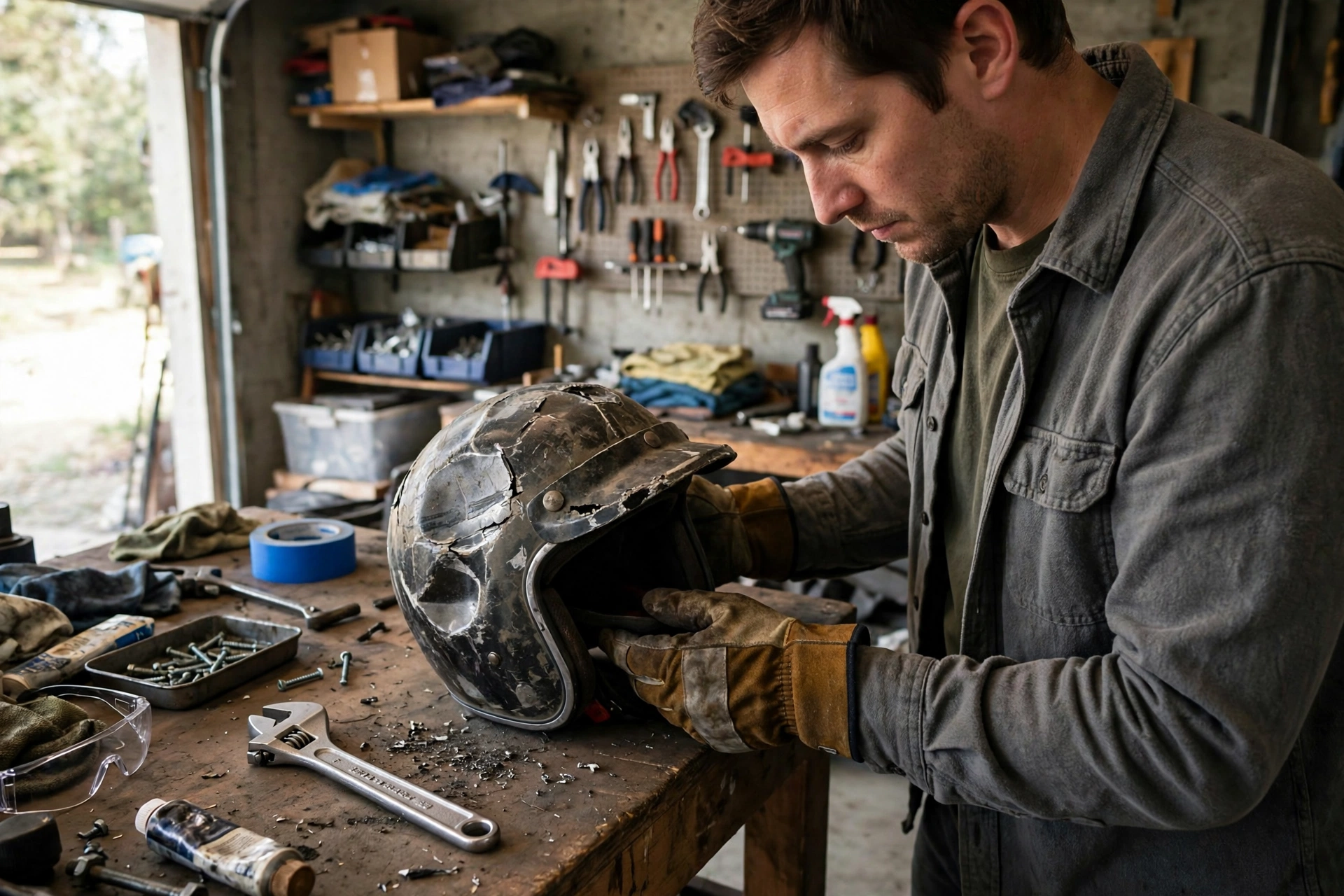
What can you fix on a helmet yourself?
There are small jobs on a helmet that a person can safely do themselves. A loose visor screw can be tightened, a dirty lining can be removed and washed if the maker says it can be, and a worn strap pad can be replaced with a part made for that helmet. These are care and upkeep jobs, and they do not change the structure of the helmet. They are worth doing, because a clean, well-kept helmet is more comfortable and lasts longer.
What a person should not do is try to repair the shell or the foam lining. Filling a dent with glue, tape, or filler does not restore the helmet’s strength, and it can hide damage that needs to be seen. Drilling holes, cutting the shell, or painting over a crack are also bad ideas, because they can weaken the helmet or hide a problem. If the shell or the lining is damaged, the helmet has reached the end of its safe life, and no home repair will bring it back.
When must a dented helmet be replaced?
A dented helmet must be replaced when the shell is cracked, when the dent is deep, when the lining is compressed or split, or when the helmet has been involved in a crash or a hard fall. It must also be replaced when it no longer fits well, because a dent can change the shape of the shell and make the fit loose or uneven. A helmet that wobbles or slips is a helmet that may not stay in place in a fall, and that is a risk that is easy to avoid by buying a new one.
Age matters too. A helmet that has been used for many years, left in a hot car, or stored in damp conditions may be weaker than it looks, even without a visible dent. A dented helmet that is also old is a clear case for replacement, and the new helmet will bring newer materials and a better fit.
How can you prevent dents in a helmet?
Dents can be prevented by storing a helmet carefully and treating it as safety equipment rather than as a bag or a shelf. A helmet should be kept in a bag or on a shelf where it will not be knocked off, and it should never be used as a seat or a step. When travelling, a helmet should be packed so that heavy items cannot press on it, and it should not be left loose in a boot with tools and other hard objects.
A helmet should also be kept away from strong heat and from chemicals such as solvents and strong cleaners, because these can harm the materials over time. Cleaning with mild soap and water is enough for most helmets, and the lining should be left to dry naturally. People who are choosing a replacement helmet may also want to learn about features that can help in a fall, including a system designed to reduce rotational forces, such as MIPS, which is found in some modern helmets. A well-kept helmet, looked after from the day it is bought, is far less likely to end up dented and far more likely to protect its wearer.
Can a dented bike helmet still be used?
A bike helmet with a shallow dent and no cracks may still be usable in general terms, but a deep dent, a cracked shell, or damage to the lining means it should be replaced. When in doubt, replace it.
Does insurance cover a dented helmet?
In general terms, some insurance policies cover a helmet damaged in a crash, but the details differ from one policy to another. Check the policy wording and keep photos of the damage.
Can a shop repair a dented helmet?
Most shops will not repair a dented helmet shell, because a repair cannot restore the helmet’s strength. In general terms, a shop will advise replacing a helmet with shell or lining damage.

Olivia
Writer at Helmet Today, covering helmet reviews, fit and riding safety.