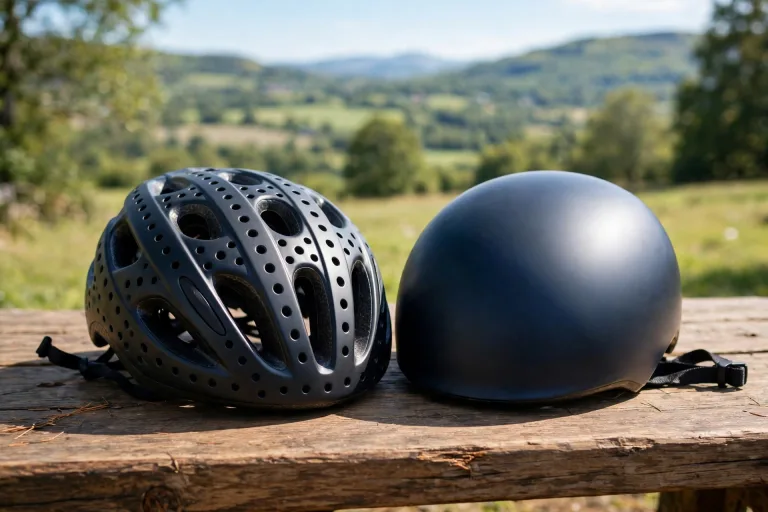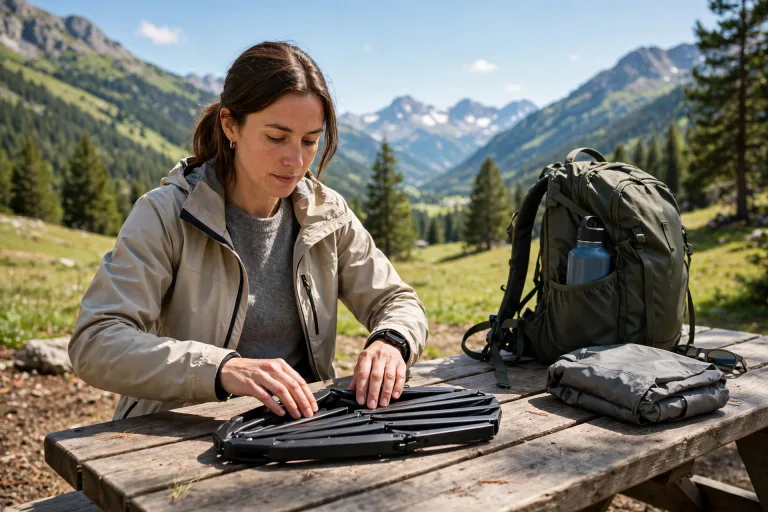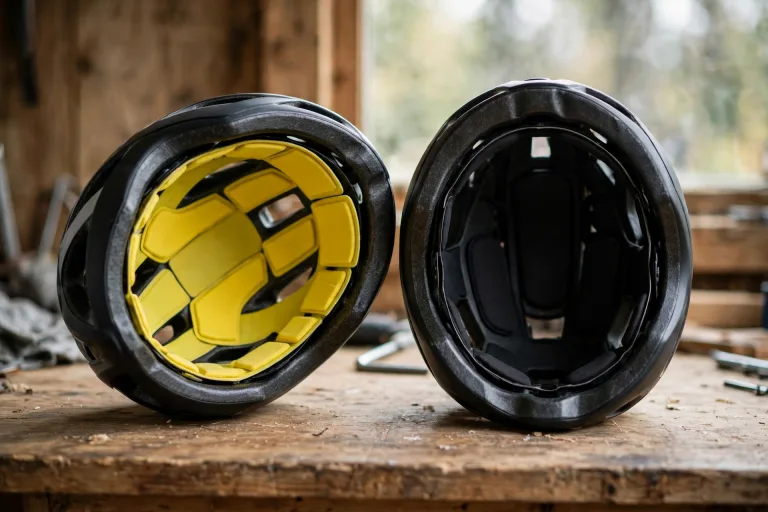
An inflatable helmet is a helmet that is worn flat or folded and then inflates around the head, usually in the moment of a fall, to form a soft protective cushion, and in general terms it is a new kind of head protection that aims to give the safety of a helmet without the bulk of wearing a hard shell all the time. The idea is simple: a person who does not want to carry or wear a normal helmet can wear a slim collar or band, and if they fall, the device fills with air in a fraction of a second and protects the head before it strikes the ground.
Inflatable helmets are also called airbag helmets, and they have attracted attention from cyclists, commuters, and people who ride scooters. A normal helmet is light and effective, but many people leave it at home because it is bulky, it spoils their hair, or it is awkward to carry into an office or a shop. An inflatable helmet tries to solve that problem by hiding the protection until it is needed, and that makes it an interesting idea for people who would otherwise wear nothing at all.
How does an inflatable helmet work?
An inflatable helmet works with sensors that watch how the wearer is moving and a small gas canister that fills the airbag when the sensors detect the kind of movement that means a fall or a crash. The sensors measure sudden changes in speed, tilt, and direction, and when the pattern matches a fall, the device triggers the canister and the airbag inflates around the head and neck. The whole process takes a fraction of a second, which is fast enough for the airbag to be in place before the head hits the ground.
When it is not triggered, the inflatable helmet looks like a collar worn around the neck, and it is much slimmer than a normal helmet. Some designs use a fabric cover that can be changed or washed, and the device is charged like a small electronic gadget, with a battery that powers the sensors. After the airbag has inflated, the device cannot be used again until the canister is replaced and the airbag is reset or changed, so it is a one-use protection in a crash, much like a car airbag.
What are the benefits of an inflatable helmet?
The main benefit of an inflatable helmet is comfort and convenience. It is light to wear, it does not press on the head, and it can be worn with a hairstyle, a hat, or a scarf in a way that a hard helmet cannot. A commuter can wear it on a bike, fold it into a bag at work, and wear it again on the way home, without carrying a bulky helmet around all day.
Another benefit is coverage. When it inflates, an airbag helmet can cover a large area around the head and neck, including parts that a normal helmet leaves exposed, such as the sides of the head and the base of the skull. In general terms, that wider coverage may help in a fall where the head strikes the ground at an awkward angle. The soft airbag can also spread the force of an impact over a larger area, which is the same idea behind the foam lining in a normal helmet.

What are the limits of an inflatable helmet?
An inflatable helmet has limits that a buyer should understand before choosing one. The device depends on its sensors and its battery, so it must be charged, switched on, and working correctly every time it is worn. A flat battery or a forgotten switch means no protection at all, while a normal helmet protects the head simply by being worn. The sensors must also tell a real fall apart from everyday movement, such as bending down, jumping off a kerb, or riding over a bump, and a device that triggers at the wrong time is a costly nuisance.
Cost is another limit. An inflatable helmet is far more expensive than a normal helmet, and after it inflates, the canister and the airbag must be replaced before it can be used again. The device also needs care: it should be kept dry, kept away from strong heat, and checked regularly to make sure the battery, the sensors, and the canister are in good order. A person who wants simple, low-cost protection that works every time may find a normal helmet a better fit.
Is an inflatable helmet as safe as a normal helmet?
In general terms, an inflatable helmet can offer good protection in the kind of fall it is designed for, and some designs have been tested to the same standards as normal helmets, but the answer depends on the design, the testing, and the rules where the person rides. A buyer should check whether the helmet meets a recognised safety standard and whether it is accepted for the activity they want to use it for, because the rules differ from one place to another and from one sport to another.
It has no battery to charge, no sensors to fail, and no canister to replace, and it protects the head in any fall, including a slow fall or a knock that the sensors of an inflatable helmet might not detect. An inflatable helmet is a clever idea, but it is a more complex device, and complexity brings more ways for something to go wrong. A person who is unsure should talk to a trusted seller and read the maker’s guidance before deciding.
Who is an inflatable helmet best for?
An inflatable helmet is best for a commuter or a casual cyclist who rides at a steady pace on city streets and who would otherwise wear no helmet at all. For that person, an inflatable helmet is a big step up from nothing, and its comfort and convenience may be the difference between wearing protection and wearing none. It is less suited to fast road cycling, mountain biking, or any sport where falls are frequent and hard, because in those sports a normal helmet is simpler, tougher, and ready for the next fall without a reset.
People who are comparing helmet types may also want to learn about features that can help in a fall, including a system designed to reduce rotational forces, such as MIPS, which is found in some normal helmets and is a simpler, well-tested way to add protection. The best helmet, in the end, is the one that is worn every time, and for some riders that helmet is an inflatable one.
Does an inflatable helmet need charging?
Yes, in general terms an inflatable helmet needs charging, because its sensors run on a battery. It must be charged and switched on before every ride, or it will not protect the wearer.
Can an inflatable helmet be reused after it inflates?
An inflatable helmet cannot be reused straight away after it inflates. In general terms, the gas canister must be replaced and the airbag reset or changed before it can be used again.
Is an inflatable helmet allowed everywhere?
Not everywhere, in general terms. Some places and events only accept helmets that meet a certain standard, so a rider should check the rules for their area and their activity before buying one.

Olivia
Writer at Helmet Today, covering helmet reviews, fit and riding safety.