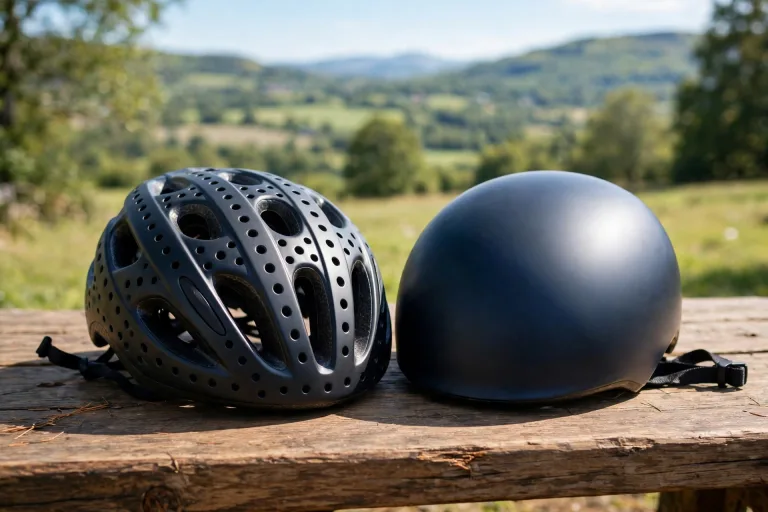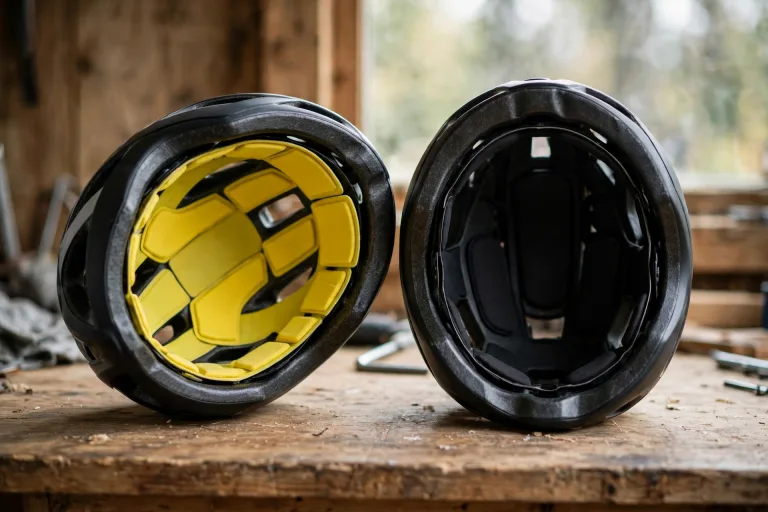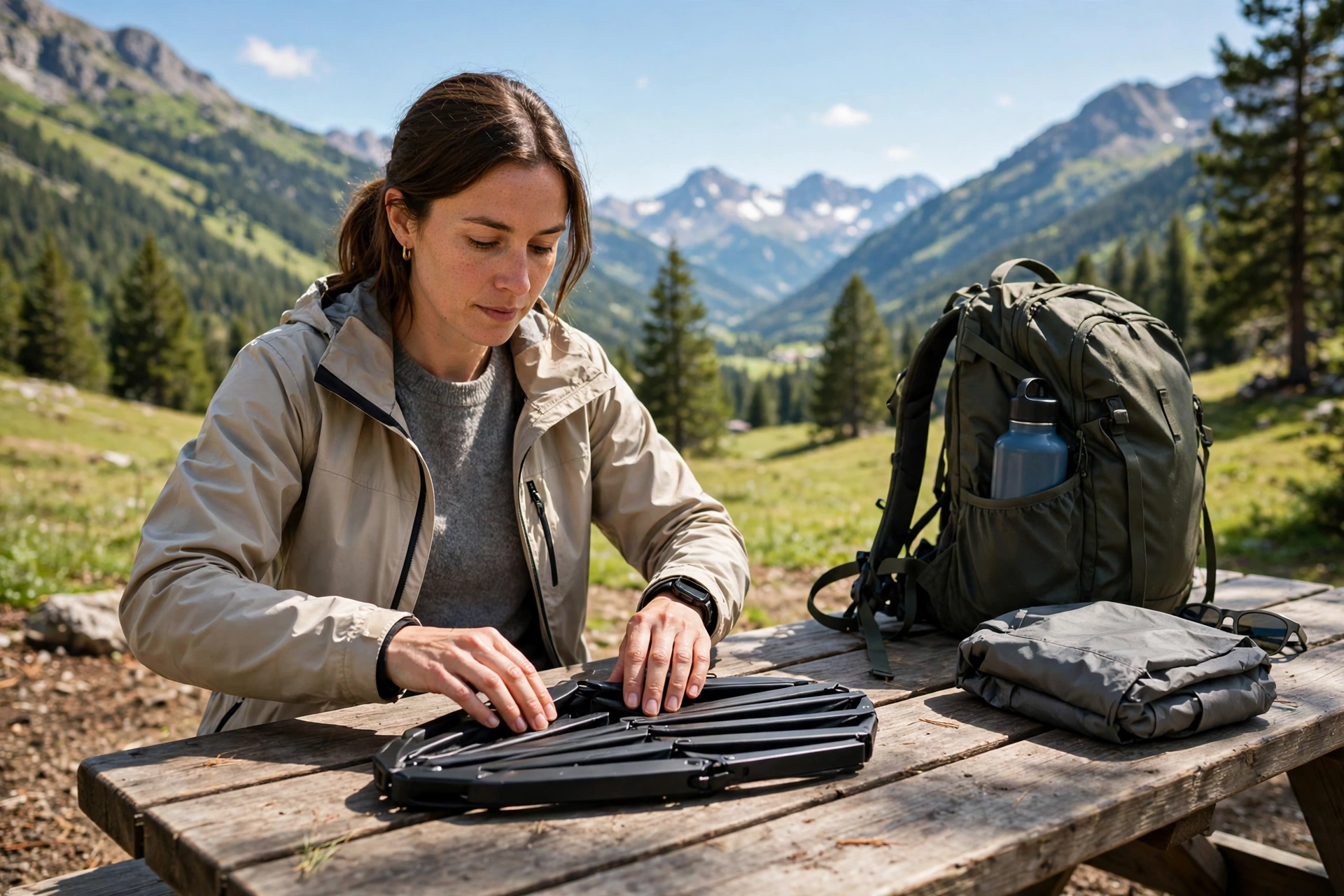
A collapsible helmet is a helmet that folds, flattens, or packs down into a smaller shape when it is not being worn, so that it can be carried in a bag, a backpack, or a bike basket, and in general terms it is made for people who need a helmet for part of a journey and want to carry it easily for the rest. The idea is simple. A normal helmet is bulky, and carrying it around all day can be a nuisance, so a collapsible helmet is designed to shrink when it is not on your head. Some fold in half, some flatten into a disc, and some use panels that fold in on each other, but all of them share the same goal: a helmet that is there when you need it and out of the way when you do not.
Collapsible helmets are most often used by cyclists, scooter riders, and commuters who ride to work, to a station, or to a meeting, and then need to carry the helmet with them for the rest of the day. A helmet that folds down can fit in a laptop bag or a tote, which makes it far easier to take on a train, into an office, or into a shop. For many people, that ease of carrying is the difference between wearing a helmet and leaving it at home.
How does a collapsible helmet work?
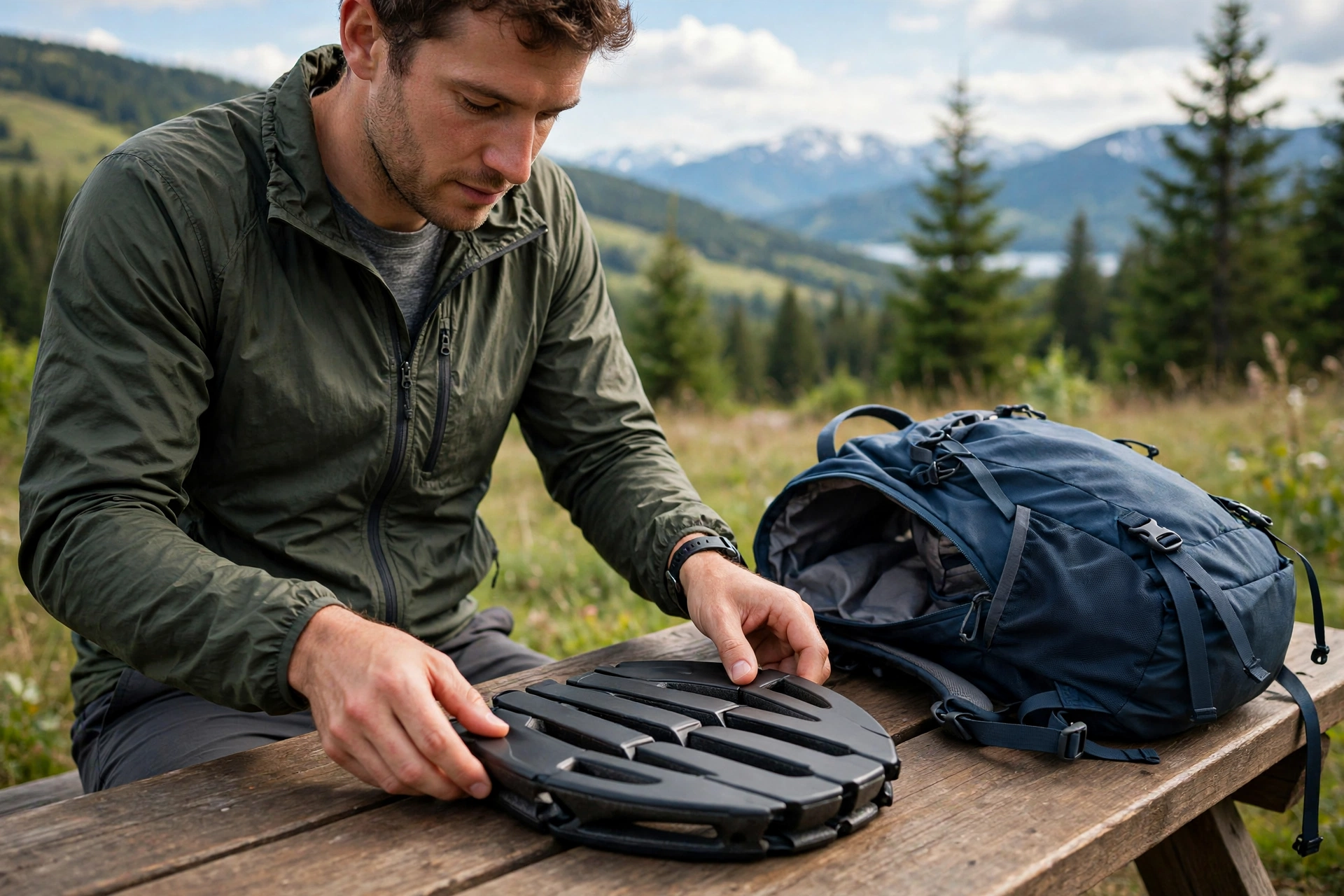
A collapsible helmet works by using a folding shell, a flexible structure, or a set of panels that move together to make the helmet smaller. In some designs, the shell is made in two or three sections that fold in on hinges, so the helmet becomes flatter when it is folded. In others, the helmet is made from a flexible material that can be pressed flat, and it springs back into shape when it is unfolded. The lining, the straps, and the fit system are designed to fold with the shell, so that the whole helmet packs down as one piece.
The folding action should be smooth and simple, because a helmet that is hard to fold will soon be left unfolded and carried in the hand, which defeats its purpose. In general terms, a good collapsible helmet can be folded and unfolded in a few seconds, with one or two movements, and it should lock firmly into its open shape before it is worn. A helmet that does not lock properly, or that feels wobbly when it is open, should not be used, because a helmet that moves in a fall cannot protect the head properly. The rider should always check that the helmet is fully open and locked before putting it on.
Who is a collapsible helmet best for?
A collapsible helmet is best for people who ride in short bursts and then need to carry the helmet with them, such as commuters, students, and city riders. A cyclist who rides to a station, takes a train, and then walks to an office may not want to carry a bulky helmet all day, and a collapsible helmet solves that problem. The same is true for a scooter rider who pops into a shop, or a rider who uses a shared bike or scooter and wants a helmet that fits in a small bag.
It is also useful for travellers, because a helmet that folds flat can be packed in a suitcase or a backpack without taking up too much space. In general terms, a collapsible helmet is a good choice for low-speed, everyday riding, where the main need is a helmet that is easy to carry and comfortable to wear for a short trip. It is less suited to long, fast rides, where a rider may want the extra ventilation, the deeper coverage, and the lighter weight of a standard helmet, and where the helmet is worn for hours rather than carried for hours.
What are the pros and cons of a collapsible helmet?
The main advantage of a collapsible helmet is its size when folded. A helmet that packs down to half its size, or flattens into a disc, is far easier to carry, store, and pack than a normal helmet, and that convenience can encourage people to wear a helmet more often. Many collapsible helmets are also light, and some are designed to be comfortable for short rides, with a simple fit system and a chin strap that is easy to adjust. For a commuter, that mix of portability and comfort can be a real benefit.
How should you choose a collapsible helmet?
To choose a collapsible helmet, start with fit, just as you would with any helmet. The helmet should sit level on the head, cover the forehead, and stay in place when you shake your head. The chin strap should be fastened securely, and the helmet should not move forward over the eyes or back off the forehead. Try the helmet with the bag or backpack you will carry it in, and check that it folds down to a size that fits, and that it unfolds easily and locks firmly into place.
How should you look after a collapsible helmet?
You should look after a collapsible helmet by folding it only as the maker intended, cleaning it regularly, and storing it in a safe place. Do not force the helmet to fold further than it is designed to go, and do not sit on it or stack heavy items on top of it when it is folded, because that can damage the hinges or the shell. After a ride, wipe the shell with a damp cloth, let the lining dry naturally, and store the helmet in a cool, dry place away from direct heat.
Check the folding parts as part of a regular helmet check, along with the strap, the lining, and the shell. Open and close the helmet, listen for rattles, and look for cracks, loose hinges, or worn straps. If a hinge becomes loose, or if the helmet no longer locks firmly into its open shape, stop using it and contact the maker for advice. Riders who are choosing a new helmet may also want to learn about features that can help in a fall, including a system designed to reduce rotational forces, such as MIPS, which is found in some helmets made for cycling and commuting. A well-kept collapsible helmet, worn every time you ride, gives you protection without the bulk.
Are collapsible helmets safe?
In general terms, a collapsible helmet that fits well, locks firmly open, and is in good condition can be a safe choice for everyday riding. Always check that it is fully open and locked before you ride.
Can a collapsible helmet fit in a backpack?
Yes, in general terms most collapsible helmets are designed to fit in a backpack, a tote, or a laptop bag when folded. Check the folded size against your bag before you buy.
When should a collapsible helmet be replaced?
A collapsible helmet should be replaced after a hard impact or a fall, or when it no longer locks open, shows damage, or no longer fits well. When in doubt, replace it rather than keep riding in it.

Olivia
Writer at Helmet Today, covering helmet reviews, fit and riding safety.