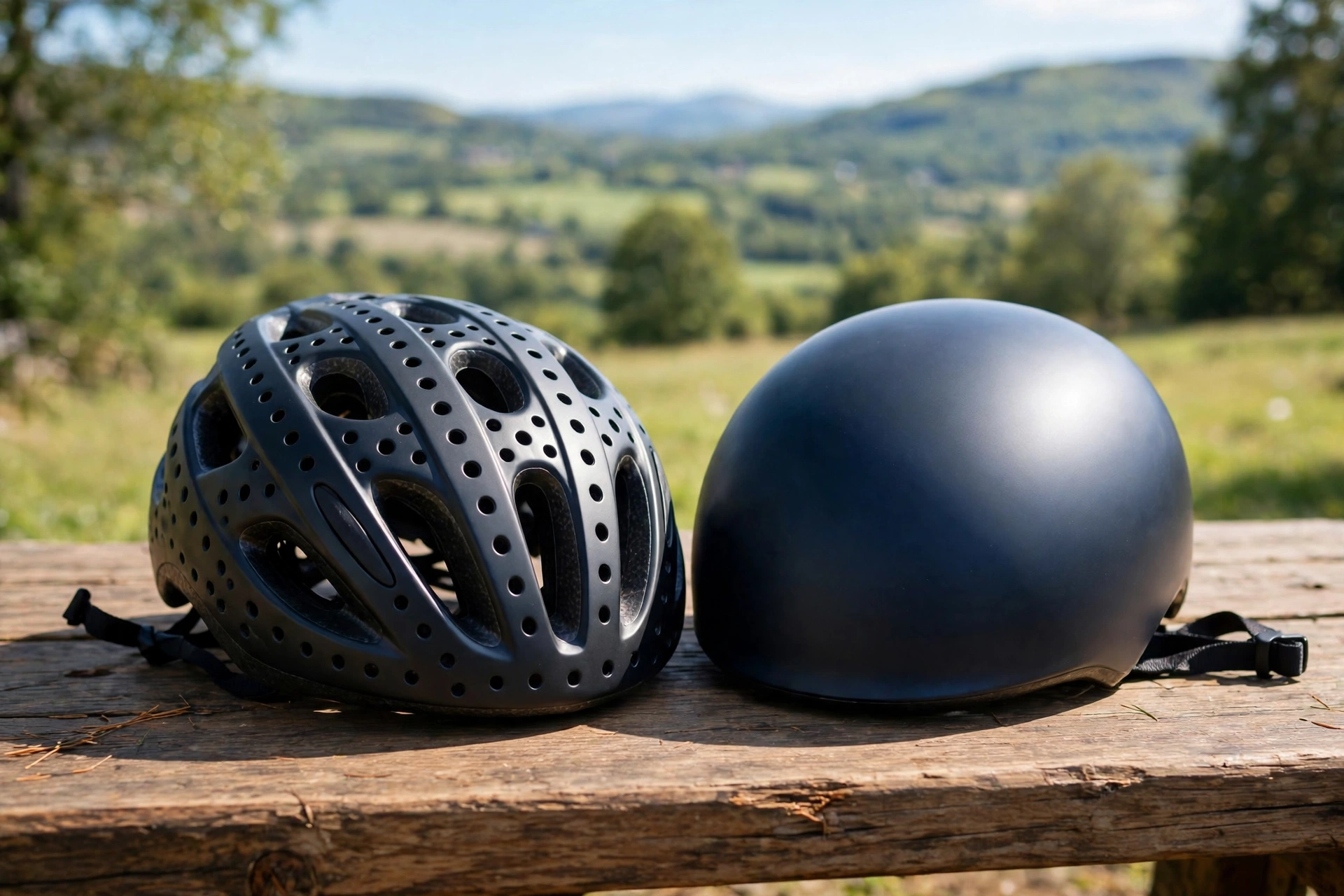
A vented helmet has openings that let air flow through it to cool the head, while a non-vented helmet has a closed shell with no air vents, and in general terms the difference is a trade-off between cooling and airflow on one side and protection from rain, dust, and debris on the other. Both types are helmets, and both are made to protect the head, but they are designed for different conditions. A vented helmet is made for warm, active riding, where the rider needs to stay cool, while a non-vented helmet is made for wet, cold, or dirty work, where the rider needs to keep water and debris out.
The choice between them matters because a helmet that is too hot will be uncomfortable, and a helmet that lets in rain or dust will be a distraction too. A rider who is comfortable is more likely to keep the helmet on, and a helmet that is worn properly is far more useful than one that is left hanging on the handlebars. Understanding how vents work, and when they help or hurt, makes it easier to choose the right helmet for the riding you actually do.
What is a vented helmet?
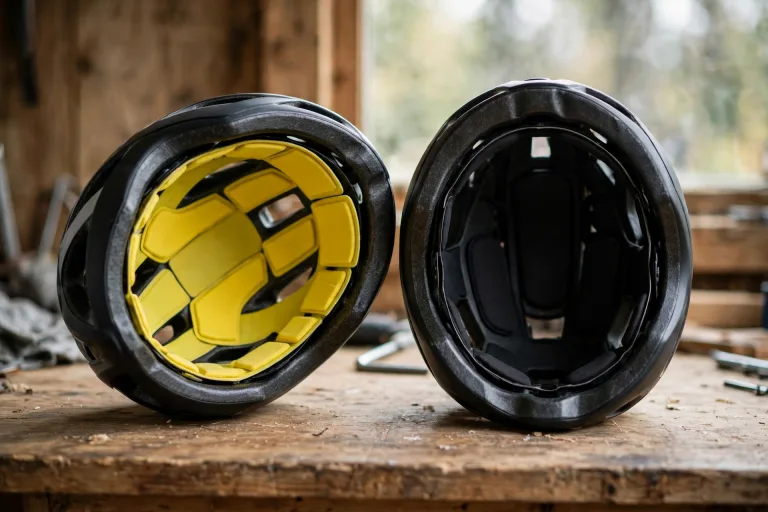
A vented helmet is a helmet with openings, usually on the front, top, and back, that let air flow in through the front, over the head, and out through the back. The vents are often fitted with mesh to keep out insects and large pieces of debris, and many vented helmets have a slider or a shutter that lets the rider open or close some of the vents. The goal is to carry heat and sweat away from the head, so that the rider stays cooler and drier on a long or active ride.
Vented helmets are common in cycling, mountain biking, and other warm-weather sports, where the rider is working hard and generating a lot of heat. In general terms, a vented helmet feels lighter and cooler than a closed helmet, and it can make a real difference on a hot day or a long climb. The trade-off is that vents can let in rain, dust, and cold air, and they can also let in small stones or twigs on a rough trail, so a vented helmet is not always the best choice for wet or dirty conditions.
What is a non-vented helmet?
A non-vented helmet is a helmet with a smooth, closed shell and no openings for airflow, so that water, dust, and debris cannot get in through the top or the sides. The shell is often made in one piece, and the inside is lined with padding that absorbs sweat, rather than relying on airflow to keep the rider cool. Non-vented helmets are common in construction, industrial work, and some winter sports, where the main need is to keep the head dry and protected from falling objects or cold wind.
A non-vented helmet can feel warmer than a vented helmet, especially in hot weather, because the heat has nowhere to go. In general terms, a non-vented helmet is a good choice for short rides in cold or wet weather, for work on a building site, or for riding in dusty conditions where vents would clog up quickly. Some non-vented helmets have a small vent that can be opened or closed, but most are fully closed, and the rider should expect to feel warmer in them on a hot day.
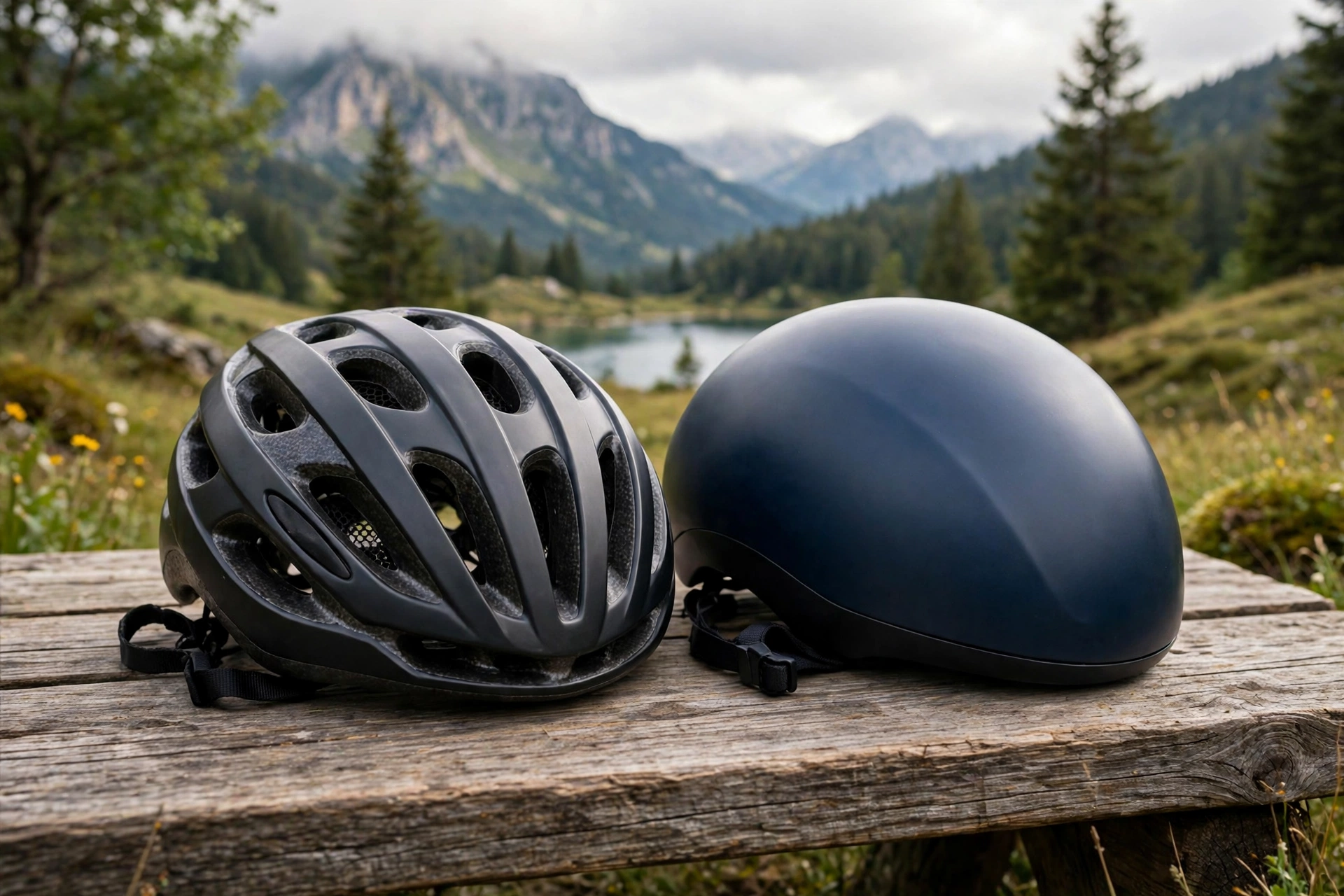
How do vented and non-vented helmets compare?
Vented and non-vented helmets compare most clearly on cooling, protection, and comfort. A vented helmet wins on cooling, because air flows through it and carries heat away, and it often feels lighter on the head. A non-vented helmet wins on protection from the weather, because its closed shell keeps out rain, snow, dust, and small debris, and it can also feel warmer in cold weather, which is a benefit in winter. Neither type is better in every situation, and the right choice depends on where and how you ride.
Which helmet should you choose?
To choose between a vented and a non-vented helmet, think first about the weather and the riding you do most often. If you ride mainly in warm weather, on long rides, or on steep climbs where you work hard and sweat, a vented helmet is likely to be the more comfortable choice. If you ride mainly in rain, snow, or cold weather, or if you work on a site where dust and falling objects are a risk, a non-vented helmet is likely to be the better choice. The best helmet is the one that fits well, feels comfortable, and suits the conditions you ride in most.
Can a vented helmet be used in winter?
A vented helmet can be used in winter, but it may feel cold, because air flows through the vents and carries heat away from the head. Some riders wear a thin cap, a skull cap, or a balaclava under a vented helmet in winter, to block the cold air and keep the head warm. Others close the vents if the helmet has adjustable shutters, or cover the vents with a helmet cover, which is a thin, waterproof cover that fits over the shell and blocks the airflow.
A non-vented helmet is often a simpler choice for winter, because its closed shell already keeps out the cold wind and the rain, and it does not need extra layers to stay warm. In general terms, a rider who rides through the winter should think about warmth as well as protection, and should choose a helmet that can be worn comfortably with a cap or a liner. Riders who are choosing a new helmet may also want to learn about features that can help in a fall, including a system designed to reduce rotational forces, such as MIPS, which is found in some vented and non-vented helmets made for cycling and sports. A helmet that keeps you warm, dry, and comfortable is one you will keep wearing all year.
Is a vented helmet cooler than a non-vented helmet?
Yes, in general terms a vented helmet is cooler than a non-vented helmet, because air flows through the vents and carries heat and sweat away from the head.
Can a non-vented helmet be used in summer?
Yes, in general terms a non-vented helmet can be used in summer, but it will feel warmer than a vented helmet. Take breaks, drink water, and take the helmet off when you stop to cool down.
Do vents make a helmet less safe?
In general terms, vents do not make a helmet less safe when the helmet is in good condition and fits well. Vents are designed to let air through without weakening the shell, but a helmet with a cracked shell should always be replaced.

Olivia
Writer at Helmet Today, covering helmet reviews, fit and riding safety.