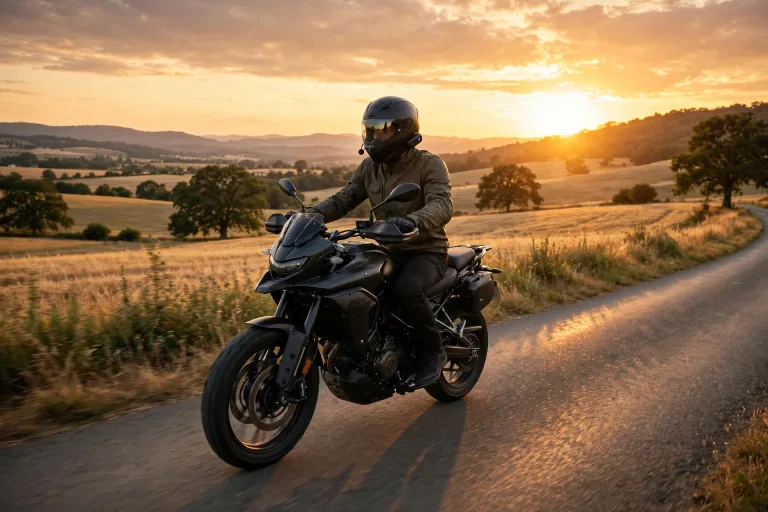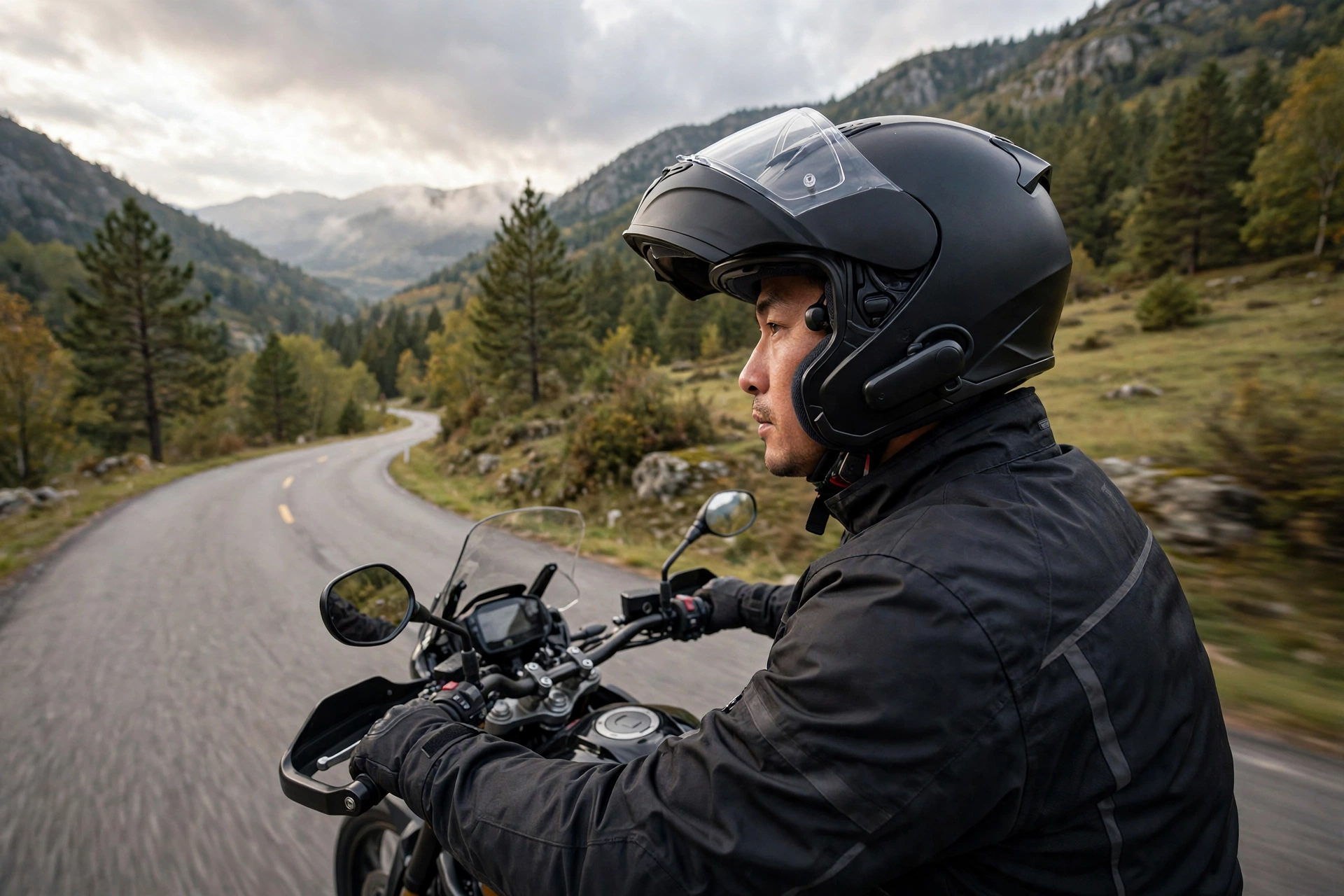
Can you talk on the phone in a helmet? In general terms, yes, you can talk on the phone while wearing a helmet if you use a hands-free Bluetooth headset or an intercom built into the helmet, but you should not hold a phone to your ear, and you should keep calls short, because a call can distract you from the road. Many riders use a helmet headset to take a call, listen to directions, or talk to another rider, and when it is set up properly, it can be a useful tool. The key is to use it in a way that does not take your eyes off the road, your hands off the controls, or your mind off the traffic around you.
A helmet is not designed for holding a phone, and trying to hold one inside a helmet is awkward, unsafe, and in many places against the rules of the road. A phone pressed against the ear can push the helmet out of place, block your hearing, and make it hard to turn your head to check for traffic. A hands-free system, by contrast, lets you keep both hands on the handlebars and your eyes on the road, and it is the only sensible way to talk on the phone while wearing a helmet.
How do riders talk on the phone in a helmet?
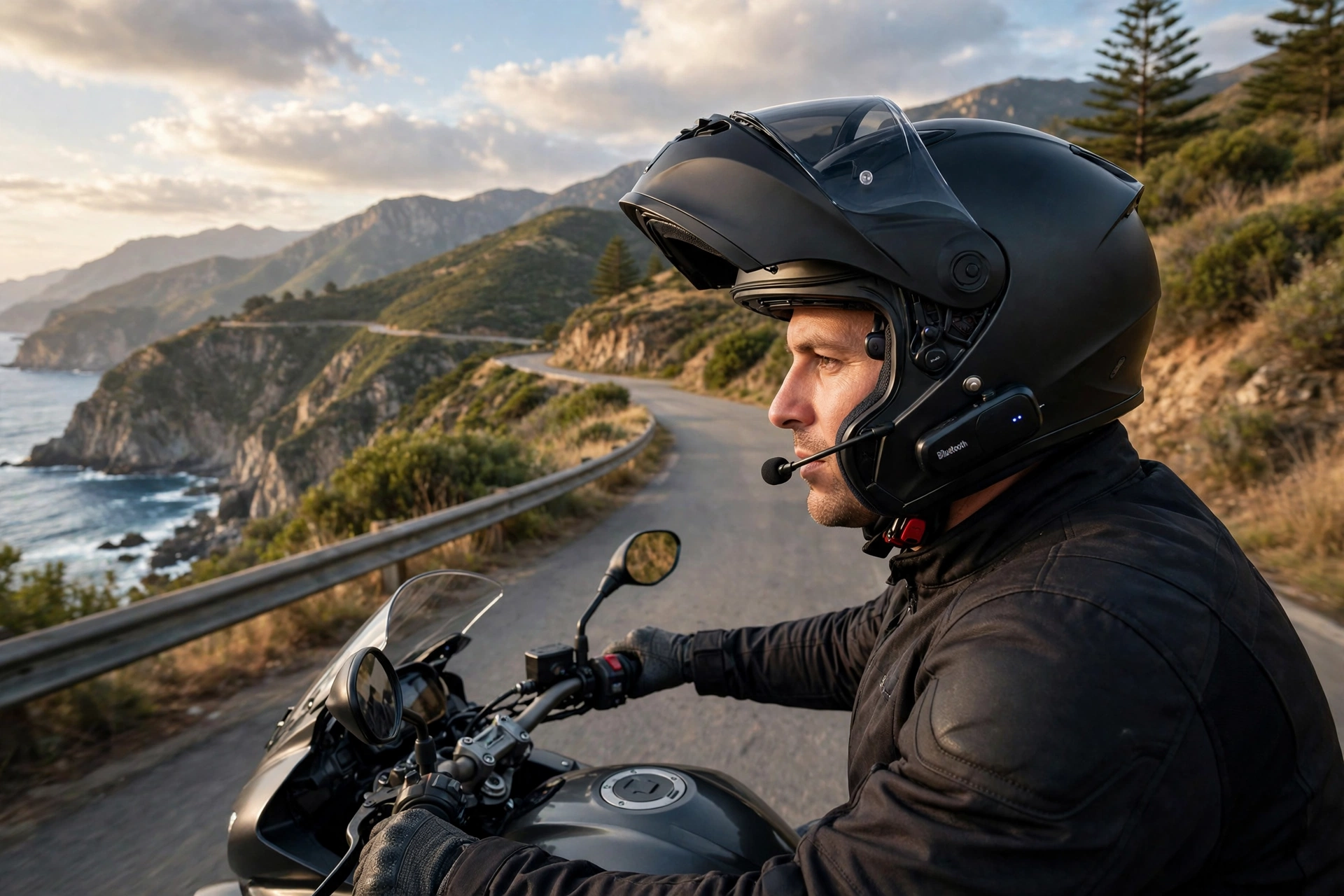
Riders talk on the phone in a helmet by using a Bluetooth headset, an intercom, or a set of speakers and a microphone fitted inside the helmet. The headset connects to the phone wirelessly, and the speakers sit near the ears, while the microphone sits near the mouth, often on a small boom or on the inside of the chin bar. When a call comes in, the rider can answer it with a button on the headset or by voice, without taking a hand off the handlebars or looking down at the phone.
Some helmets come with a headset already fitted, while others have pockets or slots where a headset can be added later. In general terms, a headset that is made for the helmet will fit better and sound clearer than a generic earphone pushed inside, because it is designed to sit in the right place and to cope with wind noise. The rider should test the headset before a long ride, check that the speakers do not press on the ears, and make sure the microphone picks up the voice clearly without picking up too much wind noise.
Is it safe to talk on the phone while riding?
Talking on the phone while riding can be a distraction, even when it is hands-free, because a call takes up some of the rider’s attention. A rider who is listening to a call may miss a warning sound, a change in traffic, or a hazard on the road, and a long or emotional call can take the rider’s mind away from riding altogether. In general terms, a short, simple call, such as confirming a meeting time or a change of plan, is less of a distraction than a long conversation, but no call is completely free of risk.
The safest approach is to keep calls short, to avoid calls in busy traffic, in bad weather, or on an unfamiliar road, and to pull over safely if a call needs your full attention. A rider who feels distracted should end the call, or ask the caller to wait until the rider has stopped. It is also worth remembering that a helmet, a headset, and a phone are all tools, and the rider is still responsible for staying alert. A call that can wait should wait, and a call that cannot wait should be taken only when it is safe to do so.
Can you use earbuds under a helmet?
You can use earbuds under a helmet, but in general terms they are not the best choice for talking on the phone while riding. Earbuds can be uncomfortable under a helmet, because the helmet presses them into the ear, and they can fall out when the helmet is put on or taken off. They can also block out too much sound, so that the rider cannot hear traffic, a horn, or a warning, and they can be hard to control without taking a hand off the handlebars.
What are the rules for phone use in a helmet?
The rules for phone use while riding vary by place, and in general terms many places do not allow a rider to hold a phone while riding, even if the rider is wearing a helmet. Hands-free use is often allowed, but the rider is still expected to stay in full control of the vehicle and to pay attention to the road. A rider who is unsure should check the local rules before riding, and should not rely on a headset to make a call legal if the local rules say otherwise.
How can you make calls clearer in a helmet?
You can make calls clearer in a helmet by choosing a good headset, fitting it properly, and keeping the helmet and the headset clean. A headset with noise reduction can help to cut out wind noise, and a microphone with a wind cover can help the caller to hear you clearly. The speakers should sit close to the ears without pressing on them, and the microphone should sit close to the mouth without touching the lips or the chin bar, because a microphone that touches the helmet can pick up a lot of noise.
It is also worth checking the volume before you ride, and setting it to a level where you can hear the caller without it being so loud that you cannot hear traffic. A helmet that fits well will also help, because a helmet that is too loose can move around and change the position of the speakers, while a helmet that is too tight can press the speakers into the ears. Riders who are choosing a new helmet may also want to learn about features that can help in a fall, including a system designed to reduce rotational forces, such as MIPS, which is found in some helmets made for riding. A clear call, in a comfortable helmet, is a safer call than one that forces you to shout or to strain to hear.
Can I answer a call while riding a motorcycle?
Yes, in general terms you can answer a call while riding if you use a hands-free Bluetooth headset. Keep the call short, and pull over if the call needs your full attention.
Is it legal to talk on the phone in a helmet?
In general terms, hands-free use is often allowed, but holding a phone while riding is not. The rules vary by place, so check the local rules before you ride.
Do I need a special helmet to talk on the phone?
No, in general terms you do not need a special helmet. Most helmets can be fitted with a Bluetooth headset, and some helmets come with one already fitted. Check that the headset fits your helmet before you buy.

Olivia
Writer at Helmet Today, covering helmet reviews, fit and riding safety.