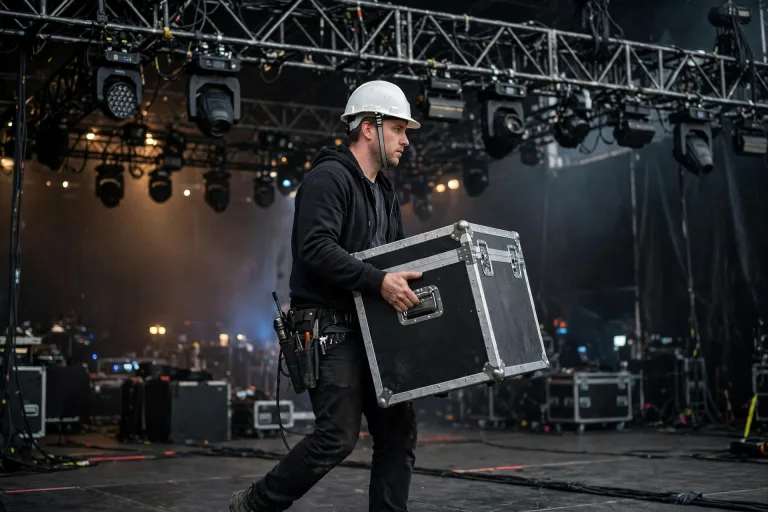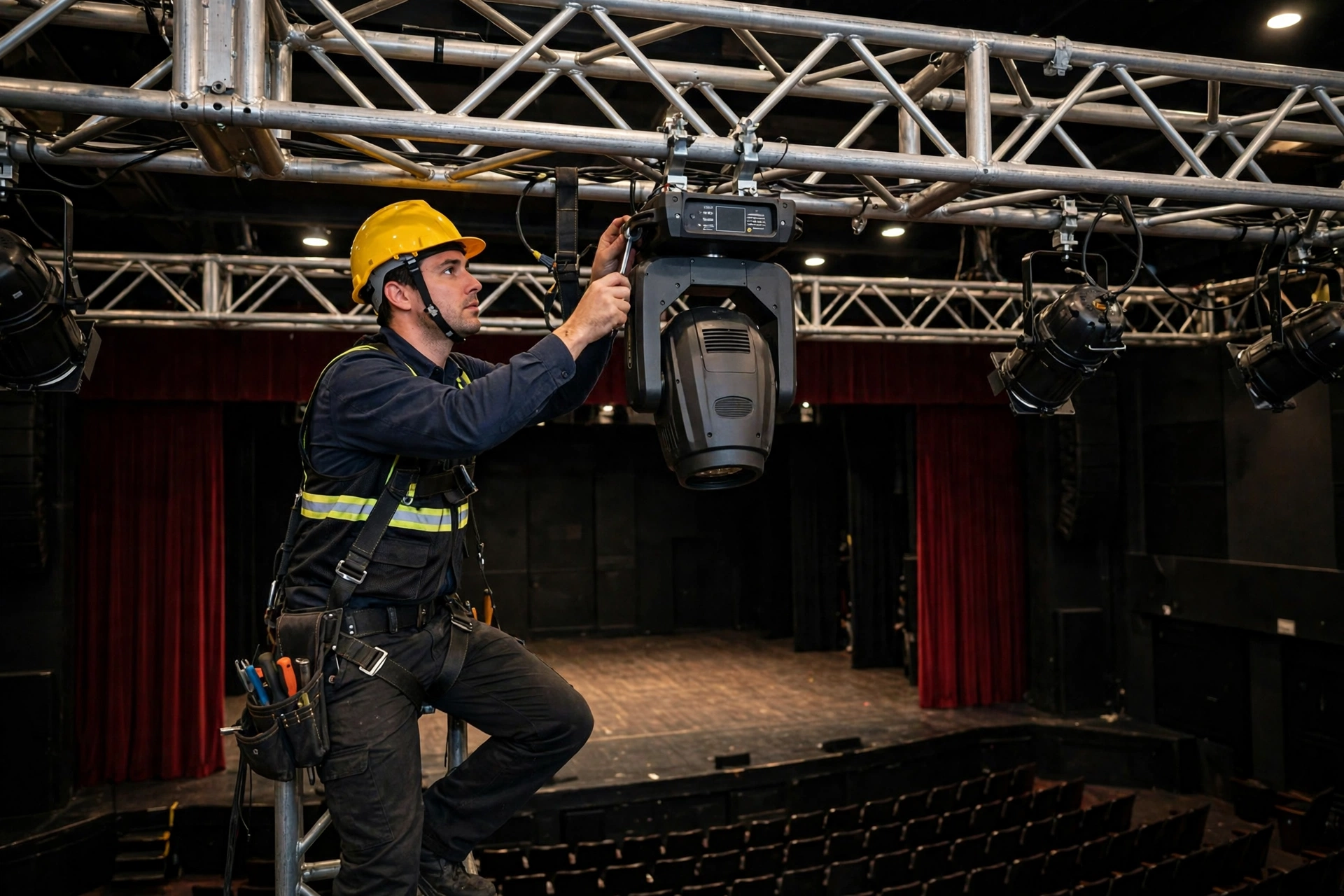
A helmet for lighting technicians is a hard hat worn by the crew member who rigs, focuses and maintains the stage, studio or film lighting, and in general terms it should protect the head from falling fixtures, bumps and knocks while the technician works at height and under rigging. Lighting technicians work in theatres, concert venues and film studios, and they spend much of their time under lighting bars, trusses and overhead fixtures. A helmet is essential safety equipment in that setting, because a lamp, a clamp or a tool dropped from above can cause a serious head injury.
The challenge for a lighting technician is to choose a helmet that protects well without getting in the way of precise work. The helmet needs to be comfortable, secure and light enough to wear for a long shift. A technician should always check the rules for the venue and the production before choosing a helmet, because the rules are what decide which helmets are allowed on site.
Why do lighting technicians need a helmet?
Lighting technicians need a helmet because they work in places where things fall, swing and hang overhead. During a rig, lighting fixtures are lifted, bars are raised and cables are pulled across the roof of a venue, and any of these can drop a bolt, a clamp or a small part of a fixture. A helmet gives protection against a head injury if something falls, and it also protects the head from bumps in a dark theatre.
There is also the risk of working near hot lamps and moving equipment, such as a motorised lighting bar or a stage lift, where a knock to the head can happen in a moment. A helmet helps to spread the force of a blow across the shell, and it also helps the technician to be seen, because many helmets are made in bright colours that stand out in a dim venue. In general terms, a helmet is the most important piece of safety equipment a lighting technician wears, and it should be worn from the start of the rig to the end of the strike.
What kind of helmet is best for lighting technicians?
The best helmet for lighting technicians is, in general terms, a hard hat that meets the safety standard required by the venue and fits the technician well. Many technicians choose a standard hard hat with a short peak, because it protects the top of the head, stays out of the way when the technician looks up at a lighting bar, and works well with ear protection and a headlamp. A helmet with a chin strap is often a good choice, because it keeps the helmet in place when the technician bends, climbs or leans over a fixture.
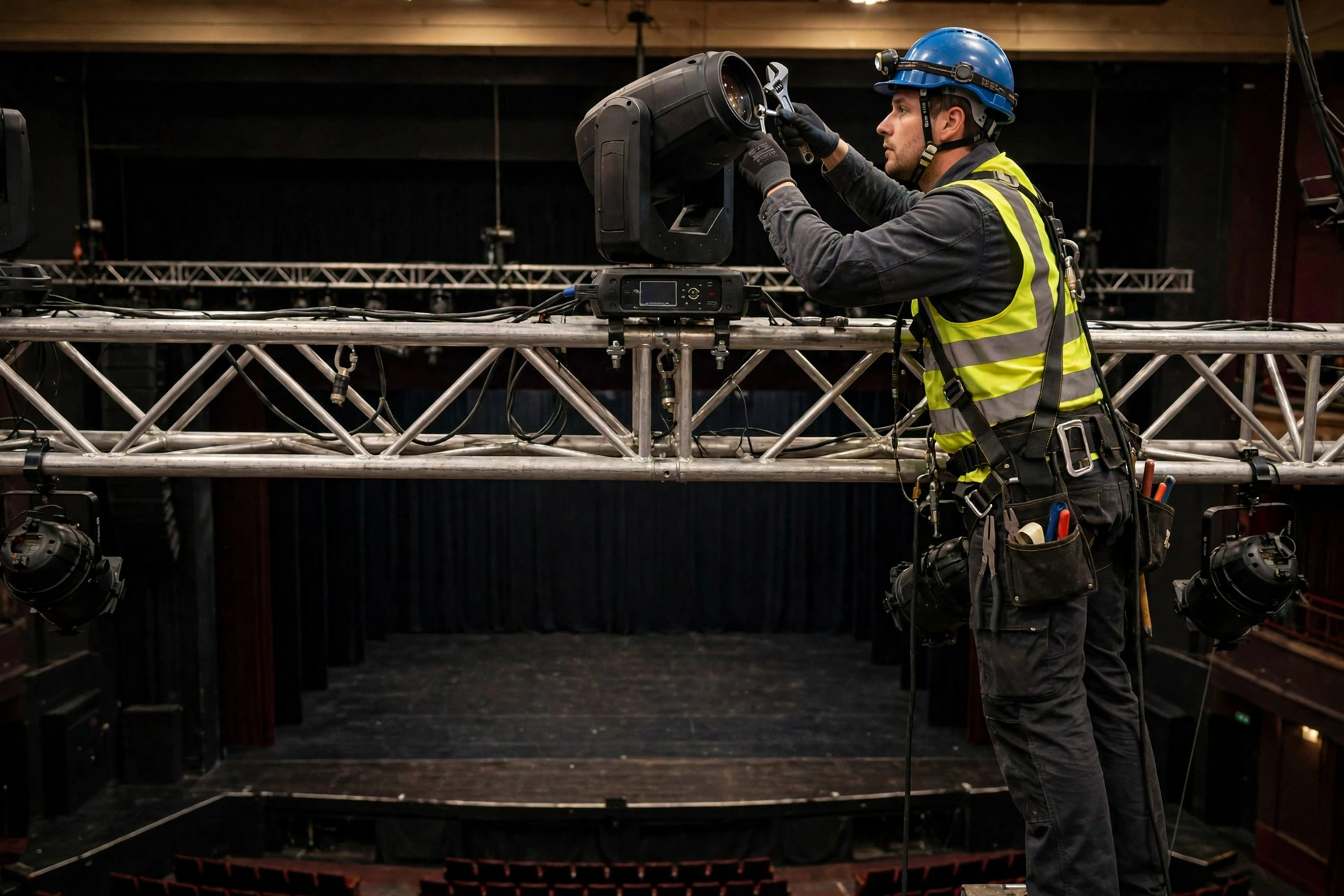
Some technicians choose a helmet with slots for accessories, so they can fit a headlamp for working in dark areas or ear defenders for working near loud speakers. The look of the helmet should never come before safety, though, and a helmet that looks right but does not meet the venue’s standard is not a good choice. A technician should check the standard, the fit and the condition of the helmet before every show.
How should a helmet for lighting technicians fit?
A helmet for lighting technicians should fit snugly, sit level on the head and stay in place when the technician shakes their head, bends down or climbs a ladder. The helmet should cover the forehead and the top of the head, and the chin strap, where one is fitted, should be fastened securely every time the technician is working. A strap that is left loose lets the helmet lift or slide, and a helmet that comes off is no help at all.
The fit should be checked with the other gear the technician will wear, such as ear protection, a headlamp or safety glasses, because these can change how a helmet sits. A headlamp should be mounted so that it does not tip the helmet to one side. The technician should also check that the helmet does not block their hearing, because a lighting technician needs to hear calls from the crew, warnings about moving loads and the sound of the show itself.
What rules apply to helmets for lighting technicians?
The rules for helmets for lighting technicians are set by the venue, the production company and the stage manager, and they can be different from one show to another. Most venues ask for a helmet that meets a recognised safety standard, and some ask for a helmet that is within a certain age, because a helmet’s materials can wear out over time. A technician should read the rules well before the show, and should bring the helmet’s paperwork or labels with them if the venue asks to see them.
Some venues also have rules about the colour of the helmet, such as asking crew to wear a bright colour so they can be seen in the dark, and a technician who turns up without the right helmet may not be allowed to work on the stage. It is far better to check in advance than to be turned away at the venue door. A technician who is unsure should ask the production manager directly, because a short question before the show can save a wasted journey on the day.
How should a lighting technician’s helmet be looked after?
A lighting technician’s helmet should be looked after with regular cleaning and sensible storage, in the same way as any work helmet. After a show, the technician should wipe the shell clean, let the lining air out and check the suspension and the chin strap for wear or damage. The helmet should be stored in a cool, dry place, away from direct heat and sunlight, and kept in a helmet bag when it is not in use.
The helmet should also be checked for cracks, dents or damage to the shell after every show, and in general terms a helmet that has taken a serious impact should be replaced rather than used again. Technicians who are choosing a new helmet may also want to learn about features that can help in a crash, including a system designed to reduce rotational forces, such as MIPS, which is found in some work and sports helmets. A well-kept helmet, worn every time, gives a lighting technician the best chance of working safely through a long production.
Can a lighting technician wear a bike helmet instead of a hard hat?
A bike helmet is not a good substitute for a hard hat on a stage, because it is designed for a different kind of impact. A lighting technician should, in general terms, wear a hard hat that meets the venue’s safety standard.
Do lighting technicians need a helmet during focus sessions?
Yes, a lighting technician should wear a helmet during focus sessions as well as during the rig and the strike. Fixtures are still being moved and adjusted during a focus, so the risk of a falling object or a bump to the head is still there.
When should a lighting technician’s helmet be replaced?
A lighting technician’s helmet should be replaced after a hard impact or a fall, or when it no longer fits well, shows cracks or damage, or has reached the age limit set by the venue. When in doubt, replace it rather than keep working in it.

Olivia
Writer at Helmet Today, covering helmet reviews, fit and riding safety.