A MIPS helmet is a helmet fitted with a low-friction layer that lets the shell move a little against the head in a fall, while a non-MIPS helmet has no such layer, and in general terms the difference is that a MIPS helmet is designed to reduce rotational forces in an angled impact, whereas a non-MIPS helmet relies on its shell and foam liner alone. MIPS stands for Multi-directional Impact Protection System, and it is found in helmets for cycling, motorcycling, skiing, and other sports. A non-MIPS helmet is not necessarily unsafe; it simply does not have this extra layer.
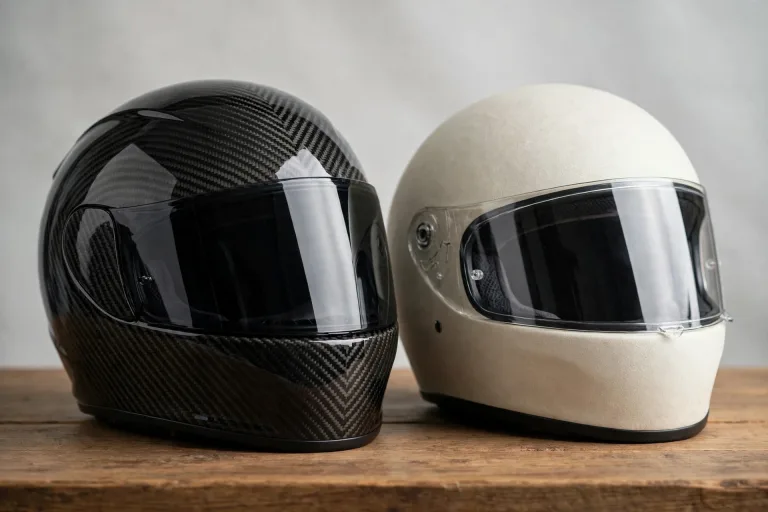
The confusion around the two types is understandable, because from the outside they often look the same. Both have a hard outer shell and a firm foam liner, and both must meet the same safety standards. The difference is hidden inside, in a thin layer that most wearers never see. Understanding what that layer does, and what it does not do, helps a buyer decide whether it is worth paying extra for.
What is a MIPS helmet?
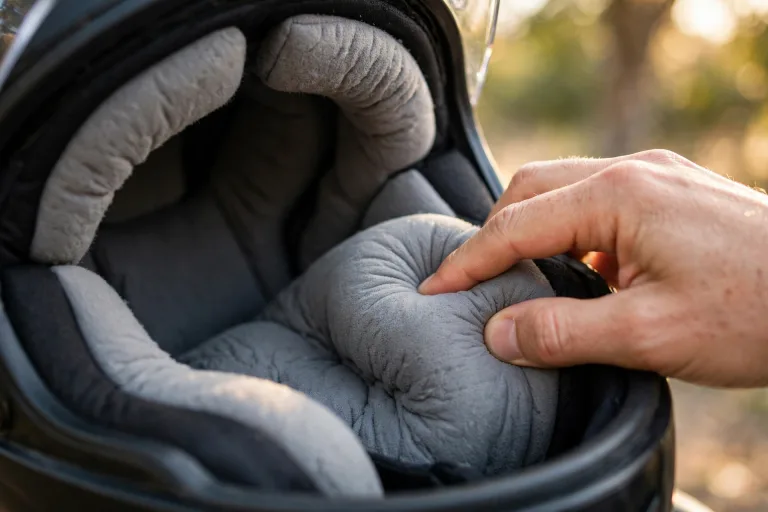
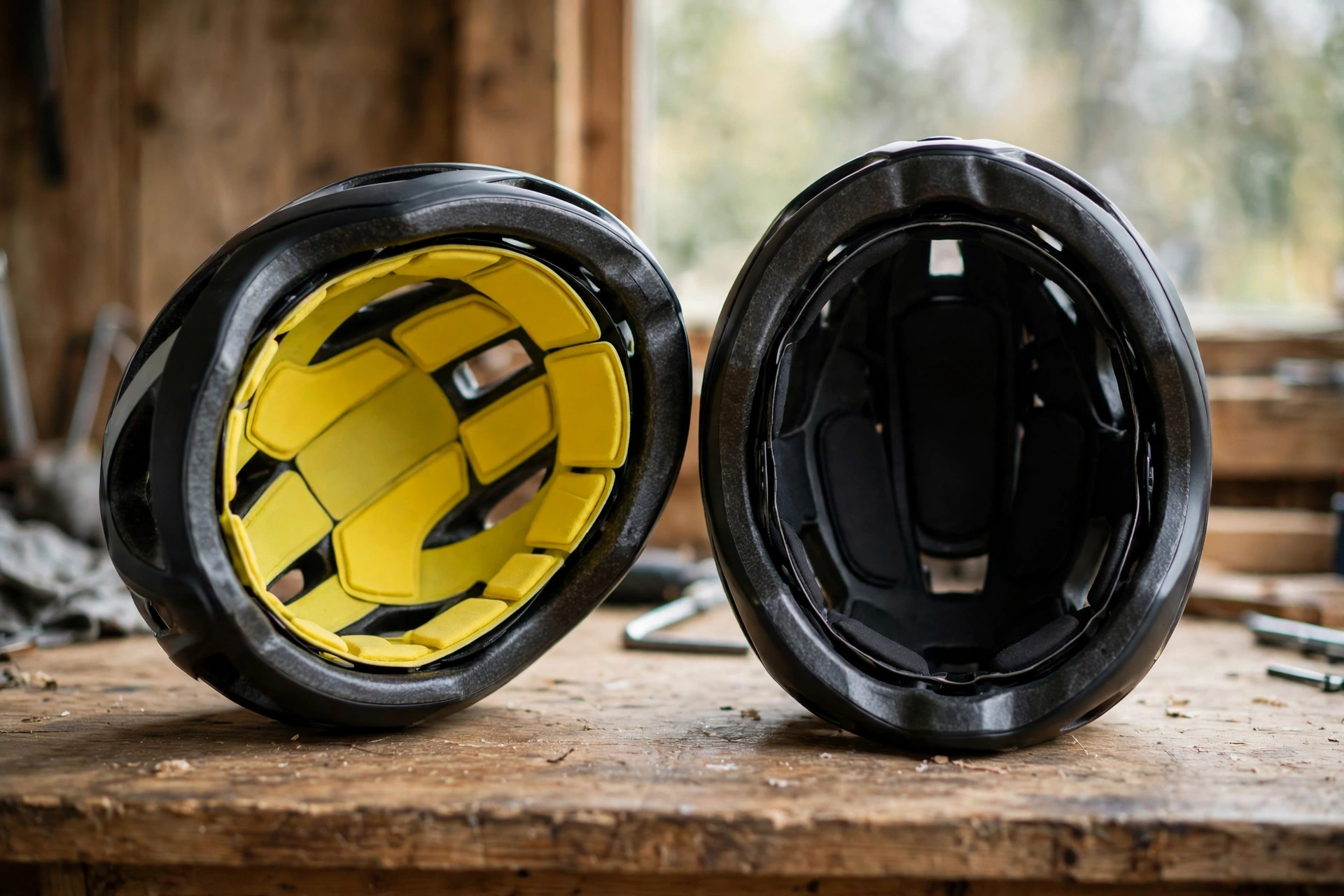
A MIPS helmet is a helmet with a thin, low-friction layer fitted between the comfort padding and the foam liner, or sometimes built into the liner itself. In a fall, this layer allows the helmet to rotate a small amount relative to the head, usually around ten to fifteen millimetres, before the liner takes up the force. That small movement is the whole point of the system.
The idea behind MIPS came from research into how the brain is hurt in a crash. Many real falls are not straight, head-on impacts; the head often hits the ground at an angle, which twists the head as well as pushing it. That twisting, or rotational, force can be harmful to the brain. MIPS aims to reduce the amount of that rotational force that reaches the head by letting the helmet move slightly first.
What is a non-MIPS helmet?
A non-MIPS helmet is simply a helmet without that low-friction layer. It still has a hard outer shell to spread the force of an impact and a firm foam liner to absorb it, and it still has to pass the same safety tests as a MIPS helmet in the same category. Most helmets sold over the years have been non-MIPS helmets, and they have protected riders well.
The foam liner in a non-MIPS helmet works by crushing on impact, which slows the head down and reduces the force that reaches the skull. What it does not do is allow the helmet to move separately from the head, so in an angled impact more of the twisting force can be passed on. That is the gap MIPS is designed to address, and it is the only real difference between the two types.
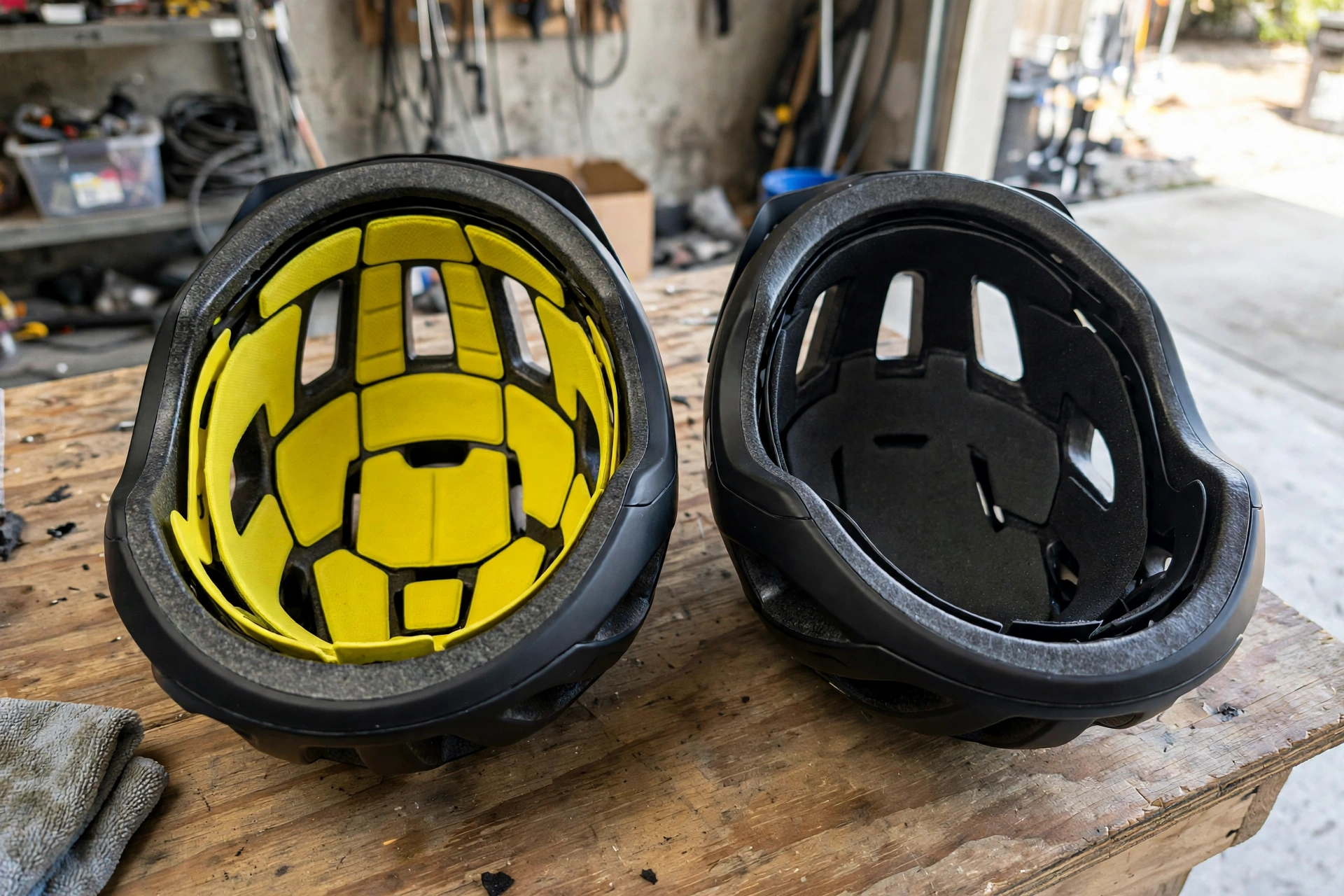
What is the main difference between a MIPS and a non-MIPS helmet?
The main difference between a MIPS helmet and a non-MIPS helmet is the low-friction layer inside the MIPS helmet, which lets the shell rotate slightly against the head in an angled impact. In a straight, head-on impact, the two helmets behave in much the same way, because the foam liner does the work in both. In an angled impact, the MIPS layer adds a small amount of movement that is meant to cut down the rotational force reaching the brain.
In practical terms, the difference is small and easy to miss. A MIPS helmet may cost a little more than the same helmet without MIPS, and it may weigh a few grams more. The fit is usually the same, and the comfort padding sits in the same place. Some riders say they can feel the MIPS layer move slightly when they twist the helmet in their hands, while others notice nothing at all.
Is a MIPS helmet safer than a non-MIPS helmet?
A MIPS helmet is safer than a non-MIPS helmet in angled impacts, in general terms, because the low-friction layer is designed to reduce the rotational forces that reach the head. For straight impacts, the two types are much the same, since both rely on the shell and the foam liner. Safety, however, depends on far more than one feature, and a MIPS helmet that fits badly is less safe than a non-MIPS helmet that fits well.
Fit matters more than any single technology. A helmet must sit level on the head, cover the forehead, and stay in place with the strap fastened. A helmet that is too loose can shift in a fall, and a helmet that is too tight will be left at home. The safety standard the helmet meets is also important, and both MIPS and non-MIPS helmets must pass the same tests for their sport.
How should you choose between a MIPS and a non-MIPS helmet?
Choosing between a MIPS and a non-MIPS helmet comes down to budget, fit, and the kind of riding the wearer does. If two helmets fit equally well and the price difference is small, the MIPS version is a sensible choice, because the extra layer adds protection in angled impacts at little cost in weight or comfort. If the MIPS version fits worse than the non-MIPS version, the better-fitting helmet is the right choice, whatever the label says.
Budget is a real factor. MIPS usually adds something to the price, and for a rider on a tight budget a well-fitting non-MIPS helmet that meets a recognised standard is a sound buy. It is better to spend the money on a helmet that fits properly and is worn every time than to stretch for a feature in a helmet that is uncomfortable or the wrong size.
Riders who fall more often, such as mountain bikers or riders learning a new sport, may get more value from MIPS, because angled impacts are common in those falls. Riders who mostly ride on smooth roads at steady speeds may see less benefit, though the extra layer does no harm. To understand the system in more detail before deciding, it helps to read what MIPS is and how it works in a helmet, which explains the layer and the thinking behind it. The best helmet is the one that fits, is comfortable, and is worn without fail.
Can you tell a MIPS helmet from a non-MIPS helmet by looking at it?
Sometimes, because many MIPS helmets carry a small yellow logo, but not always, since some versions are built into the liner and are hard to see. The maker’s description and the label inside the helmet are the reliable way to check.
Does MIPS make a helmet heavier?
Only slightly, in general terms, because the low-friction layer is thin and light. Most riders notice no difference in weight, and the fit and ventilation are usually the same as the non-MIPS version.
Should you replace a non-MIPS helmet with a MIPS one?
There is no need to replace a non-MIPS helmet that fits well and is in good condition just to get MIPS. When it is time for a new helmet, a MIPS version is worth considering, especially if the price difference is small.

Olivia
Writer at Helmet Today, covering helmet reviews, fit and riding safety.