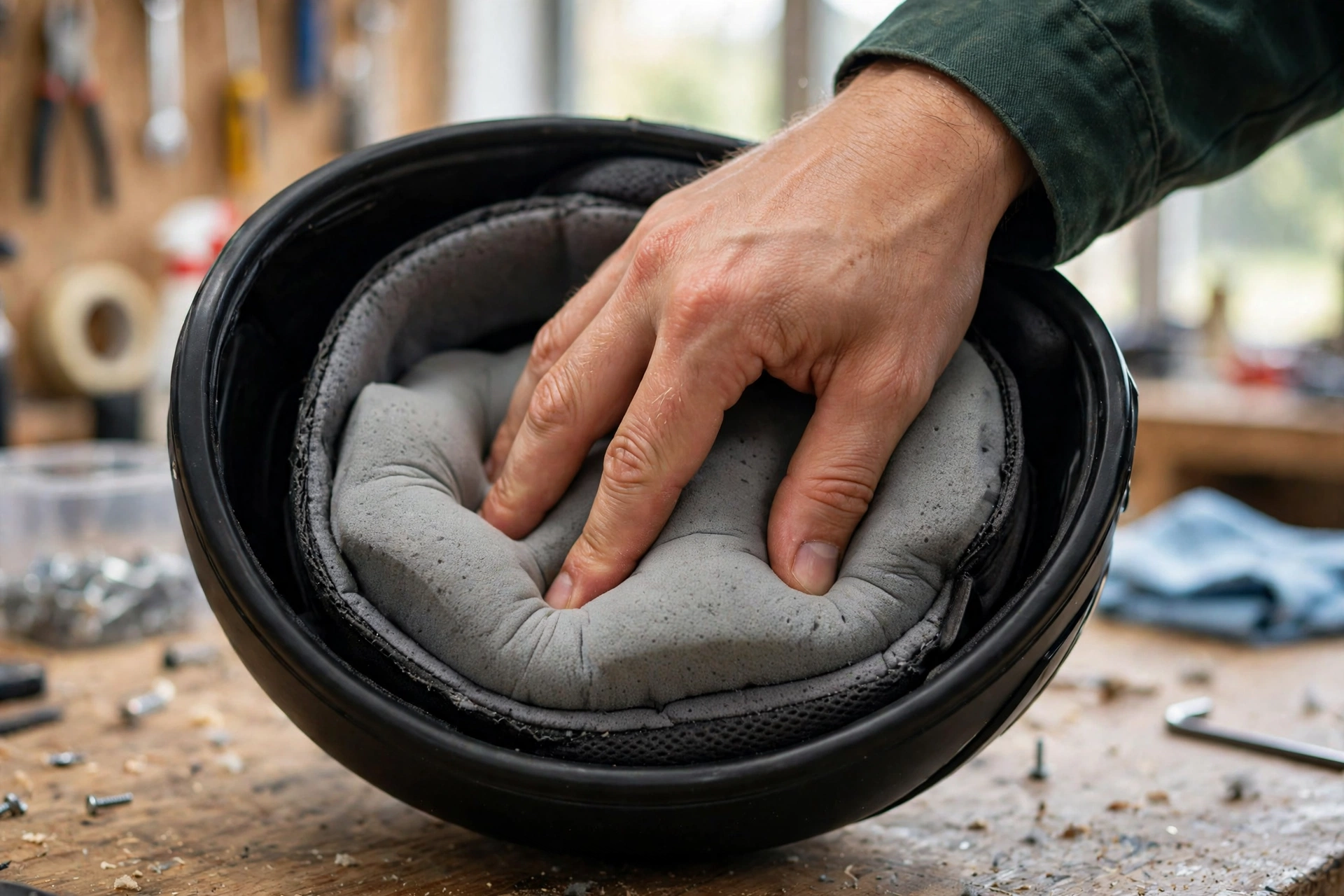
Memory foam in a helmet is a soft, slow-recovering foam layer inside the shell that moulds itself to the shape of the wearer’s head, spreading pressure evenly and holding the helmet steady, and in general terms it is used to improve comfort and fit rather than to absorb a hard impact on its own. Memory foam is the same material found in some mattresses and pillows, and in a helmet it sits as a comfort lining or as pads that touch the head directly. It feels firm at first, then softens with body heat and slowly takes the shape of the head beneath it.
The idea is simple: a helmet that matches the shape of the head more closely should feel more comfortable and stay in place better. A helmet that presses hard in one spot and leaves a gap in another can become painful on a long ride, and it can also shift around when the wearer moves. Memory foam aims to close those gaps gently, so the helmet feels like it belongs on the head rather than sitting on top of it.
What is memory foam in a helmet?
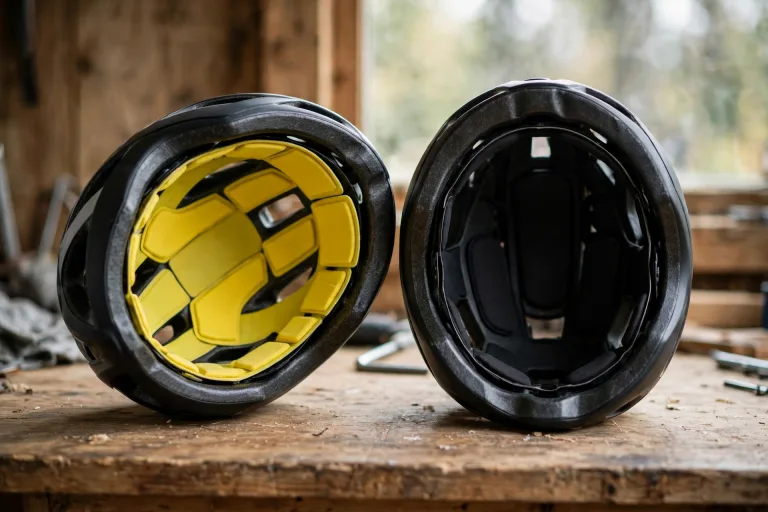
Memory foam in a helmet is a type of soft polyurethane foam, sometimes called viscoelastic foam, that responds to warmth and pressure. When it is pressed, it gives way slowly, and when the pressure is removed it returns to its shape just as slowly. This is different from the firm foam that forms the main protective layer of a helmet, which is made to crush on impact and is not meant to spring back.
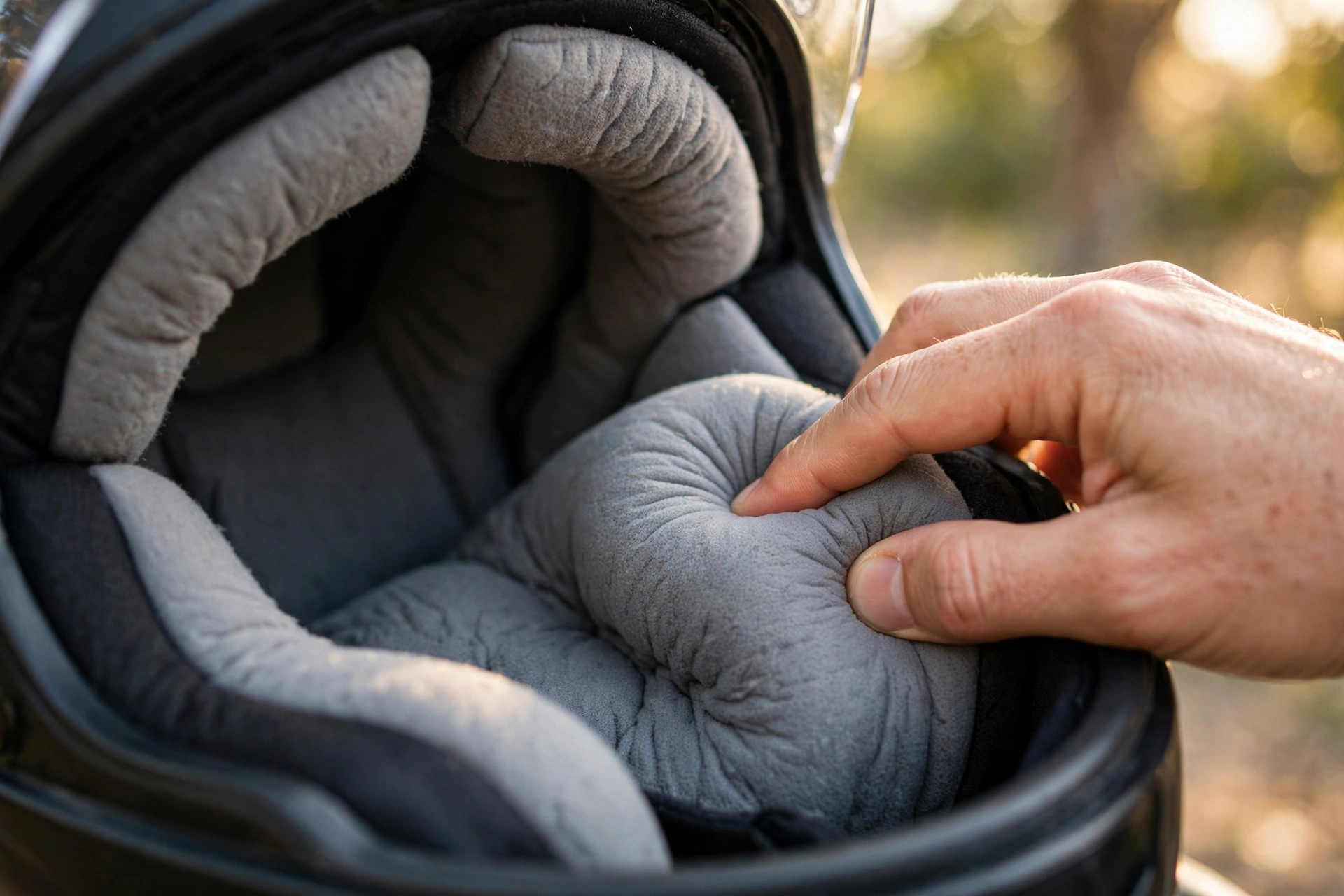
In a helmet, memory foam is usually found in the comfort padding: the pads that sit against the forehead, the temples, and the back of the head. Some helmets use memory foam as a thin layer inside a fabric cover, while others use thicker pads that the wearer can move or swap to fine-tune the fit. It is a comfort feature, and it sits inside the helmet alongside the harder protective foam, not instead of it.
How does memory foam work inside a helmet?
Memory foam works inside a helmet by softening with the warmth of the head and then moulding itself to the shape beneath it. When a rider first puts the helmet on, the pads may feel firm and a little stiff. After a few minutes of wear, the foam warms up and begins to give, filling small gaps between the helmet and the head and spreading the pressure of the shell more evenly.
This even spread of pressure is the main benefit. A helmet shell is a fixed shape, and no two heads are exactly the same, so there will always be places where a standard pad presses harder than it should. Memory foam adapts to those differences, so the wearer feels less pressure on the forehead and less pinching at the temples. The helmet also tends to feel more stable, because the foam is in contact with more of the head at once.
Is memory foam better than standard helmet padding?
Memory foam is better than standard helmet padding for comfort and for fit, in general terms, but it is not better in every way. Standard padding, usually made from a soft open-cell foam covered in fabric, is light, breathable, and quick to dry. Memory foam is denser and heavier, and it can hold more heat, which means it can feel warmer on a hot day or during hard effort.
For riders who struggle with pressure points, memory foam can be a real improvement. A helmet that gave the wearer a sore forehead after an hour may feel comfortable for a whole day once memory foam pads are fitted. For riders who ride in warm weather, though, the extra warmth may be a drawback, and the slower recovery of the foam means the pads can feel a little flat after long use until they cool and rest.
Does memory foam make a helmet safer?
Memory foam does not make a helmet safer in the sense of absorbing a hard impact, because that job belongs to the firm protective foam and the shell. Memory foam is too soft to deal with the force of a crash, and it is not tested or rated for impact protection in the way the main liner is. A helmet should never be chosen for its memory foam alone, and a helmet without memory foam is not less safe because of that.
Where memory foam can help safety is indirectly, through fit. A helmet that fits well stays in place in a fall, and a helmet that is comfortable is more likely to be worn every time. A helmet left at home because it hurts to wear offers no protection at all. In that sense, memory foam supports safety by making a good fit easier to achieve and easier to live with, day after day.
How should you look after memory foam in a helmet?
Memory foam in a helmet should be looked after with gentle cleaning and careful storage, because it is a softer material than standard padding and it can be damaged by harsh treatment. The pads should be removed if they are designed to come out, and washed by hand with mild soap and cool water, then left to dry naturally away from direct heat. A washing machine or a hot dryer can damage the foam and change the way it recovers.
Over time, memory foam pads will lose some of their spring and may feel flatter or less even than they did when new. When that happens, the pads can often be replaced, which is a simple way to freshen up a helmet without buying a new one. Riders who are choosing a new helmet may also want to read about other features that can help in a fall, including MIPS, a system designed to reduce rotational forces in some helmets. A helmet with comfortable, well-kept padding is a helmet the rider will actually want to wear.
Can memory foam pads be added to any helmet?
Not every helmet takes memory foam pads, in general terms, because the pads must match the shape of the shell and the fixing points inside it. Replacement pads made for a specific helmet model are the safest choice, and a poor-fitting pad can change how the helmet sits on the head.
Does memory foam make a helmet hotter to wear?
Yes, memory foam can make a helmet feel warmer, because it is denser than standard padding and it holds heat more easily. Riders in warm weather should check the helmet’s ventilation before choosing memory foam pads.
How long does memory foam in a helmet last?
Memory foam pads usually last for a few seasons of regular use, in general terms, before they start to feel flat or uneven. Regular cleaning and proper drying help them last longer, and worn pads can usually be replaced.

Olivia
Writer at Helmet Today, covering helmet reviews, fit and riding safety.