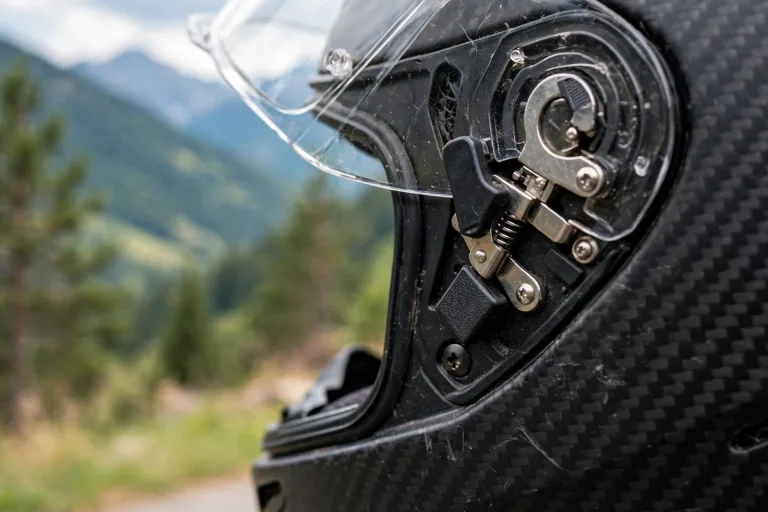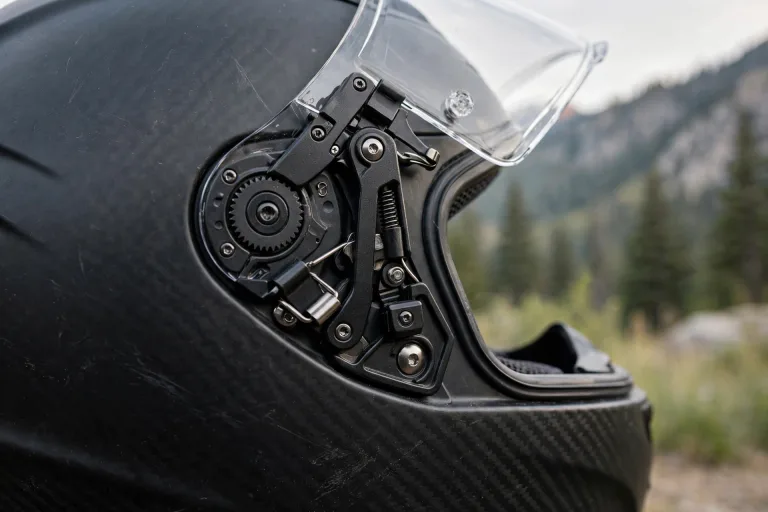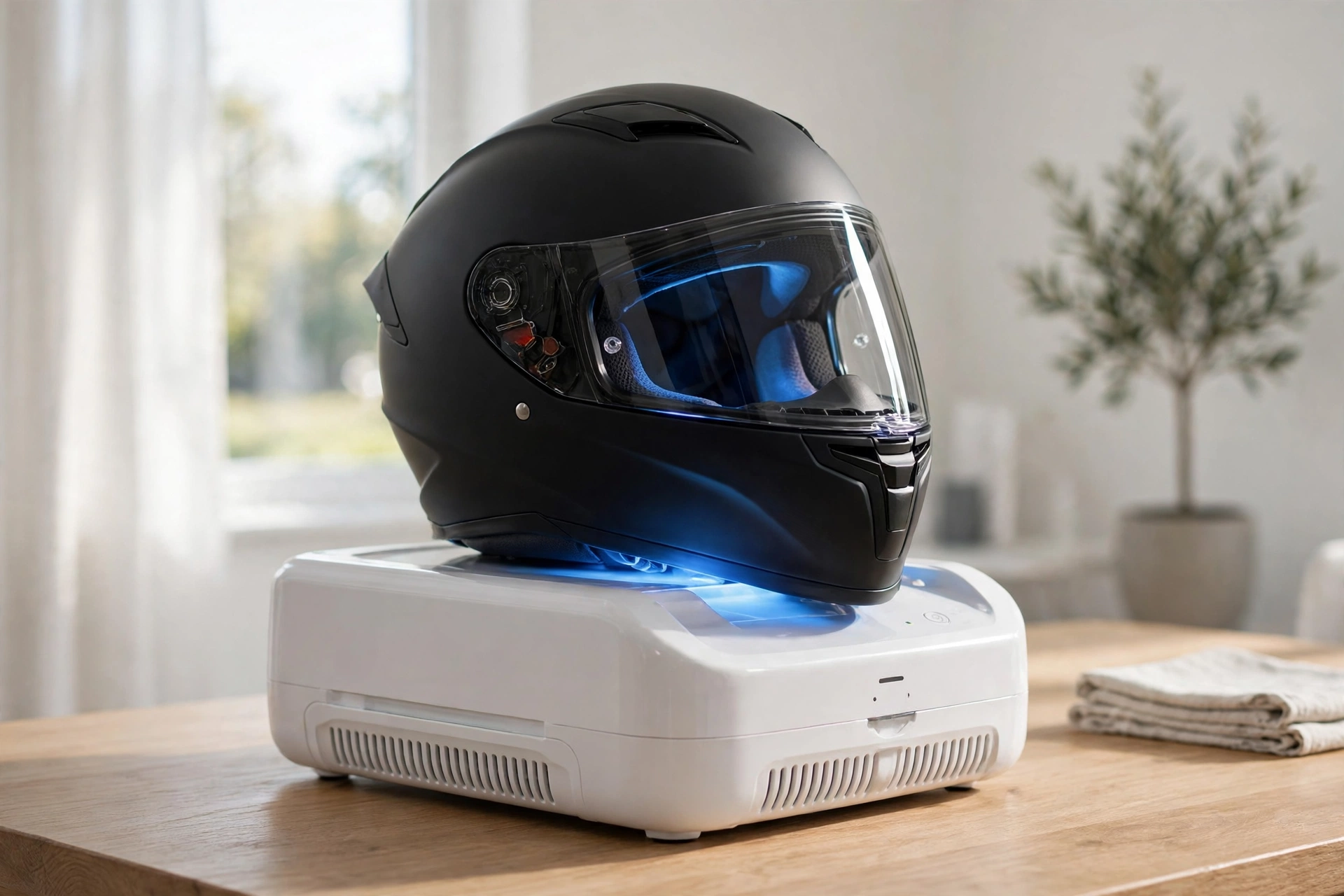
A helmet sanitiser is a device or a spray used to clean the inside of a helmet and reduce the smell and germs that build up from sweat, and in general terms it works by killing odour-causing bacteria with light, ozone, or a cleaning spray, rather than by washing the helmet in water. A helmet gets hot and sweaty in use, and the lining soaks up that sweat day after day. A sanitiser is a way to freshen the helmet between washes and to keep it pleasant to wear.
Anyone who wears a helmet regularly knows the problem. After a few weeks of riding, the inside of the helmet starts to smell, even if the outside still looks clean. The lining cannot always be taken out and washed, and even when it can, it takes time to dry. A sanitiser offers a quicker way to deal with the smell, and for some riders it becomes part of the routine after every ride.
What is a helmet sanitiser?
A helmet sanitiser is a product made to clean and freshen the inside of a helmet without a full wash. It comes in two main forms: a device that sits inside the helmet or blows air through it, and a spray that is applied to the lining. Both aim at the same problem, which is the bacteria that grow in warm, damp padding and cause bad smells.
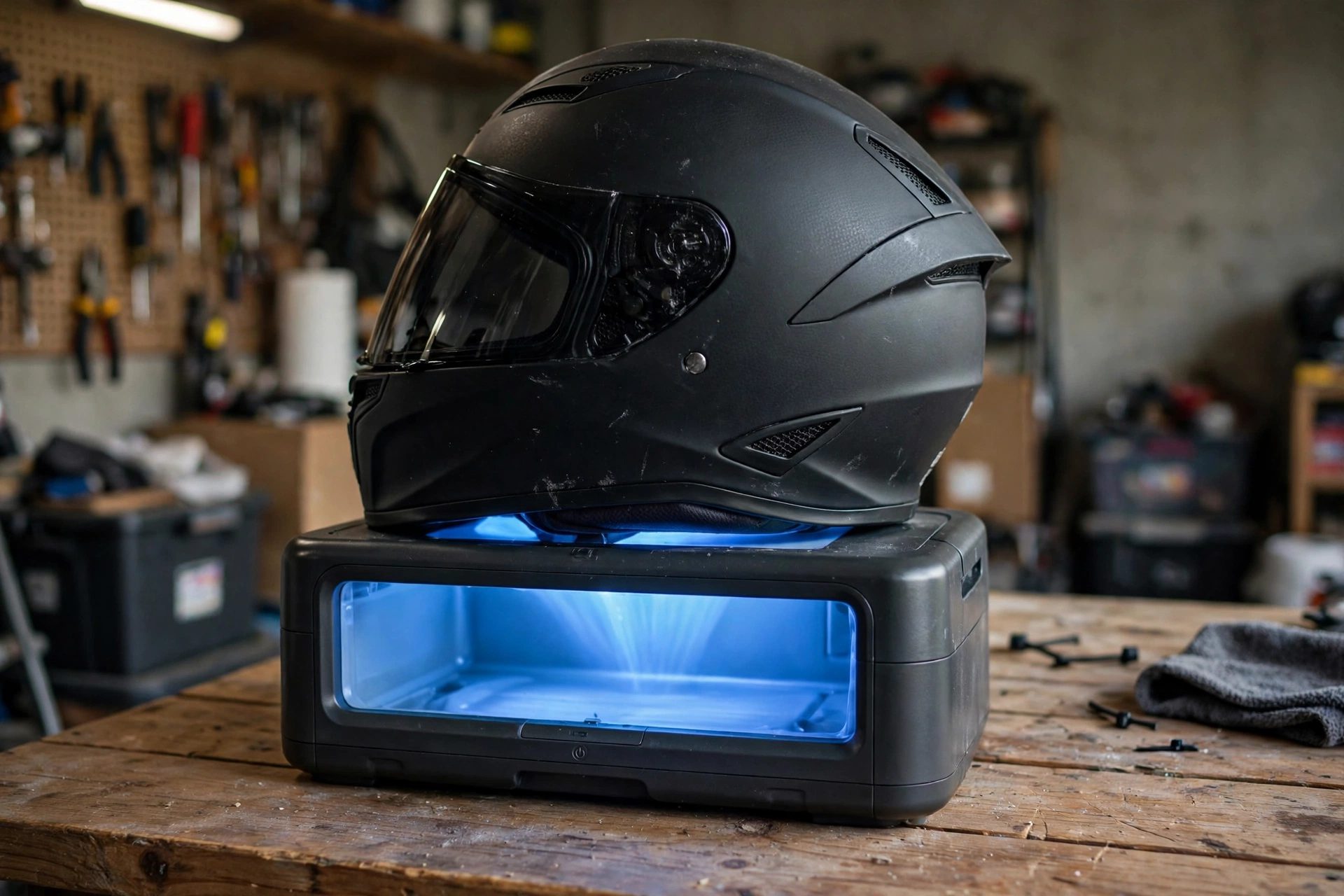
Device sanitisers often use ultraviolet light, known as UV light, or ozone, a form of oxygen, to kill bacteria on the lining. The helmet is placed on or inside the device, which is switched on for a set time, often around ten to twenty minutes. Spray sanitisers are simpler: the wearer sprays the lining, lets it dry, and the smell is reduced. Some sprays are made for helmets specifically, while others are general sports-gear sprays.
How does a helmet sanitiser work?
A helmet sanitiser works by killing or reducing the bacteria that live in the helmet lining and cause smells. Bacteria thrive in warm, damp places, and a helmet lining after a ride is exactly that: warm, damp, and full of sweat. Given time, those bacteria multiply, and the smell gets worse. A sanitiser interrupts that process.
UV sanitisers work by shining ultraviolet light onto the lining, which damages the bacteria and stops them from multiplying. The helmet must be positioned so the light reaches the lining, and the device is usually left running for a fixed time. Ozone sanitisers work by filling the helmet with ozone gas, which is a strong oxidiser that breaks down bacteria and smells. Ozone devices need care, because ozone should not be breathed in directly, so the helmet should be aired out before it is worn again.
Is a helmet sanitiser worth buying?
A helmet sanitiser is worth buying for riders who wear a helmet every day and struggle with smells, in general terms, but it is not essential for everyone. A rider who uses a helmet once a week and can wash the lining regularly may never need one. A daily commuter, a delivery rider, or a rider in a hot climate, on the other hand, may find that the helmet starts to smell within days, and a sanitiser can keep it fresh between washes.
The value depends on the type. A spray is cheap and simple, and it works well enough for most riders. A device costs more, but it can be used again and again without buying refills, and some riders like the fact that it dries the helmet at the same time. A device that also blows warm air through the helmet can be useful after a wet ride, because a dry helmet smells less and lasts longer.
Can a helmet sanitiser damage a helmet?
A helmet sanitiser can damage a helmet if it is used wrongly, in general terms, but a product made for helmets and used as directed should be safe. The main risks come from heat and from harsh chemicals. A device that blows very hot air into the helmet could soften the foam or the glue that holds the lining, and a spray with strong solvents could damage the padding or the shell. Heat is a known enemy of helmet materials, so any device that warms the helmet should be checked carefully.
Ozone sanitisers need extra care. Ozone is a powerful gas, and in high amounts it can affect rubber, foam, and fabric over time. Short, occasional use as directed by the maker is unlikely to cause harm, but leaving a helmet in an ozone device for far longer than recommended is not wise. The helmet should always be aired out after an ozone treatment before it is worn.
How should a helmet be cleaned and freshened?
A helmet should be cleaned and freshened with a simple routine: air it out after every ride, wash the lining when it can be removed, and use a sanitiser in between when needed. After a ride, the helmet should be left open in a place with good airflow, so the lining can dry out. Putting a damp helmet straight into a closed bag or a dark cupboard traps the moisture and lets the smell build up.
A sanitiser fits into this routine as a middle step, used after the helmet has dried a little and before the next ride. It is not a replacement for washing, and it is not a fix for a helmet that is damaged or worn out. Riders who are choosing a new helmet may also want to read about safety features that matter in a fall, including MIPS, a system designed to reduce rotational forces. A clean, fresh helmet is a helmet the rider will want to put on, and that is the first step to wearing it every time.
How often should a helmet sanitiser be used?
In general terms, a sanitiser can be used after every ride for a daily helmet, or once a week for a helmet used less often. It should not be used as a substitute for washing the lining when it is dirty.
Can a helmet sanitiser remove all smells?
Not always, because a deep smell that has built up over months in worn padding may need a proper wash or new pads. A sanitiser works best on fresh smells and as part of a regular cleaning routine.
Is a UV helmet sanitiser safe to use at home?
Yes, in general terms, when it is used as directed, with the light kept away from the eyes and skin. The helmet should be placed in the device as instructed and the device should not be opened while it is running.

Olivia
Writer at Helmet Today, covering helmet reviews, fit and riding safety.