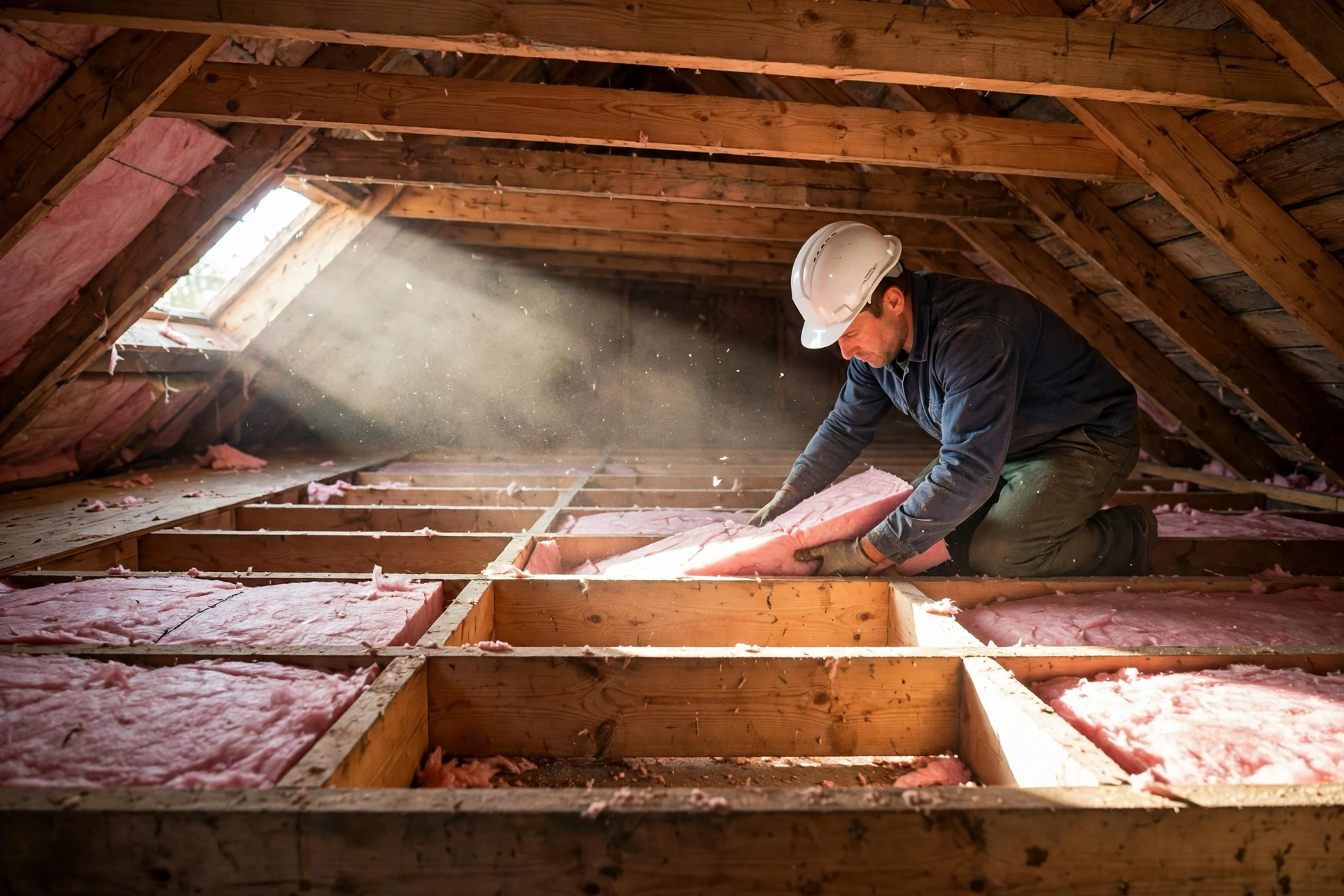
A helmet for insulation workers is a helmet worn on the job to protect the head from falling objects, bumps against pipes and ducts, and knocks in tight spaces, and in general terms it is usually a hard hat style helmet that meets a recognised safety standard for work sites, with a snug fit and a chin strap that keeps it in place. Insulation work means fitting insulating material into walls, roofs, pipes, and ducts, often in attics, basements, and ceiling spaces. The work takes the installer into places where the head is close to joists, nails, and hanging pipes, and where things can fall from above.
Many people think of a hard hat as something for a building site, but insulation workers face many of the same risks, often in smaller and darker spaces. A helmet is part of the everyday kit for this work, along with gloves, eye protection, and a dust mask. It is worn not because the job looks dangerous, but because a single knock on the head in a tight space can be a serious one.
What is a helmet for insulation workers?
A helmet for insulation workers is a work helmet, usually a hard hat, that protects the head from impacts and falling objects while the worker is fitting insulation. It has a hard outer shell that spreads the force of a knock, and an inner suspension or liner that holds the shell away from the head and absorbs some of the force. The shell is often made from a tough plastic that resists cracks and dents.
Some insulation workers use a helmet with a brim all the way around, which helps to keep dust and small debris off the face and neck. Others use a cap-style helmet with a short brim at the front, which is lighter and easier to wear in a tight space. A helmet with slots for earmuffs or a face shield can be useful, because insulation work is often noisy and dusty, and the helmet can carry the extra protection the worker needs.
Why do insulation workers need a helmet?
Insulation workers need a helmet because they work in spaces where the head is at risk from above and from the sides. In an attic, the worker’s head is close to roof joists and to nails sticking through the roof boards. In a basement, the head is close to pipes, ducts, and low ceilings. A worker who stands up too fast in a tight space can hit their head hard enough to cause a real injury.
There is also the risk of things falling from above. Insulation material, offcuts, tools, and pieces of board can all fall from a higher level, and a worker below may not see them coming. A helmet spreads the force of a falling object and helps to protect the skull. Even a small object, dropped from a height, can hurt if it hits an unprotected head.
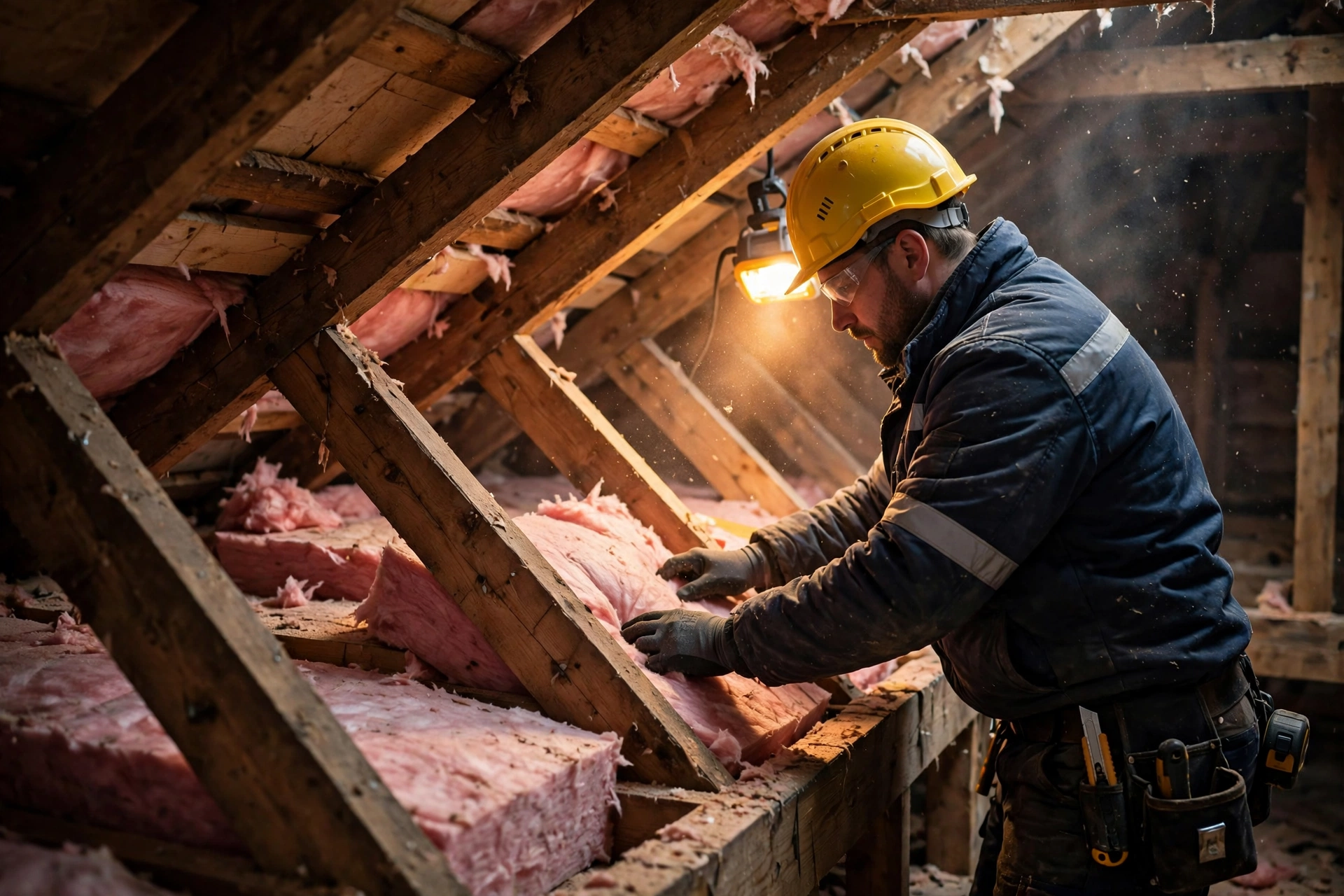
What should you look for in a helmet for insulation work?
When choosing a helmet for insulation work, the first thing to look for is the safety standard. The helmet should be marked with a recognised standard for industrial head protection, and it should be in good condition, with no cracks, dents, or damage to the shell. A helmet that has been dropped or hit hard should be checked with care, and in general terms a helmet that has taken a serious impact should be replaced.
The second thing to look for is fit and comfort. The helmet should sit level on the head, and the suspension should be adjusted so the helmet feels snug without pressing hard in one spot. A helmet that is uncomfortable will be taken off, and a helmet left on a bench offers no protection. A chin strap is worth having, because it keeps the helmet on when the worker bends over or works upside down in a ceiling space.
How should a work helmet fit?
A work helmet should fit snugly, sit level on the head, and stay in place when the wearer bends, reaches, or shakes their head. The suspension should be adjusted to the size of the head, and the chin strap, if there is one, should be fastened so the helmet does not slip forward or fall off when the worker looks down. A helmet that slides around is a distraction, and a helmet that falls off at the wrong moment is no help.
The fit should be checked with the other gear the worker wears, such as goggles and a dust mask, because these can change how the helmet sits. Goggles should sit neatly against the helmet without a gap, and the helmet should not press on the arms of glasses. The worker should also check that the helmet does not block their hearing too much, because they need to hear warnings and instructions on the job.
How should a work helmet be looked after?
A work helmet should be looked after with regular cleaning and sensible storage, because dust, sweat, and knocks all take their toll. After a day of insulation work, the helmet should be wiped clean with a damp cloth and mild soap, and the inside should be allowed to dry out. The suspension and the sweatband should be checked for wear, because a worn suspension does not hold the shell in the right place.
The helmet should also be checked regularly for cracks, dents, and damage to the shell, the suspension, and the strap. A helmet that is damaged, or that has been in use for a long time, should be replaced, because the materials wear out even without a visible impact. Workers who are choosing a new helmet may also want to read about safety features used in sports helmets, including MIPS, a system designed to reduce rotational forces, which is now appearing in some work helmets too. A well-kept helmet, worn every shift, is the simplest protection an insulation worker has.
Can insulation workers use a regular hard hat?
Yes, in general terms, a regular hard hat that meets a recognised safety standard is the usual choice for insulation work. The key points are the standard, a good fit, and a chin strap for work in tight or overhead spaces.
Do insulation workers need a chin strap on their helmet?
A chin strap is recommended, in general terms, because insulation work often means bending over, reaching up, and working in ceiling spaces where a helmet can slip off. A strap keeps the helmet in place when the worker moves.
When should a work helmet be replaced?
A work helmet should be replaced after a hard impact, when it shows cracks or damage, or when the suspension is worn out. Even without damage, a helmet that has been used every day for a long time should be checked and replaced as the maker recommends.

Olivia
Writer at Helmet Today, covering helmet reviews, fit and riding safety.