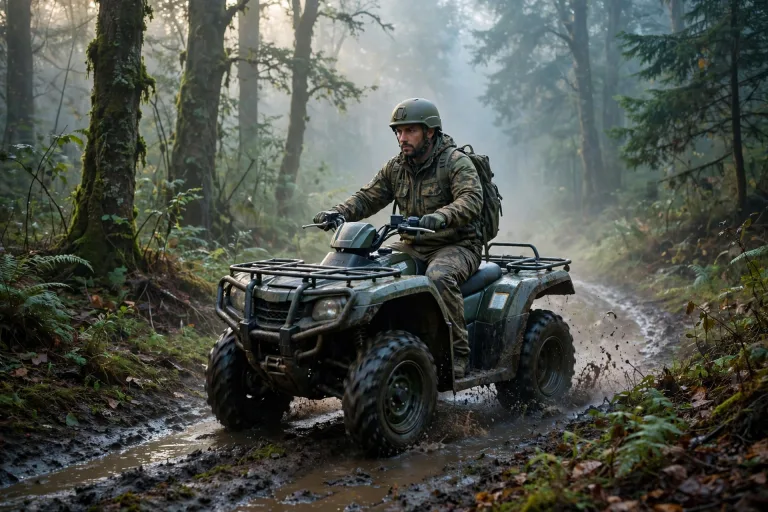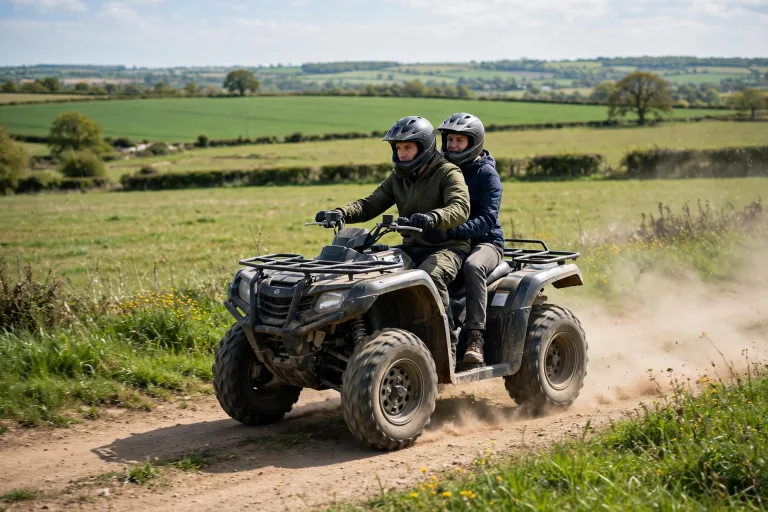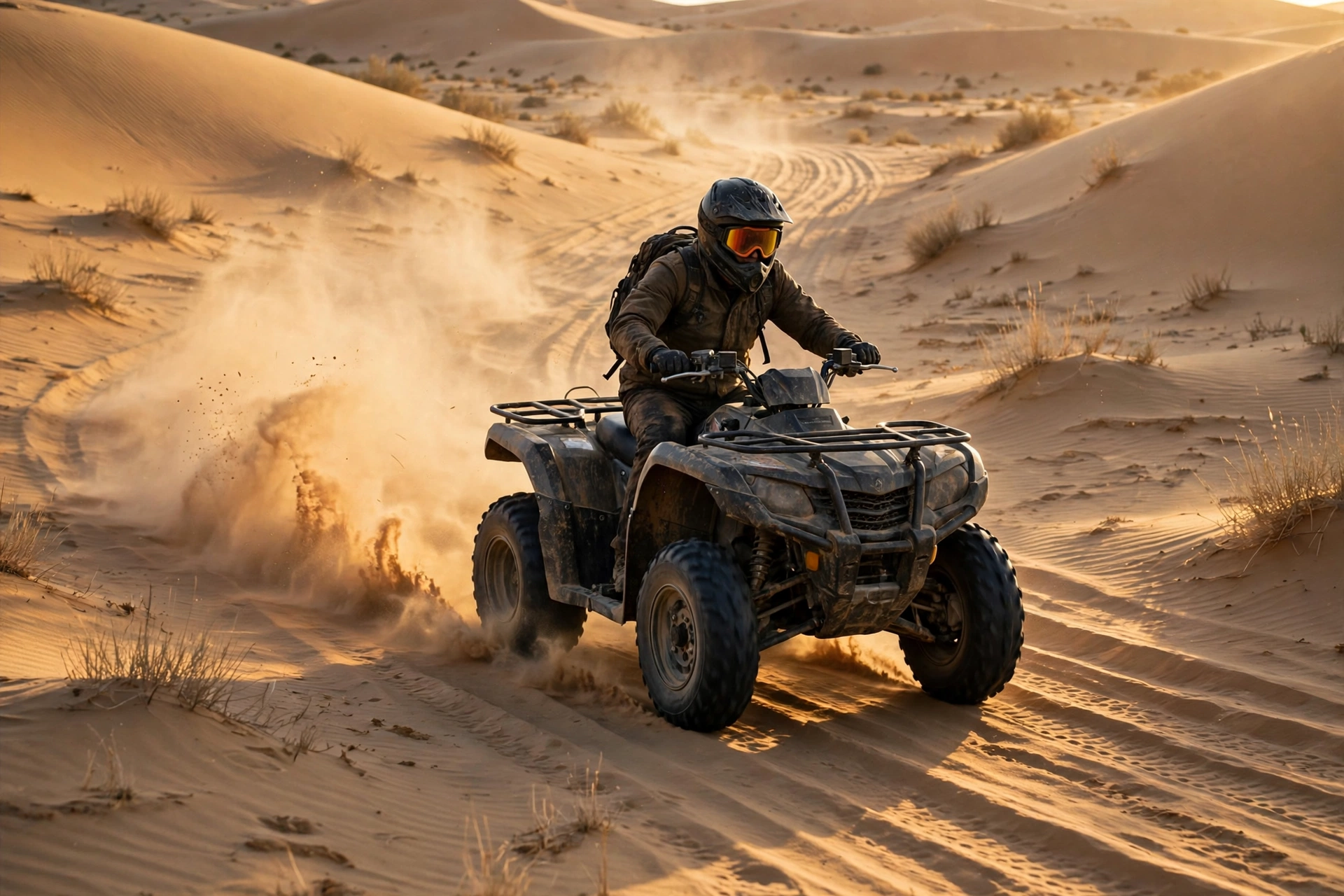
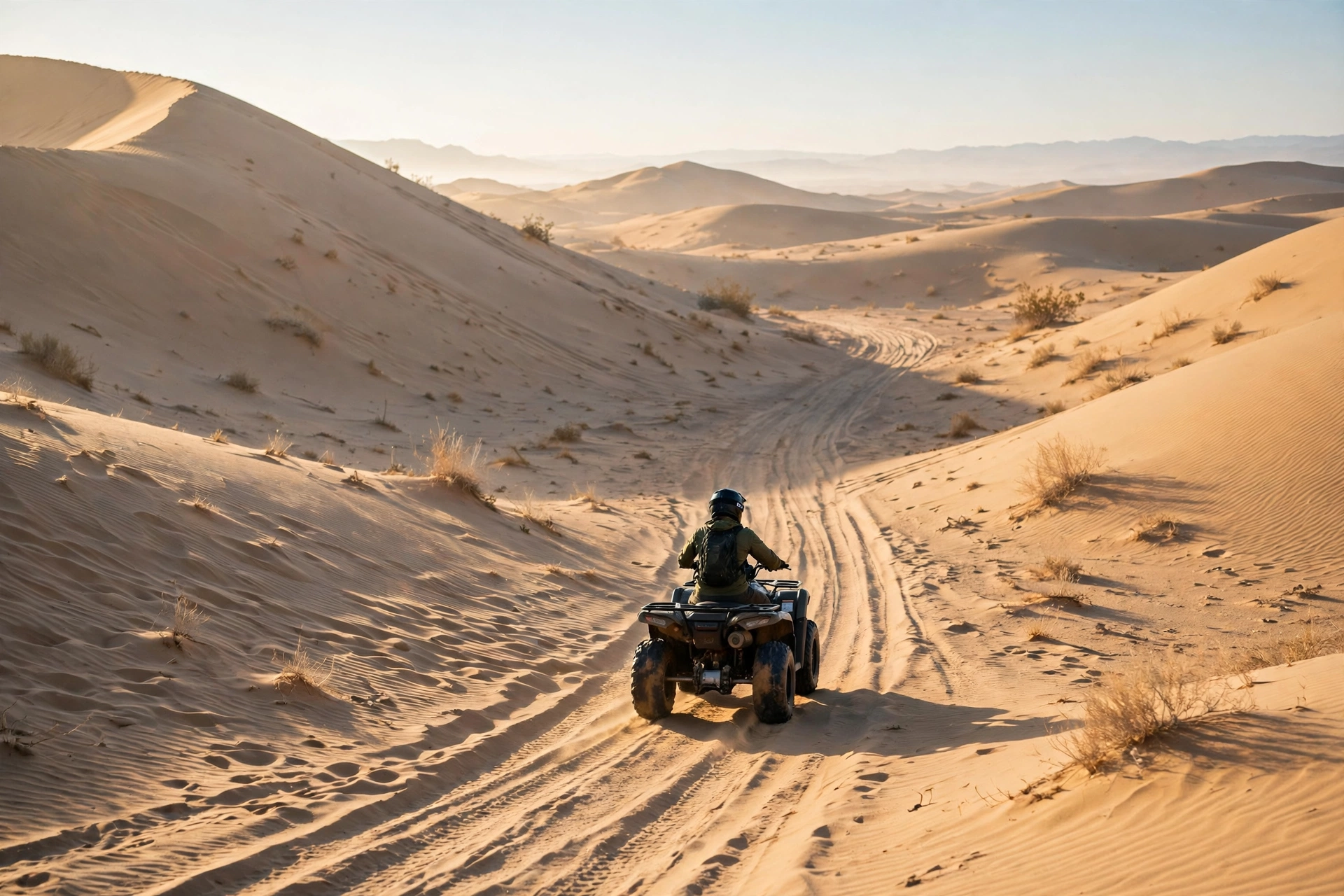
An ATV helmet for desert trail riding is a helmet made for riding a quad bike on sand and dirt trails in hot, dry desert country, and in general terms it should be light, well ventilated, dust-proof, and able to work with goggles, because desert trails bring heat, sand, and rough ground together in one ride. Desert trail riding is a different kind of riding from a short trip on a farm track. The trails are long, the ground is loose, the sun is strong, and the dust gets everywhere. A helmet that is fine for a short ride can become hot and gritty within an hour on a desert trail.
The desert is a harsh place for a rider and for a helmet. Sand blows into every opening, the sun heats the shell, and the trail can change from smooth sand to rocky ground without warning. A fall on a desert trail can mean a landing on hard rock or packed sand, so the helmet has to protect the head as well as keep the rider cool and able to see. Choosing the right one matters.
What is an ATV helmet for desert trail riding?
An ATV helmet for desert trail riding is a helmet designed for riding a quad bike, also called an all-terrain vehicle, on trails in desert country. Most riders choose an off-road helmet, sometimes called a motocross helmet, which has a long peak to block the sun, a wide eye opening for goggles, and large vents to let air through. The helmet is light, so it does not strain the neck on a long ride, and it is made to cope with dust and sand.
Some riders use a full-face helmet instead, which gives more protection for the face and chin and keeps the dust out better. A full-face helmet can be hotter, though, and it needs good ventilation to work in desert heat. A modular helmet, which flips up at the front, is another option, because it can be opened at a stop to let the rider drink or talk without taking the helmet off.
Why does desert riding need a different helmet?
Desert riding needs a different helmet because the desert brings heat, dust, and sun in a way that a forest trail or a road does not. The temperature can be high for hours at a time, and a helmet with poor ventilation will become hot and stuffy, which makes the rider tired and less able to concentrate. A helmet with large, well-placed vents lets the air flow through and keeps the head cooler.
Dust is the second problem. Fine desert dust gets into the helmet through the vents and the eye opening, and it can irritate the eyes and the lungs. A helmet that works well with goggles, with a good seal around the eyes, keeps the dust out of the rider’s eyes. A dust mask or a bandana can help too, but the helmet and the goggles are the first line of defence.
What should you look for in a desert trail ATV helmet?
When choosing a desert trail ATV helmet, the first thing to look for is ventilation. The helmet should have large vents at the front and the back, so air can flow through and carry the heat away. Vents that can be opened and closed are useful, because they let the rider shut out a dust storm and open up again when the air clears. A helmet with a vented chin bar is also helpful, because it lets the rider breathe easily without fogging the goggles.
The second thing to look for is the fit with goggles. The helmet’s eye opening should be wide enough for the goggles to sit comfortably, with no gap that lets dust in and no pressure on the nose. The rider should try the helmet and the goggles together before buying, because a pair that does not fit together will be uncomfortable on a long ride. A strap that holds the goggles firmly in place is important too, because loose goggles bounce on a rough trail.
How should a desert trail helmet fit?
A desert trail helmet should fit snugly, sit level on the head, and stay in place when the rider shakes their head or rides over rough ground. The helmet should cover the forehead and the top of the head, and the chin strap should be fastened securely every time the rider is on the ATV. A helmet that moves around on a bumpy trail is a distraction, and a helmet that comes off in a fall is no help at all.
The fit should be checked with the goggles the rider will actually wear, because goggles change how the helmet sits. The goggles should press gently against the face without leaving a gap, and the helmet should not push the goggles down onto the nose. The rider should also check that the helmet does not block their hearing, because a trail rider needs to hear the engine, other riders, and any warnings from the group.
How should a desert trail helmet be looked after?
A desert trail helmet should be looked after by cleaning the dust out of it after every ride, because fine desert sand gets into the vents, the lining, and the strap, and it can wear the materials down over time. After a ride, the helmet should be shaken out, wiped with a damp cloth, and left open in a place with good airflow so the lining can dry. The vents should be checked for sand, because a blocked vent lets less air through.
The rider should also check the helmet for cracks, dents, or damage after a fall, and in general terms a helmet that has taken a hard impact should be replaced rather than used again. Riders who are choosing a new helmet may also want to read about safety features that help in a fall, including MIPS, a system designed to reduce rotational forces in some helmets. A clean, well-kept helmet is a helmet that will protect the rider on the next desert trail, mile after mile.
Can a regular motorcycle helmet be used for desert ATV riding?
Yes, in general terms, a full-face motorcycle helmet that fits well can be used, but an off-road helmet is usually more comfortable in the desert because it is lighter, better ventilated, and made to work with goggles.
Do you need goggles with a desert trail ATV helmet?
Yes, in general terms, goggles are needed, because they keep the dust and sand out of the eyes. An off-road helmet has a wide eye opening made for goggles, and riding without them in the desert is uncomfortable and unsafe.
How do you keep a desert helmet cool?
Good ventilation is the main answer, along with a light-coloured shell, a removable lining that can be washed, and regular stops in the shade. A helmet with vents that can be opened wide will stay cooler than one with small or fixed vents.

Olivia
Writer at Helmet Today, covering helmet reviews, fit and riding safety.