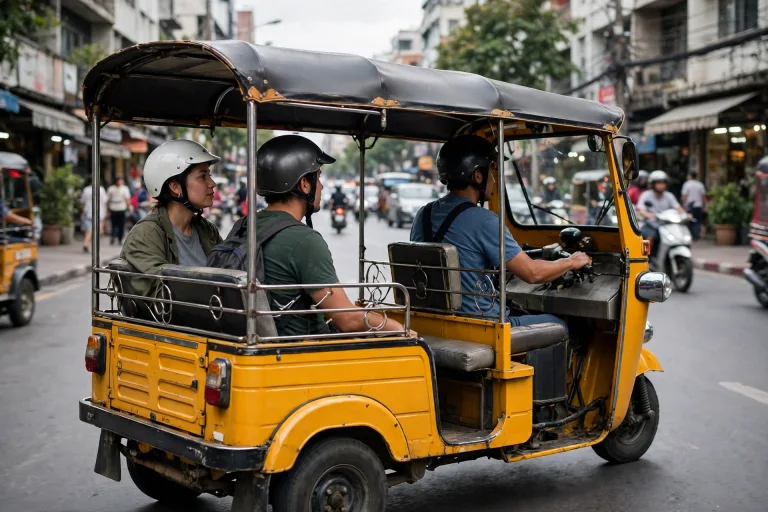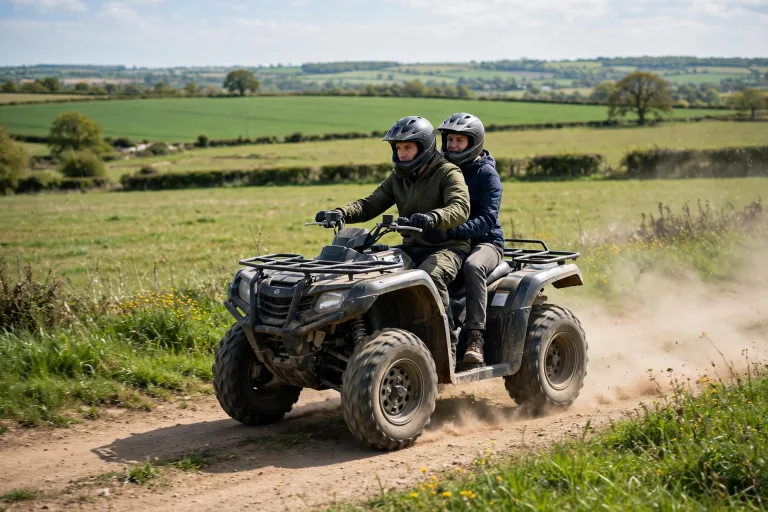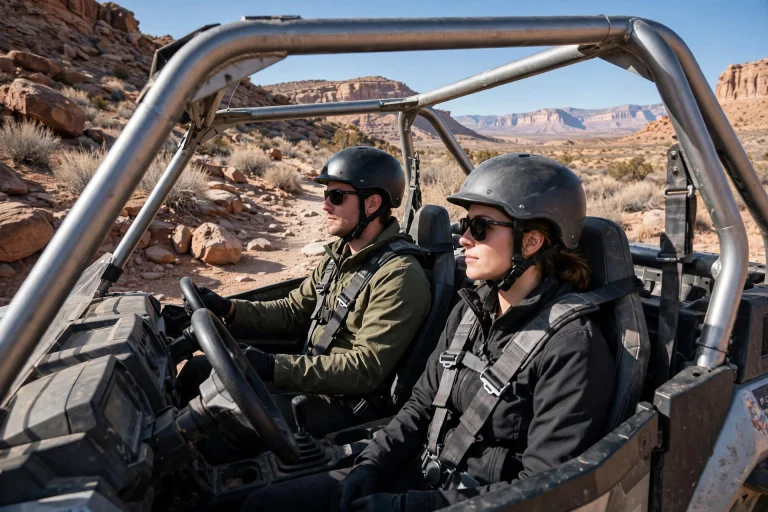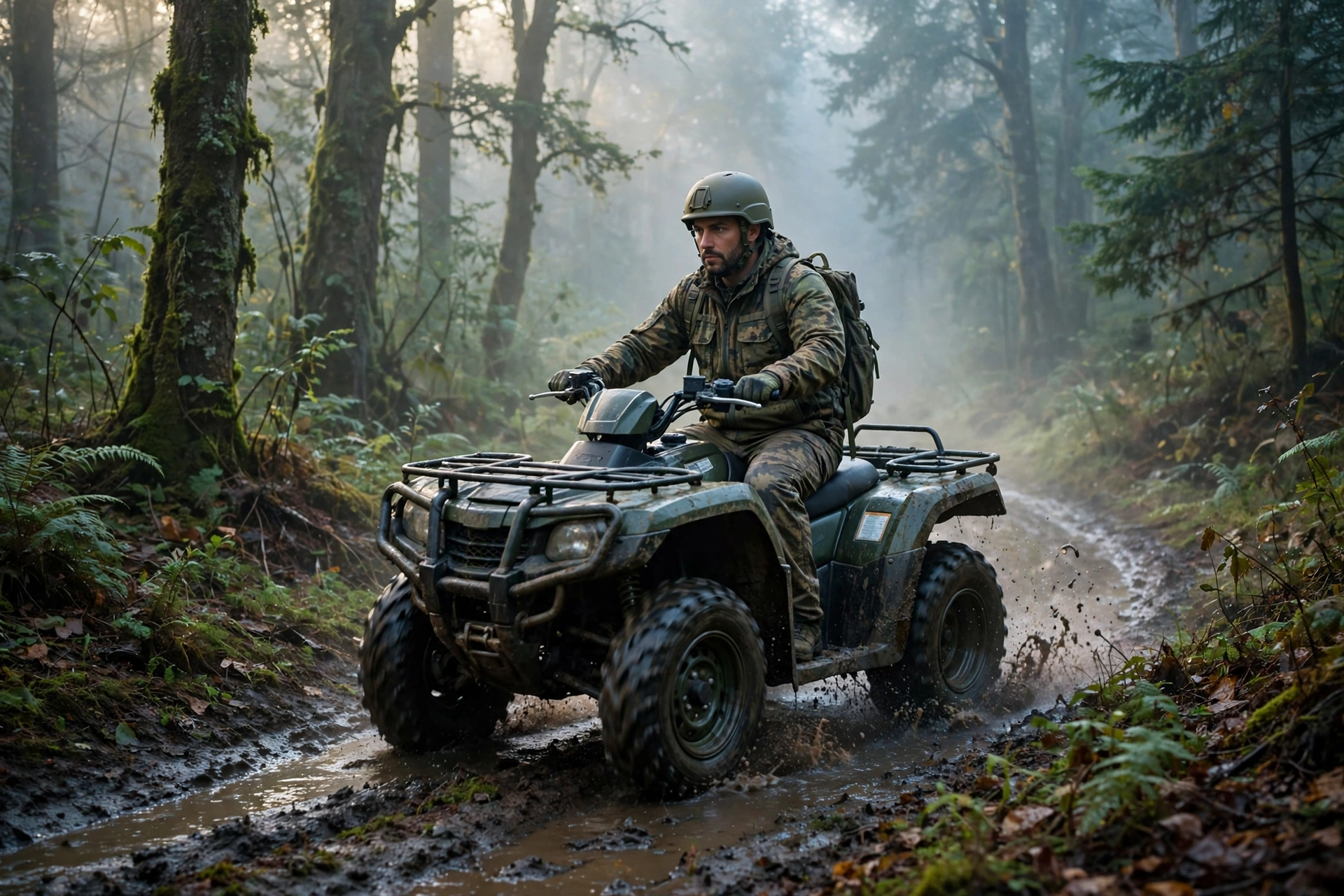
An ATV helmet for hunting trips is a helmet worn by a hunter riding an all-terrain vehicle to and from a hunting spot, to protect the head from falls, branches, and knocks on rough ground, and in general terms every hunter who rides an ATV should wear one that fits well and stays in place. An ATV is a useful way to reach a remote hunting area, carrying gear over muddy tracks, forest paths, and steep ground.
A hunting trip often starts before dawn and ends after dark, in cold, wet, or muddy conditions. A hunter may be tired, loaded with gear, and riding over ground they have not seen in daylight. A helmet is essential safety equipment for that ride, not an optional extra to leave at home.
Why do hunters need an ATV helmet?
Hunters need an ATV helmet because an ATV can tip, slide, or roll on uneven ground, and the rider has little protection if it does. A rut, a hidden rock, a wet slope, or a sudden turn can throw the rider off balance, and the rider may land on hard earth, stones, or roots. In general terms, a helmet spreads the force of an impact and helps to protect the skull, and that protection matters all the more when the rider is far from help.
There is also the risk of branches and low limbs. A forest track can be narrow, with branches at head height that are hard to see in poor light. A helmet gives a layer of protection against those knocks, and a visor or goggles help to keep the eyes clear of twigs, mud, and insects. Dust kicked up by the wheels, rain, and cold wind are further reasons to cover the head and face on the ride.
What kind of helmet is best for hunting trips?
The best helmet for hunting trips is, in general terms, a light, well-ventilated ATV or off-road helmet with a hard outer shell, a secure chin strap, and a peak or visor that shields the eyes from sun, rain, and branches. Many hunters use an open-face ATV helmet with goggles, because it gives a wide field of view and good airflow, while a full-face helmet gives more protection for the chin and face on rough ground.
The choice often depends on the weather and the ground. A full-face helmet is useful in cold, wet, or dusty conditions, while an open-face helmet with goggles can be cooler on a warm day. The helmet should work with the hunter’s other kit, such as a warm hat underneath in cold weather, a face covering, and hearing protection if it is used. A helmet that is too heavy or too hot will become a distraction on a long ride, so comfort matters as much as protection.
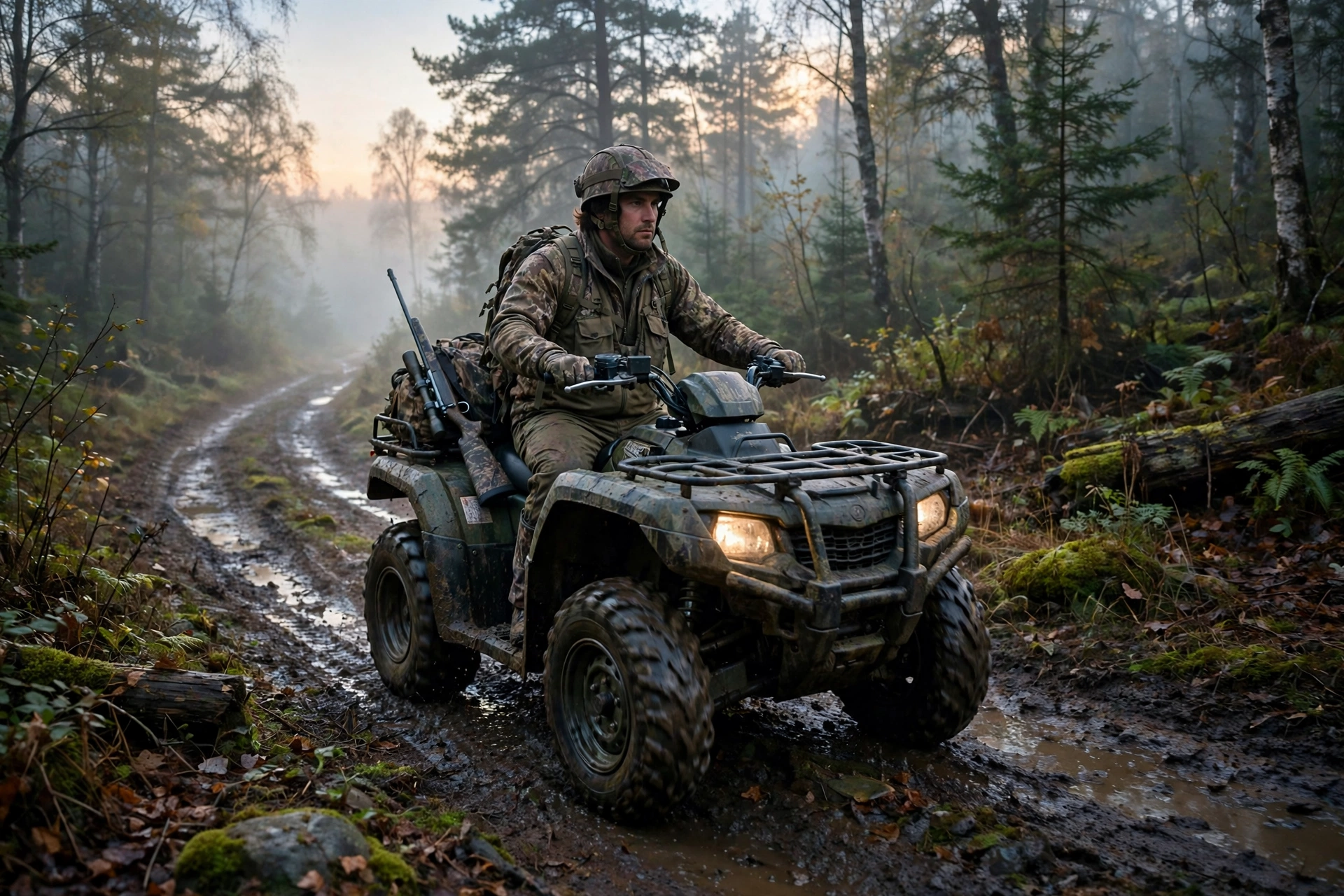
How should an ATV helmet for hunting fit?
An ATV helmet for hunting should fit snugly, sit level on the head, and stay in place when the rider shakes their head or leans into a turn. The helmet should cover the forehead and the top of the head, and the chin strap should be fastened securely every time the rider is on the ATV. A strap that is left loose lets the helmet lift in the wind or slide in a fall, and a helmet that comes off on rough ground is no help at all.
The fit should be checked with the goggles or glasses the hunter will actually wear, because eyewear can change how a helmet sits. Goggles should sit neatly against the helmet without leaving a gap that lets in mud, rain, or cold air, and the helmet should not press on the arms of glasses or push them out of place. The hunter should also check that the helmet does not block their hearing, because a hunter needs to hear other riders, the engine, and sounds in the woods.
What should a hunter check before a hunting trip?
Before a hunting trip, a hunter should check the helmet for cracks, dents, or damage to the shell, and should look at the lining, the visor or peak, the strap, and the buckle to make sure they are sound and working. A helmet that has been dropped onto hard ground, or that has taken a knock in a fall, should be looked at with care, and in general terms a helmet that has taken a serious impact should be replaced rather than used again. The damage may not be easy to see, so the hunter should think honestly about what the helmet has been through.
The hunter should also check the ATV itself before setting off. Tyres, brakes, lights, fuel, and the load on the racks all matter, and a helmet is only one part of staying safe on a hunting trip. The rider should plan the route, tell someone where they are going and when they expect to be back, and carry a phone or a radio if there is signal in the area. Riding alone in a remote spot carries extra risk, so a hunter should be honest about their own skill and the condition of the ground.
How should an ATV helmet for hunting be looked after?
An ATV helmet for hunting should be looked after with regular cleaning and sensible storage, in the same way as any off-road helmet. After a trip, the hunter should shake out mud and leaves, wipe the shell clean, and let the helmet dry naturally away from direct heat. Strong heat, such as a hot vehicle or a heater, can harm the materials in a helmet over time, so a cool, dry place is a better choice for storage.
The helmet should be kept where it will not be knocked about or used as a seat or a shelf, because a hard knock can damage it even when no crack is visible. A helmet bag is a simple way to protect it between trips, and the visor or goggles should be kept clean and free from scratches. The lining can be wiped or washed if the maker allows it, because sweat, mud, and dust build up over a season of hunting.
Hunters who are choosing a new helmet may also want to learn about features that can help in a fall, including a system designed to reduce rotational forces, such as MIPS, which is found in some helmets made for off-road riding and other outdoor activities. A well-kept helmet, worn every time the hunter rides the ATV, gives a hunter the best chance of reaching the hunting spot and returning home safely.
Do hunters have to wear a helmet on an ATV?
In general terms, a helmet is strongly advised for every ATV ride, and in some places it may be required by local rules or by the landowner. A hunter who is unsure should check the rules for the area before riding out.
Can a motorcycle helmet be used on an ATV hunting trip?
Yes, in general terms a motorcycle helmet that fits well and is in good condition is often suitable for an ATV ride. The key points are fit, ventilation, and a secure chin strap.
When should an ATV helmet for hunting be replaced?
An ATV helmet for hunting should be replaced after a hard impact or a fall, or when it no longer fits well, shows damage, or has been worn for a long time. When in doubt, replace it rather than keep riding in it.

Olivia
Writer at Helmet Today, covering helmet reviews, fit and riding safety.