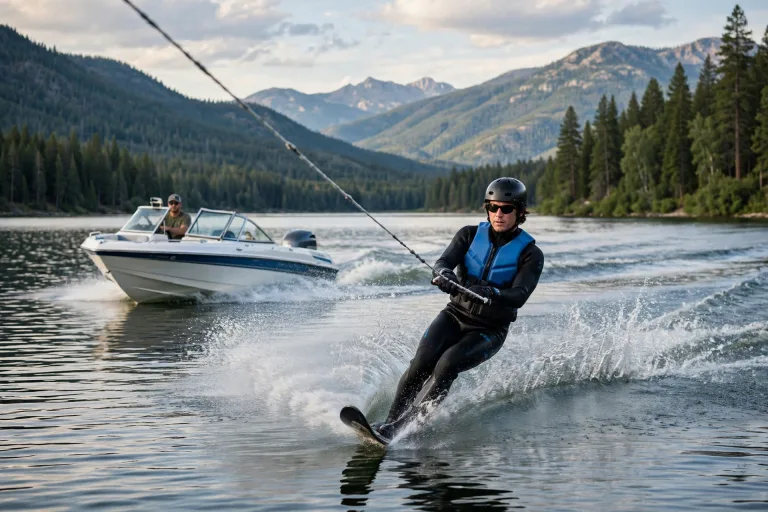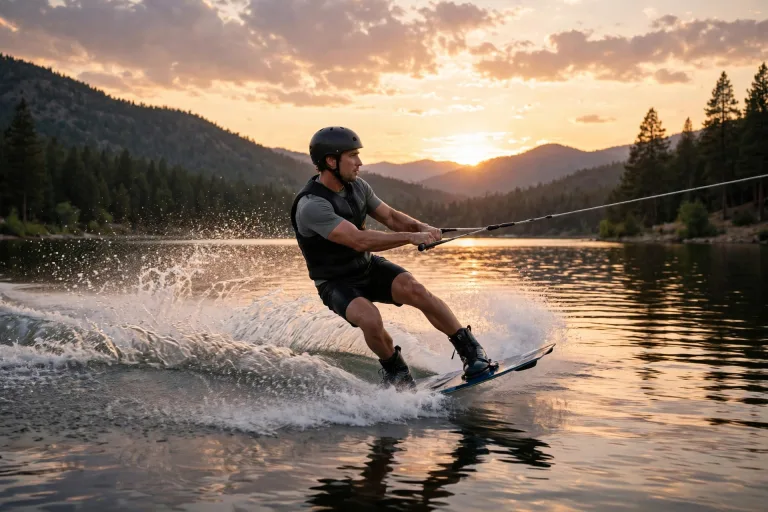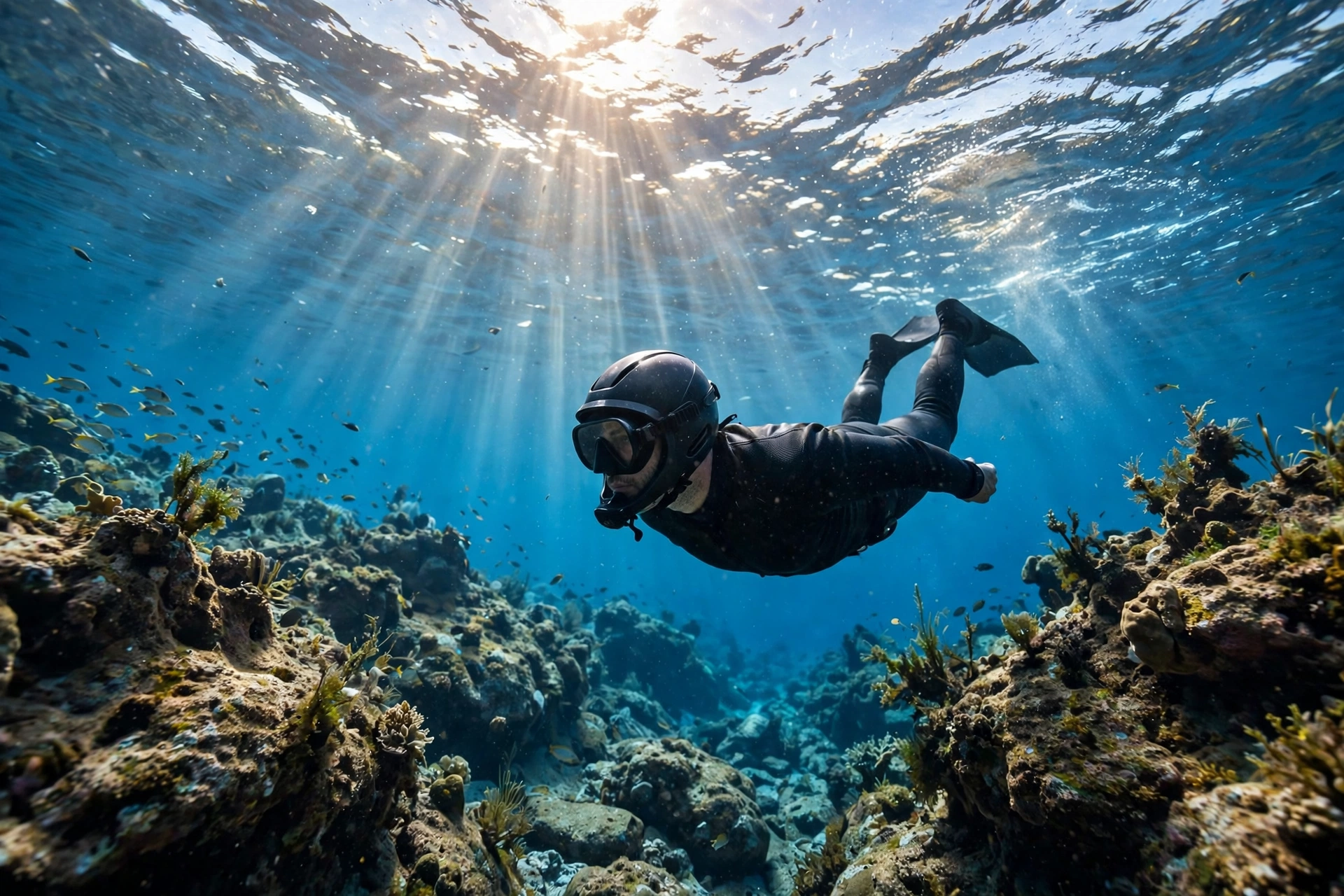
A helmet for freedivers is a lightweight water helmet worn to protect the head from knocks against rocks, reefs, boats and dive gear, and in general terms most freedivers do not wear one for ordinary open-water dives, but a helmet is worth wearing when the dive involves spearfishing, caves, wrecks or a busy boat area. Freediving is the sport of diving underwater on a single breath, without a tank, and the diver moves through open water with fins and a mask. The head is usually clear of hard surfaces in open water, which is why a helmet is not standard kit for every freediver. The picture changes near a reef, a wreck or a boat, where a knock can happen fast and without warning.
A freediver’s head is close to the surface on the way down and on the way up, and boats, buoys and other divers are all nearby at the start and the end of a dive. A helmet adds a layer of protection in those moments, and it can also keep the sun off the head during a long session at the surface. It is a piece of safety kit for a particular kind of dive, rather than something every freediver needs on every dive, and the decision to wear one comes down to the dive itself.
Do freedivers normally wear a helmet?
In general terms, most freedivers do not wear a helmet for a straightforward open-water dive. The sport is built around feeling free and unencumbered in the water, and a helmet adds weight, drag and warmth that many divers would rather do without. The risk of a head knock in clear open water is low, so most freedivers choose a mask, a snorkel, fins and a wetsuit, and leave the helmet behind.
There are dives where a helmet makes sense, though. Spearfishing near rocks, diving around a wreck, exploring a cave, or diving from a busy boat all put the head near hard objects. A diver who is learning, or who is diving in a new place with unknown hazards, may also choose a helmet for peace of mind. The decision is a personal one, based on the dive, the place, and the diver’s own comfort.
What kind of helmet is best for freedivers?
The best helmet for freedivers is, in general terms, a light, low-profile water helmet that fits closely, drains well, and does not trap air or press on the mask strap. Helmets made for surfing, kayaking or other water sports are often used, because they are made to cope with water, to dry quickly, and to stay in place when the wearer is moving through waves. A helmet that is too bulky will create drag and make the dive harder, so a slim fit matters more than extra padding for most freedivers.
The helmet should sit comfortably with a diving mask, and the strap should not pull the mask out of place. Some divers prefer a helmet with ear coverage, which can help to keep the ears warm in cold water, while others prefer open ears so they can equalise and hear clearly. Vents or drain holes are useful, because a helmet that holds water can feel heavy and can press on the head as the diver goes deeper, and a helmet that drains well is far more comfortable on a long session.
How should a helmet for freedivers fit?
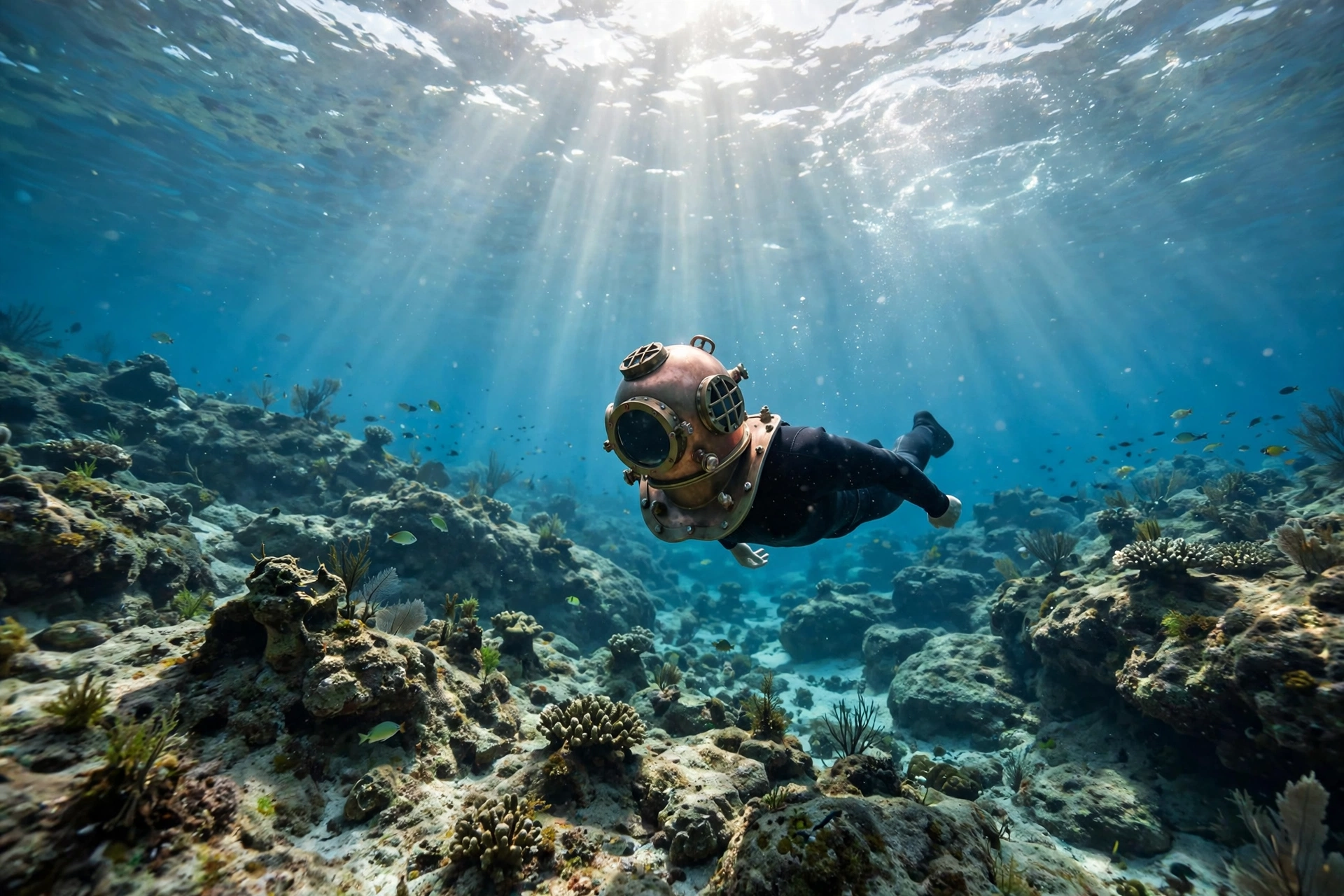
A helmet for freedivers should fit snugly, sit level on the head, and stay in place when the diver ducks under the surface or turns in the water. The helmet should cover the top and the back of the head, and the chin strap should be fastened every time the diver is in the water. A strap left loose lets the helmet lift or shift, and a helmet that moves around is a distraction at depth.
The fit should be checked with the mask the diver will actually wear, because a mask strap can change how a helmet sits. The helmet should not press on the mask or break its seal, and it should not push the mask down onto the nose. The diver should also check that the helmet does not block their hearing, because freedivers need to hear their buddy, the boat, and any signals from the surface, and muffled hearing can make a dive feel less safe.
What should a freediver check before a dive?
Before a dive, a freediver should check the helmet for cracks, dents, or damage to the shell, and look at the lining, the strap, and the buckle to make sure they are sound and working. A helmet that has been knocked against rock, or dropped onto a hard boat deck, should be looked at with care, and in general terms a helmet that has taken a serious impact should be replaced rather than used again. The damage may not be easy to see, so the diver should think honestly about what the helmet has been through.
The diver should also check the dive site, the weather, and the condition of their other kit before getting in the water. A helmet is only one part of staying safe, and it works best when the diver also checks the current, the depth, the visibility, and the plan for the dive. Diving with a buddy, rather than alone, is one of the most important safety habits in freediving.
How should a freediving helmet be looked after?
A freediving helmet should be looked after with regular cleaning and sensible storage, in the same way as any water sports helmet. After a dive, the diver should rinse the helmet with fresh water to wash out salt, shake out any sand, and let it dry naturally away from direct heat. Strong heat, such as a hot car, can harm the materials in a helmet over time, so a cool, dry place is a better choice for storage between dives.
The helmet should be kept where it will not be knocked about or used as a seat or a shelf, because a hard knock can damage it even when no crack is visible. A helmet bag is a simple way to protect it between dives. Divers who are choosing a new helmet may also want to learn about features that can help in a fall, including a system designed to reduce rotational forces, such as MIPS, which is found in some helmets made for water and speed sports. A well-kept helmet, worn when the dive calls for it, gives a freediver the best chance of enjoying the water in safety.
Do I need a helmet to freedive?
In general terms, no. Most freedivers dive without a helmet in open water. A helmet is worth considering for spearfishing, caves, wrecks, or busy boat areas where the head is near hard objects.
Can I use a surf helmet for freediving?
Yes, in general terms a surf or kayaking helmet that fits well is often suitable for freediving. The key points are a snug fit, good drainage, and a strap that holds it in place underwater.
When should a freediving helmet be replaced?
A freediving helmet should be replaced after a hard impact, or when it no longer fits well, shows damage, or has been worn for a long time. When in doubt, replace it rather than keep diving in it.

Olivia
Writer at Helmet Today, covering helmet reviews, fit and riding safety.