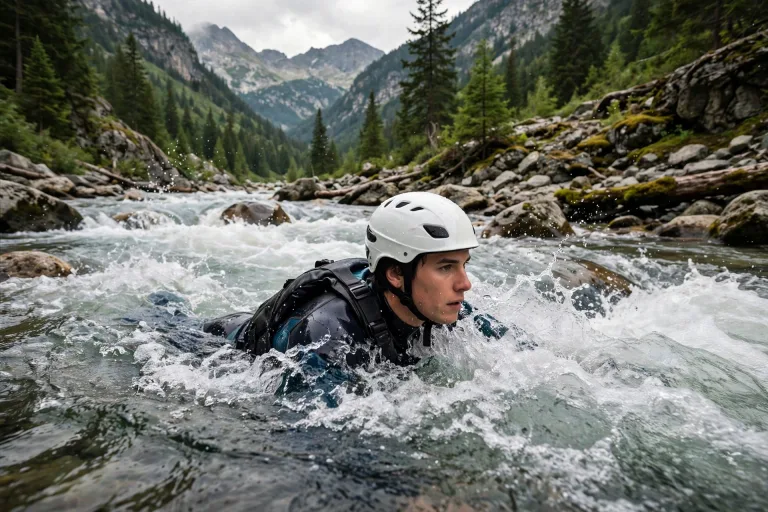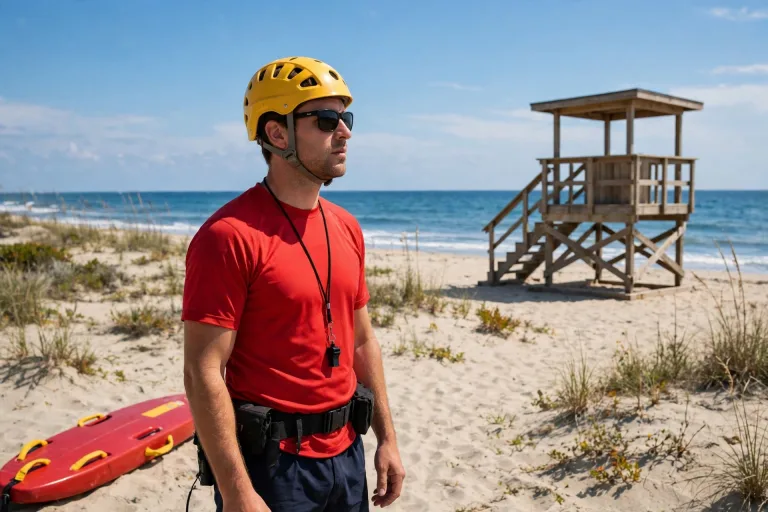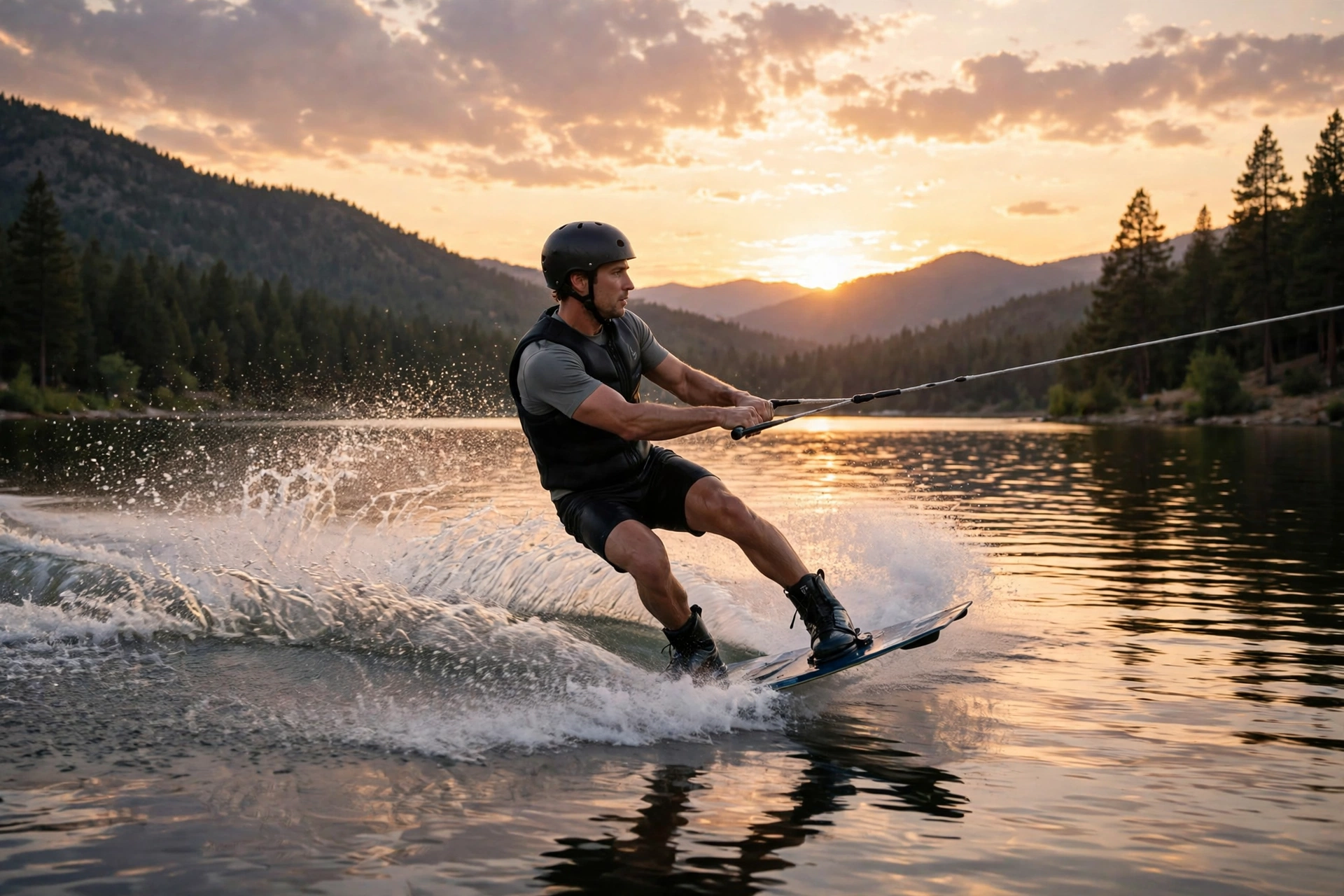
A helmet for wakeboarders is a water sports helmet designed to protect your head from hard falls onto the water, strikes from the board, and collisions with obstacles, and in general terms any wakeboarder should wear one that fits snugly before every session. Wakeboarding looks smooth when it goes well, but a fall at speed can slam your head against the water hard enough to hurt, and the board itself can swing back and hit you. A helmet made for water sports is built to handle those risks while staying light and comfortable enough to wear all day.
Many riders start out thinking a helmet is only for beginners, or only for the cable park, but experienced riders fall too, and some of the hardest falls happen when a rider is trying a new trick or riding in choppy water. A wakeboard helmet is not the same as a bike helmet or a ski helmet, and choosing one made for the water is part of riding sensibly.
Why do wakeboarders need a helmet?
Wakeboarders need a helmet because falling is part of the sport, and the water is much harder than it looks at speed. When you fall from a wakeboard, you can hit the water head-first, sideways, or backwards, and a hard landing can leave you dazed or worse. In general terms, a helmet spreads the force of an impact across a wider area and gives your head a layer of protection that bare skin and hair cannot provide.
The board is the other risk. A wakeboard is heavy, it has fins and bindings, and when you fall it can flip up and strike your head. Riders have also been hurt by hitting docks, buoys, ramps, and other riders, especially at a busy cable park.
What makes a wakeboard helmet different from other helmets?
A wakeboard helmet is different because it is made to be used in and around water. It usually has a hard outer shell and a foam liner that does not soak up water and become heavy, and it often has ear coverage to protect the ears from hard impacts with the water. In general terms, the design aims to protect the head without filling with water or dragging the rider down when they fall in.
Other helmets are built for different impacts and different conditions. A bike helmet is designed to be light and well ventilated for riding on land, and it is not meant to be soaked or hit by water at speed. A ski helmet is built for cold weather and snow, and its padding and vents are not made for the water. Using the wrong helmet can be uncomfortable and may not protect you properly, so a helmet made for wakeboarding or another water sport is the sensible choice.
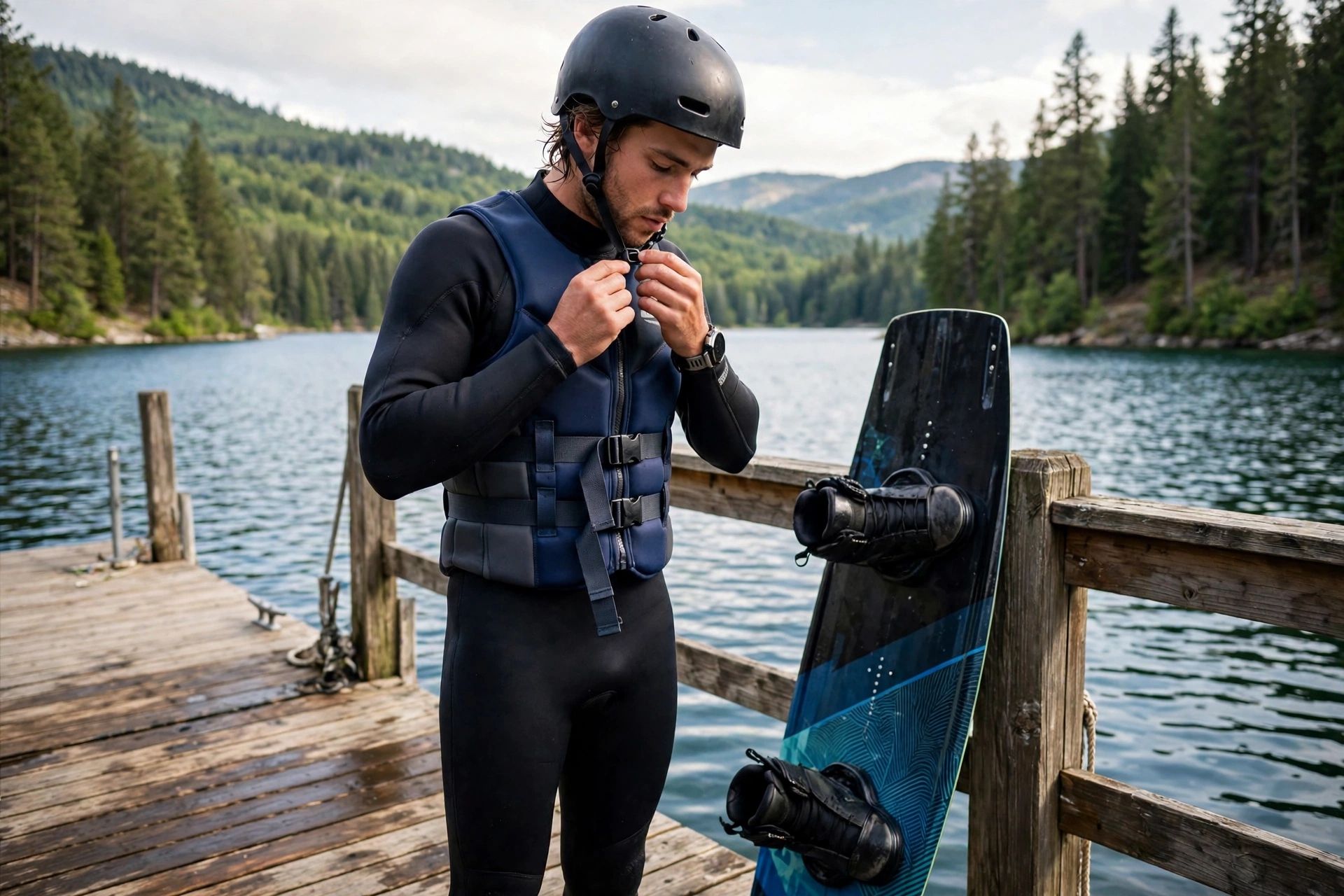
How should a helmet for wakeboarders fit?
A helmet for wakeboarders should fit snugly all the way around your head, with no loose spots and no pressure points that hurt after a few minutes. Start by measuring around your head just above your eyebrows and ears, then check the size guide for the helmet you are looking at. When you try it on, it should sit level on your head, low enough to cover your forehead, and it should not slide around when you shake your head gently from side to side.
The chin strap matters just as much as the shell. Fasten it so that it sits snugly under your chin, with room for about one or two fingers between the strap and your chin, and check that the helmet does not lift off your head when you pull gently at the front. A helmet that is too loose can shift in a fall and leave part of your head unprotected, while a helmet that is too tight will give you a headache and tempt you to take it off. Take a few minutes to adjust the straps and padding until the fit feels secure and comfortable.
What features should you look for in a wakeboard helmet?
When you are choosing a wakeboard helmet, look first for one made for water sports, with a hard shell and water-resistant foam that will not soak up water. Ear coverage is worth having, because a hard landing on the water can hurt the ears as well as the head, and some helmets include ear pads or flaps for that reason. Vents that drain water are useful too, so the helmet does not stay heavy and full of water after a fall.
Comfort and adjustability matter for a long day on the water. Look for padding that can be adjusted or swapped, straps that are easy to tighten with wet hands, and a buckle that you can fasten and undo without a struggle. Some helmets also include a system designed to reduce rotational forces in a fall, such as MIPS, which is a feature found in some modern helmets across several sports. Weight is also worth checking: a lighter helmet is more comfortable and puts less strain on your neck when you fall.
When should you replace a wakeboard helmet?
You should replace a wakeboard helmet after any hard impact, even if the shell looks fine from the outside, because the foam inside may have compressed and may not protect you as well a second time. In general terms, a helmet that has taken a serious hit has done its job once, and you should not rely on it to do the same job again. If you are unsure whether a fall was hard enough to matter, replacing the helmet is the safer choice.
Age and wear matter too. Sun, salt water, and repeated soaking can wear down the padding and straps over time, and a helmet that has become loose or uncomfortable is probably past its best. Check the inside of the helmet often for cracks, worn foam, or frayed straps, and replace it if any of those appear.
Do you need a helmet at a cable park?
Many cable parks ask riders to wear a helmet, and some will not let you ride without one, so it is worth checking the rules before you go. Cable parks have ramps, rails, and other features that add to the fun and to the risk, and falls near those obstacles can be harder than a fall in open water. Even where a helmet is not required, wearing one is still a good idea, and the habit of putting it on before every session means you never have to decide in the moment whether this ride is risky enough to need one.
Can you use a bike helmet for wakeboarding?
A bike helmet is not a good choice for wakeboarding, because it is not made to be soaked in water and it does not give the same ear coverage or water-resistant padding as a water sports helmet. Use a helmet made for wakeboarding or another water sport instead.
Do wakeboard helmets keep water out of your ears?
Many wakeboard helmets have ear coverage that helps protect the ears from hard impacts with the water, but they do not seal the ears completely. Some riders also wear ear plugs for extra protection, and that is a personal choice.
Should children wear a helmet when wakeboarding?
Yes, children should wear a helmet when wakeboarding, and it should be a water sports helmet that fits their head size properly. A helmet that is too big for a child can slip and may not protect them, so check the fit carefully and replace the helmet as they grow.

Olivia
Writer at Helmet Today, covering helmet reviews, fit and riding safety.