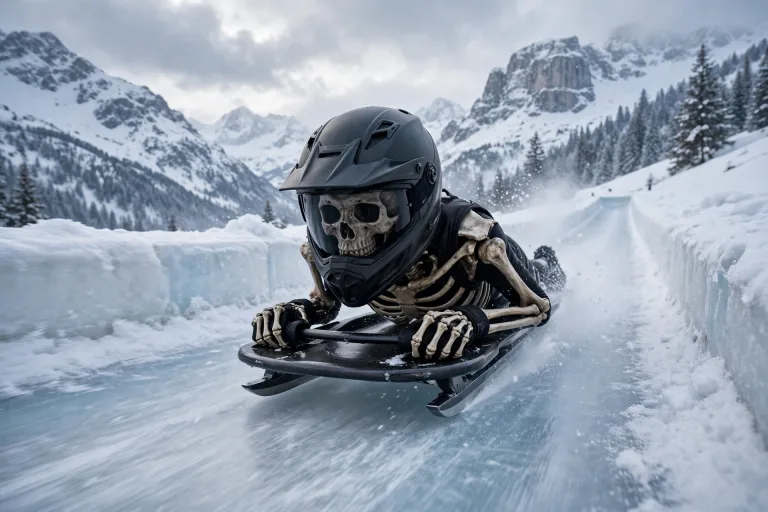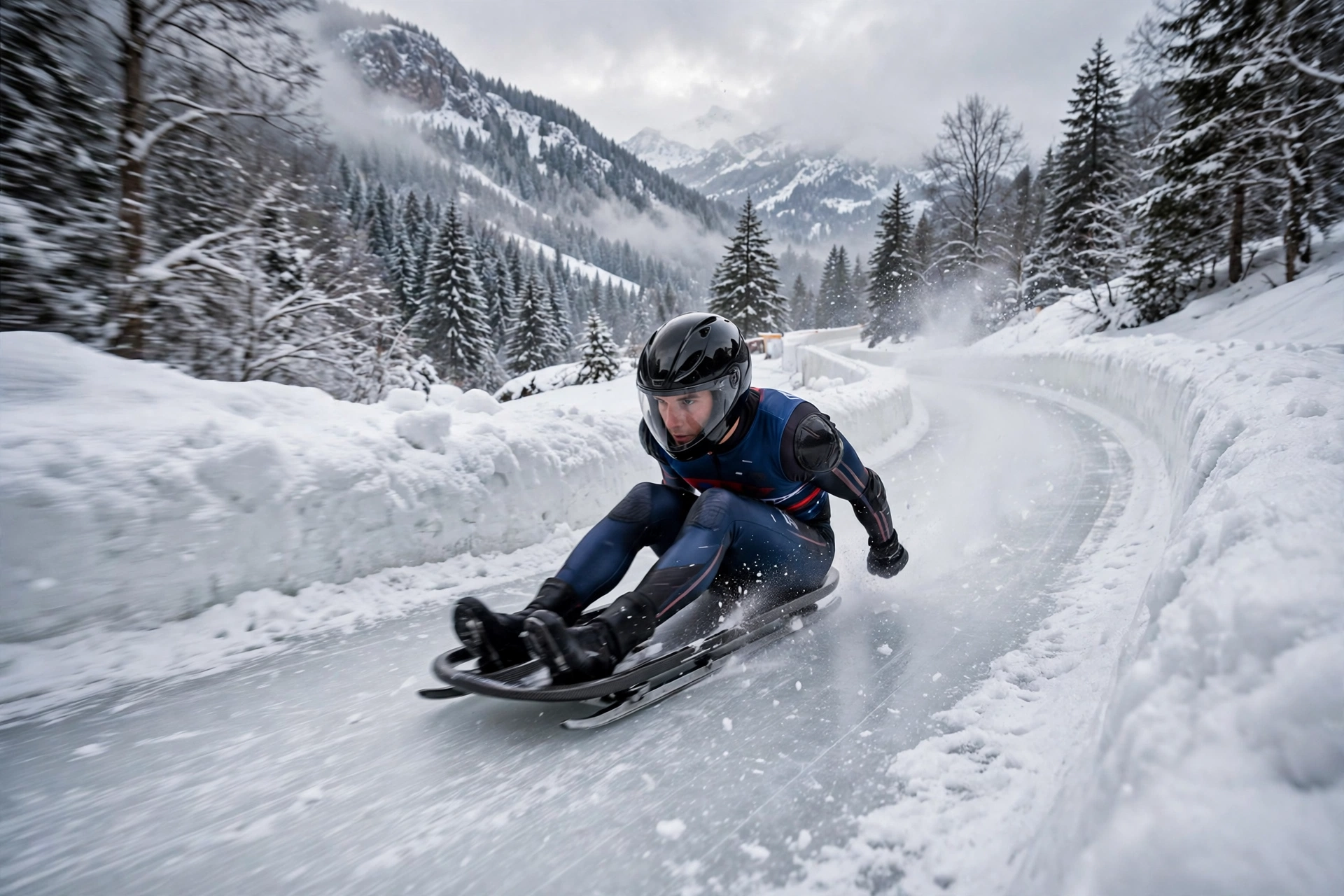
A helmet for luge riders is a close-fitting, aerodynamic helmet designed to protect the head during high-speed feet-first slides down an icy track, and in general terms every luge rider, from beginners to racers, should wear one that is made for the sport. Luge is one of the fastest sliding sports, and riders travel down the track lying on their backs on a small sled, with their head just above the ice. At those speeds a crash can be serious, so the helmet is one of the most important pieces of kit a luge rider owns.
Luge helmets look different from the helmets used in many other sports. They are smooth and rounded, with a visor that covers the eyes and a shape that helps the rider cut through the air. That shape is not just for speed: it also keeps the rider’s head protected while lying flat, and it keeps cold air and ice spray out of the eyes.
Why do luge riders need a helmet?
Luge riders need a helmet because of the speed and the surface they ride on. A luge track is made of ice, and the walls are hard and unforgiving. If a rider loses control, they can slide into a wall, roll off the sled, or hit the ice at speed, and a bare head would take the full force of that impact. In general terms, a helmet gives the rider a hard shell and a shock-absorbing layer between their head and the ice.
The cold is a factor too. Riding at speed in freezing air can sting the face and dry out the eyes, and ice spray kicked up from the track can hit the face. A luge helmet with a visor shields the eyes and face from that spray and from the wind, so the rider can see the track clearly and steer with confidence.
What makes a luge helmet different from other helmets?
A luge helmet is different because it is built for lying down at speed on ice. The shell is smooth and rounded, with no sharp edges or sticking-out parts that could catch the air or the ice, and the visor is curved to fit the shape of the face while the rider is lying flat. In general terms, the helmet is shaped around the riding position, which is unlike the upright position of most other sports.
The visor is one of the most important differences. Luge helmets usually have a clear visor that covers the eyes fully and can be flipped up or removed, and some riders use a tinted visor on bright days. The padding inside is also made to work in the cold, staying soft and comfortable at low temperatures.
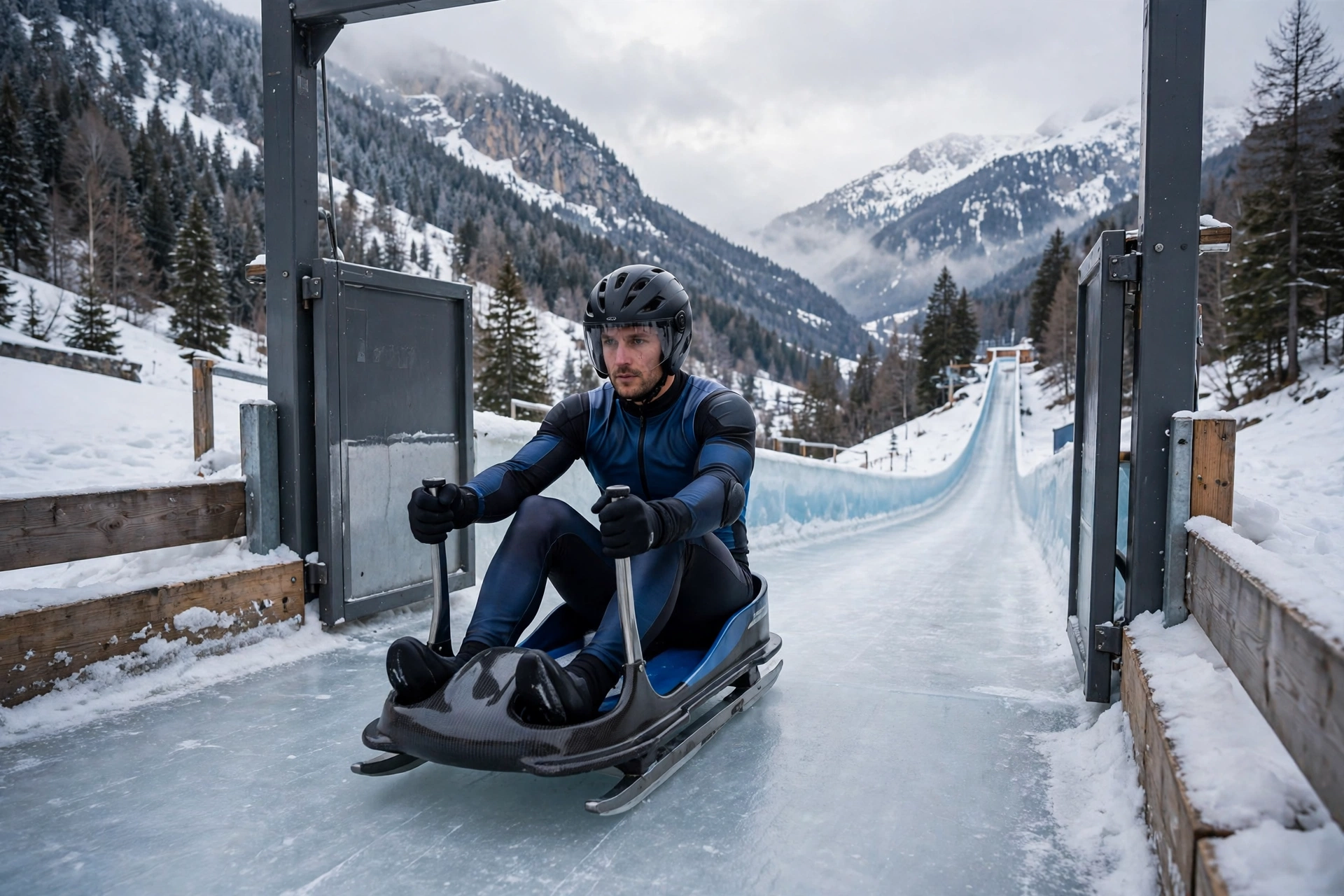
How should a helmet for luge riders fit?
A helmet for luge riders should fit closely and evenly around the head, with the visor sitting comfortably over the eyes and the shell covering the forehead and the back of the head. Start by measuring around your head just above your eyebrows, then check the size guide for the helmet. When you try it on, it should feel snug but not painful, and it should not move when you shake your head gently.
The visor fit matters as much as the shell. With the visor down, you should be able to see clearly in every direction without the edge of the visor cutting across your view, and the visor should not press against your nose or fog up quickly. Try the helmet on lying down if you can, because that is the position you will ride in, and check that the helmet stays in place and feels balanced. The chin strap should be fastened snugly, with room for about one or two fingers underneath.
What features should you look for in a luge helmet?
When you are choosing a luge helmet, look first for one made for luge or for a similar sliding sport, with a smooth aerodynamic shell and a clear visor. The visor should be easy to flip up and down with gloves on, and it should be simple to swap for a tinted one if you ride on bright days. Good ventilation is also useful, because even in the cold a rider can overheat, and vents help to keep the visor clear.
Comfort inside the helmet matters over a long session. Look for padding that fits your head shape, with no hard spots, and check that the helmet works with the rest of your kit, such as your race suit and gloves. Some modern helmets include a system designed to reduce rotational forces in a fall, such as MIPS, although that feature is found in some helmets rather than in every luge helmet. Weight is worth checking too, because a heavy helmet can strain the neck when you are lying flat and steering with small movements.
When should you replace a luge helmet?
You should replace a luge helmet after any crash or hard impact, even if the outside looks undamaged, because the foam inside may have compressed and may not protect you as well next time. In general terms, a helmet that has taken a serious hit has done its job once, and you should not count on it to do the same job again. If you are unsure how hard a crash was, replacing the helmet is the safer choice.
Age and wear are also reasons to replace a helmet. The padding can wear thin with use, the visor can become scratched and hard to see through, and the straps can fray or lose their grip. Check the helmet before every session for cracks, worn foam, or a visor that no longer sits properly, and replace it if anything looks wrong.
Do beginners need a luge helmet too?
Yes, beginners need a luge helmet just as much as experienced riders, and in some ways they need it more. A beginner is still learning how to steer, how to read the track, and how to stay on the sled, so they are more likely to lose control or take a corner badly. A good first helmet does not need to be the most expensive racing model, but it should be made for luge or a similar sliding sport and it should fit properly, so ask a coach or a club member for advice and try on a few helmets before you choose.
Can you use a ski helmet for luge?
A ski helmet is not a good choice for luge, because it is shaped for an upright position and does not have the smooth aerodynamic shell and full visor that luge riders need while lying flat on a sled. Use a helmet made for luge or a similar sliding sport instead.
Why do luge helmets have a visor?
The visor protects the rider’s eyes from cold air, wind, and ice spray at high speed, and it helps the rider see the track clearly. It also adds a smooth surface that helps the helmet cut through the air.
How do you stop a luge helmet visor from fogging up?
In general terms, keeping the visor clean, making sure the helmet vents are open, and avoiding breathing heavily onto the visor can help. Some riders use an anti-fog treatment made for visors, and replacing a badly scratched visor can also improve visibility.

Olivia
Writer at Helmet Today, covering helmet reviews, fit and riding safety.