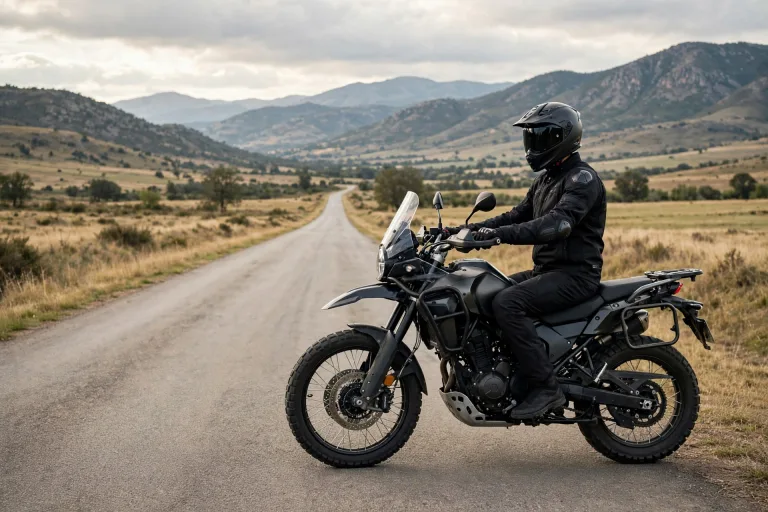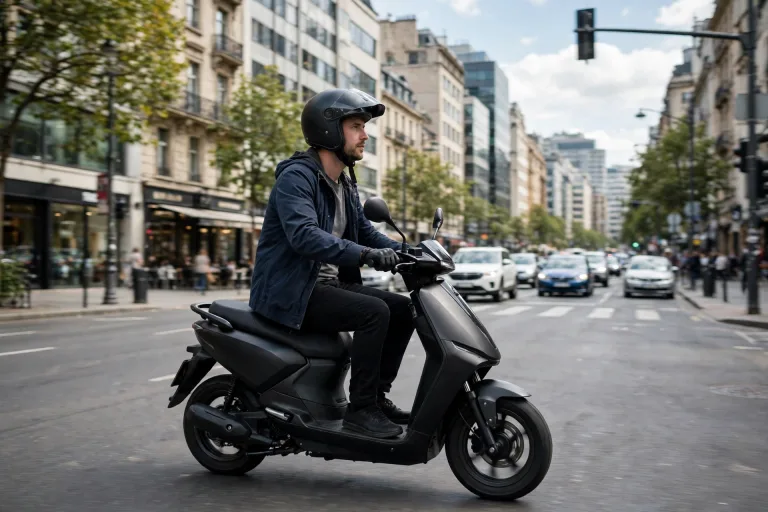
A helmet buying guide for short riders comes down to this: your height does not change the helmet size you need, because helmet size is set by the size of your head, but being short does change which helmet shapes, weights, and bike setups will feel comfortable, so short riders should choose a helmet that fits their head properly and suits their riding position. Short riders often hear that they need a smaller helmet, or that they should buy a helmet made for children, and both ideas can lead to a bad fit. The right helmet is the one that matches your head measurement, stays in place, and feels comfortable on your bike.
Height can still affect your helmet choice in smaller ways. A shorter rider may sit more upright or more leaned forward depending on the bike, and the helmet needs to work with that position, with the rider’s jacket, and with the bike’s screen or fairing.
Does height affect your helmet size?
Height does not decide your helmet size. Helmet sizes are based on the measurement around your head, usually taken just above your eyebrows and ears, and that number is what you match to a size chart. In general terms, a short adult can have a large head and a tall adult can have a small head, so height alone tells you nothing useful about which size to buy.
The mistake to avoid is buying a helmet that is too small just because you are short. A helmet that is too tight will press on your forehead and temples, give you a headache, and may not sit low enough to protect your forehead properly. A child’s helmet is also not the answer for most short adults, because it is shaped for a child’s head and may not offer the same protection or fit. Always start with your head measurement, then try helmets on in that size.
How do you measure your head for a helmet?
To measure your head, wrap a soft tape measure or a piece of string around your head at its widest point, just above your eyebrows and ears, keeping the tape level all the way around. If you use string, mark where it meets and measure the length against a ruler. In general terms, take the measurement two or three times to be sure, and use the largest number you get.
Once you have the number, check it against the size chart for the helmet you are looking at, because sizes can vary a little between brands. A measurement that falls between two sizes usually means you should try both, and pick the one that feels snug without pressing painfully. Your head shape matters too: some helmets suit rounder heads and others suit longer heads, so the size chart is only the starting point and trying the helmet on is what confirms the fit.
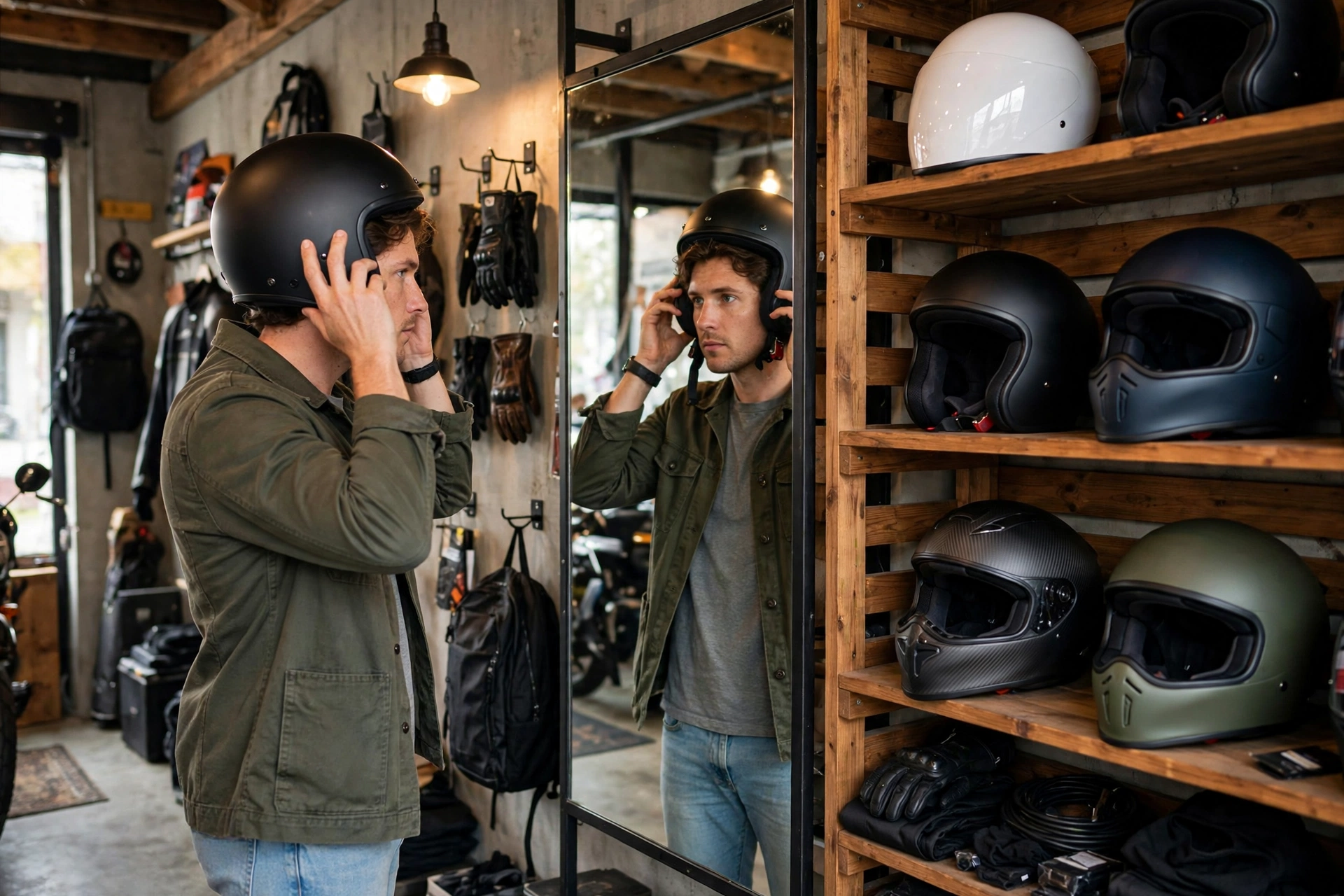
What should short riders check when trying on a helmet?
When you try on a helmet, check first that it sits level on your head and low enough to cover your forehead, with the padding touching your head evenly all the way around. Shake your head gently from side to side: the helmet should move with your head, not slide around on its own. Fasten the chin strap so it sits snugly under your chin, with room for about one or two fingers, and check that the helmet does not lift off when you pull gently at the front.
Then check the helmet in your riding position. Sit on your bike, or stand in the position you ride in, and look up, down, and to the sides. The helmet should not press on your forehead when you look up, and it should not block your view or push against your jacket collar.
Does helmet weight matter more for short riders?
Helmet weight matters for every rider, but it can matter more for short riders because a heavy helmet can feel like a bigger share of your body weight and can tire your neck sooner, especially on a long ride. In general terms, a lighter helmet is more comfortable and puts less strain on your neck, and that is worth paying attention to if you ride for hours at a time.
Weight is not the only thing to check, though. A light helmet that fits badly is still a bad helmet, so fit comes first and weight comes second. Some helmets include a system designed to reduce rotational forces in a fall, such as MIPS, and that feature adds a little weight, so you may need to balance it against comfort. Try a few helmets in your size and compare how they feel after several minutes, not just in the first few seconds.
What mistakes should short riders avoid when buying a helmet?
One common mistake is choosing a helmet for how it looks rather than how it fits. A helmet that looks good on the shelf but presses on your forehead or slides around on your head will not protect you well and will be miserable to wear. Another mistake is buying online without trying the helmet on, or ordering the same size in a different brand and expecting it to fit the same way. Sizes and shapes vary between brands, so a size that fits in one brand may not fit in another.
Another mistake is ignoring the rest of your kit. A helmet that clashes with your jacket collar, your glasses, or your bike’s screen can be annoying on every ride, and those problems are easier to spot in the shop than after you have bought it. Bring your glasses and your jacket when you try helmets on, sit on your own bike if you can, and take your time.
When should a short rider replace their helmet?
You should replace your helmet after any crash or hard drop, even if the shell looks fine, because the foam inside may have compressed and may not protect you as well a second time. Age and wear matter too: the padding can become thin and loose with use, the straps can fray, and the lining can wear out, all of which make the fit worse over time. Check your helmet often for cracks, worn foam, or a strap that no longer holds well, and replace it if anything looks wrong.
A helmet that once fitted perfectly can become loose as the padding wears down, so a regular fit check is worth doing, whatever your height.
Should short riders buy a small helmet?
Not always. Helmet size is set by your head measurement, not by your height, so a short rider may need a medium or large helmet. Measure your head, check the size chart, and try the helmet on before you buy.
Can short riders wear a child’s helmet?
In general terms, no. A child’s helmet is shaped for a child’s head and may not fit an adult properly or offer the same protection. Short adults should buy an adult helmet in the size that matches their head measurement.
Does a lower riding position change which helmet suits a short rider?
It can. A rider who leans forward a lot may need a helmet that does not press on the forehead when looking up, and one that works well with the bike’s screen. Try the helmet on in your riding position to check.

Olivia
Writer at Helmet Today, covering helmet reviews, fit and riding safety.