You can tell if a helmet no longer fits when it moves around on your head, presses painfully in some places while feeling loose in others, or no longer sits level and low on your forehead, and in general terms any of those signs means the helmet should be checked, adjusted, or replaced. A helmet that fitted perfectly when you bought it can slowly stop fitting as the padding wears down, as your head shape changes, or as the straps stretch. Because a helmet only protects you properly when it fits, a regular fit check is one of the simplest safety habits you can build.
Many riders keep wearing a helmet long after it has become too loose, because the change happens so slowly that they do not notice it. A helmet that slides forward over the eyes, lifts off easily, or wobbles when you shake your head is not doing its job.
What are the signs that a helmet no longer fits?
The most obvious sign is movement. A helmet that fits well should move with your head when you shake it gently from side to side, not slide around on its own. If the helmet shifts forward over your eyes when you nod, or slides back when you look up, the fit is too loose. In general terms, a helmet that you can twist easily on your head, or pull off without undoing the strap, is too big or too worn out to trust.
Pressure is another sign, and it can mean the opposite problem. A helmet that presses hard on your forehead or temples after a few minutes, leaves red marks, or gives you a headache is too tight or the wrong shape for your head. A helmet that feels tight in one spot and loose in another may be the wrong shape rather than the wrong size, and trying a different model can fix that.
How do you test your helmet fit at home?
To test your helmet fit at home, put the helmet on and fasten the chin strap so it sits snugly under your chin, with room for about one or two fingers. The helmet should sit level on your head and low enough to cover your forehead, with the front edge just above your eyebrows. Shake your head gently from side to side and up and down: the helmet should stay in place, and your skin on your forehead should move slightly with it.
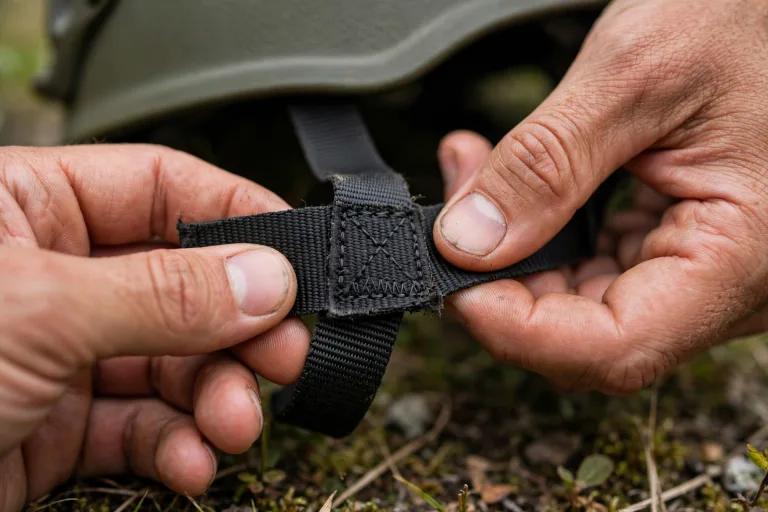
Next, try to move the helmet with your hands. Push the front of the helmet up gently: it should not lift far off your forehead. Try to twist it side to side: it should resist and move your head with it, rather than sliding around freely. Check the straps too: they should lie flat, sit just below your ears, and hold the helmet steady without digging in. If the helmet fails any of these checks, adjust the padding and straps first, and if it still fails, it is time to think about a replacement.

Why does a helmet stop fitting over time?
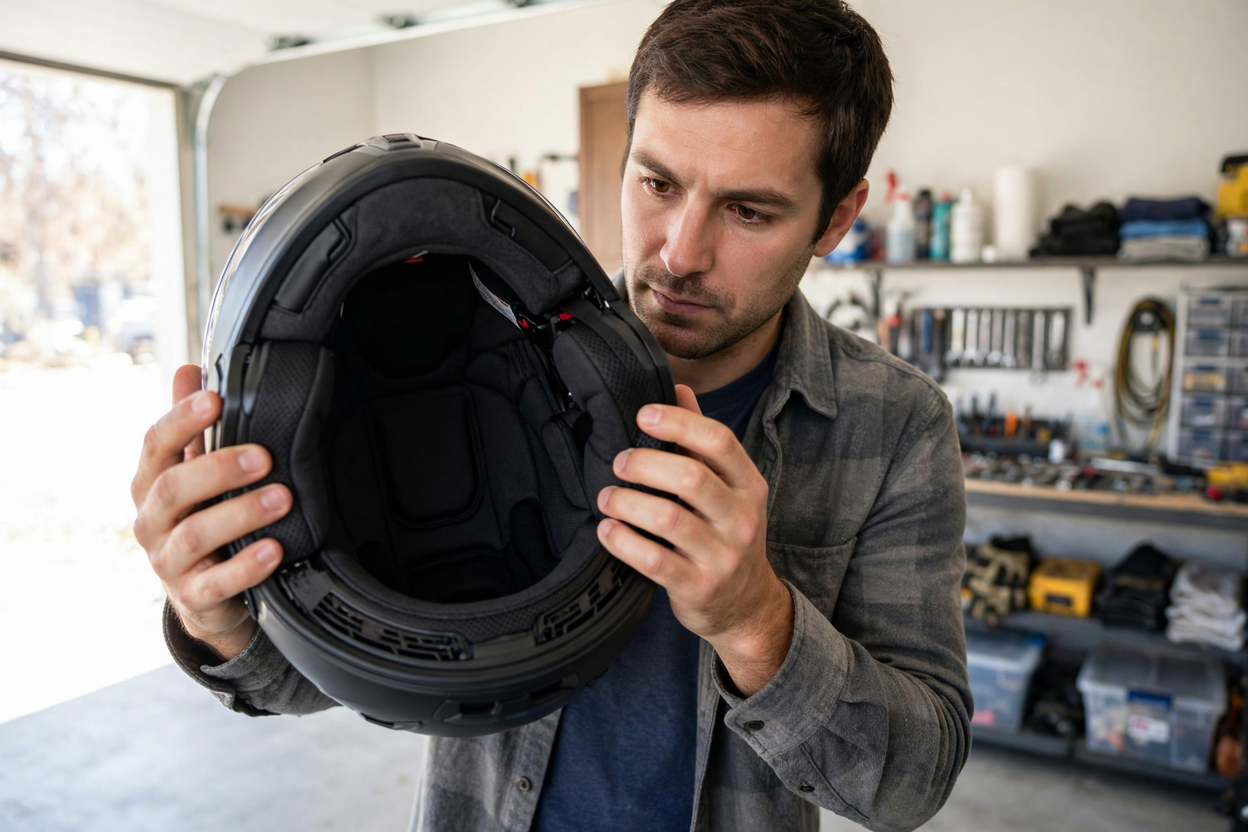
A helmet stops fitting over time mainly because the padding inside wears down. The foam and lining compress with use, sweat, and heat, and as they get thinner the helmet becomes looser on your head. In general terms, a helmet that was snug when new can become noticeably loose after a few seasons of regular use, even if the shell looks exactly the same from the outside.
Other things can change the fit too. Straps can stretch or fray, the fit system at the back can wear out, and the lining can shrink or go hard after being washed badly or left in the sun. Your own head can change as well, for example if you grow, change your hairstyle, or start wearing a different cap underneath.
Can you fix a helmet that no longer fits?
Sometimes you can fix a helmet that no longer fits, and sometimes you cannot. If the problem is a loose strap or a fit system that has slipped, adjusting the straps and the dial at the back may bring the fit back. Many helmets come with spare padding of different thicknesses, and swapping in thicker pads can take up the slack in a helmet that has become slightly loose. In general terms, small adjustments are worth trying before you buy a new helmet.
But there are limits to what adjusting can do. If the foam inside has compressed badly, if the shell is cracked, or if the helmet has been in a crash, no amount of adjusting will make it safe again, and it should be replaced. If you have tried the adjustments and the helmet still moves, presses, or lifts, replacing it is the right choice.
How often should you check your helmet fit?
You should check your helmet fit at least a few times a year, and every time you notice it feeling different. A quick check before a ride takes less than a minute: put the helmet on, fasten the strap, and shake your head gently. In general terms, if it feels the same as it always has, you can ride with confidence, and if it feels looser or tighter than before, take a closer look before you set off.
It is also worth checking the fit after the helmet has been stored for a long time, after it has been dropped, and after you have changed anything about how you wear it, such as a new hairstyle or a different cap. Children need checking more often, because they grow quickly and can outgrow a helmet in a single season.
When should you replace a helmet that no longer fits?
You should replace a helmet that no longer fits as soon as you notice the problem, rather than waiting for a more convenient time. A loose helmet can shift in a crash and leave part of your head unprotected, and a helmet that is too tight can distract you and tempt you to ride without it.
When you buy a replacement, take the time to get the fit right. Measure around your head just above your eyebrows and ears, check the size chart, and try the helmet on before you buy it if you can. Wear it for a few minutes in the shop to check for pressure points, and test it in your normal riding position. Some modern helmets include a system designed to reduce rotational forces in a fall, such as MIPS, and that is a feature worth asking about when you shop for a replacement.
How do you know if a helmet is too loose?
A helmet is too loose if it slides around when you shake your head, moves forward over your eyes when you nod, or can be pulled off without undoing the strap. It should move with your head, not on its own.
Can thicker padding fix a loose helmet?
Sometimes, yes. Swapping in thicker pads or adjusting the fit system can take up a small amount of slack, but it cannot fix a helmet that is badly worn, cracked, or the wrong size. If adjustments do not help, replace the helmet.
Should children have their helmet fit checked more often?
Yes. Children grow quickly and can outgrow a helmet in a single season, so check the fit every few months and replace the helmet when it becomes too small or too loose.

Olivia
Writer at Helmet Today, covering helmet reviews, fit and riding safety.