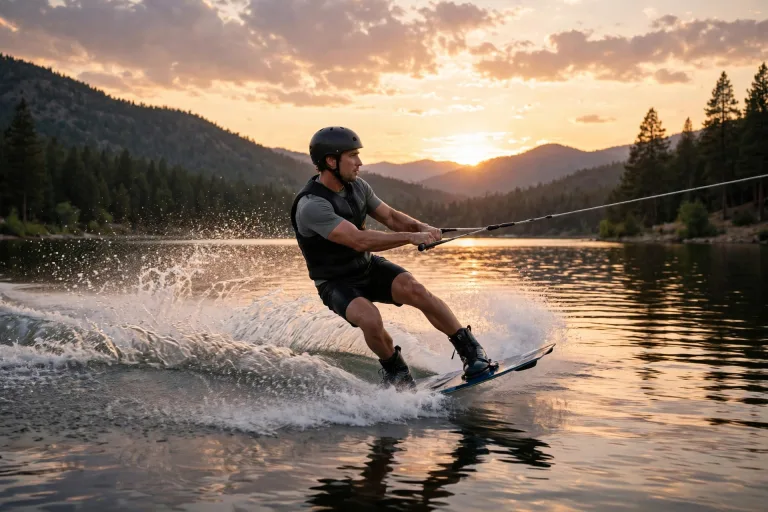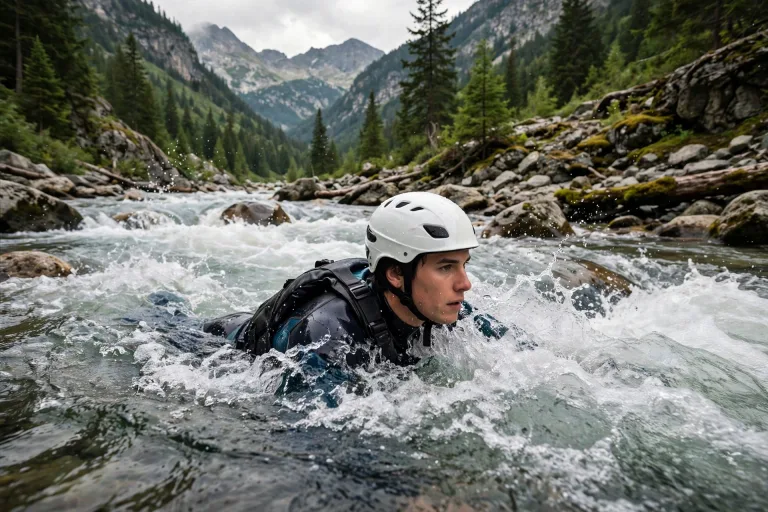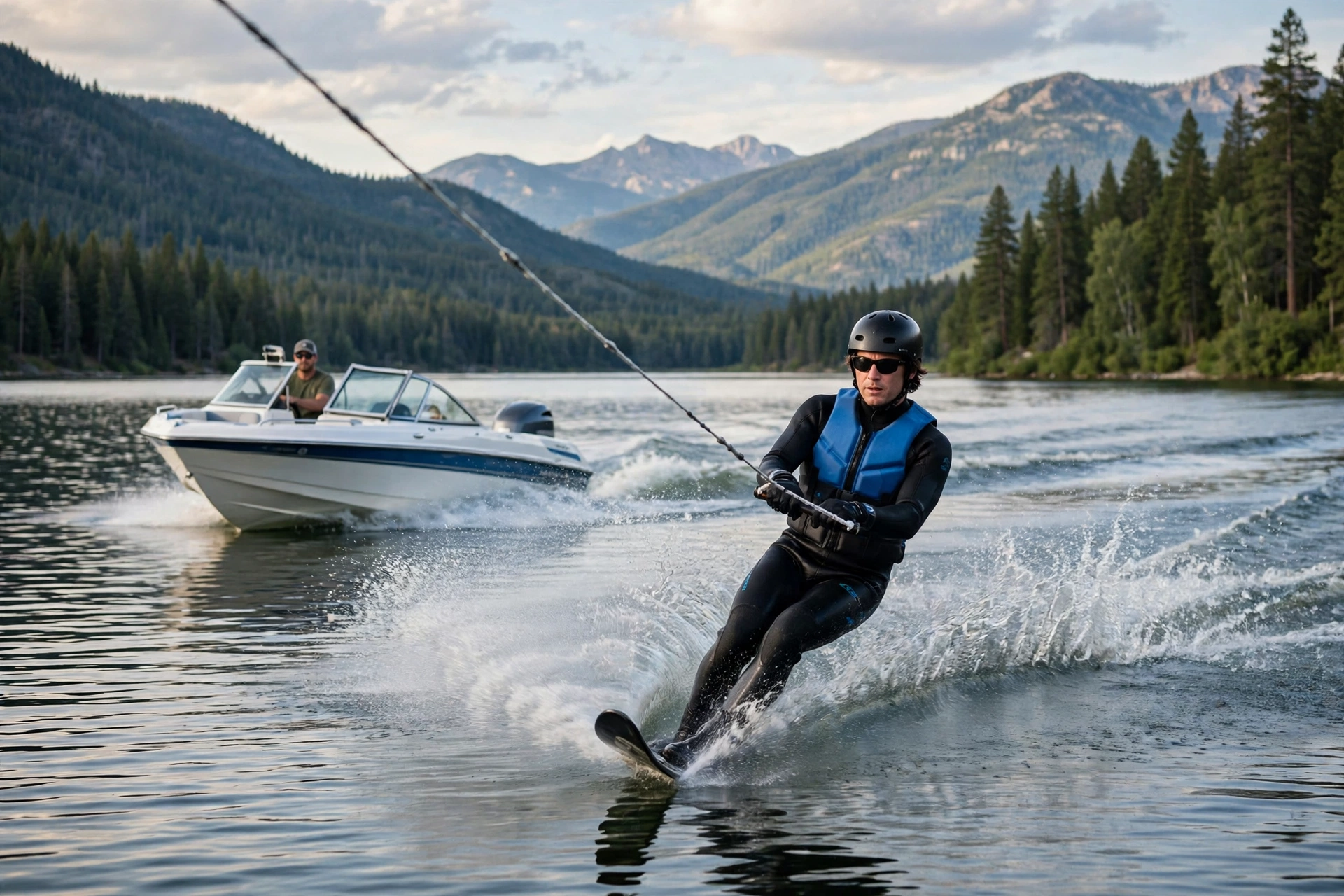
A helmet for water skiers is a helmet worn on the water to protect the skier’s head from hard falls, knocks against the ski or the water, and contact with obstacles such as a buoy or a dock. In general terms, it is a light, water-friendly helmet with a secure chin strap, drainage or ventilation to let water out, and a fit that stays put at speed. A helmet for water skiers is not the same as a bike or ski helmet used on land, and it should be chosen for the conditions on the water rather than for how it looks on the shore.
Water skiing looks smooth when it goes well, but a fall at speed can be a hard one. Water feels soft at a slow pace, yet at towing speed it can feel firm on impact, and a skier who falls forward or sideways can strike the surface with real force. A helmet gives the head a layer of protection in that moment, and it can also help against a knock from a ski, a tow rope handle, or a piece of floating debris. That is why many skiers, and many ski schools, treat a helmet as a normal part of the kit.
Why do water skiers need a helmet?
Water skiers need a helmet because the main risk is not the water itself but the speed and the force of a fall. A skier travelling behind a boat is moving fast, and when they lose their balance they may fall in an awkward way, with the head striking the water first or the body twisting as it hits. In general terms, a helmet spreads the force of that impact and helps to protect the skull, and it can also reduce cuts and bruises from a ski edge or a hard object in the water.
There is also the risk of hitting something solid, such as a buoy, a marker, a dock, or another skier’s equipment. Open water is not always empty, and a skier who is focused on the wake may not see a floating log or a moored boat until it is close. A helmet cannot make those hazards disappear, but it gives the skier a better chance of walking away from a knock with a minor injury rather than a serious one.
What kind of helmet is best for water skiers?
The best helmet for water skiers is, in general terms, one made for water sports, with a shell that can cope with repeated wetting, a lining that does not soak up too much water, and openings that let water drain away quickly. A helmet that holds water becomes heavy and uncomfortable, and it can also shift on the head when the skier moves. A water sports helmet should feel light when wet, dry out without too much trouble, and keep its shape after a day on the lake or at the coast.
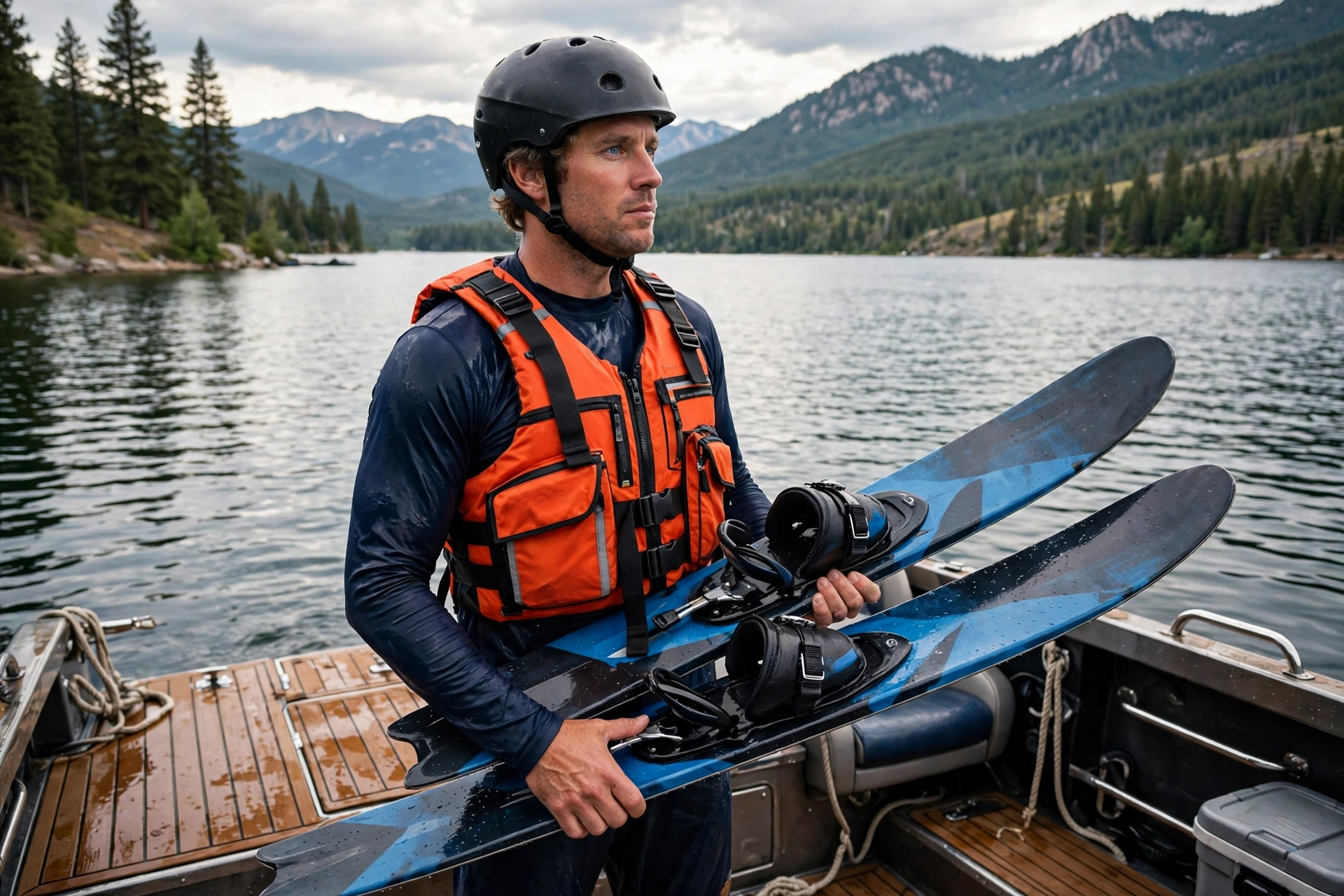
The fit matters as much as the design. A water skiing helmet should sit level, cover the top of the head and the forehead, and stay in place when the skier shakes their head or leans into a turn. The chin strap should fasten securely and should not stretch loose when it gets wet.
How should a water skiing helmet fit?
A water skiing helmet should fit snugly, without pressing hard in one place or leaving gaps that let it slide around. The skier should try it on dry first, then check the fit again with wet hair if possible, because hair can change how a helmet sits. The helmet should not tip forward over the eyes when the skier leans forward, and it should not slide back when the skier looks up at the boat or the rope.
The chin strap is a key part of the fit, and it should be fastened every time the skier is on the water, even for a short run. A strap that is left loose lets the helmet lift or twist in a fall, and a helmet that comes off in the water is no help at all.
What should a water skier check before getting on the water?
Before getting on the water, a water skier should check the helmet for cracks, soft spots, or damage to the shell, and should look at the lining, the strap, and the buckle to make sure they are sound and working. A helmet that has been dropped onto a hard dock, or that has taken a hard knock in a fall, should be looked at with care, and in general terms a helmet that has taken a serious impact should be replaced rather than used again. The damage may not be obvious from the outside, so the skier should think about what the helmet has been through.
The skier should also rinse the helmet with fresh water after use in salt water, and should let it dry naturally in the shade rather than in strong heat. Salt, sand, and sun can wear a helmet down over time, and a quick rinse after each session helps to keep the materials in good order. A helmet that smells, feels loose, or has a lining that has come away from the shell is a sign that it may need attention or replacement.
How can a water skier stay safe on the water?
A water skier can stay safe by wearing a helmet and a life vest, by skiing in a clear area away from swimmers, docks, and moored boats, and by agreeing clear signals with the boat driver before the run starts. The driver should know what the skier means by speed up, slow down, and stop, and the skier should know how to let go of the rope safely if they fall. In general terms, clear signals and a calm, steady tow are just as important as the helmet itself.
The skier should also build up speed and skill step by step, rather than trying a hard turn or a jump before they are ready. Falling is a normal part of learning, and a helmet helps the skier to get up and try again with more confidence. Some helmets made for water and snow sports also include a system designed to reduce rotational forces in a fall, such as MIPS, and skiers who are choosing a new helmet may want to learn about that feature before they buy. A helmet, a life vest, and good habits together give a skier the best chance of a safe and enjoyable day on the water.
Do all water skiers wear a helmet?
No, not all water skiers wear a helmet, but many do, and ski schools often ask beginners to wear one. In general terms, a helmet is a sensible choice for any skier, whatever their level.
Can a bike helmet be used for water skiing?
In general terms, a bike helmet is not a good choice for water skiing, because it is not made to cope with water, and it may become heavy or lose its fit when wet. A helmet made for water sports is a better fit for the job.
How often should a water skiing helmet be replaced?
A water skiing helmet should be replaced after a hard impact, or when it no longer fits well, shows damage, or feels loose after long use. When in doubt, replace it rather than keep skiing in it.

Olivia
Writer at Helmet Today, covering helmet reviews, fit and riding safety.