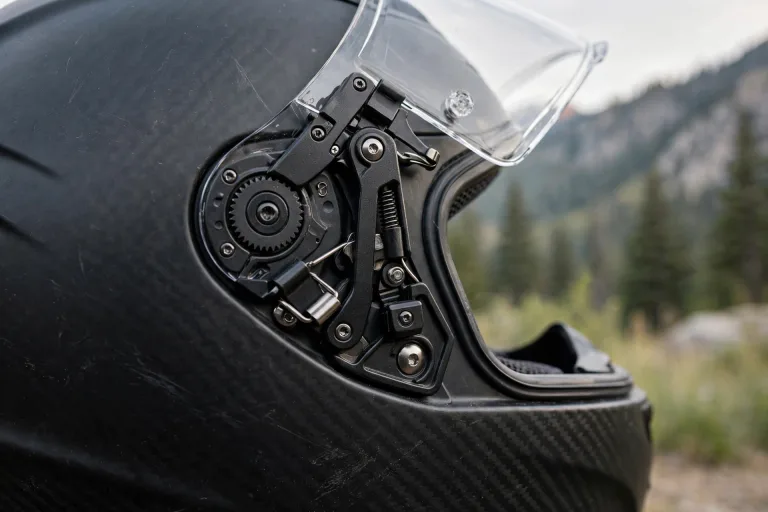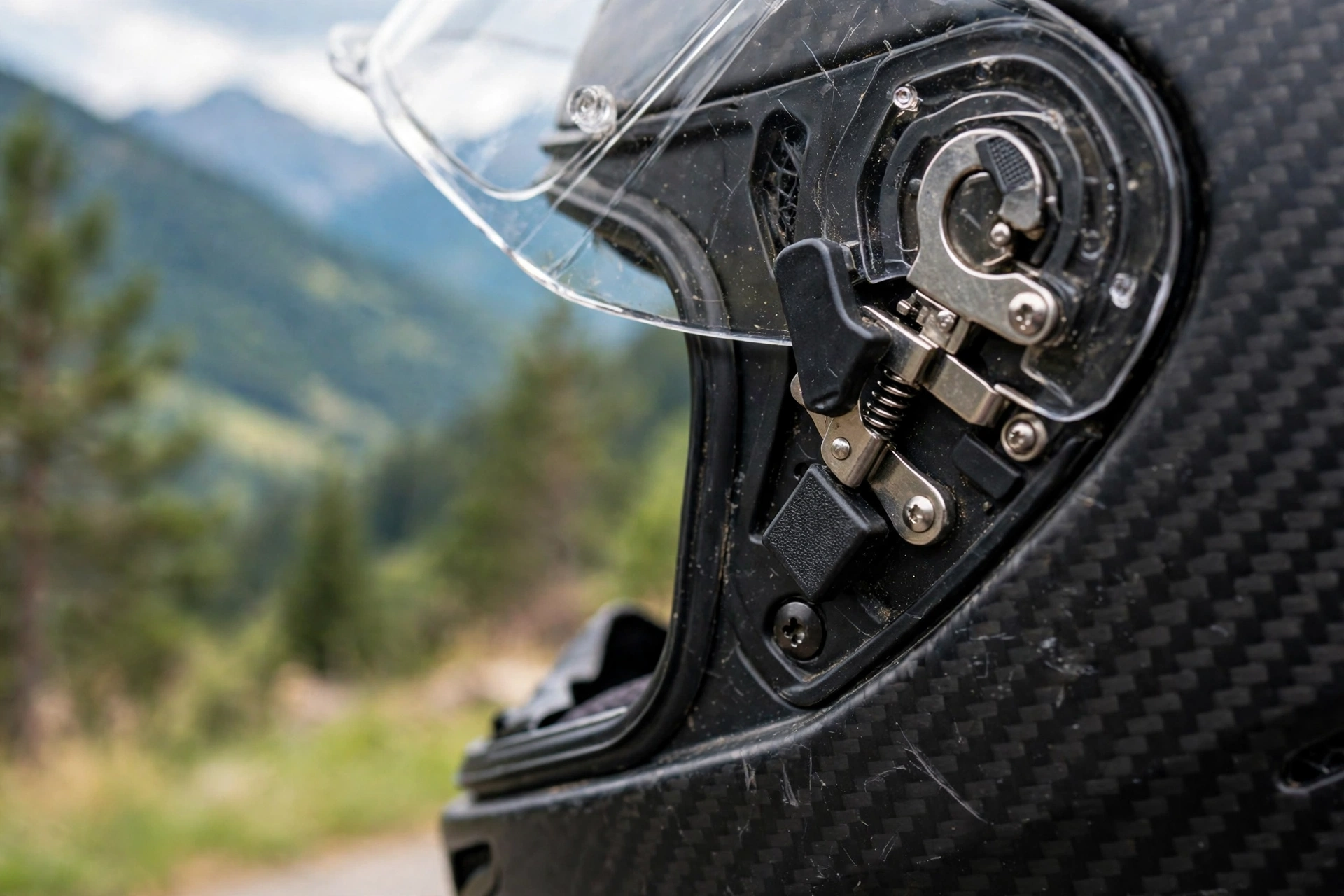
A helmet shield lock is a small catch or lever on a motorcycle helmet that holds the visor, also called the shield, firmly closed while the rider is moving. In general terms, it stops the visor from lifting, fluttering, or flying open at speed, and it keeps wind, rain, dust, and insects out of the rider’s eyes. A helmet shield lock is a simple part, but it plays a useful role in comfort and safety, because a visor that opens by itself at speed can startle a rider and block their view at the worst moment.
Most motorcycle helmets have a visor that can be raised and lowered, so that the rider can open it at a stop for air and close it on the move for protection. The shield lock is the part that keeps the closed visor in place once it is shut. Some locks work by hand, with a small lever or slide that the rider moves into place, while others work on their own when the visor is pushed fully closed. The exact design varies from one helmet to another, but the job is always the same.
What is a helmet shield lock?
A helmet shield lock is a catch, lever, or clip built into the side or the front of a motorcycle helmet, near the pivot where the visor turns. When the visor is closed and the lock is engaged, it holds the visor against the helmet shell, so that wind pressure cannot lift it. In general terms, the lock is made to be easy to use with a gloved hand, because a rider may need to open or close it while wearing riding gloves, and a fiddly catch would be hard to manage on the road.
The lock is part of the visor system as a whole, which also includes the pivot, the spring or ratchet that holds the visor at different heights, and the seal that keeps out wind and rain. A shield lock does not replace those parts, but it adds a firm hold at the fully closed position.
How does a shield lock work?
A shield lock works by holding the edge of the visor in place once it is fully closed, using a catch that grips a tab, a notch, or a small pin on the visor. On many helmets, the rider pushes the visor down until it clicks, and that click means the lock has engaged. On others, the rider pushes the visor down and then moves a small lever or slide with a thumb or a finger to lock it. In general terms, the action should feel firm and positive, with a clear click or a clear stop, rather than vague or loose.
To open the visor again, the rider releases the lock first, usually by moving the same lever back or by lifting the visor with a little extra force at the start of the movement. The exact action depends on the helmet, so a rider should learn how their own lock works before they set off, rather than trying to work it out at speed.
Why does a shield lock matter?
A shield lock matters because a visor that lifts at speed can be a real problem for a rider. Wind can catch the edge of a visor and push it open a little, letting in a rush of cold air, rain, or dust, and that can make the rider’s eyes water and blur their view of the road. In general terms, a visor that opens suddenly can also startle a rider, and a startled rider is more likely to make a sudden movement or to lose focus for a moment, which is never a good thing on a motorcycle.
The lock also helps to keep the visor sealed against the helmet, which cuts wind noise and keeps the rider warmer and more comfortable on a long ride. A good seal means less draught, less noise, and a clearer view, and those small comforts add up over a long day in the saddle. For riders who ride in rain or in cold weather, a shield lock that holds the visor firmly closed is one of the features that makes a helmet feel well made and trustworthy.
How do you use a shield lock?
To use a shield lock, close the visor fully, check that it has clicked or that the lever has moved into place, and give the visor a gentle tug to make sure it is held. The check should take only a moment, and it is worth doing before every ride, because a visor that looks closed may not be fully locked. If the visor lifts easily when you tug it, the lock may not be engaged, and you should close it again and check the catch.
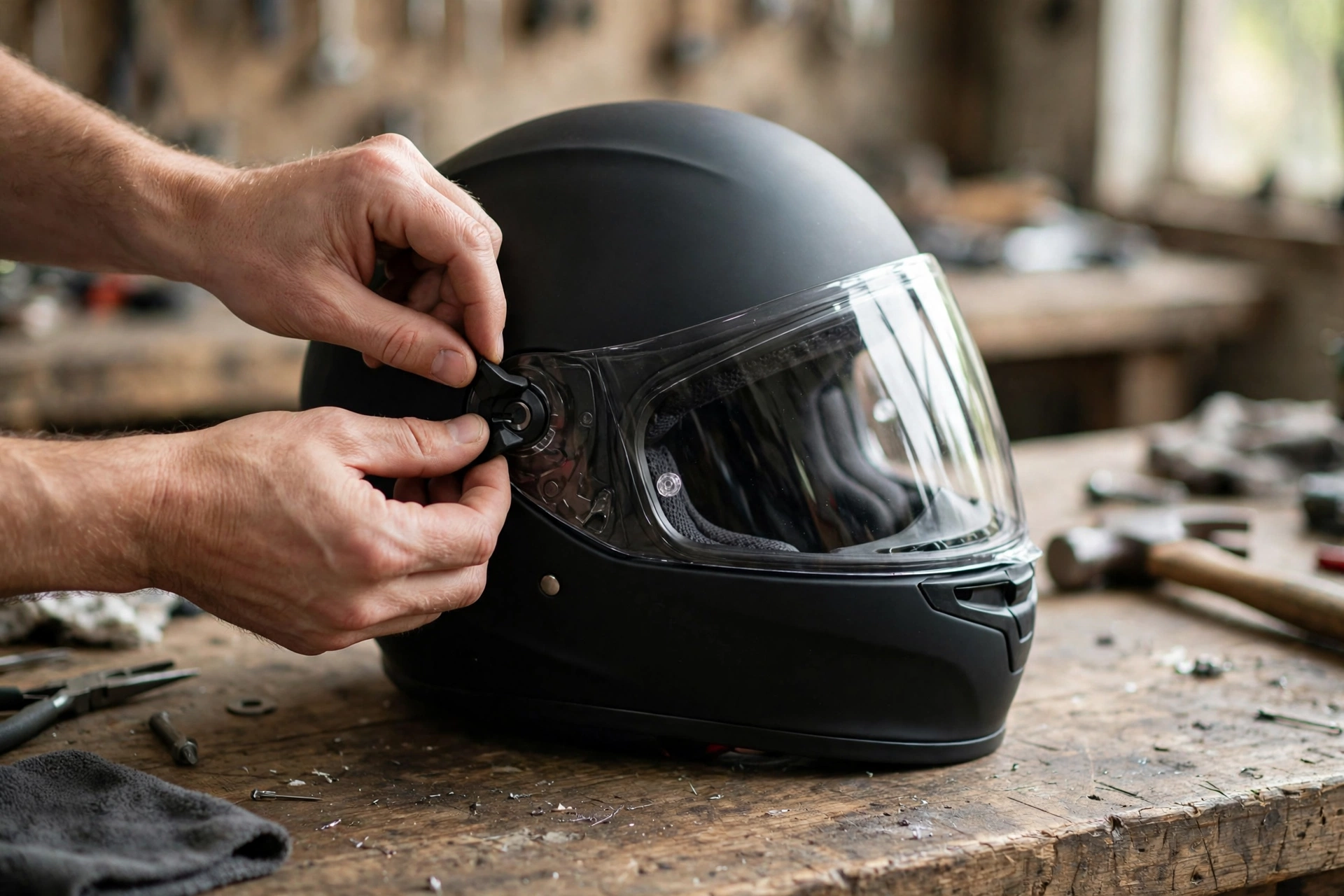
When you want to open the visor, release the lock first, then lift the visor to the height you want. Do not force the visor open while the lock is still engaged, because that can wear or break the catch. A lock that will not engage at all should be looked at by a dealer or a repairer, rather than ignored, because a visor that will not stay shut is a problem worth fixing.
What should you do if a shield lock breaks?
If a shield lock breaks, the rider should stop using the visor in the locked position and should get the lock checked as soon as they can. In general terms, a broken lock does not mean the whole helmet is ruined, because the lock is often a small part that can be replaced, but the rider should not assume that the visor will stay shut without it. Riding with a visor that lifts at speed is uncomfortable and distracting, and it is better to fix the lock than to put up with it.
The rider should check whether the part is available from the helmet maker or a dealer, and whether it can be fitted at home or needs a repairer to fit it. The visor and the lock should be checked together, because a worn visor pivot or a cracked visor edge can also stop the lock from working as it should. Riders who are learning about helmet safety may also want to read about other features that help in a fall, including a system designed to reduce rotational forces, such as MIPS, which is found in some motorcycle helmets. A helmet with a working shield lock, a clean visor, and a secure fit gives a rider the best chance of a clear view and a comfortable ride.
Do all motorcycle helmets have a shield lock?
No, not all motorcycle helmets have a shield lock, although many do. In general terms, it is more common on road helmets with a full visor, and less common on open-face helmets or off-road helmets.
Can I ride with the shield lock open?
Yes, you can ride with the visor open at low speed, for example in slow traffic or at a stop, but the visor should be closed and locked at higher speeds, so that wind and debris stay out of your eyes.
How do I know if my shield lock is working?
Close the visor fully, check for a click or a firm stop, and give it a gentle tug. If it stays shut and feels firm, the lock is working. If it lifts easily, it may need cleaning or repair.

Olivia
Writer at Helmet Today, covering helmet reviews, fit and riding safety.