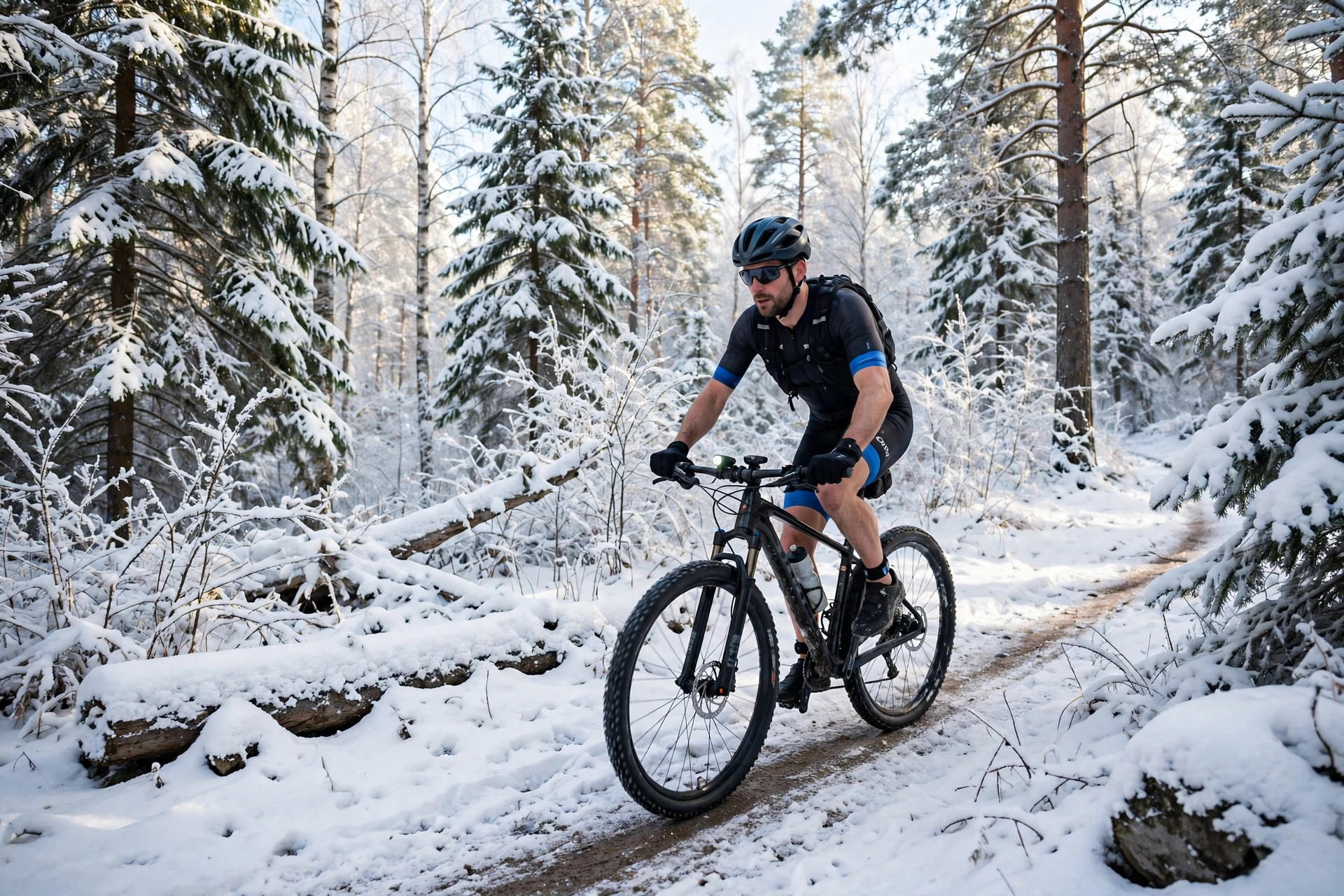
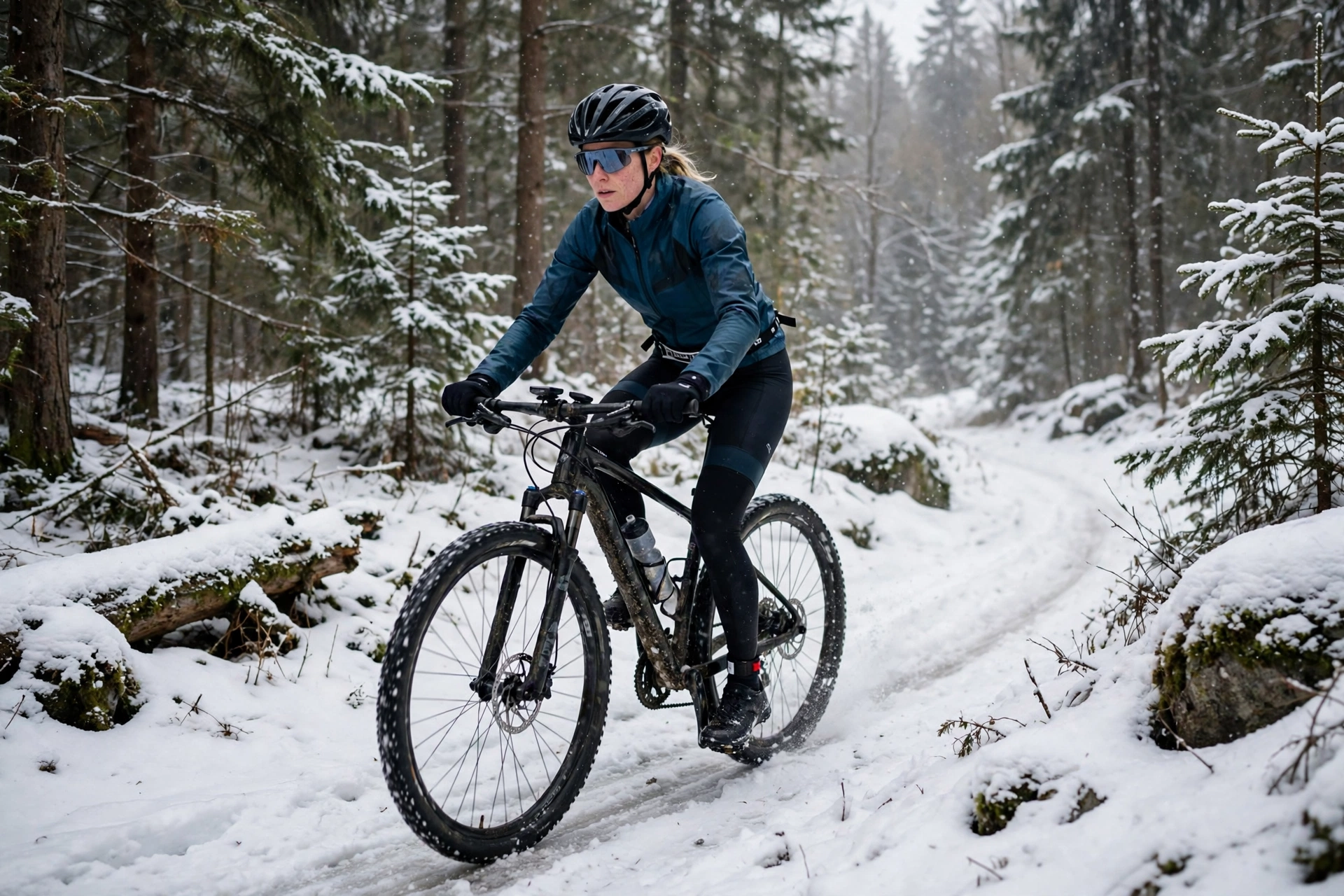
A helmet for winter triathlon is a helmet worn during the cycling leg of a winter triathlon to protect the head in a fall, and in general terms every winter triathlete should wear one that fits well and stays in place on the bike. A winter triathlon is a race made up of running, mountain biking and cross-country skiing, usually held on snow, and the bike leg is ridden on snowy or icy trails. A fall onto frozen ground or ice can be a hard one, so a helmet is treated as essential safety equipment, and most races will not let a rider start the bike leg without one.
The winter triathlete moves between three very different sports in a single race, and the helmet is the one piece of safety kit that matters most on the bike. The run and ski legs are slower, but the bike leg brings speed, hard frozen ground, and the risk of sliding on ice. A helmet gives the rider protection in that moment, and it also helps to keep the head warm in the cold.
Why do winter triathletes need a helmet?
Winter triathletes need a helmet because the bike leg is ridden at speed on snow and ice, and a fall on that surface is very different from a fall onto soft ground. Snow may look soft, but a trail packed hard by other riders, or a patch of bare ice under a thin layer of snow, can be almost as firm as tarmac. A rider thrown from a bike at speed can hit it with real force, and in general terms a helmet spreads the force of an impact and helps to protect the skull when the rider cannot control how or where they land.
There is also the risk of being struck by part of the bike, or of sliding into a tree, a fence post, or another rider, if the bike loses grip on an icy corner. A helmet gives a layer of protection against those knocks too. Cold is another reason to wear one: a helmet with a warm liner or a cover helps the rider to keep heat in on a long ride and shields the head from wind chill at speed.
What kind of helmet is best for winter triathlon?
The best helmet for winter triathlon is, in general terms, a well-ventilated mountain bike helmet with a hard outer shell, a secure chin strap, and a fit that works with a warm hat or a balaclava underneath. Many triathletes use a standard mountain bike helmet, because it is light, comfortable, and made to cope with the bumps and knocks of off-road riding. The key points are a snug fit, good ventilation that can be adjusted in the cold, and a strap that holds the helmet in place when the rider is moving fast over rough ground.
The helmet should also cope with snow and cold. A helmet used in winter will get snowy and wet, so it should be easy to wipe clean and to dry out between sessions. Vents that can be closed, or a helmet cover, are useful in very cold weather, and a lining that can be removed and washed is a practical feature.
How should a helmet for winter triathlon fit?
A helmet for winter triathlon should fit snugly, sit level on the head, and stay in place when the rider shakes their head or leans into a turn. The helmet should cover the forehead and the top of the head, and the chin strap should be fastened securely every time the rider is on the bike. A strap that is left loose lets the helmet lift in the wind or slide in a fall, and a helmet that comes off at speed is no help at all.
The fit should be checked with the warm hat, headband or balaclava the rider will actually wear in the race, because extra layers can change how a helmet sits. The helmet should sit neatly over the layer without squeezing the head or sliding forward over the eyes, and it should not press on the arms of glasses or push them out of place. The rider should also check that the helmet does not block their hearing, because a winter triathlete needs to hear other riders, marshals, and any warnings on the course.
What should a triathlete check before a race?
Before a race, a triathlete should check the helmet for cracks, dents, or damage to the shell, and should look at the lining, the strap, and the buckle to make sure they are sound and working. A helmet that has been dropped onto hard ground, or that has taken a knock in a fall, should be looked at with care, and in general terms a helmet that has taken a serious impact should be replaced rather than used again. The damage may not be easy to see, so the rider should think honestly about what the helmet has been through.
The triathlete should also check the course, the weather, and the condition of the bike before setting off. A helmet is only one part of staying safe in a winter race, and it works best when the rider also checks the tyres, the brakes, and the bike before setting off. Racing with other people nearby, and knowing the course in advance, are sensible habits too.
How should a winter triathlon helmet be looked after?
A winter triathlon helmet should be looked after with regular cleaning and sensible storage, in the same way as any sports helmet. After a ride in the snow, the rider should shake out the snow, wipe the helmet clean, and let it dry naturally away from direct heat. Strong heat, such as a radiator or a hot car, can harm the materials in a helmet over time, so a cool, dry place is a better choice for storage between races.
The helmet should be kept where it will not be knocked about or used as a seat or a shelf, because a hard knock can damage it even when no crack is visible. A helmet bag is a simple way to protect it between sessions. Riders who are choosing a new helmet may also want to learn about features that can help in a fall, including a system designed to reduce rotational forces, such as MIPS, which is found in some helmets made for mountain biking and winter sports. A well-kept helmet, worn every time, gives a winter triathlete the best chance of enjoying a fast day in the snow in safety.
Is a helmet required in a winter triathlon?
In general terms, yes. Most winter triathlon races require a helmet for the bike leg, and riders are usually not allowed to start that leg without one. A rider who is unsure should check the rules for the race before entering.
Can a normal bike helmet be used for winter triathlon?
Yes, in general terms a mountain bike helmet that fits well and is in good condition is often suitable for winter triathlon. The key points are fit, a secure chin strap, and room for a warm layer underneath.
When should a winter triathlon helmet be replaced?
A winter triathlon helmet should be replaced after a hard impact or a fall, or when it no longer fits well, shows damage, or has been worn for a long time. When in doubt, replace it rather than keep racing in it.

Olivia
Writer at Helmet Today, covering helmet reviews, fit and riding safety.