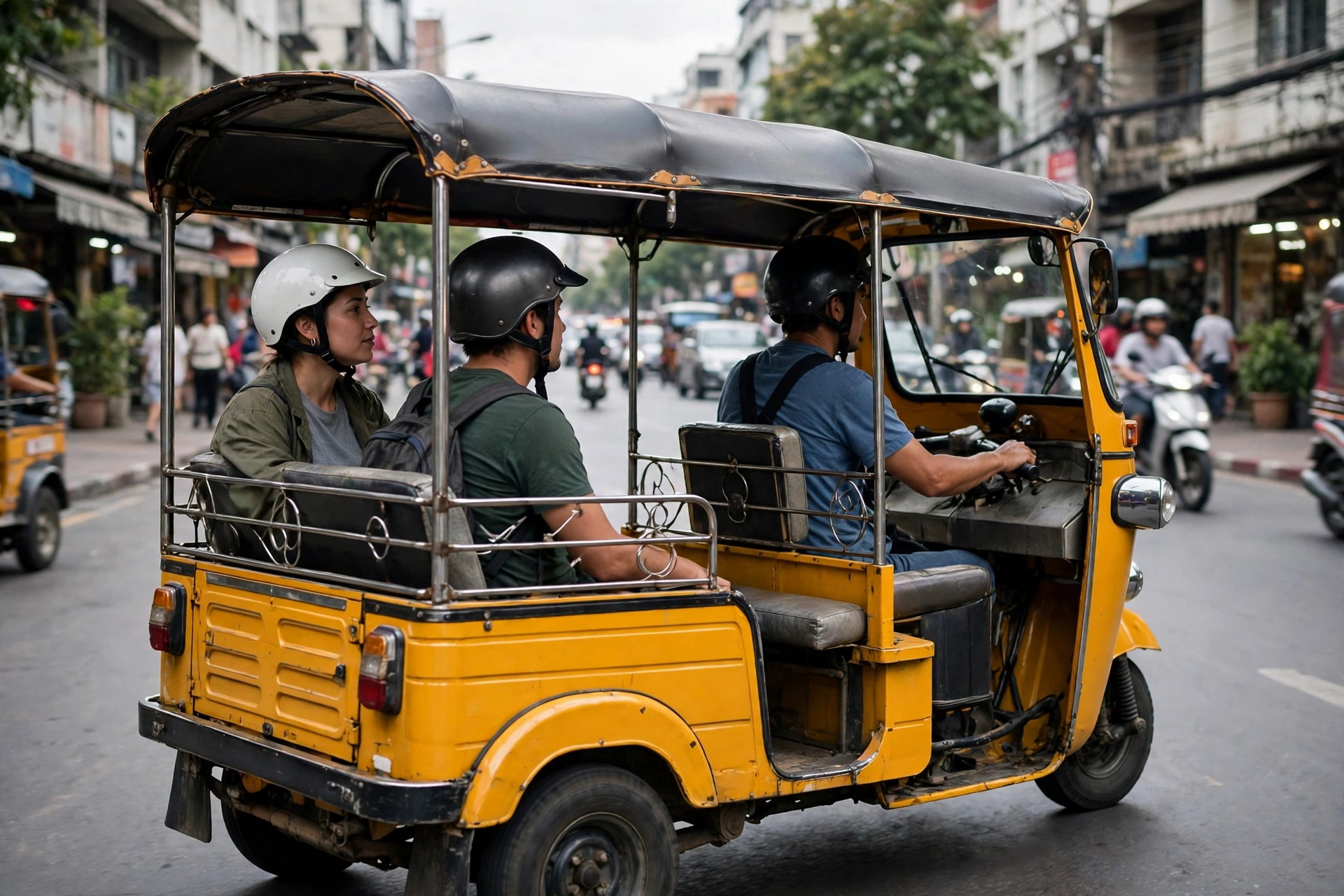
A helmet for tuk-tuk passengers is a light open-face helmet worn to protect the head in a crash or a sudden stop while riding in a tuk-tuk. In general terms, a tuk-tuk offers far less protection than a car, with open sides and no seat belts for passengers, so a helmet is the main thing standing between a passenger’s head and the road. It guards against knocks in a collision, a fall from the vehicle, or a sudden jolt, and it is worth wearing even on a short ride.
Tuk-tuks are a common way to get around in many towns and cities, and they are often used for short trips that feel too brief to bother with a helmet. But most crashes happen close to home, on familiar roads, and at low speed, and a short ride is not a safe ride. A passenger in a tuk-tuk has nothing holding them in place, so a sudden brake, a sharp turn, or a bump can throw them against the frame or out of the vehicle altogether. A helmet will not prevent a crash, but it lowers the chance that a knock to the head becomes a serious injury.
What is a helmet for tuk-tuk passengers?
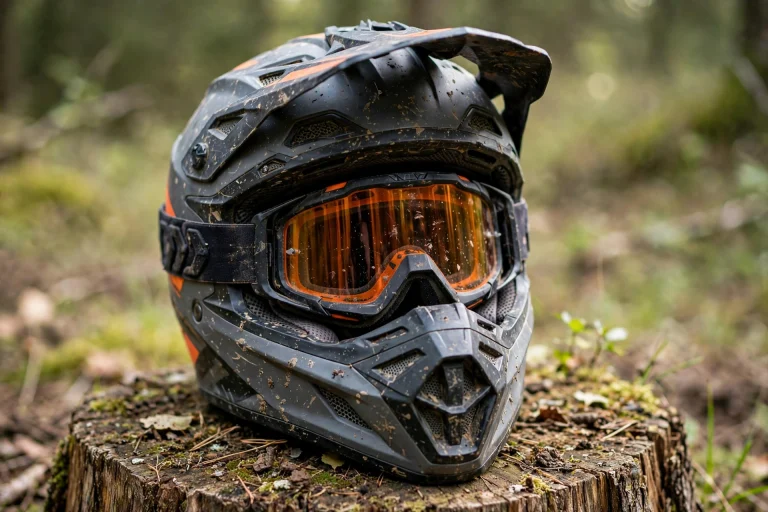
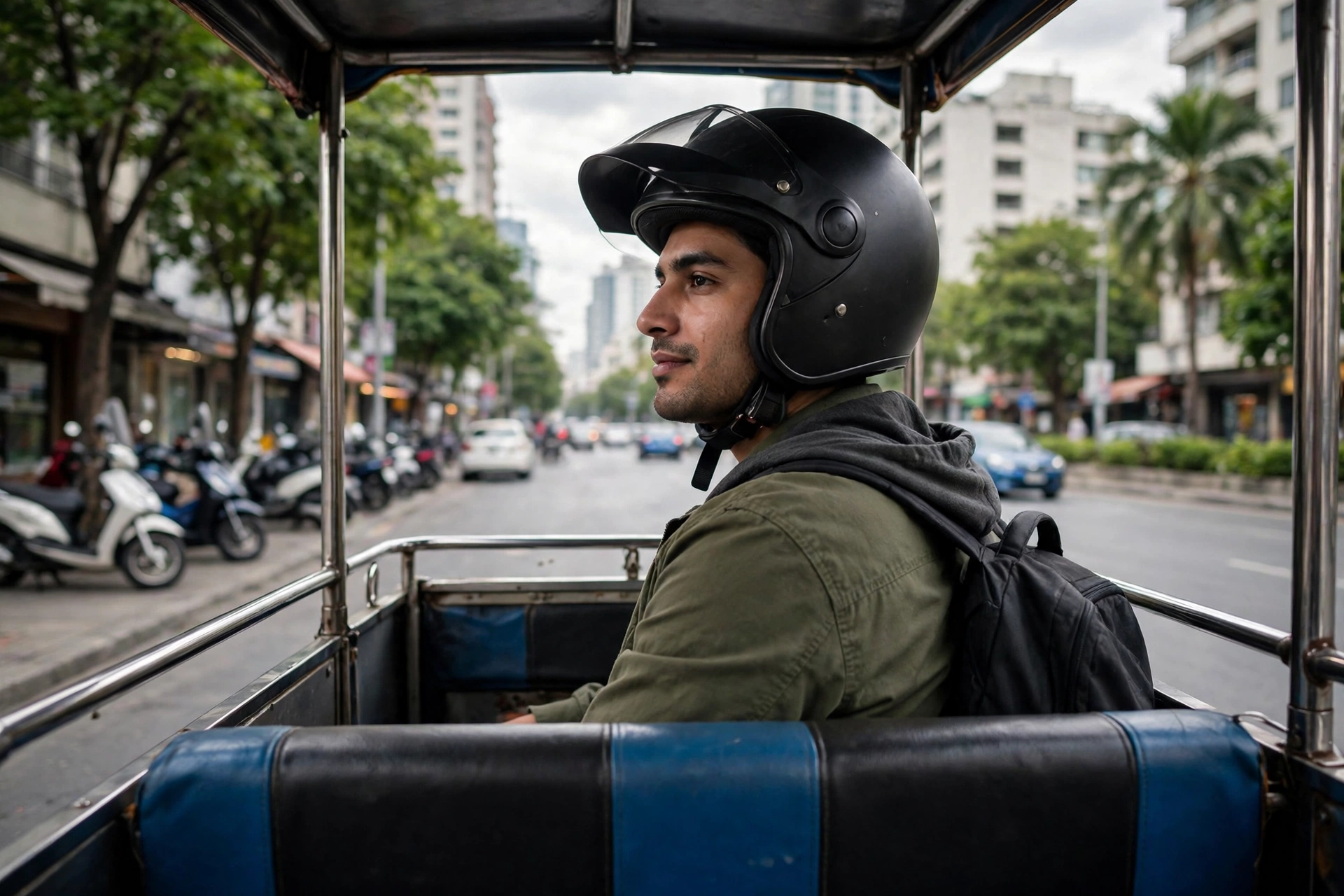
A helmet for tuk-tuk passengers is usually a light open-face helmet with a hard outer shell, a padded lining, and a chin strap that holds it firmly in place. In general terms, it covers the top, back, and sides of the head, sits low on the forehead, and leaves the face open so the passenger can see, speak, and breathe easily in hot weather. Many helmets have a small visor or peak to keep sun and dust out of the eyes.
Open-face helmets are popular for tuk-tuk rides because they are cooler and lighter than a full-face helmet, which matters in warm climates where tuk-tuks are most common. They are also easier to put on and take off for a short trip. Some passengers use a half helmet, but an open-face helmet that covers the back of the head offers more protection, and it is the better choice where one is available.
Why should tuk-tuk passengers wear a helmet?
Tuk-tuk passengers should wear a helmet because a tuk-tuk gives them very little protection in a crash. In general terms, there are no doors, no airbags, and no seat belts, and the vehicle is light and open, so a passenger can be thrown out or struck by another vehicle with little to slow them down. A helmet protects the head in exactly that kind of event, spreading the force of a blow across the shell and the lining.
The risk is easy to underestimate because tuk-tuks feel slow and safe, especially in heavy traffic. But a tuk-tuk can still be hit by a car or a motorcycle, it can still tip on a sharp turn, and a passenger can still fall out on a bumpy road. A helmet is a simple, low-cost piece of protection that covers the most vulnerable part of the body, and it is worth wearing even when the ride is only a few minutes long.
What kind of helmet suits a tuk-tuk passenger?
An open-face helmet that fits well and meets the safety standard for motorcycle use in the country is the best choice for a tuk-tuk passenger. In general terms, the helmet should have a hard shell, a comfortable lining, and a chin strap that can be fastened securely. It should cover the back of the head as well as the top, since a passenger can be thrown backward as well as forward in a crash.
A helmet with a visor or a peak is useful for keeping sun, dust, and insects out of the eyes, and vents help to keep the head cool in hot weather. Some helmets include a system designed to reduce rotational forces in a fall, such as MIPS, which is a feature worth considering, although a good fit and a helmet made for road use remain the most important things. A helmet that is too loose, too old, or made for another sport is not a safe substitute.
How should the helmet fit?
A tuk-tuk passenger’s helmet should fit snugly all round, without pressing hard on one spot or sliding around when the head moves. In general terms, it should sit level on the head, covering the forehead down to just above the eyebrows, and the chin strap should be tight enough that the helmet stays put when shaken gently from side to side. A helmet that is too loose can come off in a crash, while one that is too tight becomes uncomfortable on a hot ride.
Fit should be checked before the ride starts, not once the tuk-tuk is moving. The passenger should fasten the chin strap fully, since an unfastened helmet can fly off at the first bump. It is also worth checking that the helmet does not block vision, since a passenger who can see the road can brace for a bump or a turn. If the helmet is shared or borrowed, take a moment to adjust the straps, because a helmet that fits the last passenger may not fit the next one.
What should passengers check before the ride?
Before a tuk-tuk ride, passengers should check that a helmet is available and that it is in good condition. In general terms, look for a shell without cracks, straps that are not frayed, and a lining that is clean and still padded. A helmet that has been in a crash, or one that is visibly damaged, should not be used, and it is worth asking the driver for another one or carrying your own.
Passengers should also think about where they sit and how they hold on. Sitting in the middle of the bench, keeping hands on a rail or a handle, and keeping loose clothing and bags tucked away all help to keep a passenger steady. A helmet is the most important piece of protection, but it works best alongside these small habits. If no helmet is offered and the ride cannot be avoided, it is worth asking the driver to go slowly and to take a quieter route.
Do tuk-tuk passengers have to wear helmets?
It depends on the country and the place, and the rules are not the same everywhere. Even where it is not a legal requirement, wearing a helmet is a sensible choice, because a tuk-tuk offers very little protection in a crash.
Is a bicycle helmet enough in a tuk-tuk?
No, a bicycle helmet is made for cycling falls and is not designed for the forces of a road crash in a motor vehicle. A helmet made for motorcycle or scooter use is the right choice for a tuk-tuk passenger.
What if the driver does not offer a helmet?
Ask for one, and if none is available, consider carrying your own helmet for regular tuk-tuk rides. A personal helmet that fits well is more reliable than a shared one, and it means you are protected on every ride.

Olivia
Writer at Helmet Today, covering helmet reviews, fit and riding safety.