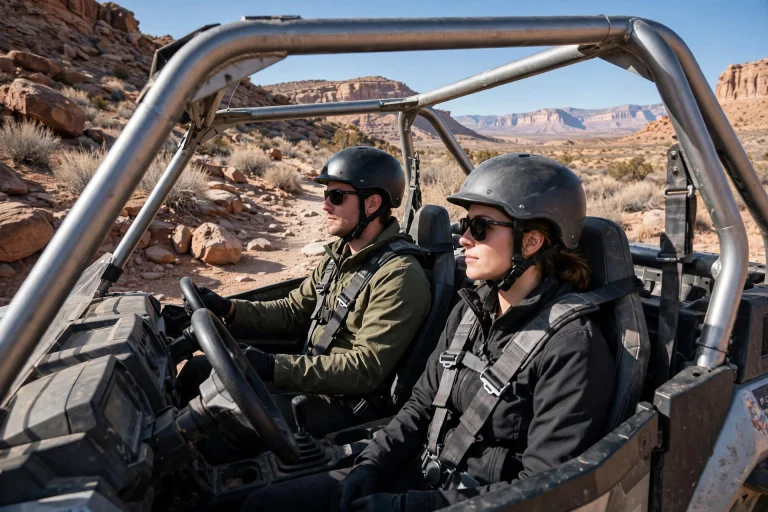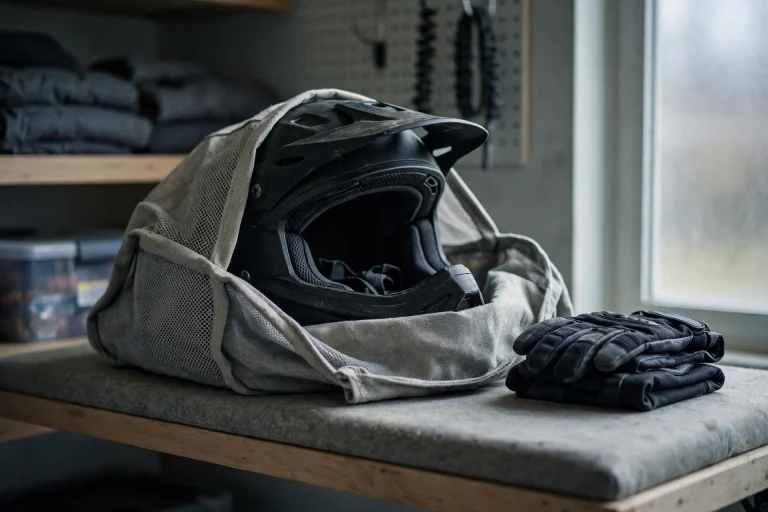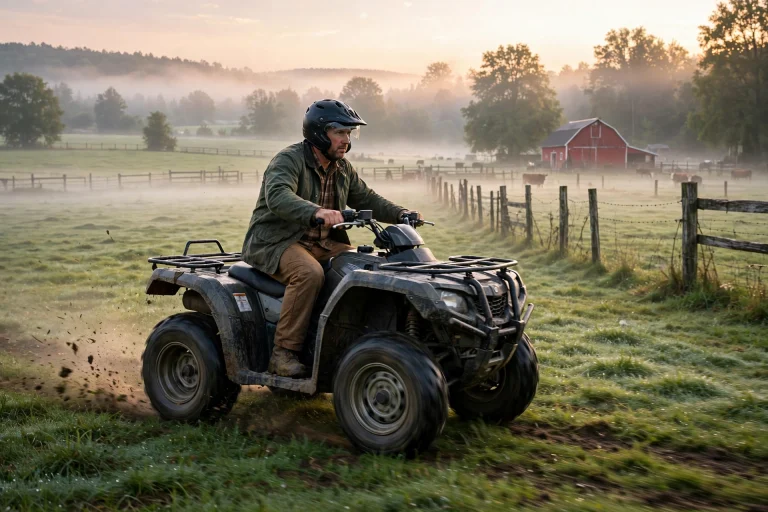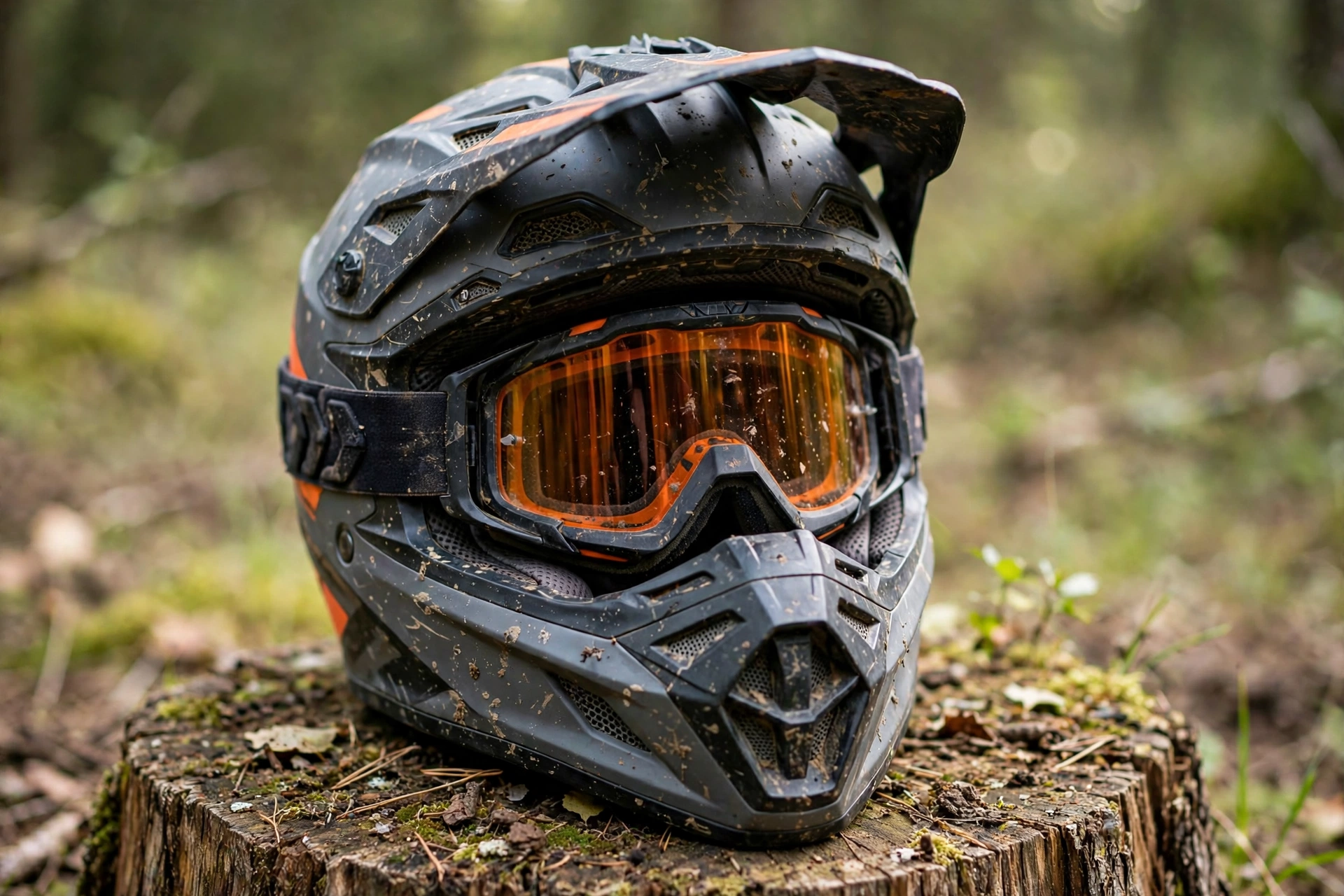
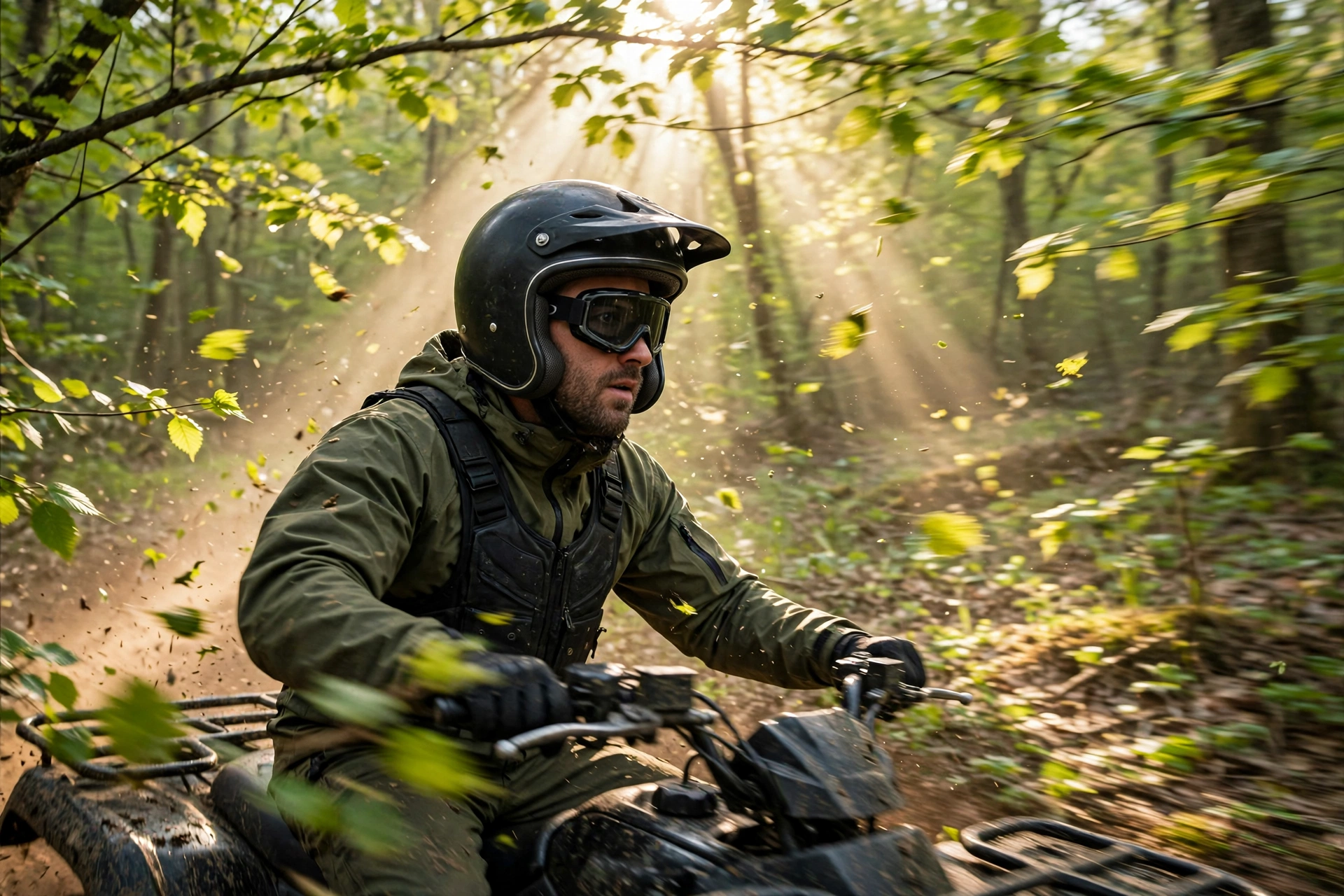
ATV helmets have no face shield because off-road riding punishes shields: dust, mud, and roost coat them, low speeds give too little airflow to stop fogging, and separate goggles seal better and can be swapped in seconds when they get filthy. The open eyeport with goggles is not a missing feature — it is a design that suits the conditions a quad actually works in.
Road helmets and ATV helmets solve different problems. This guide walks through why the shield lost out off-road, and how to get full eye protection without one.
Why Do ATV Helmets Use Goggles Instead of a Shield?
It starts with the eyeport. Off-road helmets are built with a wide open port designed around a goggle frame, and the goggles seal against your face with foam. That seal keeps dust, grit, and wind out of your eyes far better than a shield hovering in front of the helmet ever can.
Goggles are also sacrificial in a way shields are not. When a wall of mud or dust makes vision hopeless, you can pull a tear-off, swap to a clean pair, or wipe goggles with a glove in a second. A coated, scratched shield covered in dried mud is a much slower problem to fix mid-trail.
And goggles travel with your eyes. They move with your head, work at any angle, and keep protecting when you look down at the machine, over your shoulder, or back at the rider behind you — positions where a fixed shield’s coverage and optics are at their worst.
How Do Dust and Mud Make Face Shields a Problem Off-Road?
Dust is the daily issue. Fine dust hangs in the air on dry trails, coats everything, and finds its way behind a partly raised shield to settle on the inside surface — the one surface you cannot wipe while riding. A goggle’s foam seal largely keeps that dust outside where a glove can deal with it.
Mud is worse. Roost from the machine ahead lands in sheets, and a shield smeared with mud forces a choice between riding half-blind or stopping to clean it properly so it does not scratch. Goggles handle this with tear-offs and roll-off film systems developed exactly for mud.
Scratches finish the argument. Off-road shields live a short life of wipes, grit, branches, and drops in the dirt, and a scratched shield glares badly in sun and headlights. Replacing goggles costs a fraction of replacing a shield, and many riders carry a spare pair rather than babying one expensive visor.
What About Fogging and Airflow at Low Speeds?
Face shields need airflow to stay clear, and ATV riding often happens at walking pace: technical climbs, creek work, farm chores, winching, waiting. At those speeds a closed shield fogs from your own breath and body heat, and cracking it open just lets the dust in.
Goggles manage the same conditions differently. Foam-framed, vented goggles are designed to breathe at low speed, dual-pane goggle lenses resist fogging, and if a pair does mist, you can drop them around your neck and keep working — no shield stuck in front of your face either way.
Heat matters too. Slow off-road work in summer is hot work, and an open eyeport helmet with goggles moves far more air across your face than a shielded helmet at the same speed. Riders stay cooler, and a comfortable rider keeps their eye protection on instead of flipping it up.
Weather swings underline the same point. In cold rain, a shield beads with water on the outside, mists on the inside, and smears when you wipe it with a muddy glove — three problems stacked on one piece of plastic. Goggles in the same conditions can be cleared with a tear-off, dried against your base layer at a stop, or simply swapped for the dry spare pair in your pack. Off-road, redundancy beats sophistication, and a pair of goggles is the most redundant eye protection there is.
Are There ATV Helmets That Do Have Shields?
Yes — the categories blur at the edges. Dual-sport and adventure helmets often combine a peak with a proper face shield, and some accept goggles with the shield removed. They suit riders who split time between road commuting and trails, where a shield earns its keep at road speeds.
Convertible and crossover off-road helmets also exist with shields that can be fitted or flipped for cold weather, wind, or road sections. In cold conditions especially, a shield blocks the wind chill that goggles alone leave around the edges.
Whatever the configuration, the head protection underneath works the same way: shell, energy-absorbing liner, and in many modern designs rotational-impact protection such as MIPS. Choose the eye setup for your conditions, but never trade away certification and fit to get a shield.
How Do You Get Eye Protection Without a Face Shield?
Start with goggles that fit your helmet’s eyeport and seal evenly against your face, with the strap run over the helmet as designed. Try them on together before you ride: gaps at the nose or cheeks mean dust paths, and a strap that fights the helmet’s shape will slip at the worst moment.
Carry the off-road extras: a spare pair of goggles or a spare lens, tear-offs for mud, and a soft cloth for stops. Tinted lenses for bright days and clear ones for dull light or dusk cover most riding between them.
Sunglasses alone are not enough off-road — they do not seal, they slip, and they offer little protection from a stone or branch at the eyeport. If goggles truly do not suit you, look honestly at a dual-sport helmet with a shield instead of riding with bare eyes.
Frequently Asked Questions
Q: Can I add a face shield to my ATV helmet?
A: Usually not — helmets built for goggles have no shield mounts or mechanism. If you want a shield, buy a dual-sport or crossover helmet designed for one rather than modifying an eyeport helmet.
Q: Are goggles as protective as a face shield?
A: For off-road debris, dust, and roost, a well-sealed goggle is generally better because it seals to your face and can be swapped when dirty. A shield suits higher road speeds and wind protection better.
Q: Why do ATV helmets have a peak if they have no shield?
A: The peak shades your eyes from sun, deflects roost and low branches, and can be tilted as light changes. It does the sun-and-spray job while goggles do the sealing job.

Olivia
Writer at Helmet Today, covering helmet reviews, fit and riding safety.