Yes — wear a helmet in a UTV even with a roll cage and a harness. The cage protects the space around you and the harness holds your body in it, but neither stops your head from striking the cage bars, the ground through an open side, or debris — and those head strikes are exactly what a helmet is for. Cage, harness, and helmet each cover a different injury, and you need all three working together.
Side-by-sides feel car-like, and that feeling is the trap. This guide explains what each piece of safety gear actually does, and where the gaps are that only a helmet closes.
What Do a Roll Cage and Harness Actually Protect?
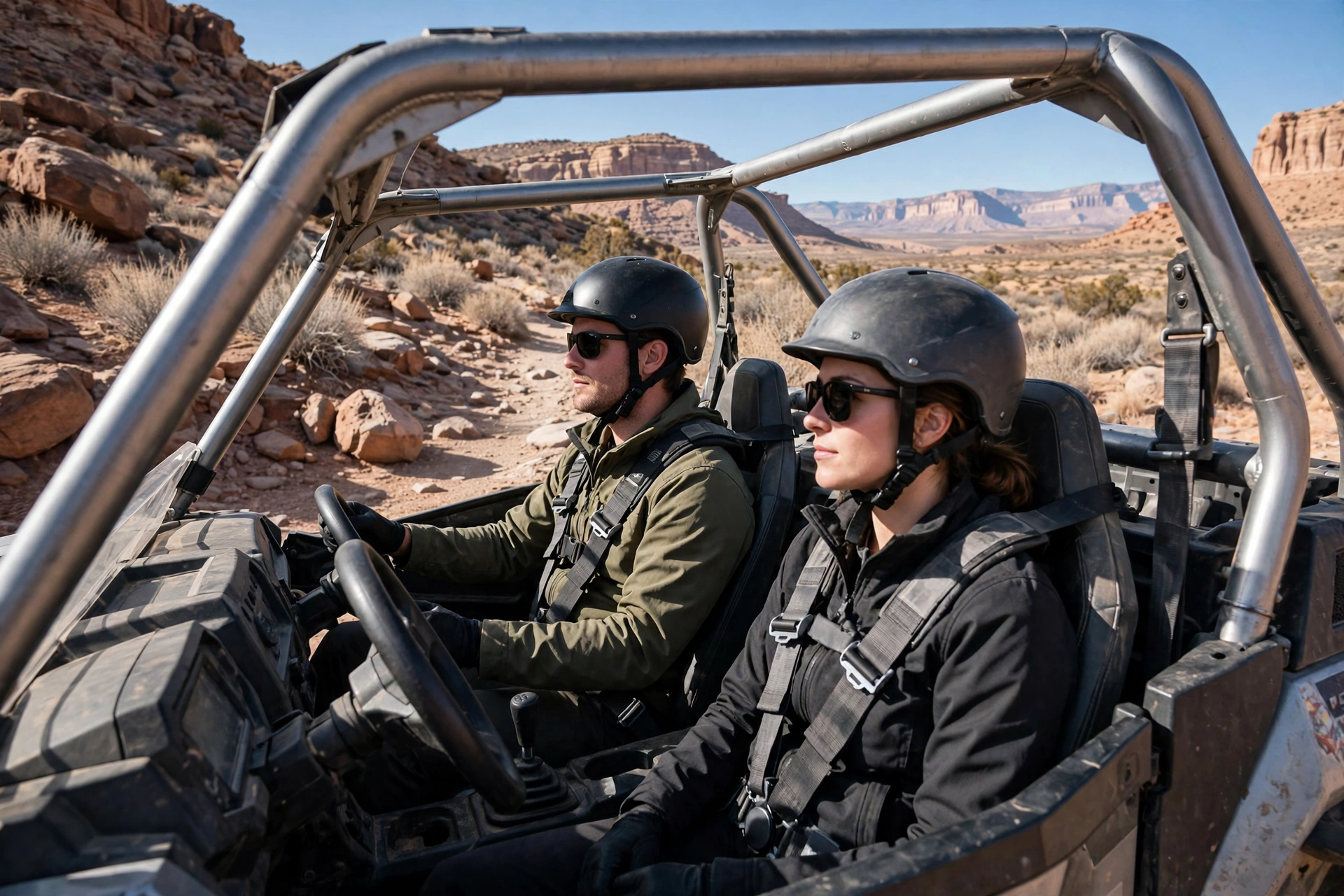
The roll cage — the ROPS frame — is structure. In a rollover it holds a survival space open around the seats so the machine’s weight and the ground do not crush the occupants. It does that job well, but it is made of hard steel tubes positioned close to your head, and it does not absorb anything.
The harness holds you in that space. A good multi-point harness keeps your body in the seat during rolls and sudden stops, stops you being thrown against the cage or out of the machine, and spreads crash loads across your shoulders and hips instead of your neck.
What neither does is cushion your head. In a roll, your helmeted or unhelmeted head travels on the end of your neck, and the distance to the nearest bar, door frame, or the ground outside an open side is short. The cage and harness keep you alive in the space; the helmet protects the head moving inside it.
How Can Your Head Still Get Hurt Inside a Cage?
The most common way is bar contact. Rollovers are violent and untidy: the machine can roll more than once, change direction, and throw occupants sideways and upward within their harness slack. Heads strike A-pillars, cross bars, and door frames with real force — the very structure that saved the space becoming the thing your head hits.
The second way is the ground. Many UTVs have open sides, half doors, or no doors at all. In a roll onto soft dirt the ground can reach into the cabin space, and in a roll onto rock or gravel it certainly does. A harness reduces how far you lean out; it does not make the opening disappear.
The third way is everything else: branches whipping through the cab on trails, stones and roost from the machine ahead, cargo breaking loose, and the low-speed tip onto a track edge where an unready head meets a bar at close range. Helmets exist for the hits you did not plan.
Harness fit feeds into this more than most drivers realise. A harness only limits your movement if it is properly tightened — lap belts low and snug, shoulder straps firm — and many casual riders run straps loose for comfort without understanding that every centimetre of slack is a centimetre your head travels before the belt catches you. Even a perfectly adjusted harness is tuned for forward crashes and rolls of the whole body; it was never designed to stop your head meeting the bar beside it in a sideways tip.
What Do the Rules Say in General Terms?
In general terms, many trail systems, parks, event organisers, and rental operators require helmets in UTVs regardless of cages and harnesses, and some road and state rules do the same. Organised rides and competitions are typically stricter still, often specifying certified helmets for drivers and passengers alike.
Work use follows a similar pattern: in general terms, workplace safety expectations for UTV and side-by-side use commonly include helmets, because employers must protect workers from foreseeable rollover and debris risks. Farm and station operators often simply make it a standing rule for the machine.
Requirements vary widely by place and by whether you are on public trails, private land, or a worksite, so check the rules that apply where you ride. But notice the direction they all lean: nobody with rollover data concludes the cage makes the helmet unnecessary.
What Kind of Helmet Works Best in a UTV?
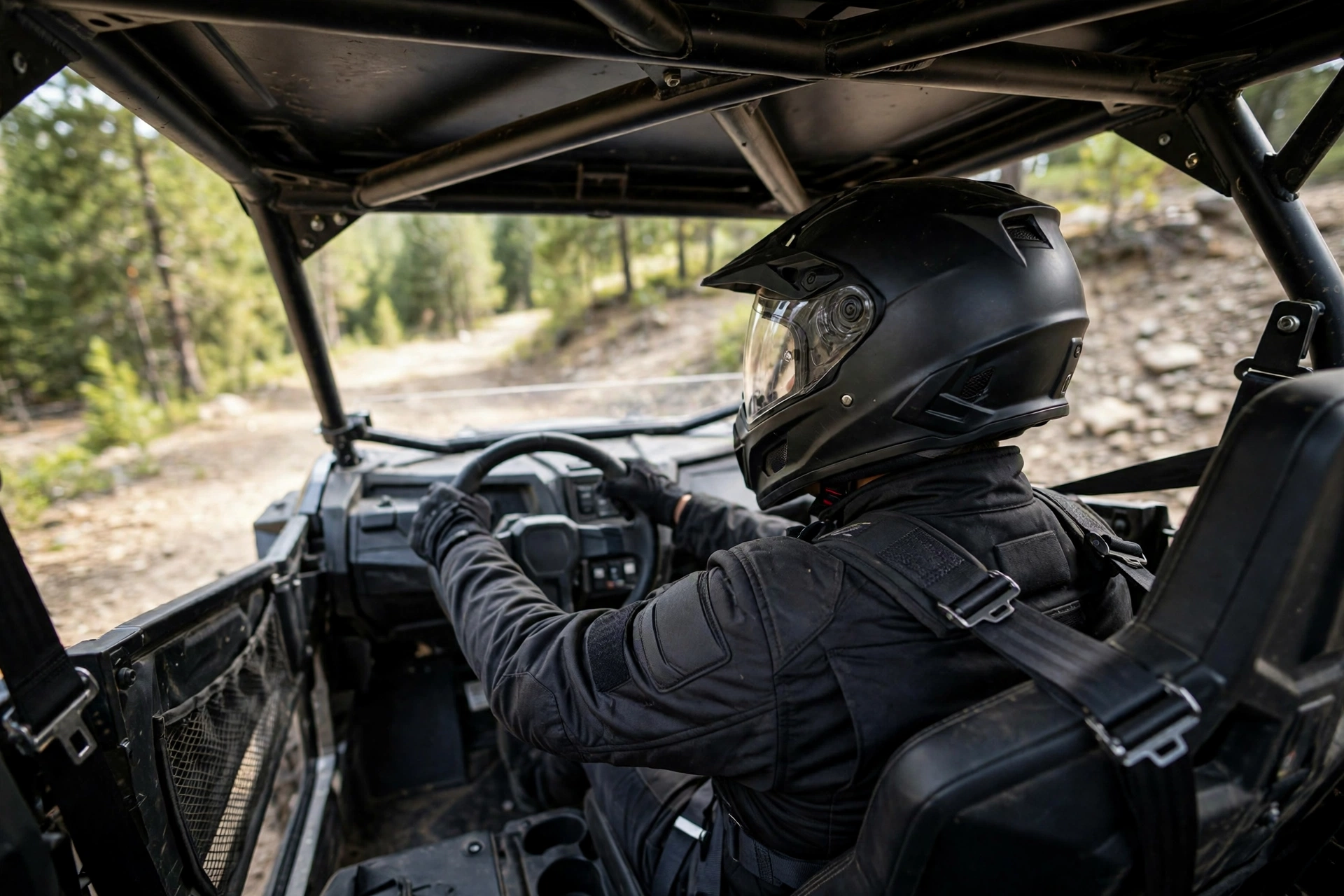
Most riders choose a lightweight open-face, dual-sport, or off-road helmet certified for motorised use. In a UTV you are seated and belted, so extreme aerodynamic shaping matters less than low weight, good ventilation, and comfort over hours — neck strain from a heavy helmet is a real issue on long trail days.
Communication is the other UTV-specific factor. Many drivers and passengers run intercoms or headsets to talk over engine and wind noise, so a helmet that accepts in-helmet speakers and a microphone — or a purpose-built headset-over-helmet setup — is worth looking for. If you might also ride the machine like an ATV, a full off-road helmet with goggles covers both jobs.
Fit and impact design still come first. Rollovers throw the head at bars and ground from odd angles, which is why many modern helmets build in rotational-impact protection such as MIPS to manage those twisting hits. Certified, snug, and comfortable beats fancy every time.
Do Passengers Need Helmets in a Caged UTV Too?
Yes — passengers face the same bars, the same openings, and the same debris as the driver, usually with less warning before a roll and nothing to brace against but the grab handle. Whatever rule you set for the driver’s seat should apply to every seat.
That includes children, in helmets sized for children. An adult helmet padded out to “fit” a small head will shift or come off exactly when it is needed, so carry a properly sized passenger helmet if young riders are regulars in your machine.
The short version of the whole question: the cage keeps the machine off you, the harness keeps you in the machine, and the helmet keeps the machine, the ground, and the trail off your head. Wear all three.
Frequently Asked Questions
Q: If I only drive my UTV slowly, do I still need a helmet?
A: Yes. Most UTV rollovers happen at modest speeds on slopes and uneven ground, and your head only has a short distance to travel before it meets a bar or the ground.
Q: What type of helmet is best for a UTV with a cage?
A: A certified, lightweight off-road, dual-sport, or open-face helmet that fits snugly and stays comfortable for hours. Intercom-friendly designs are popular because UTV crews talk by headset.
Q: Does the roll cage make the helmet redundant?
A: No. The cage holds a survival space open but is itself made of hard bars close to your head. The helmet cushions the head strikes the cage and harness cannot prevent.

Olivia
Writer at Helmet Today, covering helmet reviews, fit and riding safety.