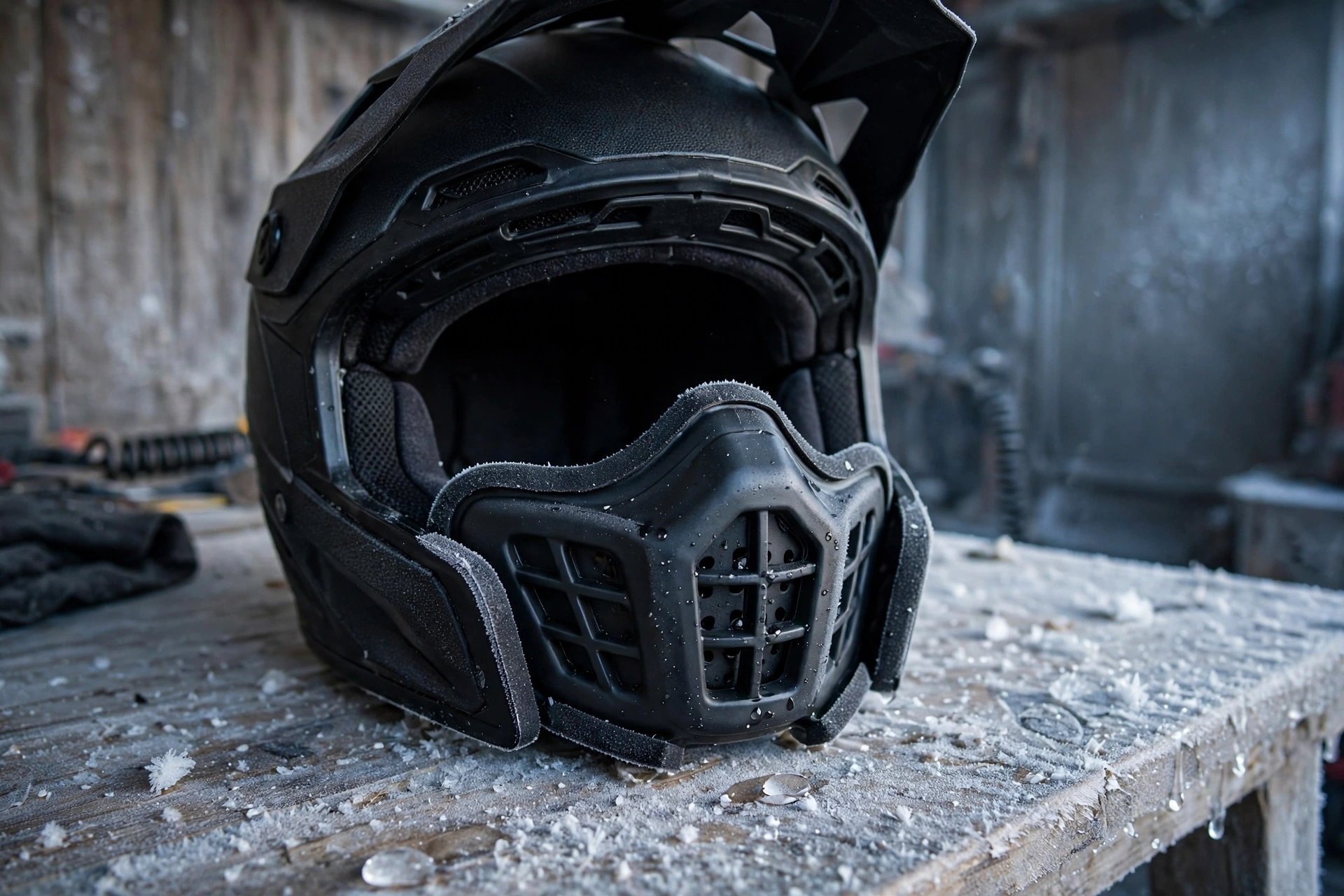
A breath box is the shaped mask inside the front of a snowmobile helmet that seals around your nose and mouth and routes your exhaled breath down and out of the helmet, instead of up across the inside of your shield. Its whole job is fog control: warm, moist breath is the main reason snowmobile shields mist up, and the breath box keeps that breath away from the lens.
It is a small part that decides whether you can see on a cold day. This guide explains how a breath box works, how it differs from a simple deflector, and how to adjust it so it actually seals.
What Does a Breath Box Actually Do?
A breath box — also called a breath mask or breath guard — is a flexible mask, usually rubber or fabric-faced foam on a plastic frame, fitted inside the chin bar area. It cups over your nose and mouth and channels each exhale downward through vents in the chin bar and out of the helmet.
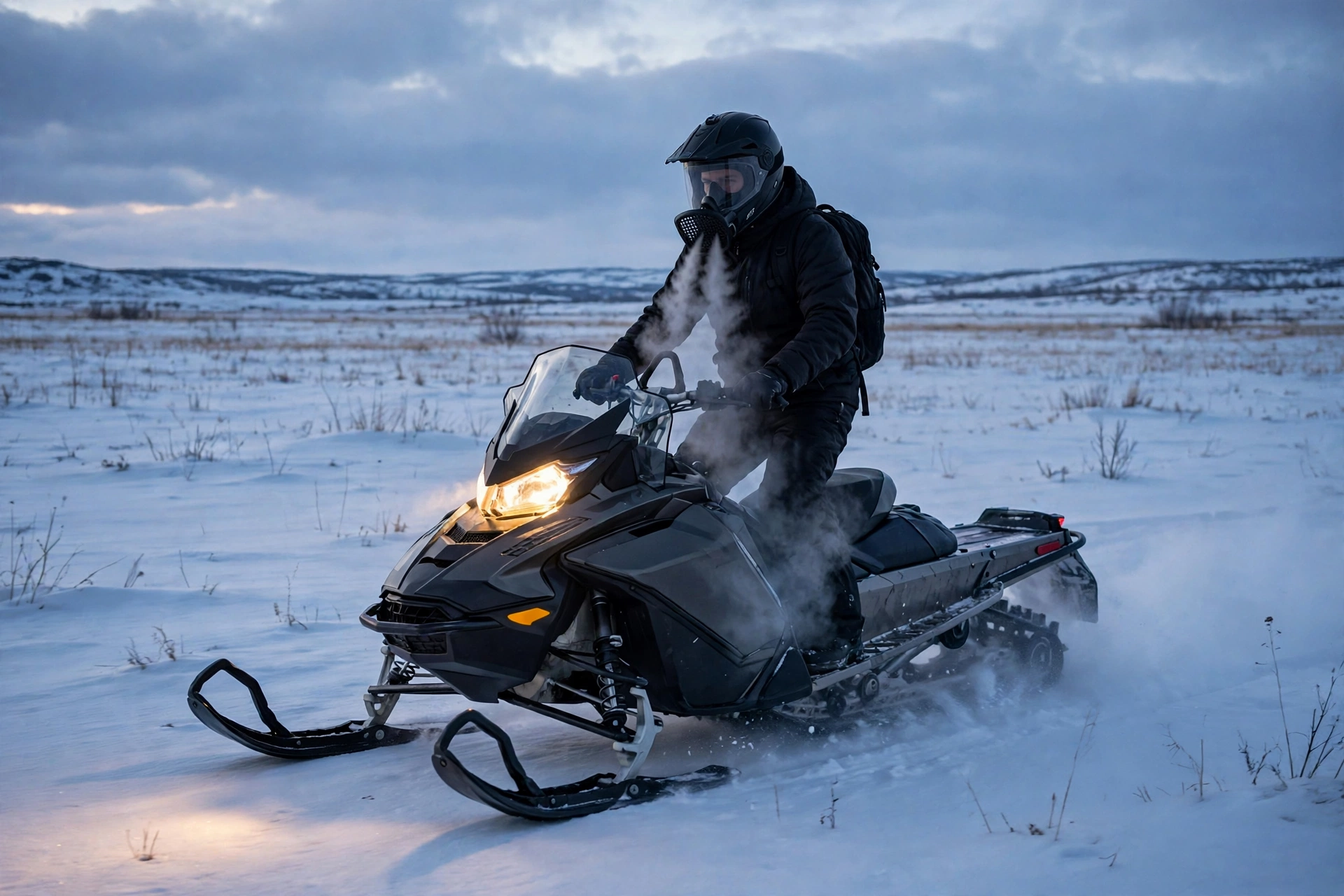
Just as important is what it stops. Without a breath box, exhaled air rises inside the helmet, and some of it escapes upward past your cheeks and nose bridge — directly onto the cold inner surface of the shield, where the moisture in it condenses as fog.
A good breath box also adds a little warmth management. Your face sits in a sheltered pocket instead of in the full blast of whatever air leaks through the chin bar, which makes long, cold rides noticeably more comfortable.
How Does a Breath Box Stop Your Shield Fogging?
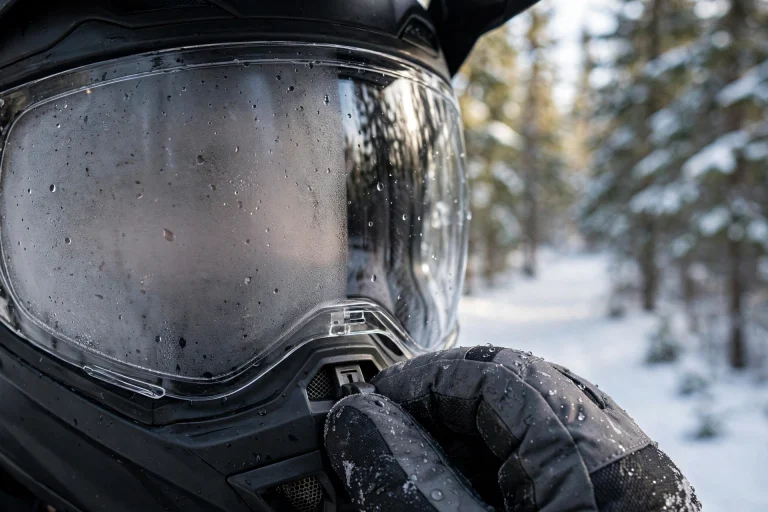
Fog is condensation: moisture from your breath hitting a surface that is colder than the air carrying it. A snowmobile shield in winter is exactly that surface, chilled from outside by speed and temperature while your breath warms and wets the inside.
The breath box attacks the moisture supply rather than the symptom. By catching each exhale at the source and ducting it out below the chin bar, it keeps the air inside the helmet much drier, so there is far less moisture available to settle on the shield. Combined with a dual-lens shield, it is the core of snowmobile fog control.
Sealing is everything, though. A breath box with a gap at the nose bridge leaks breath straight upward — the worst possible place — which is why adjustable nose pieces and a proper fit check matter more than the box’s price or brand.
Is a Breath Box the Same as a Breath Deflector?
Not quite. A breath deflector is usually a small flap or angled piece at the top of the chin bar that tries to push rising breath downward and away from the shield. It helps, but it does not seal around your face, so determined breath and hard breathing still get past it.
A breath box is the fuller solution: a mask that encloses the nose and mouth and gives the breath a defined exit path. Helmets intended for serious cold generally use a box, often combined with a chin curtain underneath to close the gap at the neck.
Some helmets also pair the box with a drop-down or balaclava-style skirt, and modular snowmobile helmets may route breath differently again. However your helmet does it, the test is the same: on a cold day at a stop, does the shield stay clear?
How Do You Adjust a Breath Box to Fit Your Face?
Start with the nose seal. Most breath boxes have a mouldable metal or plastic strip across the nose bridge — shape it to your nose so no gap remains. This single adjustment makes the biggest difference, because the nose bridge is the leak that fogs shields fastest.
Next, position the mask height. The box should sit so your mouth is inside it comfortably and you can talk and breathe hard without breaking the seal, and the helmet’s straps or mounts holding the box should be even on both sides. Put the helmet on, breathe deliberately upward, and feel or watch for leaks at the shield.
Check the combination you actually ride with: balaclava edges, jacket collar, and neck gaiter can all lift the mask or hold it off your face. Adjust everything together at home, gloved, rather than discovering the leak at a trail junction in the dark.
Keep the box clean as part of the routine. Breath boxes collect moisture, and a mask that goes away damp after every ride will smell, stiffen, and seal worse as the season goes on. Most are removable — rinse or wash yours as the maker directs, dry it fully before refitting, and check the nose strip and straps while it is out. A clean, supple breath box seals better and is far more pleasant to breathe through on a long day.
What If Your Helmet Still Fogs With a Breath Box?
Work through the causes in order. First the seal, as above. Second, exhalation volume: hard climbs and digging out a stuck sled produce far more breath than cruising, and even a good box can be overwhelmed briefly — cracking the shield a notch at stops lets the moisture escape before it settles.
Third, the shield itself. A breath box cannot save a single-lens shield in deep cold, and a dual-lens shield with a damaged seal between its panes fogs from inside the lens sandwich. If fog appears between the panes, the shield needs replacing, not adjusting.
Fog management is one part of cold-weather protection; the rest is the helmet itself — shell, liner, and in many modern helmets rotational-impact systems such as MIPS managing angled falls on ice and hardpack. A clear shield matters because seeing the trail is the first safety system of all.
Frequently Asked Questions
Q: Do all snowmobile helmets have a breath box?
A: No. Many do, some use a simple breath deflector instead, and motocross-style helmets worn with goggles handle breath differently because there is no shield to fog. Check the helmet’s spec before you buy.
Q: Can I add a breath box to a helmet that did not come with one?
A: Often yes — universal breath masks that attach inside the chin bar are widely available. Fit matters more than brand: it must seal at your nose and route breath out of the helmet.
Q: Why does my shield still fog at stops even with a breath box?
A: At a stop there is no airflow helping you, and your breathing is usually heaviest after effort. Check the nose seal first, then crack the shield slightly at stops to dump moist air.

Olivia
Writer at Helmet Today, covering helmet reviews, fit and riding safety.