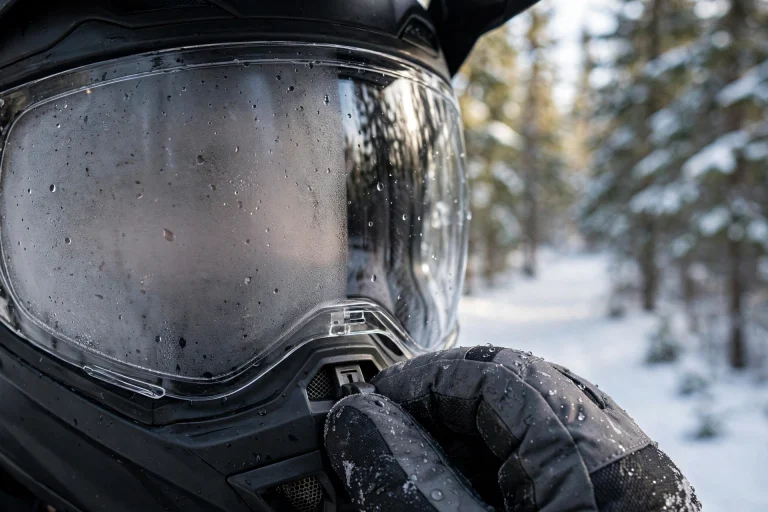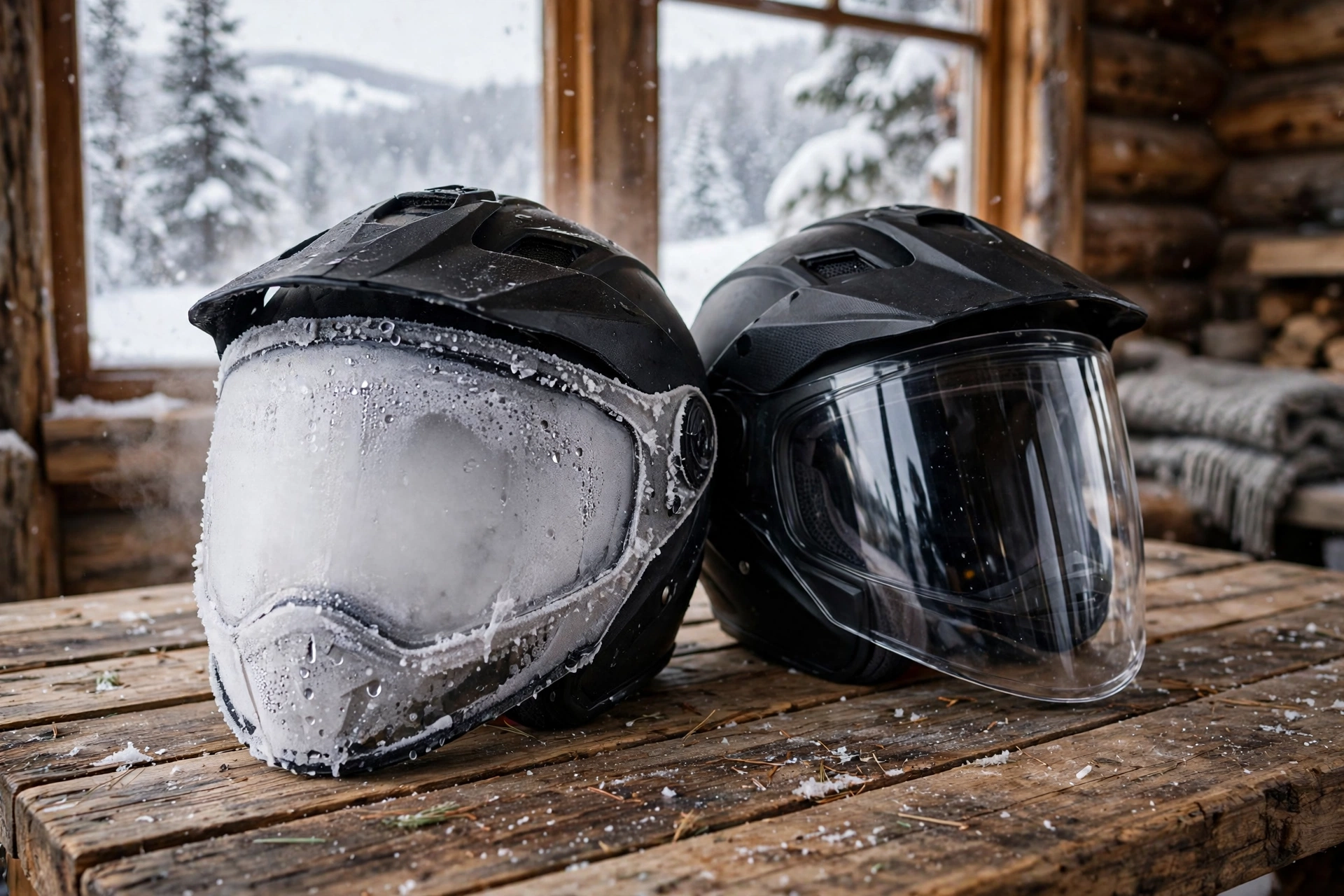
For snowmobile riding, a dual lens shield is better for almost everyone: its two panes with a sealed air gap insulate the inner surface, so your breath is far less likely to fog it. A single lens shield is lighter and cheaper, but it fogs quickly in real cold and suits only mild days or short, gentle rides. Fog control is the whole argument — everything else is a trade-off around it.
Here is how the two designs work, what each gives up, and how to choose for the weather you actually ride in.
How Does a Dual Lens Shield Stop Fogging?
Fog forms when moisture from your breath condenses on a surface colder than the air touching it. On a single lens shield, the plastic is chilled from outside by winter air and speed, so its inner face is a perfect condensation trap — every breath adds a little more mist.
A dual lens shield works like double glazing. Two panes are bonded together with an air gap sealed around the edges, and that trapped air insulates the inner pane. The inside surface stays much closer to the temperature of the air in your helmet, so breath moisture stays vapour instead of turning to fog.
The seal is the whole system. If the edge seal fails and moist air gets between the panes, the shield fogs in the sandwich where you can never wipe it — the classic sign of a dual lens shield that needs replacing, however good it still looks from outside.
What Are the Downsides of a Dual Lens Shield?
Cost and weight, mostly. A dual lens shield costs more than a single, weighs a little more, and is a slightly thicker optical stack, which some riders notice as a touch more distortion at the edges or in bright, glary conditions.
Care is the other trade. The inner pane of many dual lens shields is softer and easier to scratch, and harsh cleaners or rough wiping can damage it or the edge seal. Clean it gently with water and a soft cloth, and never scrape ice off it with anything hard.
There is also a seasonal reality: in mild weather a dual lens buys you nothing, and riders who mostly tour in spring sometimes run a single lens or goggles then and keep the dual lens for the cold months. Owning both is a legitimate setup, not an indulgence.
When Is a Single Lens Shield Good Enough?
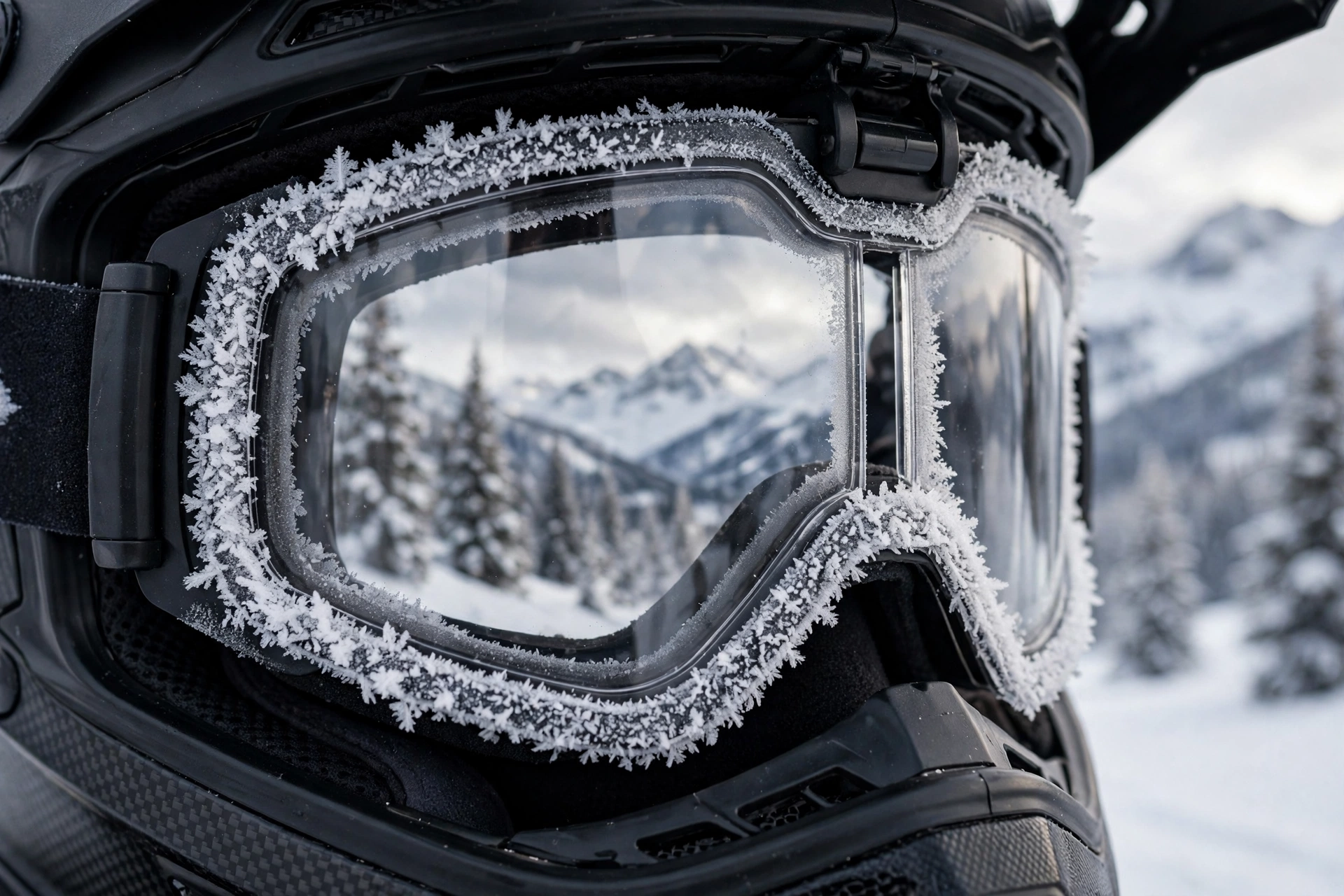
Single lens shields cope when the temperature gap is small: mild days near freezing, short hops, and slow riding where you can crack the shield open at the first hint of mist. Youth and rental fleets often run them for gentle use, and as a summer or spare shield they are perfectly sensible.
They also suit riders who wear goggles as their main setup and use the shield only occasionally, and they make a cheap emergency spare to carry in the tunnel bag — a clear single lens you can actually see through beats a damaged dual lens every time.
The honest limit is cold. In deep cold with a closed helmet and a working rider breathing hard, a single lens will fog; technique — cracking the shield, breath boxes, stopping to clear — delays it rather than prevents it. If your riding is winter-proper, plan on dual lens from the start.
What About Heated and Pinlock-Style Shields?
Heated shields take the dual lens idea further: an electric element warms the lens to keep it above fogging and frost point, powered from the sled. For very cold climates, night riding, and riders who wear glasses, a heated dual lens shield is the most fog-proof option commonly available — at the highest price, with a cord to manage.
Pinlock-style inserts create the same double-glazing effect by adding an inner lens against a single shield, held by pins. They work very well when the insert seals evenly, and they let riders convert some single lens helmets — but the insert is delicate, and a poor seal fogs between the layers just like a failed dual lens.
Whichever route you take, remember the shield is only the vision half of the helmet. The protection half — shell, energy-absorbing liner, and features like rotational-impact liners such as MIPS — matters on the day vision was not enough. Buy the shield for your weather and the helmet for the crash.
Tint deserves a word in the same conversation, because it interacts with fog choices. A tinted or mirrored outer shield is comfortable in bright snow glare, and some dual lens shields come in tinted versions — but a tint you cannot swap leaves you struggling at dusk or in flat, grey light, when contrast matters most. Riders who meet mixed light often run a clear dual lens shield and manage glare with sunglasses or a drop-down sun visor, keeping the fog-proofing constant whatever the light does.
Which Shield Should You Choose for Your Riding?
Match it to your coldest regular riding, not your average day. Trail riders in real winter: dual lens, no debate. Riders in extreme cold, or who fog everything they have tried: heated. Mild-climate, short-hop, or spare shield: single lens is fine and saves money.
Factor in your breath box and helmet vents too, because fog control is a system. A dual lens paired with a leaking breath box still mists at the edges, and a great breath box cannot save a single lens in January. Get the combination working together before blaming any one part.
And whatever you choose, keep it clean and unscratched, and replace it when the seal fails or the view degrades. A shield is a consumable with a service life, not a lifetime part.
Frequently Asked Questions
Q: Can I convert a single lens shield to a dual lens?
A: Not the shield itself, but a Pinlock-style insert can add a second layer to some shields. Otherwise, buy the dual lens shield made for your helmet model — shields are not interchangeable between helmets.
Q: Why is my dual lens shield fogging between the panes?
A: The edge seal has failed and moist air has entered the air gap. That fog cannot be wiped away, and the shield should be replaced.
Q: Is a heated shield worth it over a dual lens?
A: For very cold weather, night riding, or glasses wearers who fog everything, generally yes. For ordinary winter trail riding, a good dual lens with a sealing breath box is usually enough.

Olivia
Writer at Helmet Today, covering helmet reviews, fit and riding safety.