Store a snowmobile helmet for the off season clean, completely dry, and indoors: wash and fully dry the liner, breath box, and shield first, then keep the helmet in its bag or a breathable box on a shelf in a cool, dry, dark place inside the house — not in a hot trailer, a damp garage corner, or anywhere near fuel and chemicals. Stored that way, a helmet comes out of summer in the same condition it went in.
A snowmobile helmet spends more of its life in storage than on your head, and storage is where quiet damage happens. This guide covers the clean-down, the right place, and the mistakes that age a helmet before its time.
How Should You Clean a Helmet Before Storing It?
Storage starts with cleaning, because a helmet put away dirty spends months marinating in sweat, breath moisture, and road grime, and comes out smelling of it with its padding degraded. Remove the comfort liner, cheek pads, and breath box where the design allows, and wash them as the maker directs — usually gentle hand washing in mild soap — then rinse well.
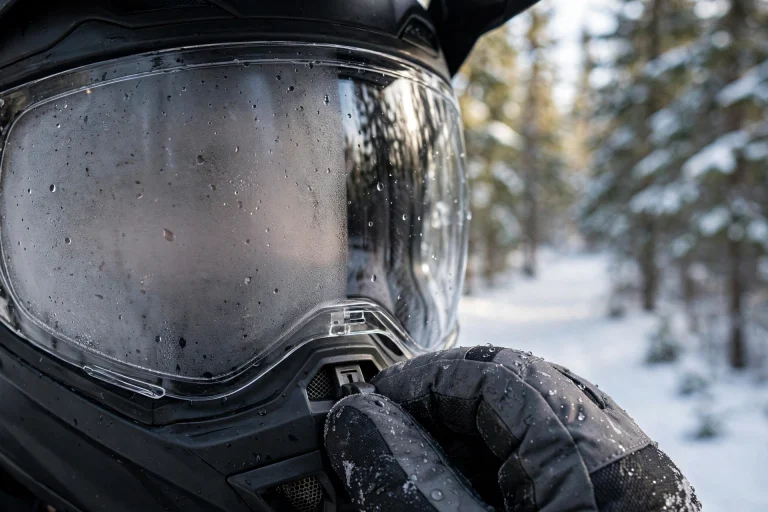
Drying matters more than washing. Every piece must be completely dry before the helmet is closed up: air-dry indoors, away from direct heat, until the foam feels dry all the way through, which can take a couple of days for thick padding. A helmet sealed in a bag with damp foam is a mildew project by July.
Clean the outside too. Wipe the shell with mild soap and water, clean the shield with a soft cloth and plain water or a maker-approved cleaner, and empty dust and debris out of the vents. Check over straps, buckle, shield pivots, and seals while everything is apart — the end of the season is the natural moment to spot the wear you will want to fix before the snow returns.
Where Is the Best Place to Store a Snowmobile Helmet?
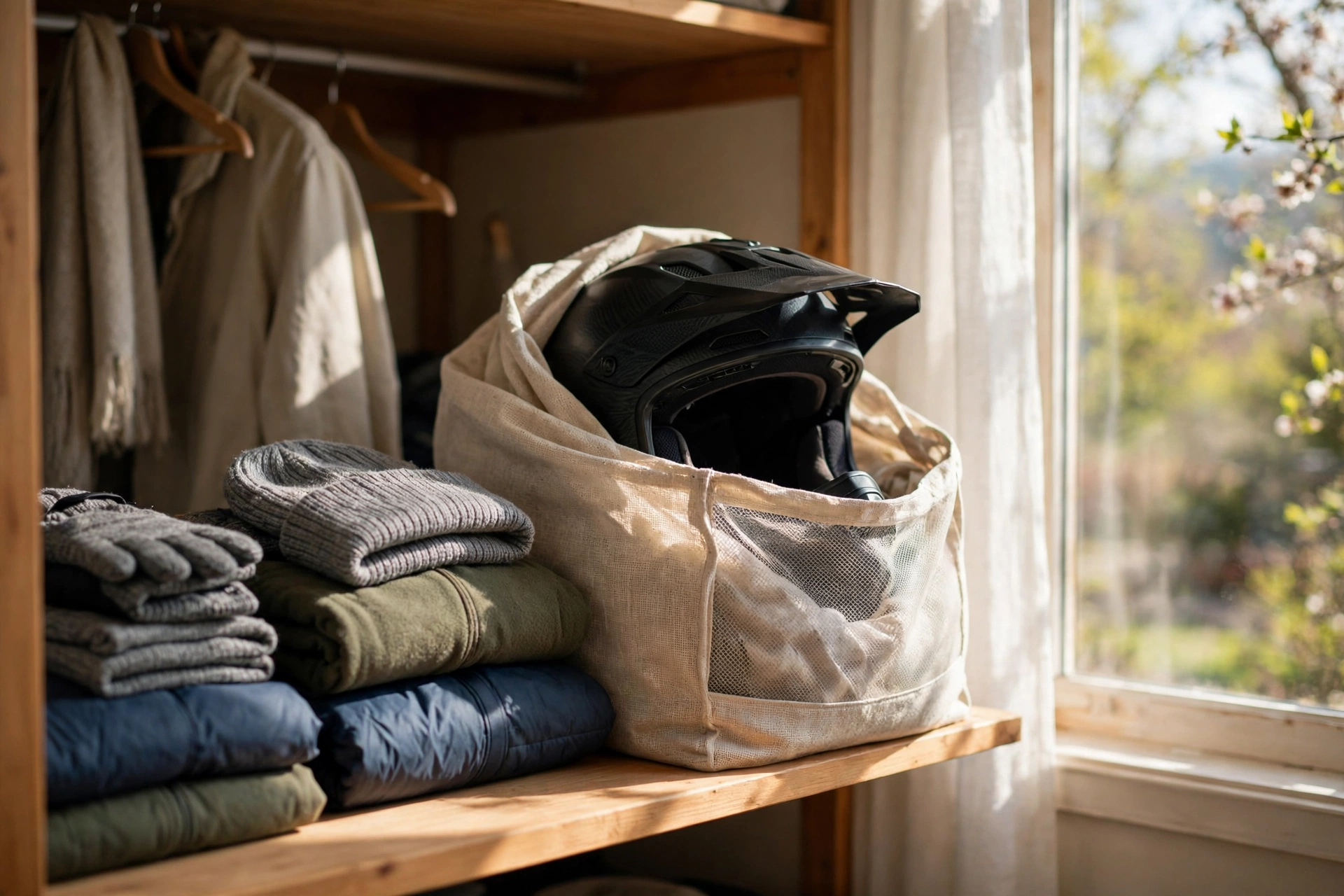
Think like the materials. Foam, plastics, adhesives, and fabrics all prefer what your house offers: stable, moderate temperature, low humidity, and darkness. A shelf in a closet or a spot in a dry basement is ideal. Keep the helmet in its soft bag, or a breathable box, which keeps dust and light off while letting any trace moisture escape.
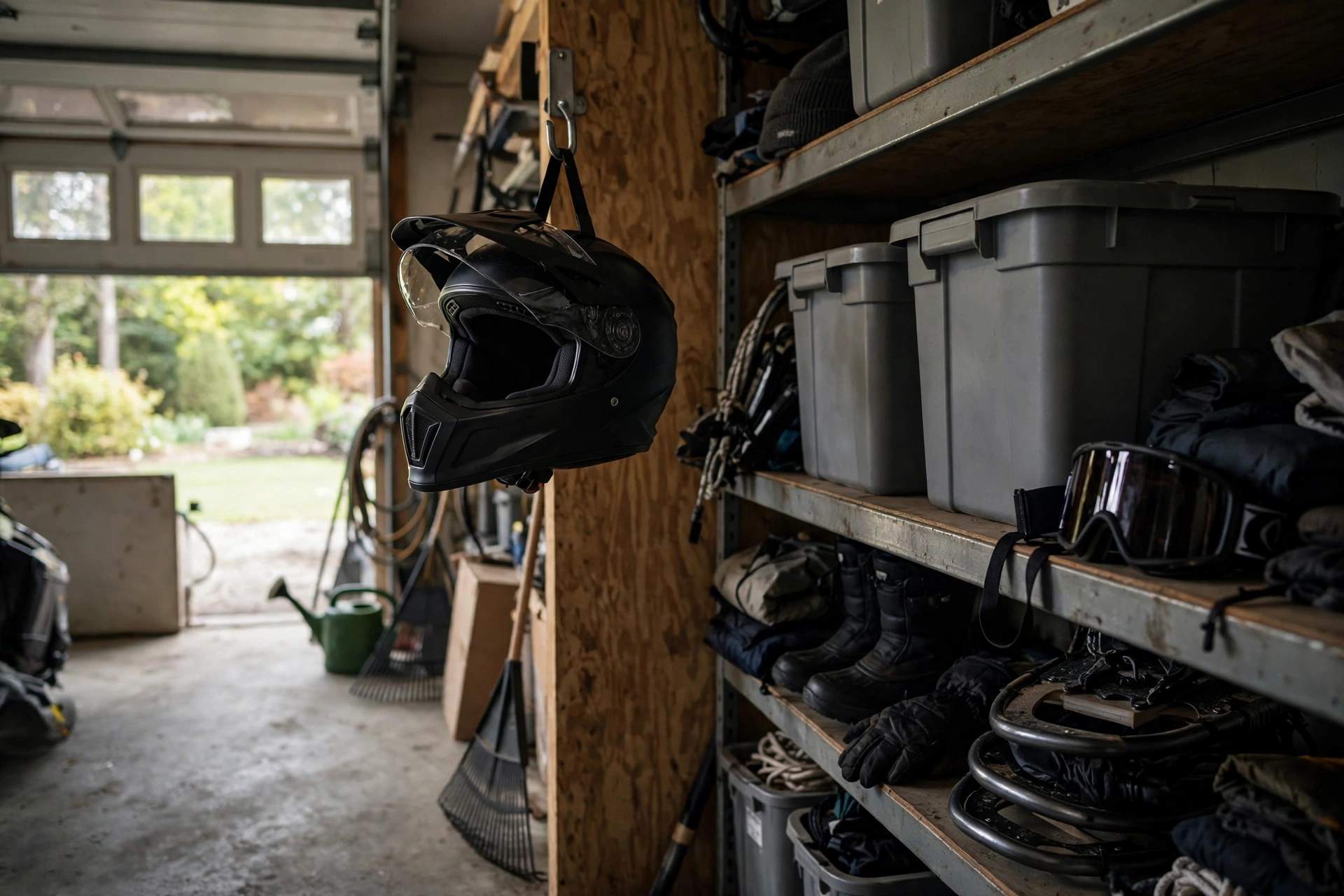
Support it properly. A helmet should sit on its base on a flat surface, or on a purpose-made helmet hook or stand that supports it from inside the opening. Do not hang it by its strap, which stretches the strap and loads one point of the shell, and do not store it perched somewhere it can fall — a drop onto a hard floor is an impact whether a head is in it or not.
Keep the storage spot boring: no direct sun through a window, no shelf above a heater or boiler, and no company. A helmet stored alone and undisturbed ages far better than one in a family dumping zone being knocked by boots and boxes all summer.
What Should You Avoid When Storing a Helmet?
The trailer is the classic mistake. A snowmobile trailer or uninsulated garage spends the summer cycling between cool nights and genuinely hot days, and that heat is hard on liner foam and adhesives — the helmet effectively ages in fast-forward while it sits. The same space usually adds humidity swings and the odd fuel smell, neither of which helps.
Chemicals are the second enemy. Keep helmets away from fuel, solvents, paints, and strong cleaners, in storage and in use: their fumes and splashes can attack shell plastics and foam. A helmet stored on the shelf above the workbench chemicals is quietly being damaged by its neighbors.
Avoid sealed plastic bins for a helmet that is not bone dry, avoid attics for the same heat reasons as trailers, and avoid stacking anything on top of the helmet. Also avoid storing gloves, balaclavas, or damp gear inside the helmet — it is not a storage cubby, and anything damp inside it works on the liner all summer. Remember that a helmet’s protection depends on that liner’s condition: the foam, and systems such as rotational-impact liners like MIPS, only perform as designed if the materials reach the crash in the condition they left the factory in.
How Do You Protect the Shield and Breath Box in Storage?
The shield is the most fragile part you own. Store it fitted but clean, or removed and kept in its own soft sleeve if you prefer — either way, never loose in a box of gear where hard edges can scratch it. A scratched shield is not just ugly; scratches scatter light and worsen glare and night vision. Keep the shield closed or the helmet bagged so dust does not settle on the inner surface.
The breath box and chin curtain should go away clean and fully dry, like the liner. Check the breath box’s nose seal and straps for stiffness or tears at the end of the season — replacing a tired breath box in October is a nuisance; discovering it in December is a foggy first ride.
Goggles, for riders who use them, get the same treatment: clean lenses, dried foam, stored in their pouch, never crushed under gear. Foam that spends the summer compressed comes back with its seal flattened, so store goggles uncompressed and unstacked.
What Checks Should You Do Before the First Ride Back?
Bring the helmet out early — a week before the season, not the morning of the first ride. Try it on with your balaclava and run the fit checks: snug and even, no roll, no new looseness. Padding that felt fine in April reveals its true condition in November, and a helmet that has gone loose in storage was ageing, not resting.
Work the moving parts. Open and close the shield and check the dual-lens seal for fogging damage, operate every vent, fasten and release the buckle, and inspect straps for fraying or stiffness. Refit the breath box and confirm the seal. Replace anything tired now, while parts are in stock and there is no ride waiting.
Finally, be honest about the helmet’s age and history. The off-season check is the moment to decide whether this is the helmet’s last winter. A helmet that starts its season sound, clean, and correctly fitted is the whole point of storing it properly in the first place.
Frequently Asked Questions
Q: Can I store my snowmobile helmet in the trailer over summer?
A: It is the worst common option. Trailers and uninsulated garages get hot, cycle in temperature and humidity, and sit near fuel — all of which age foam, adhesives, and fabrics faster. A cool, dry indoor shelf is far kinder.
Q: Should I store the helmet with the shield open or closed?
A: Closed, and clean, with the helmet in its bag. That keeps dust off both shield surfaces and protects the lens from knocks. What matters most is that the shield and liner go away clean and completely dry.
Q: How do I stop my helmet smelling after storage?
A: Prevention is the whole trick: wash the liner, breath box, and pads before storage and dry them fully — smells come from a helmet put away dirty or damp. If one already smells, wash the removable parts again and air the helmet out; persistent sour foam is a sign the padding is at the end of its life.

Olivia
Writer at Helmet Today, covering helmet reviews, fit and riding safety.