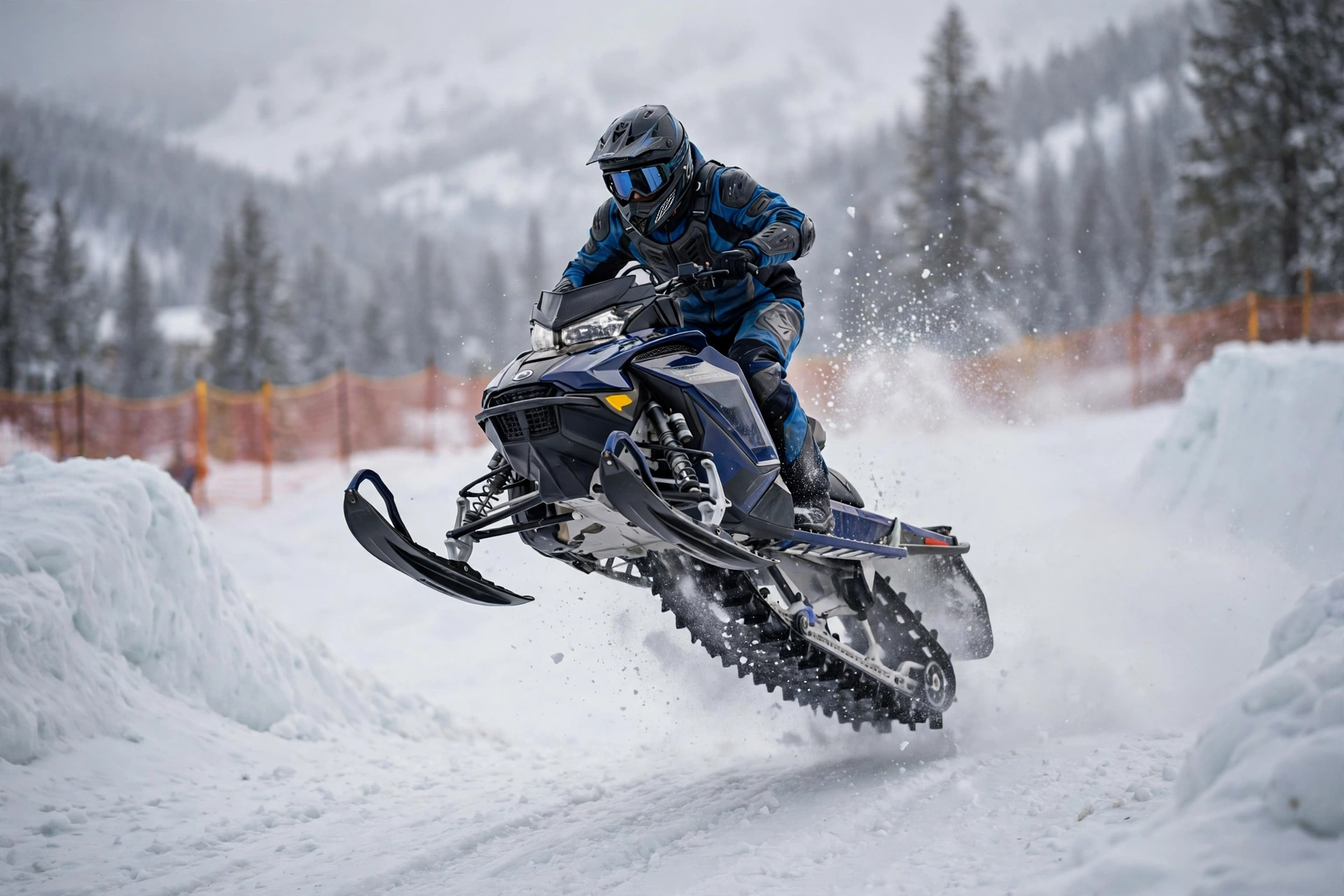
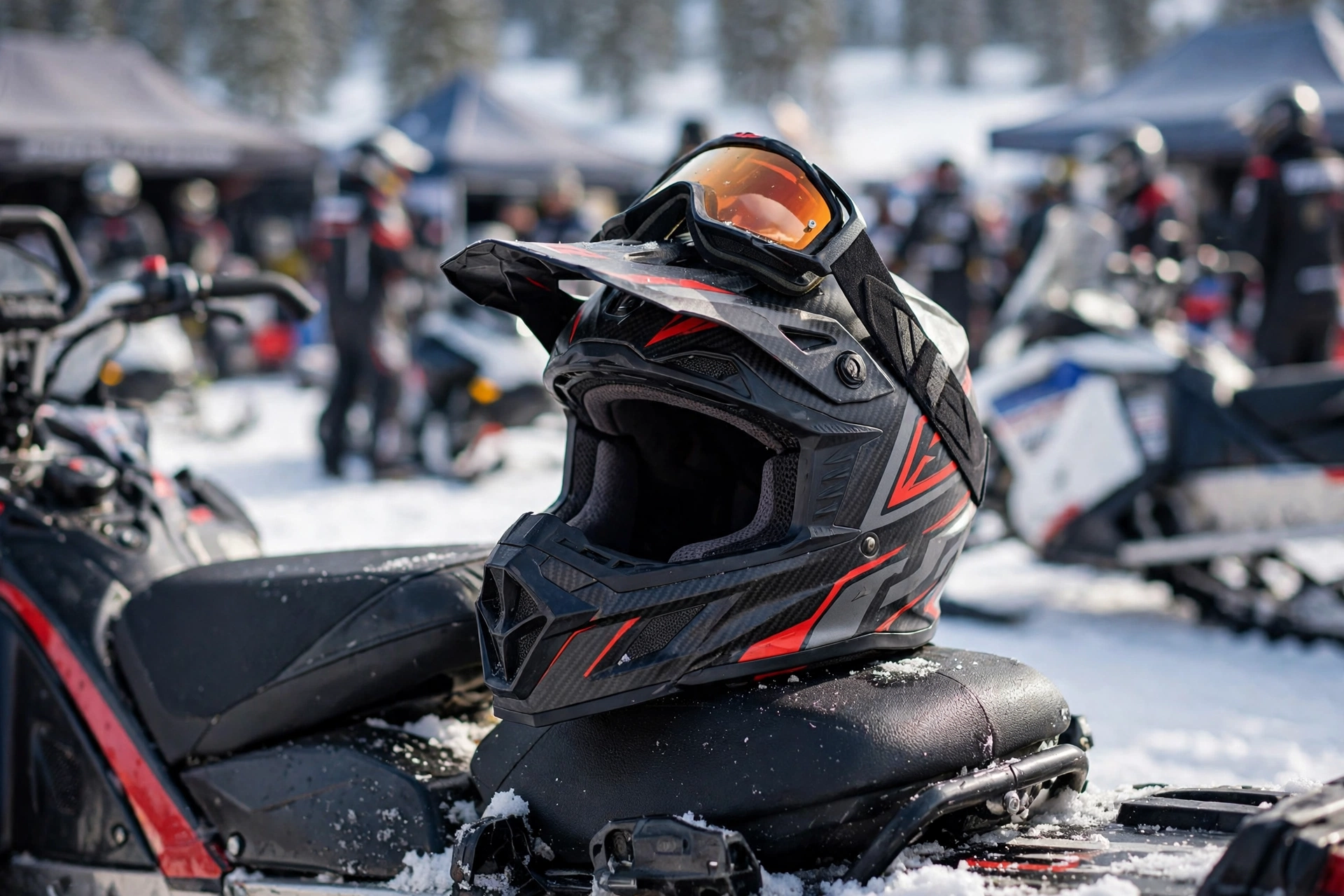
A snowcross helmet is a motocross-style helmet adapted for snowmobile racing and aggressive off-trail riding: a lightweight full-face shell with an extended chin bar and peak, a wide open eyeport made for goggles instead of a shield, and heavy venting for riders working at maximum effort. If you ride trails at speed in real cold, it is probably not your helmet; if you race, jump, and ride standing up, it is built exactly for you.
The name comes from snowcross racing — sleds on a motocross-style track — and the helmet’s design follows the racing brief. This guide explains what makes it different, who it suits, and what using one on the trail really involves.
What Makes a Snowcross Helmet Different From a Trail Helmet?
Start with the eyeport. A trail helmet closes its face with a hinged shield; a snowcross helmet leaves a large open eyeport and expects goggles to fill it. The chin bar is extended, motocross-style, to give breathing room and airflow in front of the mouth, and a peak sits above the eyeport to block roost — in this case snow spray from sleds ahead — and sun.
Weight and venting follow the racing brief. Snowcross helmets are typically light, because their riders move constantly, ride standing, and work their whole body, and they vent generously to dump the heat that effort generates. Sealing and insulation, by contrast, are minimal: there is no breath box pod sealed against the world, no chin curtain cocoon, and far less effort spent keeping wind out.
Underneath, it is a real full-face helmet: a hard shell and an energy-absorbing liner, certified like other snowmobile helmets in general terms. The difference between a snowcross helmet and a trail helmet is not protection level — it is the climate and effort each one assumes.
Why Do Snowcross Riders Use Goggles Instead of a Shield?
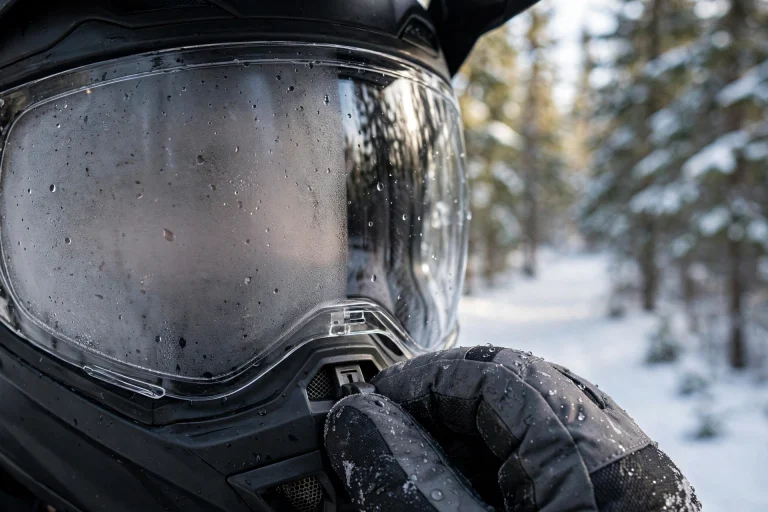
Effort. A racer or aggressive off-trail rider breathes hard and constantly, and that volume of warm, wet breath overwhelms what a shield and breath box can manage — the shield fogs, then ices, and vision is gone. Goggles keep the fog problem in a small, separate unit that vents well, sits away from the direct breath stream, and resists fogging far better under hard work.
Swap speed matters too. When goggles do ice or get plastered with snow spray, the rider changes them in seconds for a dry spare — between motos, or at a trailside stop — while a frozen shield means stopping to scrape, thaw, and wipe. Racers carry spare goggles the way trail riders carry spare gloves.
Goggles also suit the riding itself: wide peripheral vision for close racing, no shield mechanism to damage in the constant tumbles of aggressive riding, and a setup that works with the rider’s head moving in every direction rather than locked behind a lens.
Who Needs a Snowcross Helmet and Who Does Not?
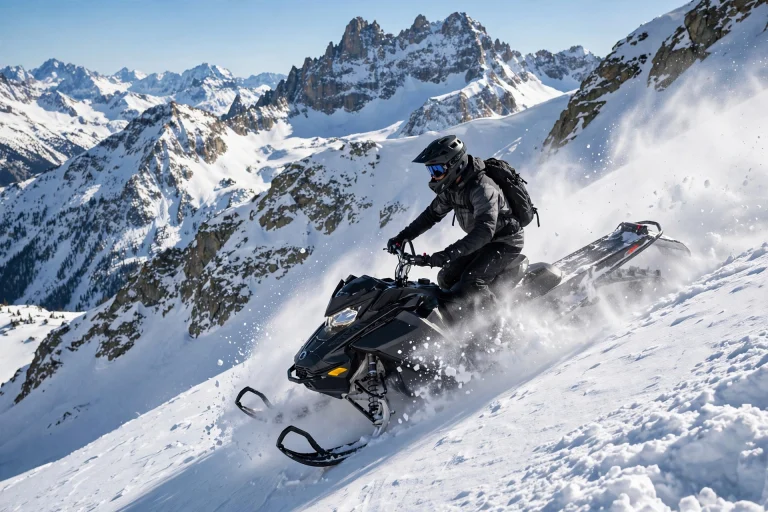
You are the target rider if your snowmobiling looks like exercise: racing, ditch-banging, mountain and backcountry riding with constant body movement, digging out, and side-hilling. For that riding, a trail helmet’s warmth is wasted — you generate your own — and its shield is a fogging liability. The snowcross setup is not a compromise for you; it is the correct tool.
You are not the target rider if your miles are seated, steady, and long. Trail tourists, high-mileage riders, and anyone riding in genuinely deep cold will feel every one of the snowcross helmet’s missing seals: the wind through the eyeport area, the cold cheeks outside the goggle line, the noise, and the effort of managing goggles and balaclava gaps all day.
Beginners should be especially honest here. The snowcross look is tempting, but a new rider’s first season is usually trail riding at moderate effort — exactly where a warm, simple shield helmet forgives more and distracts less. Buy for the riding you do this winter, not the riding in the video.
Can You Trail Ride in a Snowcross Helmet?
Yes, plenty of riders do — with preparation. The setup can be made trail-tolerable: a quality balaclava that seals the forehead gap, goggles with a generous foam skirt that meets the helmet cleanly, a breath deflector or mask in the chin bar, and a neck gaiter to close the bottom. Dressed that way, a snowcross helmet handles moderate trail days.
What you cannot fully fix is sustained high-speed cold. At trail speeds in deep cold, the open design admits more air than any layering fully defeats, and your face becomes the insulation project. Riders who split their time often solve it the honest way: two helmets, or one good trail helmet for the cold months and the snowcross setup for spring and aggressive days.
Remember, too, that the helmet underneath the style is safety equipment with a finite life. Whether it is a snowcross or trail design, the shell, liner, and systems such as rotational-impact liners like MIPS do their work only if the helmet fits snugly and has not already absorbed a crash — racing helmets, which live hard lives, deserve especially honest retirement checks.
What Should You Check Before Buying a Snowcross Helmet?
Fit first, as always: snug and even, no roll or rock, checked with your balaclava on. Then check the goggle marriage — bring your goggles, or buy helmet and goggles together, and confirm the goggle frame seals inside the eyeport with no corner gaps, because that interface decides whether the whole system works.
Check the cold kit. Does the helmet accept a breath box or deflector? Is there a chin curtain option? Generous venting is the point of the design, but closable vents widen the weather window you can use it in. And plan the spares: at least one spare set of goggles with a different lens is part of the real purchase price.
Finally, check certification and buy from a reputable source, as with any helmet. Racing style is easy to copy superficially; the certification label inside is what says the helmet underneath the graphics is the real thing.
Frequently Asked Questions
Q: Is a snowcross helmet just a motocross helmet?
A: It is very close in design — many are adapted from motocross helmets — but snow versions are sold for winter use, often with cold-weather touches like breath deflectors, different vent foam, and goggle setups chosen for snow. Check it is certified and set up for winter before using a summer motocross helmet on a sled.
Q: Are snowcross helmets less safe than trail helmets?
A: No — in general terms they are certified full-face helmets built to the same kind of standards. The difference is comfort equipment for cold and effort, not protection. Fit and condition matter far more than which style you choose.
Q: Why do snowcross helmets have a peak?
A: The peak blocks sun glare and deflects roost — snow and ice spray thrown up by sleds ahead — the same job the peak does on a motocross helmet with dirt. Riders dip their head slightly to put the peak between their goggles and the spray.

Olivia
Writer at Helmet Today, covering helmet reviews, fit and riding safety.