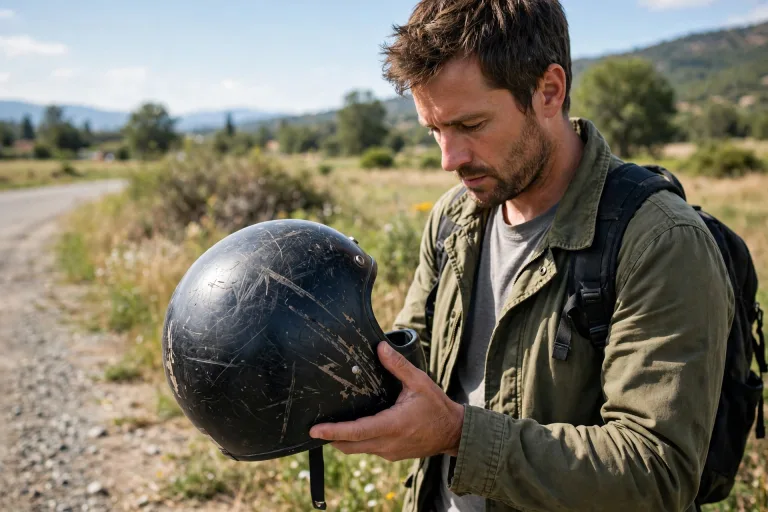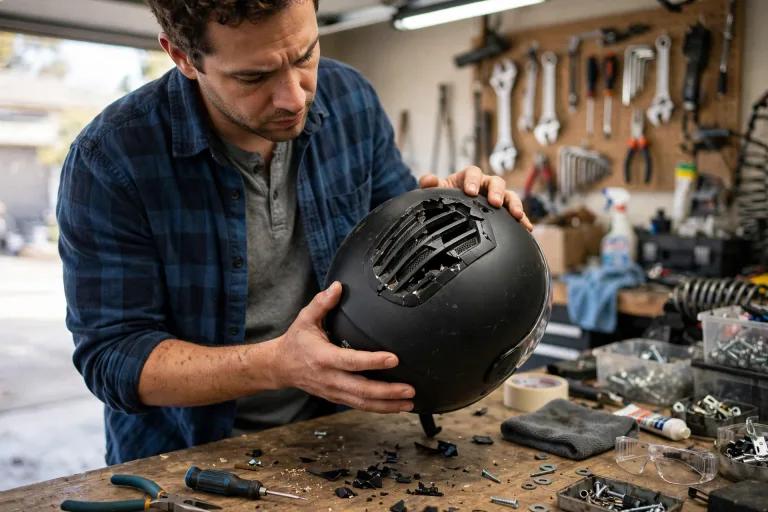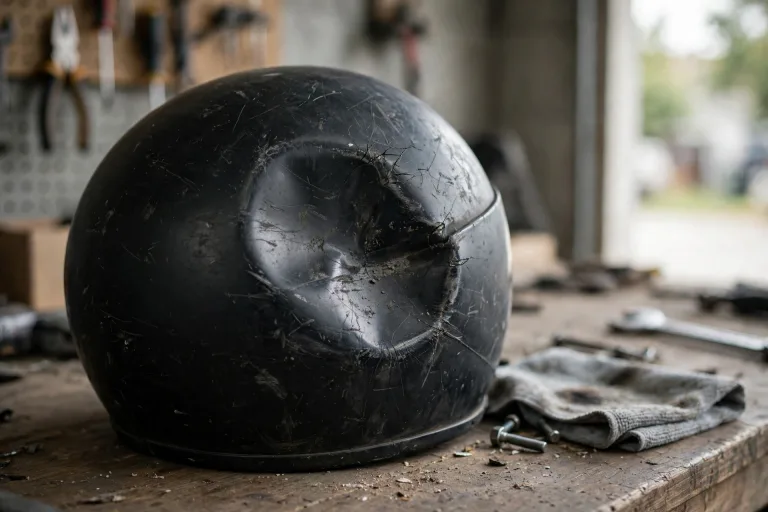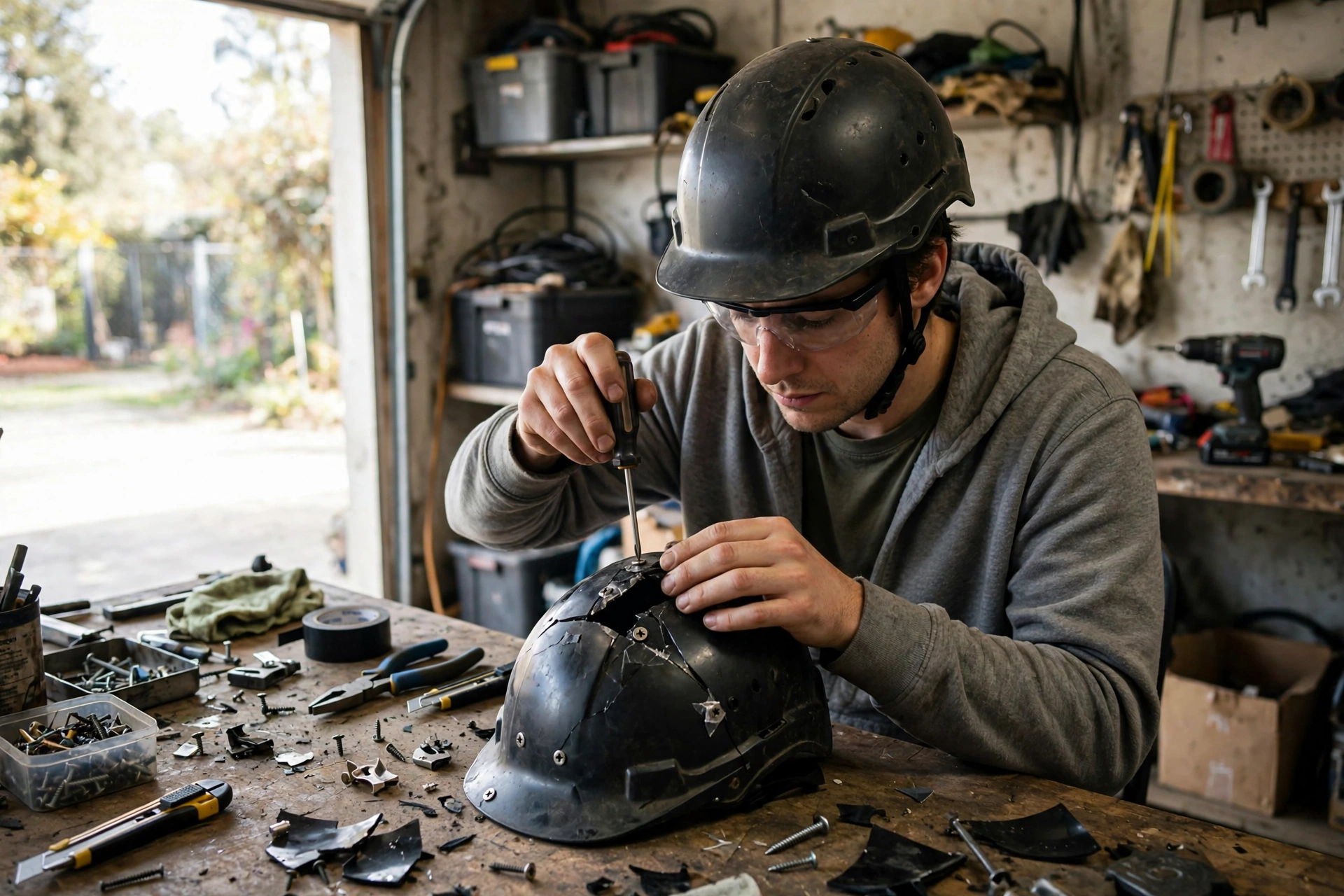
To fix a broken helmet peak, first check whether the peak itself is cracked or only loose, because a loose peak can often be tightened or re-fitted, while a cracked or snapped peak usually needs a replacement part from the helmet maker. A helmet peak, also called a visor, is the small shield above the eyes that keeps sun, rain, and mud out of a rider’s face, and it is one of the parts of a helmet most likely to break in a fall. In general terms, a broken peak is a common and usually fixable problem.
A peak is held in place by screws, clips, or a snap fitting, and it is designed to give way in a crash rather than to stay rigid and transfer force to the helmet. That means a peak can break even when the helmet itself is fine, and a broken peak does not always mean the helmet is ruined. The first job is to look closely at what has actually broken.
How can you tell if a helmet peak can be fixed?
A helmet peak can usually be fixed when the damage is limited to the peak itself or to its fittings, and the helmet shell is undamaged. Look at the peak for cracks, splits, or missing pieces, and look at the mounting points on the helmet for stripped screws, broken clips, or cracked plastic. If the peak is only loose, or if one screw has worked its way out, the fix may be as simple as tightening it or fitting a new screw.
If the peak has snapped in two, or if the mounting point on the helmet shell is cracked, the fix is harder. A peak that has snapped can sometimes be glued, but a glued peak is rarely as strong as it was, and it may break again the next time it catches a branch or a fall. In general terms, a peak that is cracked through is better replaced than repaired. The mounting points matter too: if the screw hole in the helmet is stripped, a new screw will not hold, and the helmet maker may need to be contacted about a repair.
What tools do you need to fix a broken peak?
To fix a broken peak you usually need only a small screwdriver, the right replacement screws or clips, and, if the peak is being replaced, a new peak made for that helmet model. Most helmet peaks are held on with small screws, often a Phillips or a Torx head, and a screwdriver set that fits those heads is the main tool. A clean cloth and a little soapy water are useful for cleaning the area before the new peak goes on.
It is worth checking the helmet maker’s website or manual before starting, because some peaks use a snap fitting that needs to be released in a certain way, and forcing it can break the mounting point. The manual may also list the part number for the peak, which makes ordering the right replacement much easier. A tube of thread-locking fluid can help to keep small screws from working loose again, but it should be used sparingly and only on metal screws, not on plastic parts.
How do you replace a broken helmet peak?
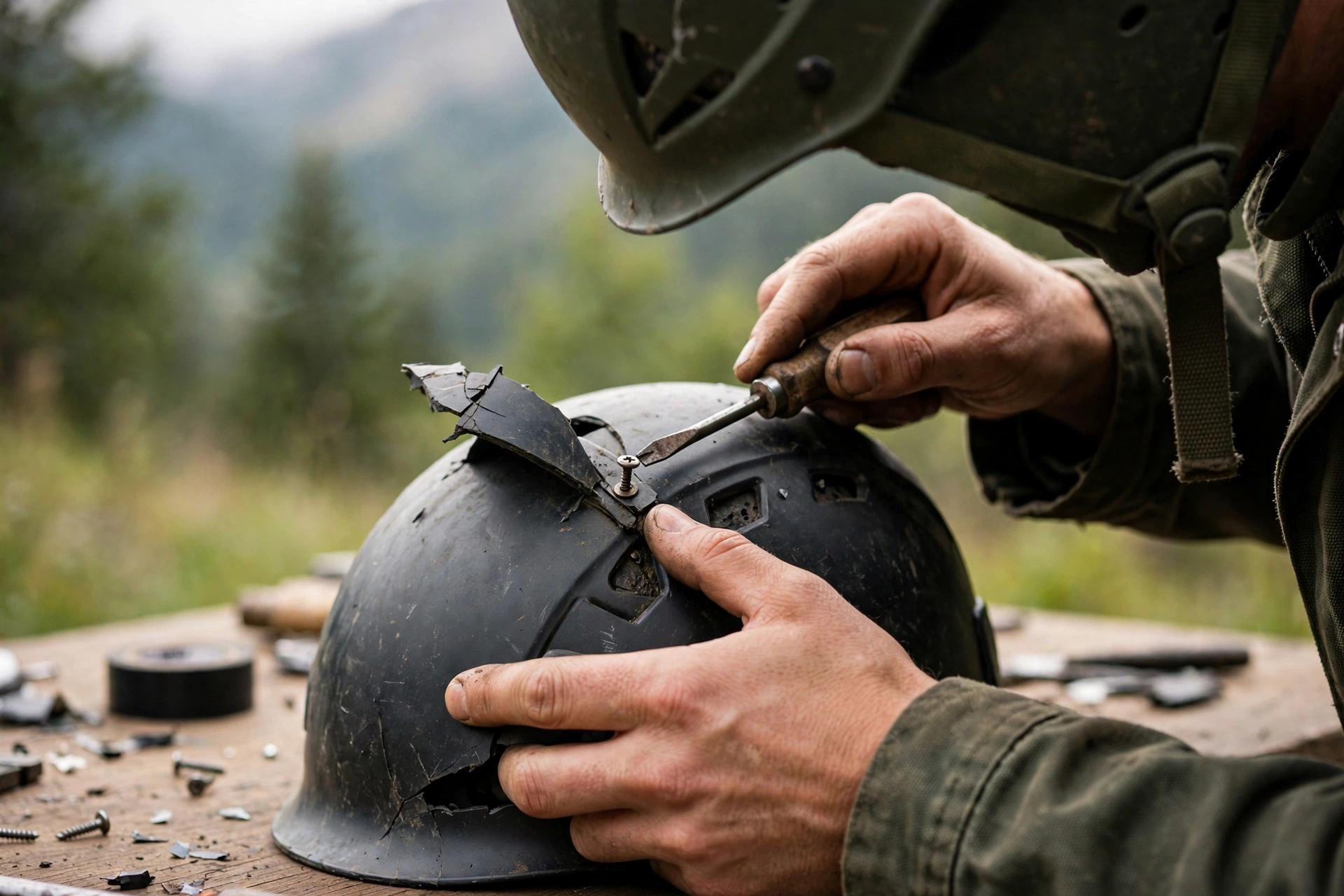
To replace a broken helmet peak, first remove the old peak by unscrewing it or unclipping it, taking care to keep the screws and any washers in a safe place. Clean the mounting area on the helmet, check that the screw holes and clips are sound, and then line up the new peak with the mounting points. The new peak should sit in the same position as the old one, with the same angle over the eyes.
Fit the screws by hand first, so that the threads catch properly, and then tighten them gently with the screwdriver. Small screws in a helmet are easy to overtighten, and overtightening can crack the plastic of the peak or strip the hole in the helmet. Once the screws are snug, check that the peak does not wobble and that it can be moved through its range if it is an adjustable peak. A peak that is fitted too tightly may not adjust at all, and a peak that is fitted too loosely will rattle on the trail.
Can you glue a broken helmet peak?
A broken helmet peak can be glued in some cases, but in general terms gluing is a temporary fix rather than a proper repair. A strong glue, such as a two-part epoxy, can hold a cracked peak together for a while, and it may be enough to get a rider through a ride or a weekend. The glued joint will not be as strong as the original plastic, though, and it is likely to fail again if the peak catches a branch or takes another knock.
Gluing is best used when the crack is small and the peak is still in one piece, or when a replacement peak is on its way and the rider needs something in the meantime. The broken surfaces should be cleaned and dried before the glue is applied, and the peak should be left to set for the full time the glue maker recommends. A peak that has snapped clean through, or that has lost a piece, is not a good candidate for glue, and a new peak is the safer choice.
When should you replace the helmet instead of the peak?
A helmet should be replaced instead of just the peak when the helmet itself has taken a hard impact, shows cracks in the shell, or no longer fits well. A peak usually breaks in a fall, and a fall that breaks the peak may also have damaged the helmet in ways that are not easy to see. In general terms, a helmet that has taken a serious impact should be replaced rather than used again, even if the shell looks fine from the outside.
The rider should check the shell, the lining, and the strap after any fall that breaks the peak, and should think honestly about how hard the impact was. If the helmet has visible cracks, dents, or a loose lining, it is time for a new one. Riders who are choosing a new helmet may also want to learn about features that can help in a fall, including a system designed to reduce rotational forces, such as MIPS, which is found in many modern helmets. A sound helmet with a fresh peak is far better than a damaged helmet with a perfect one.
Can you ride with a broken helmet peak?
Yes, in general terms you can ride with a broken peak if the helmet itself is sound, but the peak may flap, rattle, or block your view. It is better to remove a loose peak or replace it before a long ride.
Where can you buy a replacement helmet peak?
A replacement peak can usually be bought from the helmet maker, a bike shop, or an online parts seller. Check the helmet model and the part number so the new peak fits properly.
How long does it take to replace a helmet peak?
Replacing a helmet peak usually takes only a few minutes once the right part is in hand. Removing the old peak, cleaning the mounts, and fitting the new one is a simple job with a small screwdriver.

Olivia
Writer at Helmet Today, covering helmet reviews, fit and riding safety.