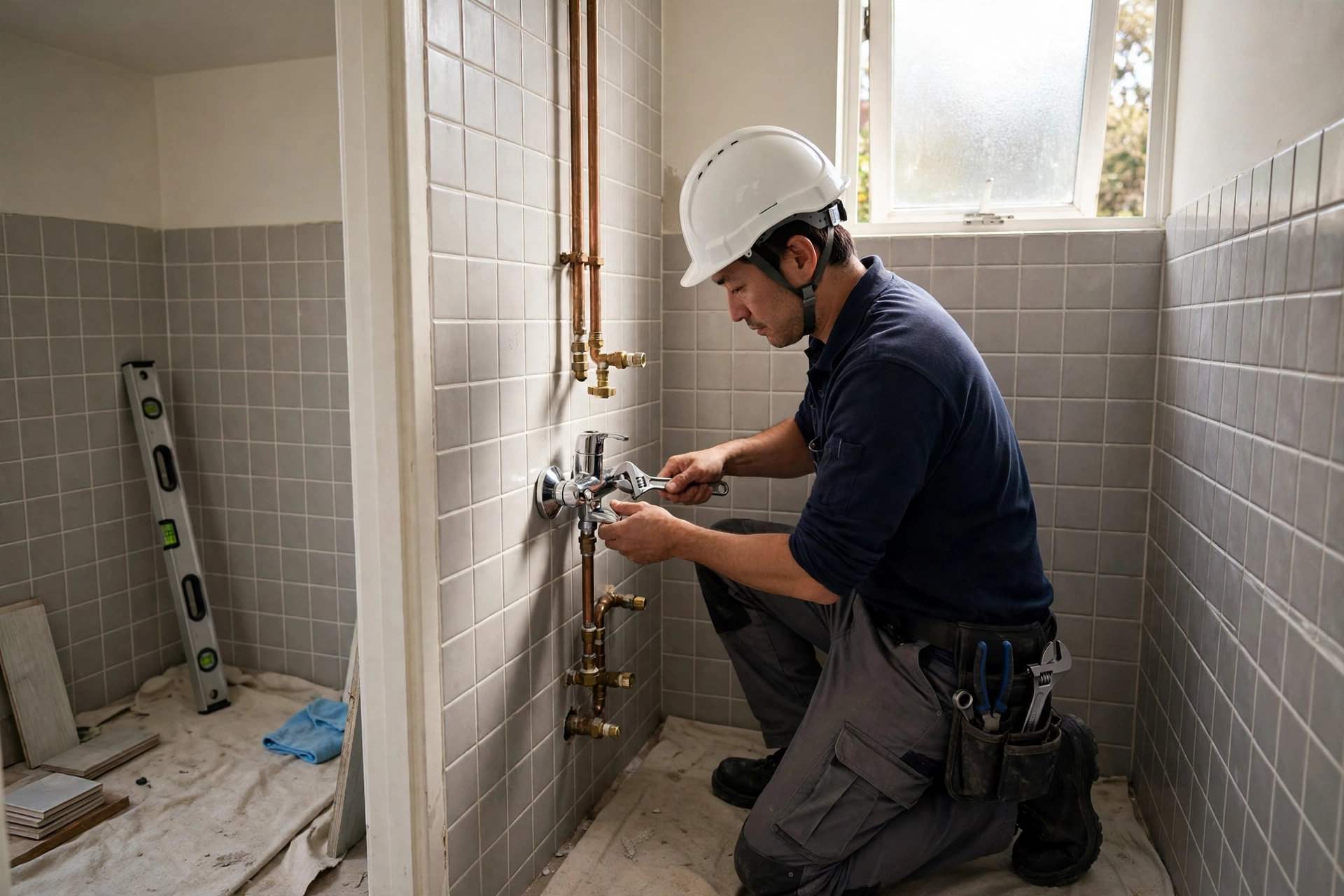
A helmet for bathroom fitters is a protective helmet worn by a fitter while working in a bathroom, and in general terms it is a good idea whenever there is a risk of bumping the head on low ceilings, exposed pipes, or falling tools during a bathroom installation or renovation. Bathroom fitting often means working in a small, cramped space with tiles, pipework, and heavy fixtures overhead, and a knock to the head can happen quickly when a fitter is crouched under a basin or reaching up to fix a shower fitting. A helmet gives a layer of protection in exactly those moments.
A bathroom fitter’s work brings them close to hard surfaces all day. Bathrooms are usually small rooms with low ceilings, tiled walls, and sharp corners on baths, sinks, and radiators. A fitter may be lifting a heavy bath into place, fitting a shower screen, or working above their head to connect pipework, and in each of those jobs the head is close to something hard. A helmet helps to spread the force of a bump and to reduce the chance of a cut or a bruise.
Why do bathroom fitters need a helmet?
Bathroom fitters need a helmet because their working space is tight, hard, and full of things to bump into. A bathroom is often the smallest room in a house, and once the bath, the toilet, the basin, and the shower are in place, there is very little room to move. A fitter who stands up too quickly under a low ceiling, or who turns around with a length of copper pipe on their shoulder, can strike their head before they have time to react. In general terms, a helmet takes the edge off that kind of knock.
During a renovation, tiles, tools, and offcuts may be stored above the work area, and a small object dropped from head height can still cause a painful injury. A helmet also protects against cuts from sharp edges on tiles and metal fittings, and against dust and debris when a fitter is cutting into a wall or a ceiling.
What kind of helmet is best for bathroom fitters?
The best helmet for bathroom fitters is, in general terms, a light, low-profile helmet that fits snugly, stays in place when the fitter bends down, and does not get in the way in a tight space. Many fitters choose a bump cap, which is a light cap with a hard shell built in, because it protects against bumps and scrapes without the bulk of a full hard hat. Others prefer a light industrial helmet when the job involves demolition, working under a ceiling, or lifting heavy fixtures.
The helmet should be comfortable enough to wear for a full working day. A bathroom fit can take hours of kneeling, crouching, and reaching, so a helmet that is too heavy or too hot will soon be taken off and left on the floor, where it does no good at all. Good ventilation, a padded inner lining, and an adjustable fit are worth looking for, and the helmet should be easy to wipe clean after a dusty day. A chin strap is useful when the fitter is working overhead, because it keeps the helmet in place when the head is tilted back.
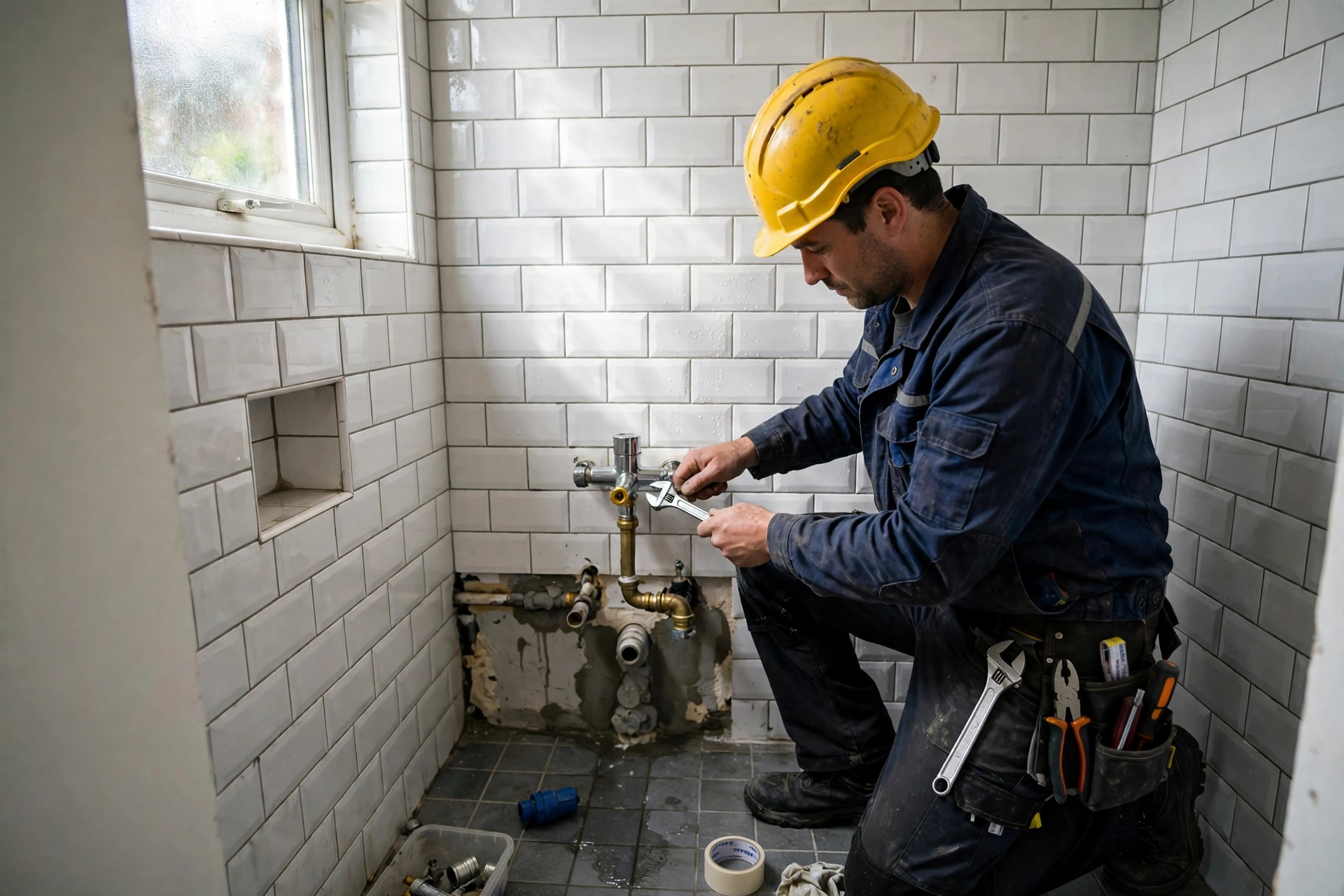
How should a helmet for bathroom fitting fit?
A helmet for bathroom fitting should fit snugly, sit level on the head, and stay in place when the fitter bends forward to work under a basin or looks up at a ceiling. The helmet should cover the top of the head and the forehead, and the fit should be checked with the fitter wearing it in a working position, not just standing upright. A helmet that slides forward when the fitter bends down will block their view and soon be pushed back, leaving the head unprotected.
The fit should be adjusted with the headband or the dial at the back of the helmet, and the fitter should be able to shake their head gently without the helmet moving. If the fitter wears glasses or a dust mask, the helmet should be checked with those on too, because eyewear and masks can change how a helmet sits.
Should bathroom fitters wear a helmet on every job?
Bathroom fitters should, in general terms, wear a helmet on every job where there is a risk of a head knock, and that covers most bathroom work. A small job, such as changing a tap, may seem too minor for a helmet, but even a small job can involve reaching into a tight cupboard or under a sink where the head is close to hard edges. A helmet is light and easy to put on, and wearing it as a habit means the fitter never has to stop and think about whether this particular job is risky enough.
On a building site, or on a larger renovation where other trades are working nearby, a helmet may be required by the site rules, and a fitter who turns up without one may not be allowed to work. Even in a private home, a customer is more likely to trust a fitter who arrives with proper safety gear, because it shows that the fitter takes the work seriously.
How should a bathroom fitter’s helmet be looked after?
A bathroom fitter’s helmet should be looked after with regular cleaning and sensible storage, in the same way as any work helmet. After a day of fitting, the helmet should be wiped down to remove dust, grout, and sealant, and the lining should be cleaned or aired out. Tile dust and plaster dust can build up inside a helmet over time, and a lining that is never cleaned will become uncomfortable and may irritate the skin.
The helmet should be stored in a dry place, away from direct heat and strong sunlight, and it should not be thrown into a van with heavy tools where it can be knocked about. A helmet that has been dropped from a height, or that has taken a hard knock, should be looked at with care, and in general terms a helmet that has taken a serious impact should be replaced rather than used again. Fitters choosing a new helmet may also want to learn about MIPS, a system designed to reduce rotational forces in a fall.
Is a bump cap enough for bathroom fitting?
In general terms, a bump cap is enough for light fitting work where the main risk is bumping the head on low ceilings and fixtures. For demolition or heavy lifting, a full industrial helmet gives more protection.
Can a bathroom fitter wear a helmet with glasses?
Yes, a bathroom fitter can wear a helmet with glasses, as long as the helmet is checked with the glasses on and does not press on the arms or push them out of place.
When should a bathroom fitter replace their helmet?
A bathroom fitter should replace their helmet after a hard impact, or when it no longer fits well, shows cracks or damage, or has been worn for a long time. When in doubt, replace it rather than keep working in it.

Olivia
Writer at Helmet Today, covering helmet reviews, fit and riding safety.