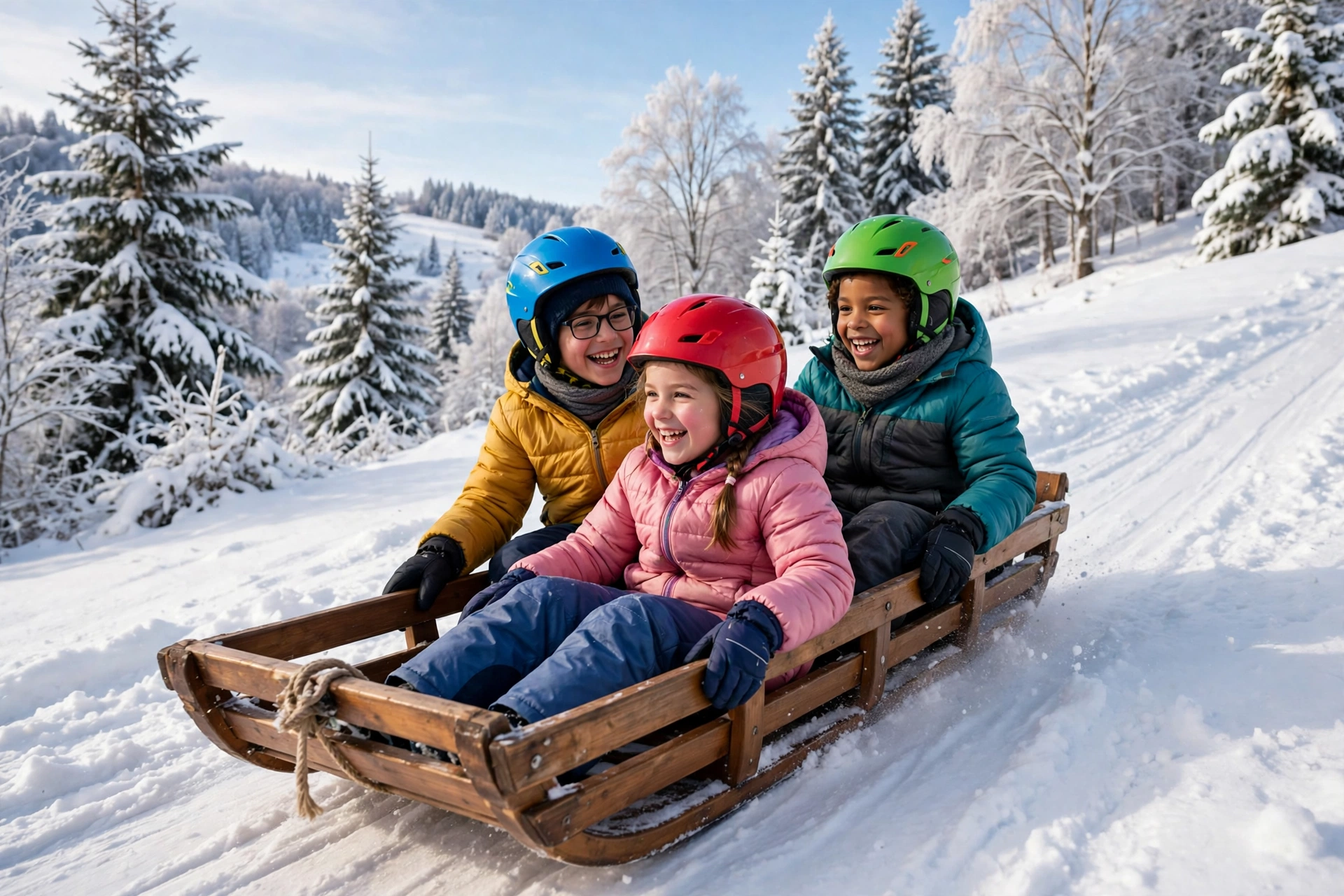
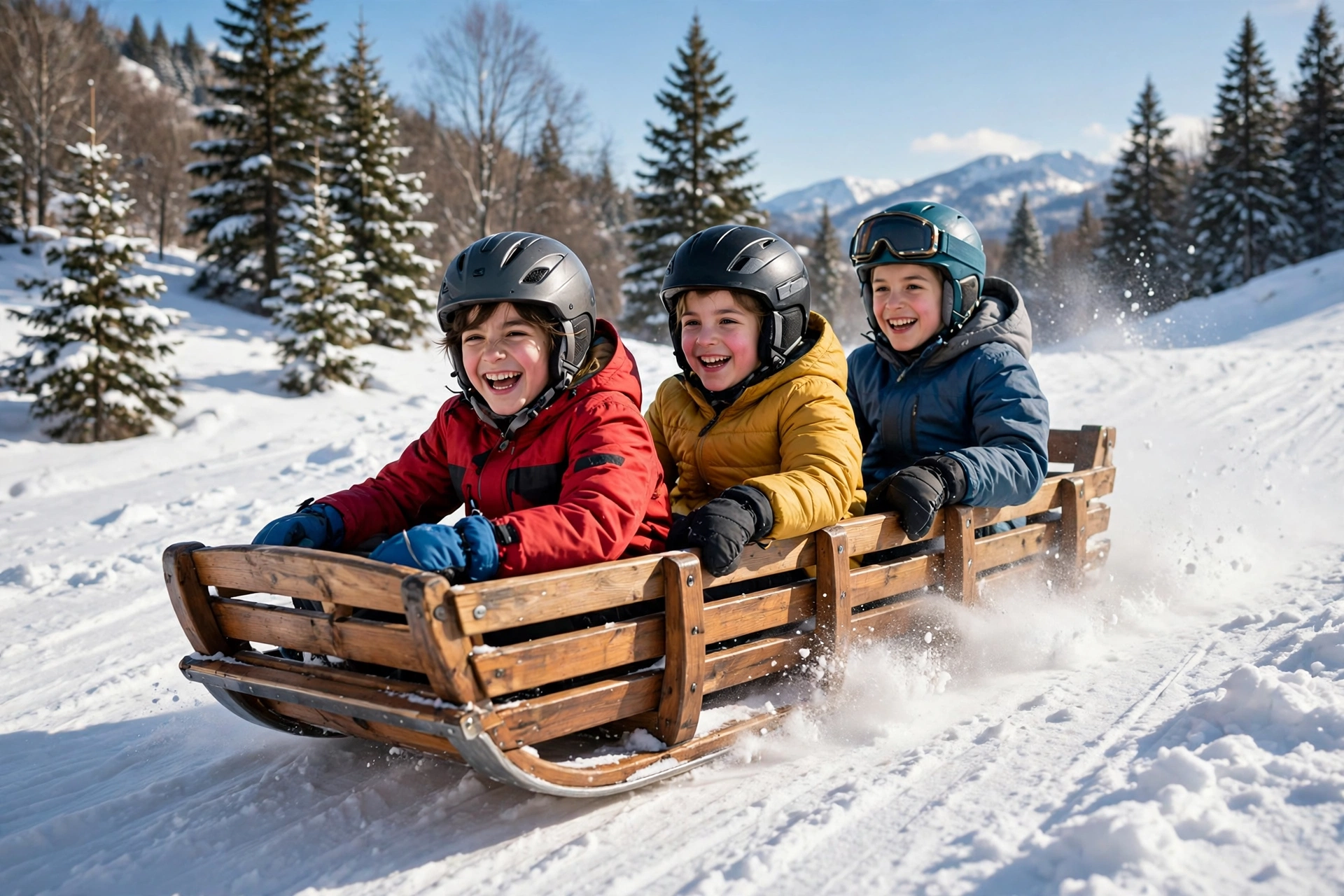
Children should wear a helmet for sledging and tobogganing, because a sled can pick up surprising speed and a fall onto hard snow or ice can hurt. A ski helmet or a well-fitting winter sports helmet is usually the best choice, since it is made for cold weather and covers the head properly. Make sure it fits snugly, sits level just above the eyebrows, and works with your child’s goggles or glasses if they wear them.
Sledging looks gentle, but it is not always slow. A toboggan on a steep hill can travel fast, steering is limited, and a child can easily slide off the back or tip over at the bottom. Trees, fences and other sledgers are all nearby. A helmet does not make sledging dangerous — it makes a fun winter activity safer. This guide explains which helmet to choose, how it should fit, and what to check before the first run.
Which Helmet Is Best for Sledging and Tobogganing?
A ski helmet is usually the best choice for sledging. It is designed for cold weather, it has ear pads that keep the ears warm, and it covers the head well at the back. A bike helmet is not a good substitute, because it is made for warmer weather, it has large vents that let cold air in, and it does not cover the ears or the back of the head in the same way.
If your child already has a ski helmet that fits, use that. There is no need to buy a separate helmet just for sledging. If you are buying one, choose a helmet that meets a recognised snow sports standard and fits your child’s head measurement. In general terms, a helmet that fits well and is comfortable will be worn happily, while a helmet that presses or wobbles will be left in the car.
Some families use a multi-sport helmet that is made for both winter and summer use, with removable ear pads and adjustable vents. These can work well for sledging if they fit properly and meet a snow sports standard. Check the label inside the helmet to be sure it is rated for winter use before you rely on it.
How Should a Sledging Helmet Fit a Child?
The helmet should sit level on the head, with the front edge just above the eyebrows. Ask your child to shake their head from side to side and nod up and down. The helmet should move with the head and stay in place. If it slips forward over the eyes or tips back to expose the forehead, adjust the rear dial first, and if it still moves, try a different size or shape.
Check the fit with the kit your child actually wears. A thin balaclava or beanie underneath will change the fit, so try the helmet on with it. Check that the ear pads sit comfortably without squeezing, and that the helmet does not press on the forehead after a few minutes. A helmet that presses will give your child a headache, and a child with a headache will soon take it off.
Also check the chin strap. It should fasten securely and sit flat under the chin, tight enough that you can fit one finger between the strap and the chin. If the strap is loose, the helmet can come off in a fall. Some helmets have a magnetic buckle that is easier to fasten with gloves on, which children tend to like.
What Should Parents Check Before the First Run?
Walk the hill first. Look for trees, fences, paths, roads and other hazards at the bottom of the slope, and pick a run with a clear, open run-out area. Avoid slopes that end near a road, a car park or a frozen pond. A good sledging hill has a gentle slope, a clear bottom, and enough space for everyone to stop safely.
Check the sled too. Make sure it is in good condition, with no cracks or sharp edges, and that the steering and brakes work if it has them. A toboggan with a rope handle is easier to control than a flat plastic sledge. Tell your child to sit facing forwards, feet first, and to keep their hands inside the sled.
Finally, check the weather and the snow. Hard, icy snow is faster and less forgiving than soft snow, so take extra care on icy days. Dress your child warmly, with gloves and waterproofs, and make sure they can see clearly. If your child wears glasses, check that the helmet does not push them down or fog them up.
How Do You Keep Sledging Safe for Younger Children?
Younger children should always sledge with an adult nearby. Sit with a small child on a larger toboggan if you can, so you can steer and slow down together. Keep runs short at first, and let your child get used to the speed before trying a steeper hill.
Teach your child how to fall safely. If the sled tips over, they should try to roll away from it rather than reaching out with their hands. Tell them to keep their feet up and their hands inside the sled, and to shout if they need help. A few simple rules, practised on a gentle slope, make a real difference.
Take breaks. Children get cold and tired quickly in the snow, and a tired child makes more mistakes. Warm up indoors with a hot drink, dry off gloves and hats, and check the helmet fit again before going back out. If you are curious about the technology inside modern winter helmets, reading about what MIPS is for helmets can help you understand one of the features some helmets offer.
What About Helmets for Adults Sledging with Children?
Adults should wear a helmet too. A parent on a toboggan travels at the same speed as their child, and a fall affects everyone on the sled. A ski helmet is the best choice for adults as well, for the same reasons: warmth, coverage and a proper fit.
If the whole family wears helmets, it stops being a rule for children and becomes simply what the family does. Children copy what adults do, and a parent in a helmet sends a stronger message than any lecture. It also means the helmet is there if you need it, on the run when you least expect a fall.
Check your own helmet fit too. The same rules apply: it should sit level, feel snug all round, and stay in place when you shake your head. Replace any helmet after a hard impact, even if you cannot see damage, because the liner inside can be damaged in ways that are not visible.
Frequently Asked Questions
Q: Does my child need a helmet for sledging?
A: In general terms, yes. A sled can pick up surprising speed, and a fall onto hard snow or ice can hurt. A well-fitting ski helmet is usually the best choice for sledging and tobogganing.
Q: Can my child wear a bike helmet for sledging?
A: In general terms, no. A bike helmet is made for warmer weather, has large vents that let cold air in, and does not cover the ears or the back of the head the way a ski helmet does.
Q: How do I choose a safe sledging hill?
A: Pick a gentle slope with a clear, open run-out area and no trees, fences, roads or frozen ponds at the bottom. Walk the hill first, and avoid steep or icy slopes for younger children.

Olivia
Writer at Helmet Today, covering helmet reviews, fit and riding safety.