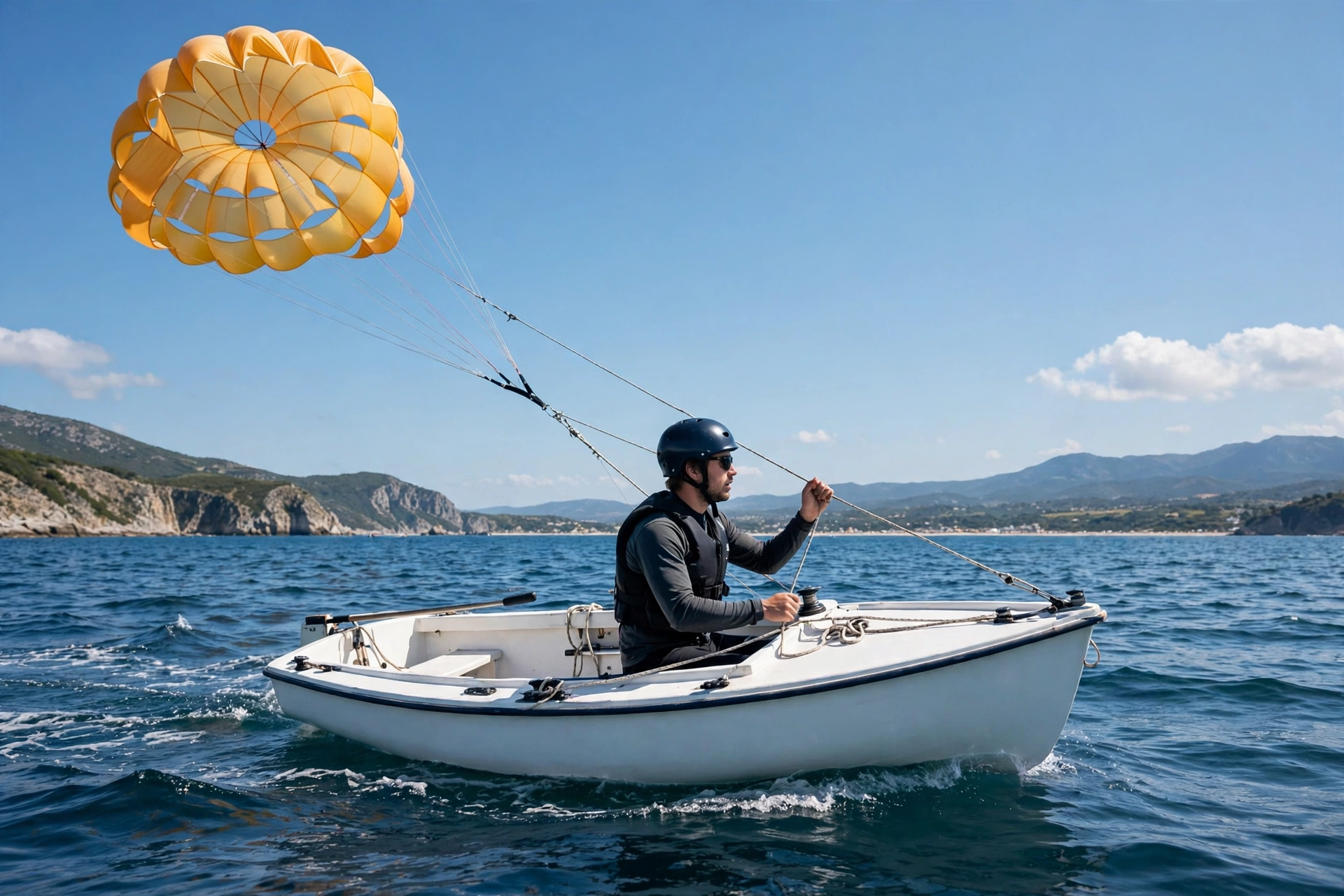
Yes — para sailing athletes generally wear a helmet, and a helmet is part of the standard safety kit for the sport in many events. Para sailing is competitive sailing for athletes with a physical impairment, raced in small adapted keelboats and dinghies. The helmet protects the head from the boom, rigging and deck hardware as the boat moves and turns.
Sailing looks calm from the shore, but the deck of a racing boat is a busy place. The boom swings across the boat at every tack, lines run under tension, and the deck pitches with the waves. This guide explains what kind of helmet para sailors wear, why it is worn, and what to look for when choosing one.
What Kind of Helmet Do Para Sailors Wear?
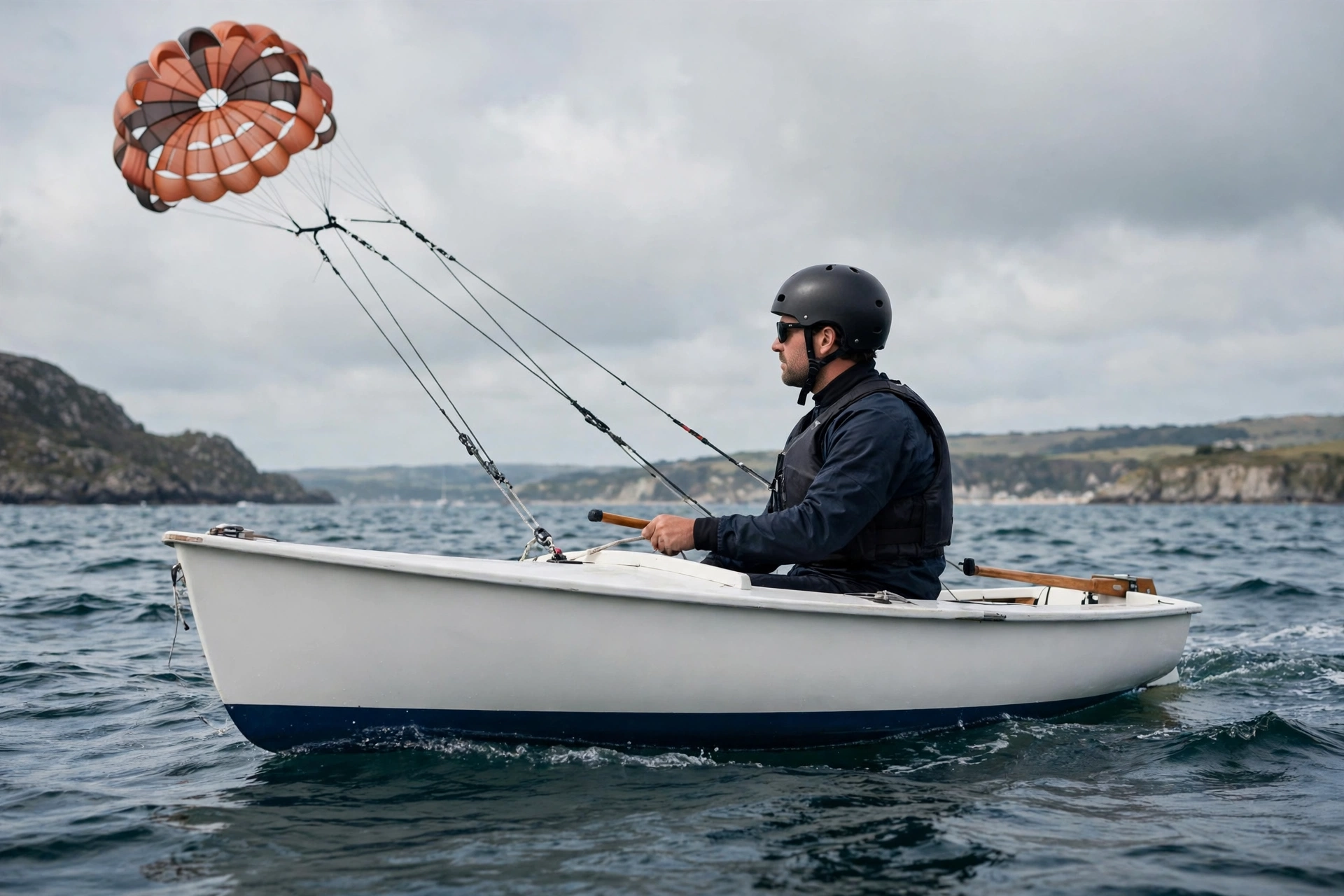
Para sailors typically wear a lightweight watersports helmet with a hard outer shell and a padded liner. The helmet covers the top and sides of the head, sits low enough to protect the temples, and leaves the face open so the sailor can see the sails, the course and other boats. A chin strap fastens under the chin and keeps the helmet in place in a gust or a sudden heel of the boat.
The helmet is designed for use on the water. It drains quickly, does not soak up much water, and stays light when wet, which matters when spray comes over the deck or the sailor gets caught in rain. Ventilation holes let water run out and air circulate. A helmet made for cycling or another land sport is not a good substitute, because it is not designed to be worn in a wet, salty environment.
Why Is a Helmet Worn in Para Sailing?
The main reason is the boom. The boom is the horizontal spar at the foot of the mainsail, and it swings across the boat every time the boat tacks or gybes. A sailor who is in the wrong place when the boom comes across can take a hard knock to the head. A helmet spreads the force of that blow and reduces the chance of a head injury. Even experienced sailors get caught by the boom, because a gust can move it faster than expected.
Rigging and deck hardware are other risks. Lines, blocks and cleats are hard and sit at head height around the cockpit, and a sailor moving quickly to adjust a sail can strike one of them. In a small boat, there is not much room to move, and the head is often close to the hardware. In general terms, the helmet is there for the knocks that happen in the normal movement of sailing, not only for emergencies.
There is also a practical reason: confidence. Knowing the head is protected helps a sailor move around the boat freely and focus on the race rather than on ducking. For athletes who sail with adapted seating or controls, a helmet adds reassurance, because their seating position may put them closer to the boom or limit how quickly they can duck.
How Does a Para Sailing Helmet Differ from a Cycling Helmet?
A para sailing helmet and a cycling helmet may look similar at a glance, but they are built for different jobs. A cycling helmet is designed for a single impact on a hard road surface, with large vents for cooling at speed on land. A watersports helmet is designed to be worn in and around water, so it drains quickly, stays light when wet, and resists salt and sun.
The coverage is different too. A watersports helmet often sits a little lower around the sides and back of the head, giving more protection against knocks from the boom and deck hardware. A cycling helmet is shaped for the forward-leaning position on a bike and for airflow at road speed. Each helmet suits its own sport, and swapping one for the other leaves gaps in protection that are easy to avoid by using the right helmet.
What Should You Look for in a Para Sailing Helmet?
Fit comes first. The helmet should sit level on the head, feel snug all round without pressing hard on one spot, and stay put when you shake your head. The strap should fasten securely under the chin and hold the helmet firmly in place, even when wet. If the helmet rocks from side to side or slides forward over the eyes, it is the wrong size or the wrong shape for that head.
Next, check the hearing and the field of view. The helmet should let the sailor hear calls from the crew and the race committee clearly, because sailing is a team sport built on communication. It should also let the sailor see the sails, the telltales and other boats without turning the whole head. If you are learning about how helmets handle different kinds of impact, reading about what MIPS is for helmets can help you understand one of the technologies used in modern helmet design.
Do All Para Sailors Wear a Helmet?
In general terms, helmets are the norm in para sailing, but the exact rules can vary between competitions and the organisations that run them. Some events require a helmet for every athlete, while others may leave the choice to the athlete or their team. Because the rules can differ, athletes and coaches should always check the rules for the specific event before racing, rather than assuming one event’s rules apply everywhere.
Whatever the rule says, many sailors choose to wear a helmet in training as well as in racing. Training is where new manoeuvres are practised and where the boom catches people out most often, so the same protection that matters on race day matters on a practice sail too. A helmet that is comfortable enough to wear all day is more likely to be worn, which is why fit and weight matter so much in this sport.
Frequently Asked Questions
Q: Do para sailors wear helmets in training as well as races?
A: In general terms, yes. Many sailors wear a helmet whenever they are on the water, because a knock from the boom can happen in practice just as easily as in a race.
Q: Can a para sailor use a cycling helmet on a boat?
A: In general terms, no. Cycling helmets are not designed for water use. A watersports helmet drains better, stays light when wet, and is shaped for sailing.
Q: Does a helmet have to be replaced after a hard knock?
A: In general terms, yes. A helmet that has taken a hard impact should be checked and usually replaced, even if the damage is not visible on the outside, because the liner inside can be damaged in ways you cannot see.

Olivia
Writer at Helmet Today, covering helmet reviews, fit and riding safety.