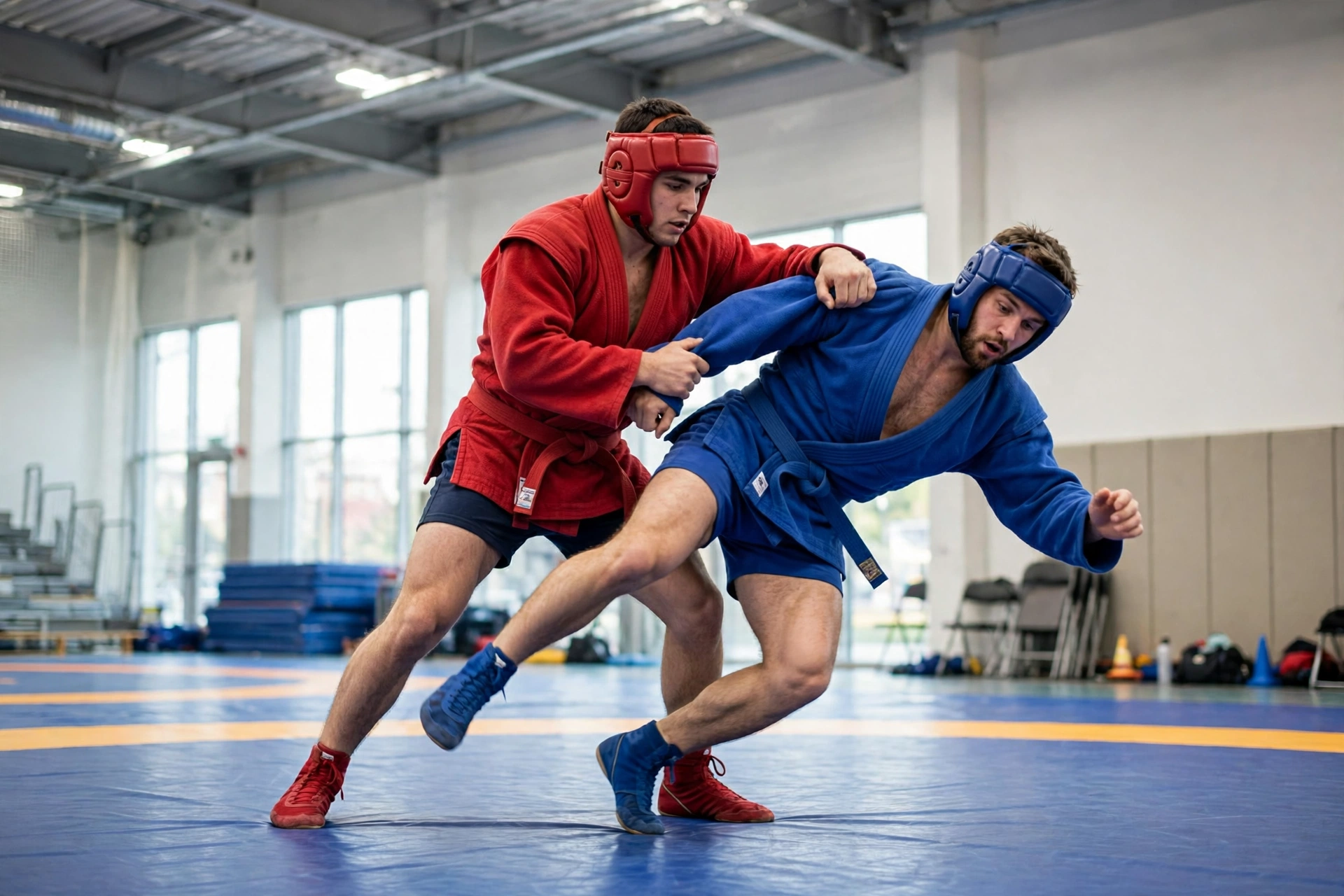
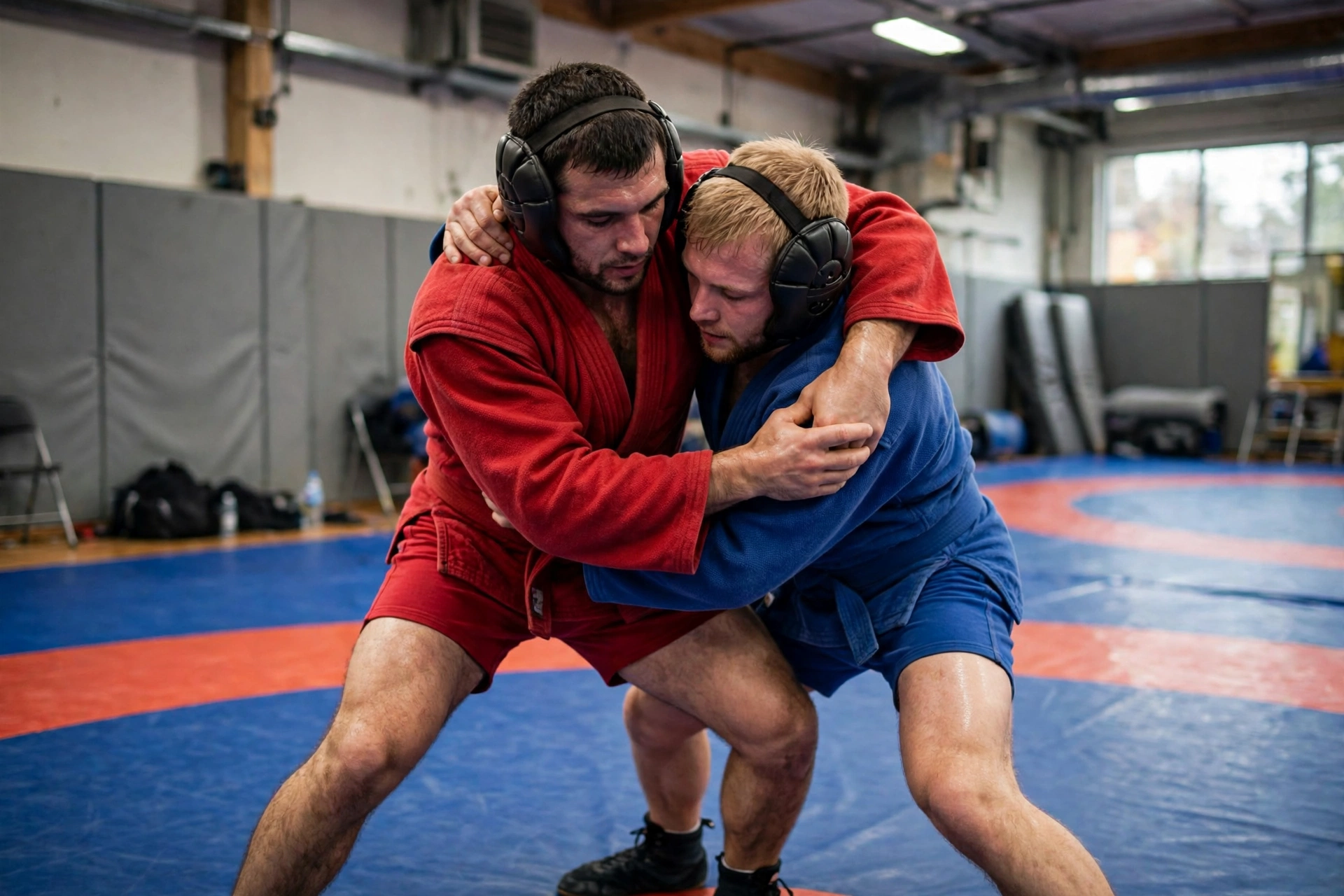
Sambo headgear is soft padded ear protection worn during training and competition to protect the ears and the sides of the head from friction, pressure, and knocks on the mat. Sambo is a grappling sport from Russia, related to judo and wrestling, where athletes throw, pin, and submit each other on a mat. The headgear looks much like a wrestler’s ear guard: a slim padded guard that covers the ears and the sides of the head, held in place with straps, rather than the bulky head guard used in boxing.
In sambo, the head is not a striking target — there is no punching or kicking — but the ears and the sides of the head still take a lot of punishment. Constant pressure against the mat, grinding in the clinch, and the friction of throws can leave ears sore and swollen. This guide explains what sambo headgear is, why it is worn, how it differs from wrestling ear guards, and what to look for when choosing a pair.
What Is Sambo Headgear?
Sambo headgear is a lightweight padded guard that covers the ears and the sides of the head. It is usually made from soft synthetic material or neoprene, with padded cups over the ears and straps that fasten under the chin and around the back of the head. The top of the head is often left open or covered by a thin strap, because the guard is there to protect the ears, not to cushion strikes from above.
The design is deliberately slim. A sambo athlete needs to move freely, shoot for takedowns, and work in close contact, so a bulky guard would get in the way and give an opponent something to grab. The ear cups sit close to the head, the straps are flat and low-profile, and the whole guard is flexible enough to move with the athlete. Some designs use a lace-up or Velcro fastening, while others use a simple slip-on style with elastic straps.
Why Do Sambo Athletes Wear Headgear?
The main reason is to protect the ears. In grappling, the ears are pressed against the mat, ground against an opponent’s body, and squeezed in headlocks and clinches. Over time, repeated friction and pressure can cause the ears to swell and harden, a condition often called cauliflower ear. Headgear puts a padded layer between the ear and the mat or the opponent, which reduces the friction that causes the damage.
Headgear also protects the sides of the head from mat burn and bruising. When an athlete is thrown or pinned, the side of the head can scrape across the mat, which leaves painful grazes that take days to heal. A guard covers the most exposed areas and lets the athlete train again the next day without a raw patch of skin. It also helps in the clinch, where heads press together and the pressure on the ears can be intense.
How Is Sambo Headgear Different from Wrestling Ear Guards?
In practice, the difference is small. Both are slim padded guards that cover the ears and fasten under the chin, and many products are sold for both sports. Wrestling ear guards, used in freestyle and Greco-Roman wrestling, tend to have hard plastic ear cups with a soft lining, because wrestling involves very forceful head contact and the rules of the sport allow headgear with rigid cups. Sambo headgear is often softer, with foam or neoprene cups, because sambo rules and traditions favour a lighter, more flexible design.
The strap layout can differ as well. Wrestling guards often use a three-strap system — one over the top, one around the back, and one under the chin — which holds the cups very firmly in place during explosive takedowns. Sambo guards may use a simpler two-strap layout, which is quicker to put on and take off between rounds of drilling. In general terms, the choice between them comes down to personal preference and what your club or competition requires.
What Should You Look for in Sambo Headgear?
Fit is the first thing to get right. The ear cups should sit directly over the ears, not in front of or behind them, and they should press gently against the head without squeezing. The straps should hold the cups in place when you move, roll, and change direction, but they should not dig into the chin or the back of the head. Try the guard on and move your head through the positions you use in training: if it shifts, try a different size or strap adjustment.
Next, check the ear cups themselves. They should be padded enough to cushion pressure, but not so thick that they block your hearing completely. You need to hear your coach and your training partner, and you need to be aware of what is happening around you on the mat. Cups with ventilation holes or a breathable lining help with comfort during long sessions, because the ears can get hot and sweaty under a solid cup.
Look at the materials and the fastening. Neoprene and soft synthetic fabrics are comfortable and easy to wash, while harder plastic cups offer more protection but can feel less forgiving. Velcro straps are quick to adjust, while lace-up designs take longer but can be tightened more precisely. Whichever you choose, make sure the guard is easy to clean — it will pick up sweat every session. If you are learning about how helmets handle different kinds of impact, reading about what MIPS is for helmets can help you understand one of the technologies used in modern helmet design.
When Is Headgear Required in Sambo?
The rules vary by organisation and by age group. In many youth and junior sambo competitions, headgear is required, because younger athletes are still learning to fall and to protect themselves, and their ears are more vulnerable to injury. In adult competition, the rules differ: some events require headgear, some make it optional, and some leave it to the athlete. Always check the rules of the specific event you are entering, rather than assuming.
In training, the decision is usually left to the athlete and the coach. Many clubs encourage all members to wear headgear for sparring, because it prevents the ear injuries that can keep someone off the mat for weeks. Others leave it optional for experienced athletes who have already built up some tolerance. If you are new to sambo, wearing headgear from the start is the sensible choice: it is much easier to prevent ear damage than to deal with it afterwards.
There are times when headgear is not worn, such as during warm-ups, footwork drills, and technique demonstrations where there is no hard contact. It is also usually left off for conditioning work. The guard earns its keep in live grappling — randori, sparring, and competition — where the ears and the sides of the head are under real pressure. Keep it in your kit bag and put it on when the contact starts.
Frequently Asked Questions
Q: Does sambo headgear prevent cauliflower ear?
A: In general terms, it greatly reduces the risk. The padded cups protect the ears from the friction and pressure that cause swelling, though no guard can remove the risk entirely in a hard grappling sport.
Q: Can I use wrestling headgear for sambo?
A: In general terms, yes. Wrestling ear guards and sambo headgear are very similar, and many products are sold for both sports — just check your competition rules before relying on one for an event.
Q: How do I wash sambo headgear?
A: Hand-wash it in lukewarm water with mild soap, rinse well, and air-dry away from direct heat. Avoid machine washing, which can damage the cups and straps.

Olivia
Writer at Helmet Today, covering helmet reviews, fit and riding safety.