To keep a bobsled helmet visor clear in the cold, wipe it clean before every run, use an anti-fog treatment on the inside, keep the helmet dry between runs, and carry a spare visor so you can swap it if conditions change. A clear visor is not a luxury in bobsled: the driver steers by sight, and a fogged or iced visor can hide the shape of the track at the worst moment.
This guide explains why visors fog and ice up, and the practical steps riders take to keep them clear through a cold day on the track.
Why Do Visors Fog and Ice Up?
A visor fogs when warm, moist air meets a cold surface. The rider’s breath is warm and damp, and the visor is cold from the air outside. When the breath reaches the inside of the visor, the moisture condenses into tiny droplets — fog. In very cold conditions, that moisture can freeze, leaving a thin layer of ice on the inside of the visor.
The outside of the visor has its own problems. Ice spray from the track, snow, and condensation can all cloud the outer surface. At bobsled speeds, even a thin film of moisture on the outside bends the light and makes the track harder to read. Both sides of the visor need attention.
What Is the Best Way to Clean a Visor?
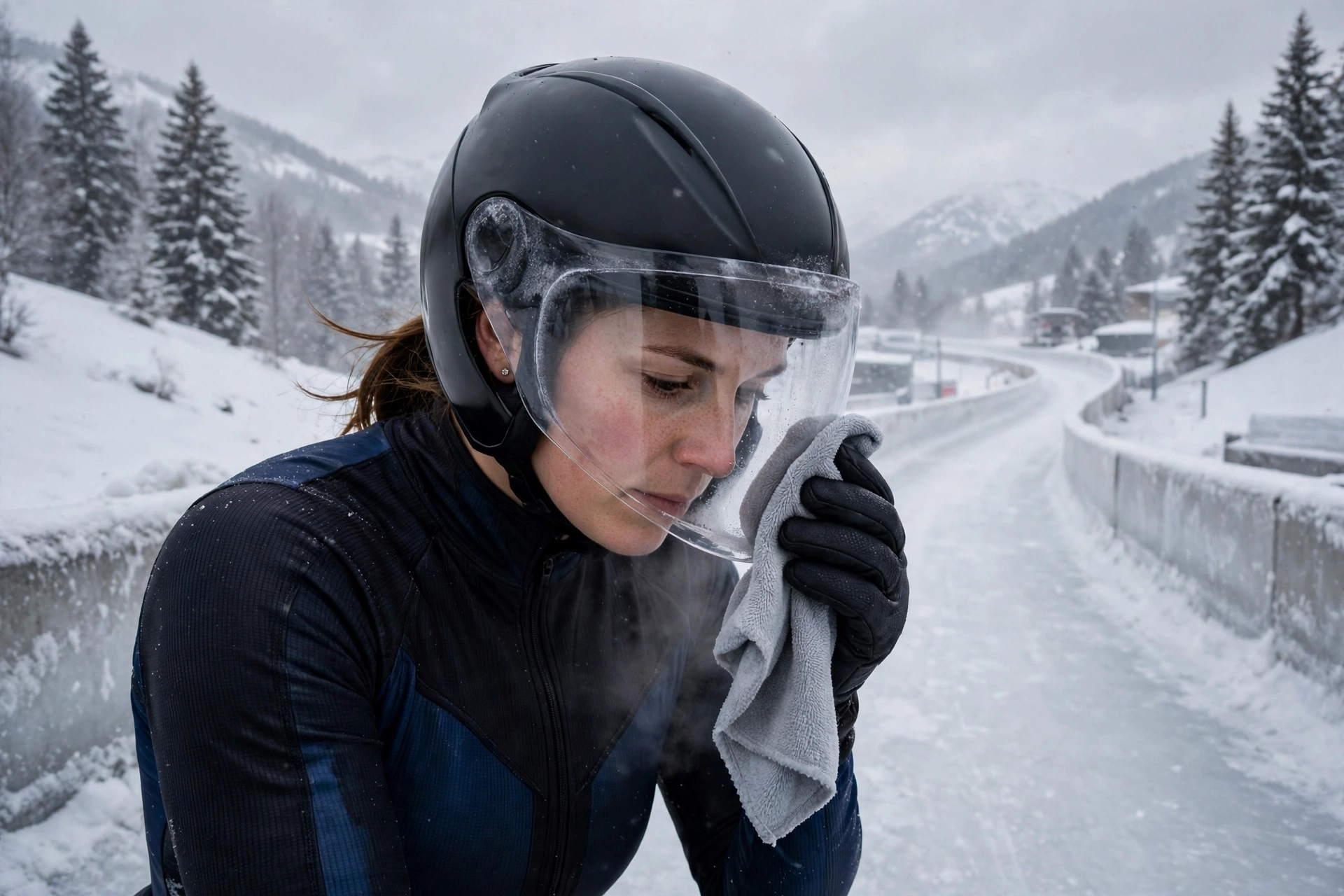
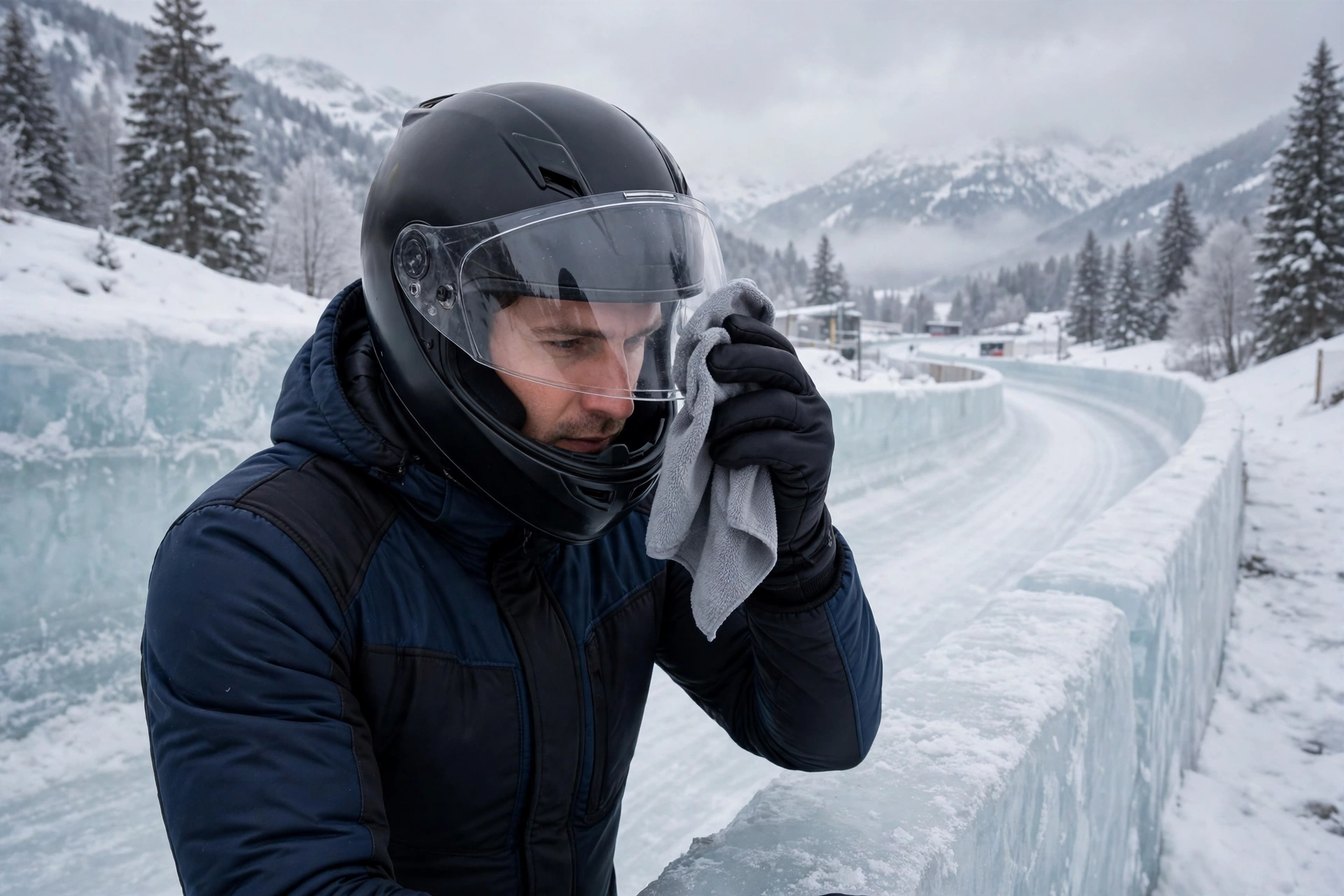
Clean the visor with a soft, clean cloth — microfibre is ideal — and plain water or a cleaner made for visors. Wipe gently, without pressing hard, because the visor’s surface can scratch, and a scratched visor is worse than a dirty one. Never use paper towels or rough cloths, which can leave fine scratches across the surface.
Clean both sides. The outside collects spray and dirt from the track, while the inside collects moisture and residue from breath. A visor that is clean on the outside but fogged on the inside is still useless. Make cleaning the visor part of your routine before every run, not something you do only when it looks dirty.
Between runs, keep the visor covered or the helmet stored somewhere dry. A visor left exposed on a cold track will collect condensation, and a visor stored in a damp bag will be fogged before you even put it on.
Do Anti-Fog Treatments Actually Work?
In general terms, yes — a good anti-fog treatment helps, though no treatment works perfectly in every condition. Anti-fog products work by spreading moisture into a thin, clear film instead of letting it form into droplets. Applied to the inside of the visor, they can keep the view clear through a run.
Apply the treatment to a clean, dry visor, following the product’s instructions. Reapply regularly, because the treatment wears off with cleaning and use. Some riders apply it the night before a competition and again in the morning. Others carry a small bottle in their kit bag and reapply between runs if the visor starts to fog.
Not all treatments suit all visors, so check that the product you use is safe for your visor’s material. A treatment that damages the visor’s coating will do more harm than good.
Should You Carry a Spare Visor?
Yes, if you can. A spare visor is one of the most useful items in a bobsledder’s kit bag. If your visor fogs badly, gets scratched, or ices up during a session, swapping it takes a minute and restores a clear view. Without a spare, you are stuck with a poor visor for the rest of the day.
Carry the spare in a soft case or wrapped in a cloth, so it does not get scratched in your bag. If you have visors in different tints, the spare can also be a different tint for changing light — clear for dull conditions, tinted for bright sun on the ice. If you are learning about helmet technology in general, reading about what MIPS is for helmets can help you understand one of the features found in modern helmets.
What Else Helps Keep a Visor Clear?
How you store the helmet matters. Keep it somewhere dry and not too cold between runs, so condensation does not form on the visor. Do not leave it sitting on the ice or in a damp bag. If the helmet is cold and you put it on with a warm face, fogging is almost guaranteed — let it warm up slightly first if you can.
Breathing technique helps too. Some riders learn to breathe downward, away from the visor, which reduces the amount of warm air reaching the inside surface. It takes practice, but it can make a real difference on a cold day. And check the visor seal: a visor that does not seal properly against the shell lets in cold air and moisture, which makes fogging worse.
It is also worth knowing that different tracks can present different visor problems. An outdoor track on a snowy day will throw more spray at the visor than an indoor track, while a track that runs through a forest may have sections in deep shade where the light changes suddenly. Riders who compete at several tracks learn to carry a small visor kit: a soft cloth, a bottle of anti-fog treatment, and a spare visor in a different tint. That kit weighs almost nothing and fits in a pocket, but it can save a competition. The habit of checking the visor before every run, rather than only when it looks dirty, is what separates riders who rarely have visor trouble from those who are always wiping at the start line.
Frequently Asked Questions
Q: Can I use car anti-fog spray on a bobsled helmet visor?
A: In general terms, only use products made for helmet visors, or ones your helmet maker recommends. Car products may damage the visor’s coating.
Q: What should I do if my visor fogs during a run?
A: There is little you can do mid-run. That is why prevention matters: clean the visor, use anti-fog treatment, and carry a spare so the next run starts with a clear view.
Q: Does a tinted visor fog more than a clear one?
A: In general terms, no — fogging depends on temperature and moisture, not on tint. Choose the tint for the light conditions, and treat either type with anti-fog the same way.

Olivia
Writer at Helmet Today, covering helmet reviews, fit and riding safety.