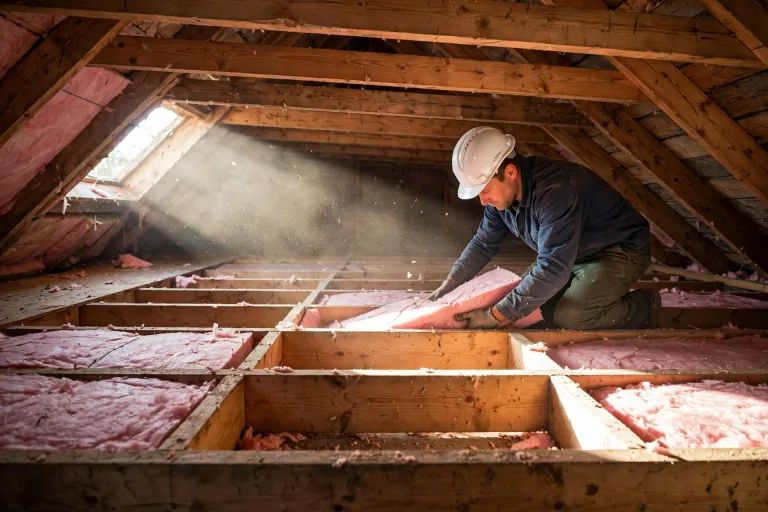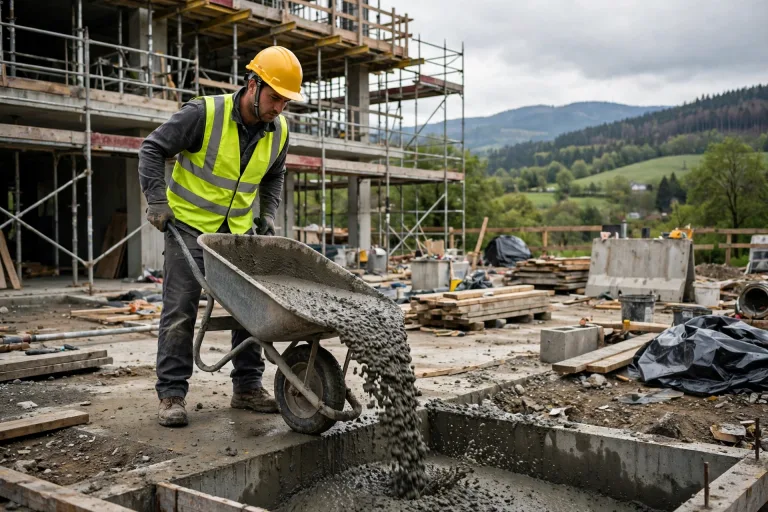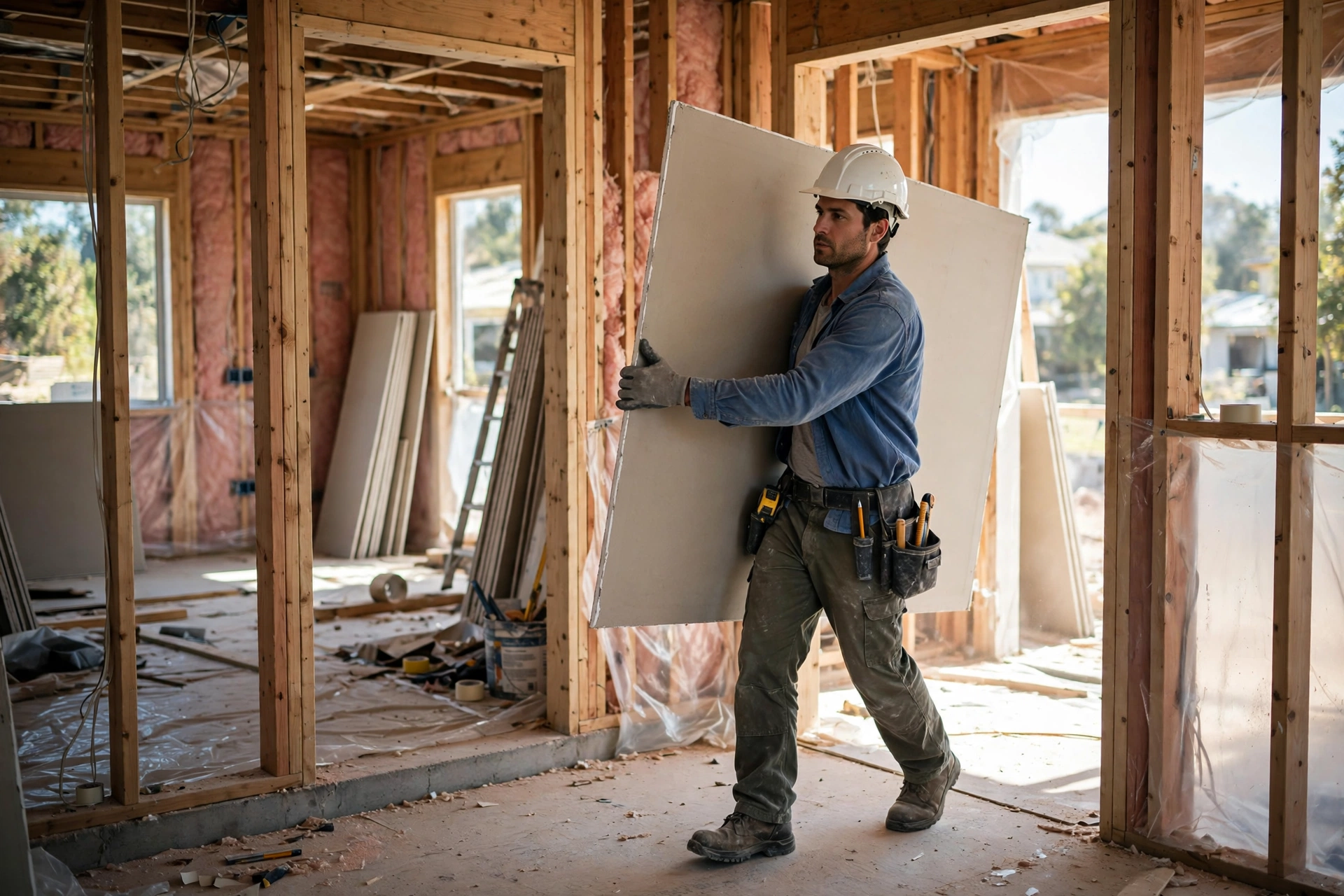
A helmet for drywall installers is a helmet worn on a building site to protect the head from falling objects, knocks, and bumps while hanging and finishing drywall, and in general terms every drywall installer working overhead or near other trades should wear one that fits well. Drywall work means lifting heavy sheets, working on ladders and stilts, and cutting and fixing boards above head height, and the head is exposed to falling tools, offcuts, and fixings for much of the day. A helmet gives the installer a layer of protection in that busy environment.
Drywall installers often work alongside electricians, plumbers, and other trades, and the site can be noisy, dusty, and crowded. A helmet helps the installer to stay safe while they focus on getting the boards level and the joints smooth, and it is treated as standard safety equipment on most building sites rather than as an optional extra.
Why do drywall installers need a helmet?
Drywall installers need a helmet because the work is done in a place where things fall from above. A tool left on a scaffold, a piece of offcut, or a fixing dropped by another worker can fall onto the installer’s head, and even a small object can cause a painful injury when it falls from height. A helmet spreads the force of an impact and helps to protect the skull, and that protection matters all the more when the installer is looking up and cannot see what is coming.
There is also the risk of bumping the head on a low beam, a scaffold pole, or the edge of a board that is being lifted into place. Drywall sheets are large and awkward, and an installer who is carrying one may not see a hazard at head height until it is too late. A helmet gives a layer of protection against those knocks too, and it can make the difference between a small bump and a cut that needs treatment.
What kind of helmet is best for drywall installers?
The best helmet for drywall installers is, in general terms, a light, comfortable hard hat or safety helmet with a secure chin strap and a fit that works with other site gear. Many installers use a standard hard hat, because it is light, easy to wear, and made to cope with falling objects. The key points are a snug fit, good ventilation, and a shell that is free from cracks or damage.
The helmet should also work with the other equipment the installer uses, such as safety glasses, ear protection, and a dust mask. Drywall work creates a great deal of dust, especially when boards are cut or sanded, so the installer needs a helmet that does not get in the way of a mask or push glasses out of place. A helmet with a brim can help to keep dust and small debris off the face, and a lining that can be removed and washed is a practical feature on a dusty site.
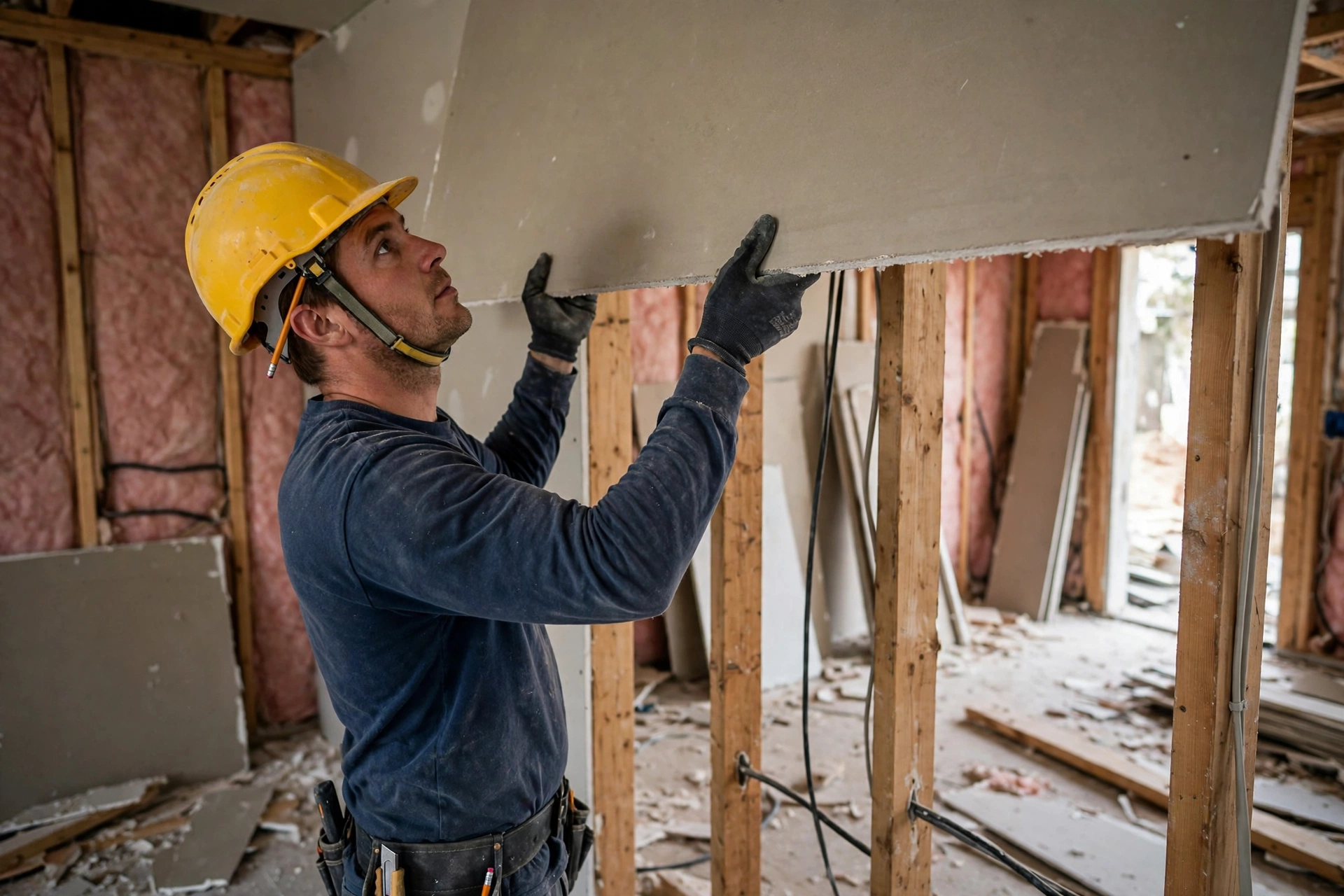
How should a helmet for drywall installers fit?
A helmet for drywall installers should fit snugly, sit level on the head, and stay in place when the installer bends, reaches up, or turns quickly. The helmet should cover the top of the head, and the suspension or lining inside should be adjusted so that the shell sits at the right height. The chin strap, where one is fitted, should be fastened securely, because a helmet that falls off when the installer bends over is no help at all.
The fit should be checked with the glasses, ear protection, and dust mask the installer will actually wear, because these can change how a helmet sits. Glasses should sit neatly without leaving a gap, and the helmet should not press on the arms of glasses or push them out of place. The installer should also check that the helmet does not block their hearing more than the ear protection already does, because a worker on a busy site needs to hear warnings, machinery, and other workers.
What should a drywall installer check before work?
Before work, a drywall installer should check the helmet for cracks, dents, or damage to the shell, and should look at the lining, the suspension, and the strap to make sure they are sound and working. A helmet that has been dropped from height, or that has taken a knock from a falling object, should be looked at with care, and in general terms a helmet that has taken a serious impact should be replaced rather than used again. The damage may not be easy to see, so the installer should think honestly about what the helmet has been through.
The installer should also check the work area before starting, and should make sure that the ladders, stilts, and scaffolds are in good order. A helmet is only one part of staying safe on a building site, and it works best when the installer also checks that the area is clear, that tools are put away safely, and that other trades know where the drywall work is taking place. Working with other people nearby, rather than alone on a site, is a sensible habit too.
How should a drywall installer’s helmet be looked after?
A drywall installer’s helmet should be looked after with regular cleaning and sensible storage, in the same way as any work helmet. After a day on site, the installer should brush off the dust, wipe the shell clean, and let the lining air out. Drywall dust can build up inside a helmet, and a lining that is left dusty can irritate the skin, so a helmet that can be cleaned easily is a good choice. Strong heat, such as a hot van in summer, can harm the materials in a helmet over time, so a cool, dry place is a better choice for storage.
The helmet should be kept where it will not be knocked about or used as a seat or a shelf, because a hard knock can damage it even when no crack is visible. A helmet bag is a simple way to protect it between jobs. Installers who are choosing a new helmet may also want to learn about features that can help in a fall, including a system designed to reduce rotational forces, such as MIPS, which is found in some work and safety helmets. A well-kept helmet, worn every day, gives a drywall installer the best chance of finishing the job in safety.
Do drywall installers have to wear a helmet?
In general terms, most building sites expect drywall installers to wear a helmet, and many sites make it a rule. An installer who is unsure should check the site rules before starting work.
Can a hard hat be used for drywall work?
Yes, in general terms a hard hat that fits well and is in good condition is often suitable for drywall work. The key points are fit, comfort, and a secure strap where one is fitted.
When should a drywall installer’s helmet be replaced?
A drywall installer’s helmet should be replaced after a hard impact or a fall from height, or when it no longer fits well, shows damage, or has been worn for a long time. When in doubt, replace it rather than keep working in it.

Olivia
Writer at Helmet Today, covering helmet reviews, fit and riding safety.