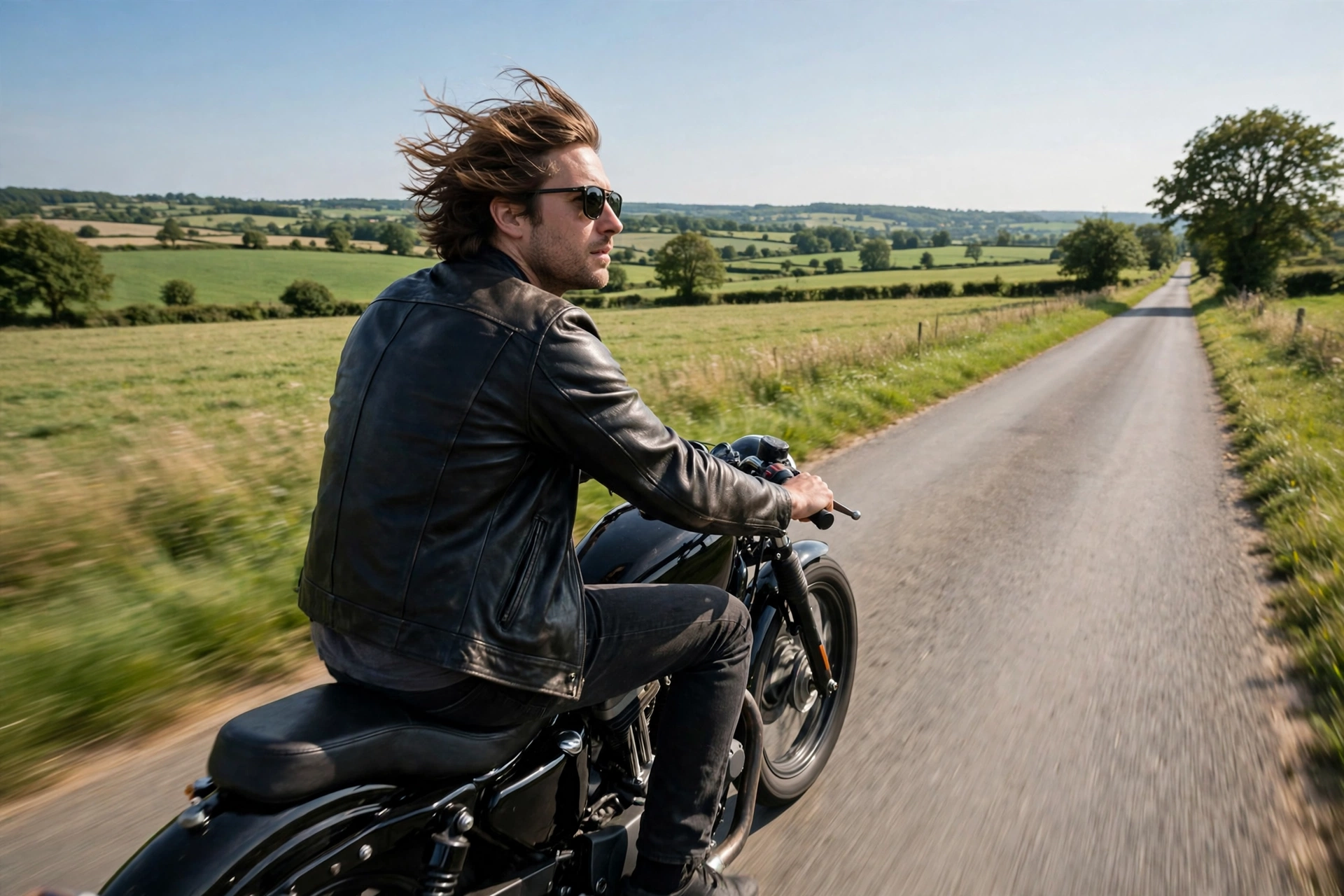
If you ride without a helmet, your head has no protection in a crash or a fall, and in general terms a head injury that a helmet might have softened can become a serious or life-changing one. A motorcycle, a bicycle, or a scooter can be knocked over in a moment, and the rider’s head can strike the road, a kerb, or another vehicle with great force. A helmet is designed to absorb some of that force and to protect the skull, so riding without one leaves the rider exposed to a risk that is easy to avoid.
Many riders who go without a helmet do so because the journey is short, the weather is hot, or the helmet feels uncomfortable. Those reasons are understandable, but they do not change what happens in a crash. In general terms, the protection a helmet offers matters on every ride, not only on long ones or fast ones.
What happens to your head in a crash without a helmet?
In a crash without a helmet, the head can strike a hard surface directly, and the force of that impact goes straight to the skull and the brain. A helmet works by spreading the force over a wider area and by slowing the head down more gently, because the foam inside the helmet crushes as it absorbs energy. Without that layer, the head stops suddenly when it hits the road, and the brain can be shaken or bruised inside the skull.
The injuries that can follow range from cuts and grazes to a fractured skull or a serious brain injury, and some of these injuries can affect a person’s memory, speech, movement, or mood for a long time. A rider can also suffer a head injury in a fall that looks minor from the outside, because the damage is inside the skull and is not always visible at once.
Is it against the law to ride without a helmet?
Whether it is against the law to ride without a helmet depends on where you are, because the rules are different in different countries and, in some places, in different states or regions. In many countries, a helmet is required by law for motorcycle riders, and in some places it is also required for cyclists, especially for children. In other places, the law may apply only to certain riders, such as young riders or riders on certain types of vehicle.
A rider who breaks the helmet law can face a fine or another penalty, and the exact penalty depends on the local rules. Laws also change over time, so a rider should check the current rules for the place where they are riding rather than relying on what a friend told them or on what was true years ago. Even where the law does not require a helmet, the safety reasons for wearing one are the same, and many safety experts recommend a helmet for every ride, whether the law asks for it or not.
What are the risks of riding without a helmet?
The main risk of riding without a helmet is a head injury, but there are other risks too. Without a helmet, the rider’s face and eyes are exposed to wind, dust, rain, and insects, and any of these can distract the rider at the wrong moment. A stone flicked up from the road can sting the face, and a strong gust of wind can make it hard to keep the eyes open. A helmet with a visor, or a helmet worn with goggles, helps the rider to see clearly and to stay focused on the road.
There is also the risk of a longer recovery after a crash. A head injury can mean time in hospital, time away from work, and a long period of rest and treatment, and that can affect the rider and their family. The cost and trouble of wearing a helmet are small when set against the cost of a serious head injury.
Why do some riders choose not to wear a helmet?
Some riders choose not to wear a helmet because they find it hot, heavy, or uncomfortable, or because they feel that it limits their hearing or their view of the road. Others feel that a helmet spoils the sense of freedom that riding gives them, or that they are a careful rider who will not crash. A helmet that fits badly can certainly be uncomfortable, and a heavy helmet can feel tiring on a long ride, so it is worth looking for a helmet that fits well and suits the kind of riding being done.
It is also true that some riders have never had a crash, and that can make the risk feel distant. But a crash is often caused by someone else, such as a driver who does not see the rider, or by a sudden hazard in the road, and careful riding cannot remove that risk entirely. A helmet is a simple step that a rider can take for themselves, and it is one that works even when the cause of the crash is out of the rider’s control. Choosing a helmet that is light, well ventilated, and comfortable makes it much easier to wear one every time.
How can you get into the habit of wearing a helmet?
Getting into the habit of wearing a helmet starts with treating it as part of the ride, in the same way as putting on shoes before leaving the house. Keeping the helmet by the door, or next to the bike, makes it easy to pick up, and putting it on before starting the engine, rather than after, turns it into a routine. A rider who always wears a helmet will soon find that it feels strange to ride without one, and that is a good sign that the habit has taken hold.
Choosing the right helmet helps too. A helmet that fits snugly, sits level on the head, and has a strap that is easy to fasten is much more pleasant to wear than one that is loose or heavy. Riders who are choosing a new helmet may also want to learn about features that can help in a fall, including a system designed to reduce rotational forces, such as MIPS, which is found in some helmets. A helmet that is comfortable and well fitted is a helmet that a rider will actually wear, and that is what matters most of all.
Can you get a head injury at low speed without a helmet?
Yes, in general terms a fall at low speed can still cause a head injury, because the head can strike a hard surface such as the road or a kerb. A helmet can soften that impact even on a short, slow ride.
Does a helmet protect against all injuries?
No, a helmet is designed to protect the head, and it cannot prevent every kind of injury in a crash. It can, in general terms, reduce the severity of a head injury, which is a real benefit.
Should children wear a helmet when riding?
Yes, in general terms children should wear a helmet when riding a bike or a scooter, because a child’s head is more vulnerable and a fall can happen easily. A helmet that fits the child well is the key point.

Olivia
Writer at Helmet Today, covering helmet reviews, fit and riding safety.