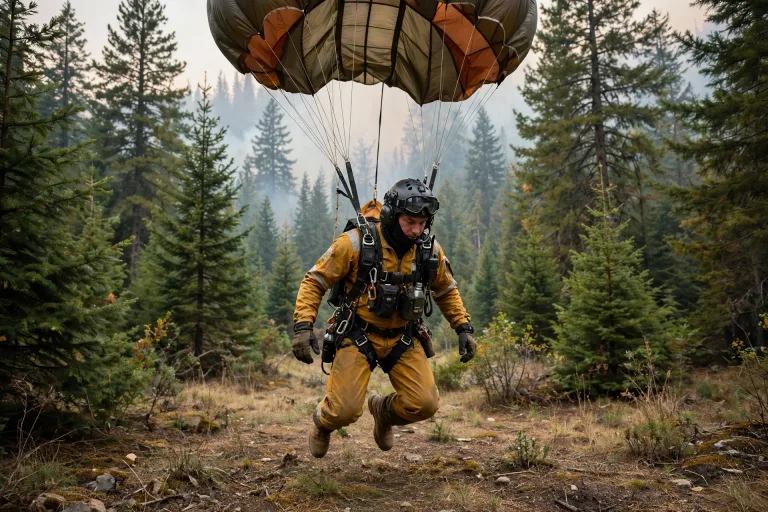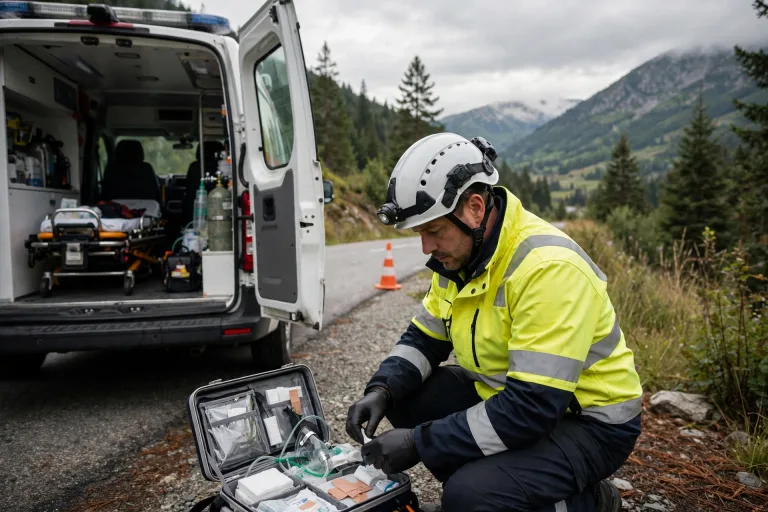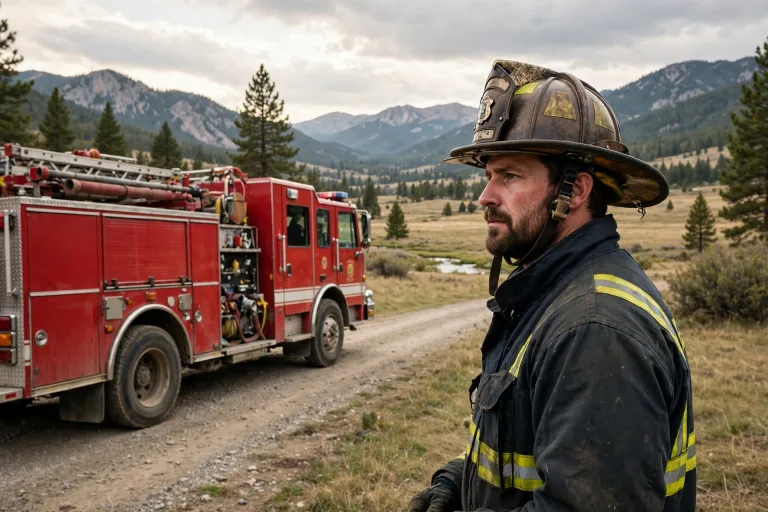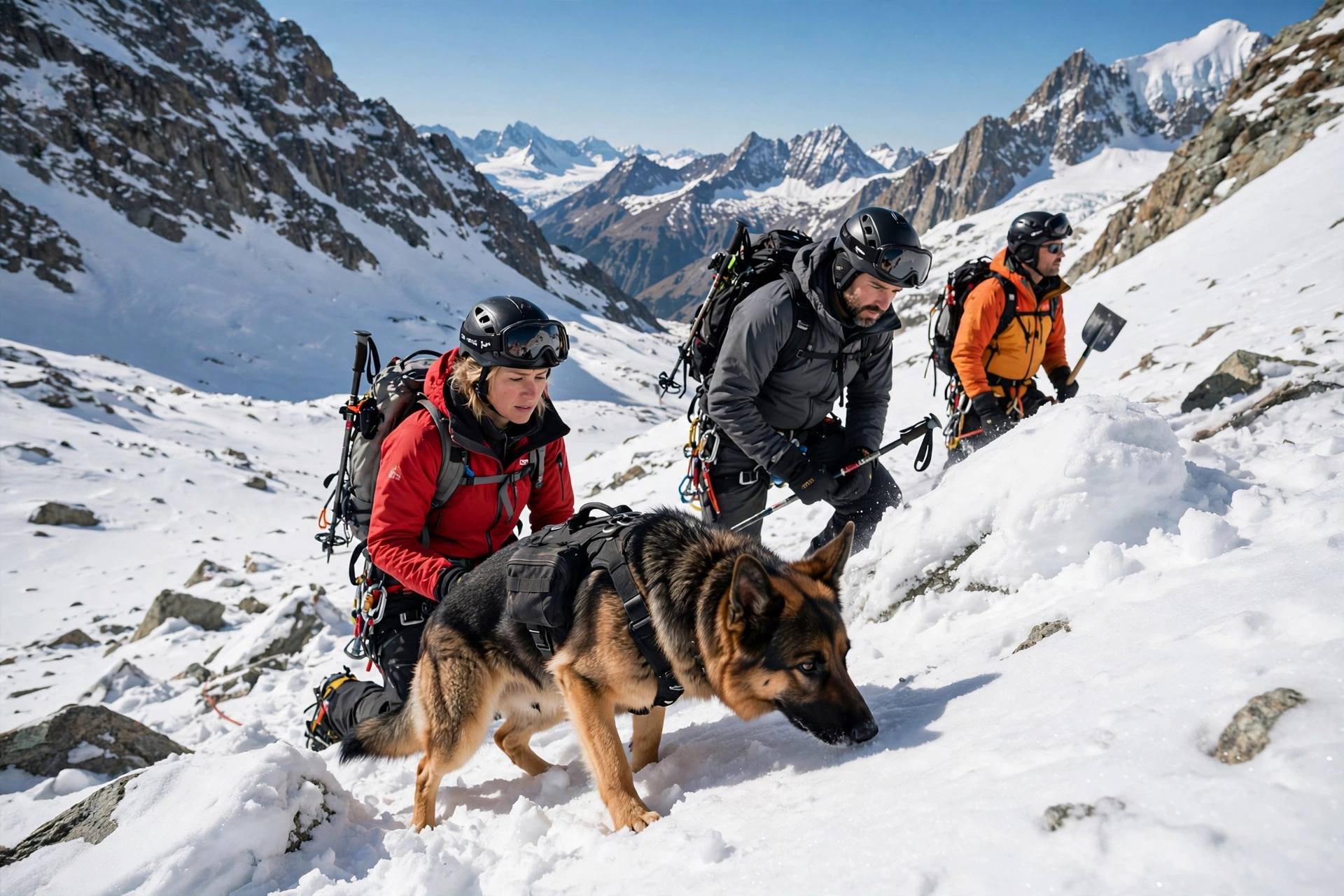
A helmet for avalanche rescue teams is a helmet worn by rescuers working on snowy mountain slopes to protect the head from falls, falling snow and ice, and knocks from rescue equipment, and in general terms every member of an avalanche rescue team should wear one that fits well, works with winter clothing, and stays in place in deep snow. Avalanche rescue work takes a team onto steep, unstable slopes in bad weather, often in a hurry and often in the dark, and the head is at risk from the moment they leave the base. A helmet made for this work is essential safety equipment, not an optional extra.
Rescuers move fast over difficult ground, carrying heavy packs, probes, and shovels, and they may need to climb, dig, and crawl through shifting snow. A fall onto hard snow or ice can be a serious injury, and a helmet spreads the force of that impact. That is why rescue teams treat the helmet as part of the uniform, like the transceiver, probe, and shovel.
Why do avalanche rescue teams need a helmet?
Avalanche rescue teams need a helmet because the mountain is an unforgiving place, and a rescue is often carried out in the worst conditions. The slope may be steep and icy, the snow may be deep and unstable, and the team may be working under an overhang or below a cornice that could shed snow at any moment. In general terms, a helmet gives each rescuer a hard shell and a shock-absorbing lining between their head and whatever falls or strikes it, and that protection is worth having on every call-out.
There is also the risk of a fall while moving. A rescuer crossing a slope on skis or on foot can slip on ice, trip over hidden rocks, or be caught by a small slide, and a fall in deep snow can be hard to recover from. A helmet protects the head in that fall, and it also protects against knocks from skis, poles, and the team’s own equipment. Cold is another reason: a helmet helps to keep the head warm, cuts the wind, and works with goggles to keep the eyes clear in driving snow.
What kind of helmet is used by avalanche rescue teams?
The helmet used by avalanche rescue teams is, in general terms, a winter sports helmet, often similar to one worn for skiing or mountaineering, with a hard outer shell, a warm lining, and vents that can be closed in cold weather. It should be light enough for a long search, warm enough for a cold day, and strong enough for a hard knock. The key points are a snug fit, good ventilation, and a strap that holds the helmet in place during sudden movement.
The helmet should also work well with the rest of the rescuer’s kit. Goggles should sit neatly against the helmet without leaving a gap that lets cold air and snow in, and a balaclava or a neck warmer should fit under the helmet without pushing it out of shape. A head torch should be easy to clip on for night work, and the helmet should not block the rescuer’s hearing, because a rescuer needs to hear the team leader, the radio, and any sounds from under the snow.
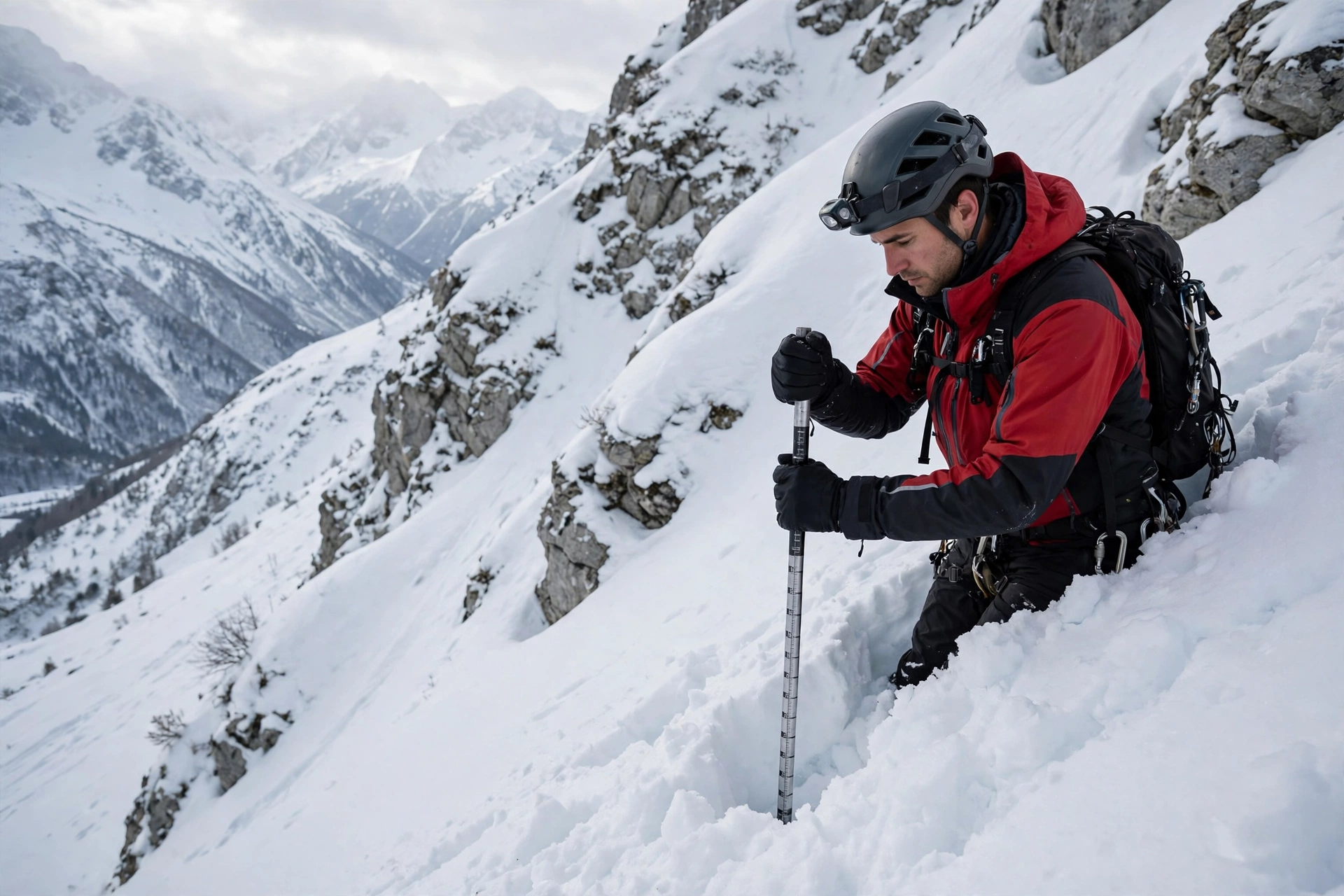
How should a helmet for avalanche rescue teams fit?
A helmet for avalanche rescue teams should fit snugly, sit level on the head, and stay in place when the rescuer bends, climbs, or digs in the snow. The helmet should cover the forehead and the top of the head, and the chin strap should be fastened securely every time the team is on the slope. A strap that is left loose lets the helmet lift in the wind or slide in a fall, and a helmet that comes off in deep snow is no help at all.
The fit should be checked with the winter layers the rescuer will actually wear, including a thin balaclava if one is used. A helmet that fits well over bare hair may feel tight over a balaclava, and a helmet fitted over thick layers may feel loose without them. The rescuer should also check that the helmet does not block their view, because a rescuer needs a clear view of the slope, the markers, and the rest of the team.
What should a rescue team check before going out?
Before going out, each member of the team should check their helmet for cracks, dents, or damage to the shell, and should look at the lining, the strap, and the buckle to make sure they are sound and working. A helmet that has been dropped onto hard ice, or that has taken a knock in a fall, should be looked at with care, and in general terms a helmet that has taken a serious impact should be replaced rather than used again. The damage may not be easy to see, so the rescuer should think honestly about what the helmet has been through.
The team should also check the snow, the weather, and the avalanche forecast before setting off. A helmet is only one part of staying safe on the mountain, and it works best when the team also checks that the slope is safe to enter, that the weather is within their ability, and that all of the rescue equipment is in good order. A rescue that puts the team at risk helps nobody, so the decision to go out should always be made with care.
How should an avalanche rescue helmet be looked after?
An avalanche rescue helmet should be looked after with regular cleaning and sensible storage, in the same way as any winter sports helmet. After a day on the mountain, the rescuer should wipe the outside clean, shake out any snow, and let the helmet dry naturally at room temperature, away from direct heat. A radiator or a hot vehicle can harm the materials in a helmet over time, so a cool, dry place is a better choice for drying and storage.
The helmet should be kept where it will not be knocked about or used as a seat or a shelf, because a hard knock can damage it even when no crack is visible. A helmet bag is a simple way to protect it between call-outs. Rescue teams who are choosing new helmets may also want to learn about features that can help in a fall, including a system designed to reduce rotational forces, such as MIPS, which is found in some winter sports helmets. A well-kept helmet, worn on every call-out, gives an avalanche rescue team the best chance of bringing everyone home safe.
Do all avalanche rescue teams wear a helmet?
In general terms, most avalanche rescue teams wear a helmet, and many rescue organisations expect it. A team member who is unsure should check the rules for their organisation before going out.
Can a ski helmet be used for avalanche rescue?
Yes, in general terms a ski or mountaineering helmet that fits well, is warm, and is in good condition is often suitable for avalanche rescue. The key points are fit, warmth, and a secure chin strap.
When should an avalanche rescue helmet be replaced?
An avalanche rescue helmet should be replaced after a hard impact or a fall, or when it no longer fits well, shows damage, or has been worn for a long time. When in doubt, replace it rather than keep working in it.

Olivia
Writer at Helmet Today, covering helmet reviews, fit and riding safety.